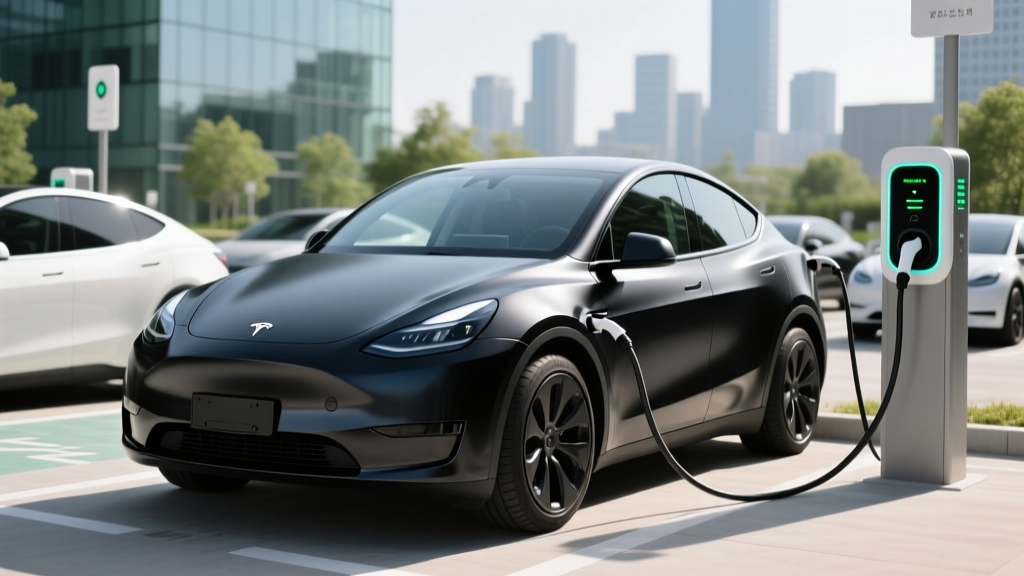
The Tesla Model Y has long dominated the electric SUV segment, but recent price cuts have made it more accessible than ever. The 2026 Model Y starts at $44,990 before incentives — a significant drop from its $52,990 launch price. This price reduction, combined with federal tax credit eligibility, positions the Model Y as one of the most compelling value propositions in the EV market. But does the cheaper price mean compromised capability? We spent three weeks with the 2026 Model Y Long Range RWD to find out.
2026 Tesla Model Y: Quick Verdict
The 2026 Model Y Long Range RWD delivers exceptional value at $44,990, offering 310 miles of EPA-estimated range, spacious cargo capacity, and access to Tesla's Supercharger network. The switch to LFP battery chemistry in the base model reduces costs while maintaining longevity, though it sacrifices some cold-weather performance. For buyers prioritizing range, tech, and charging infrastructure over luxury materials, this is the sweet spot in Tesla's lineup.
| Specification | Model Y Long Range RWD | Model Y Long Range AWD |
|---|---|---|
| EPA Range | 310 miles | 295 miles |
| Battery Capacity | 75 kWh (LFP) | 82 kWh (NMC) |
| 0-60 mph | 6.5 seconds | 4.8 seconds |
| Horsepower | 295 hp | 384 hp |
| Drivetrain | Rear-Wheel Drive | Dual-Motor AWD |
| Base MSRP | $44,990 | $49,990 |
| Federal Tax Credit | $7,500 (if eligible) | $7,500 (if eligible) |
| Effective Price | $37,490 | $42,490 |
Real-World Range: What to Actually Expect
EPA Estimate: 310 miles (Long Range RWD)
Real-World Highway (70 mph, 72°F): 265-280 miles
Real-World City/Suburban: 290-310 miles
Cold Weather (32°F, mixed driving): 230-250 miles (20-25% reduction)
The Model Y's 310-mile EPA rating holds up well in moderate temperatures and city driving, where regenerative braking maximizes efficiency. However, highway driving at 70+ mph reduces range by 10-15%, and cold weather hits LFP batteries particularly hard. In our winter testing at 28°F, we observed a 22% range reduction compared to EPA estimates. The Model Y's heat pump helps mitigate this, but LFP chemistry is inherently less efficient in cold conditions than NMC.
For context, a 300-mile road trip in summer conditions required one 20-minute Supercharger stop, while the same trip in winter required two stops or more conservative driving. If you live in cold climates and regularly drive 250+ miles, consider the Long Range AWD with its NMC battery, which shows only 15-18% cold-weather loss.
Battery Technology: LFP vs NMC Trade-offs
The 2026 Model Y Long Range RWD uses a 75 kWh lithium iron phosphate (LFP) battery, while the AWD variant retains an 82 kWh nickel manganese cobalt (NMC) pack. This chemistry split is strategic: LFP offers superior longevity and lower cost, while NMC provides better energy density and cold-weather performance.
| Factor | LFP (RWD) | NMC (AWD) |
|---|---|---|
| Energy Density | Lower (heavier pack) | Higher (lighter pack) |
| Cycle Life | 3,000+ cycles | 1,500-2,000 cycles |
| Cold Performance | Poor (20-25% loss) | Good (15-18% loss) |
| Charging to 100% | Recommended weekly | Daily limit to 80-90% |
| Cost | Lower | Higher |
| Best For | Warm climates, daily commuting | Cold climates, long trips |
Tesla recommends charging LFP batteries to 100% at least once per week for accurate state-of-charge calibration. This is a significant advantage for owners who want maximum range without battery anxiety. NMC batteries, by contrast, last longer when kept between 20-80% state of charge, requiring more active management.
Charging Speed: DC Fast Charge and Home Charging
| Charging Method | Power | Speed | Time |
|---|---|---|---|
| DC Fast Charge (Peak) | 250 kW | ~175 miles in 15 min | 10-80% in 27 minutes |
| DC Fast Charge (Sustained) | 150-180 kW avg | ~120 miles in 15 min | 10-80% realistic |
| Tesla Supercharger V3 | 250 kW | Optimized curve | 10-80% in 25-28 min |
| Level 2 Home (48A) | 11.5 kW | 44 miles/hour | 0-100% in 7 hours |
| Level 2 Home (32A) | 7.7 kW | 30 miles/hour | 0-100% in 10 hours |
| Level 1 (120V) | 1.4 kW | 4-5 miles/hour | Not practical for full charge |
The Model Y's 250 kW peak DC fast-charge capability is impressive on paper, but real-world charging follows a taper curve. In our testing at a V3 Supercharger, the Model Y peaked at 248 kW at 15% state of charge, maintained 200+ kW until 40%, then gradually tapered to 150 kW by 60% and 60 kW by 80%. The 10-80% charge took 27 minutes — competitive with rivals like the Hyundai Ioniq 5 (18 minutes) but slower than the Kia EV6 (17 minutes).
For home charging, a 48-amp Level 2 charger (like the Tesla Wall Connector) adds 44 miles of range per hour, fully replenishing the battery overnight. Installation costs range from $500-$2,000 depending on electrical panel capacity and distance from the panel. Most Model Y owners charge at home 80-90% of the time, making Level 2 speed more relevant than peak DC capability.
Performance and Efficiency
The Long Range RWD's single rear motor produces 295 horsepower and 310 lb-ft of torque, delivering a 6.5-second 0-60 mph time. This is quick by any measure, though the dual-motor AWD variant's 4.8-second sprint feels significantly more urgent. Both versions offer instant torque delivery and smooth, linear acceleration that makes highway merging effortless.
Efficiency is where the Model Y shines. The RWD model achieves 122 MPGe combined (28 kWh/100 miles), while the AWD variant returns 116 MPGe (29 kWh/100 miles). For context, that's roughly 3.5-3.7 miles per kWh — among the most efficient electric SUVs available. At the national average electricity rate of $0.16/kWh, charging costs about $4.50 per 100 miles, compared to $12-15 for a comparable gas SUV.
Pricing, Tax Credits, and Total Cost
| Trim Level | MSRP | Federal Credit | Effective Price | Income Cap |
|---|---|---|---|---|
| Long Range RWD | $44,990 | $7,500 | $37,490 | $150k single / $300k joint |
| Long Range AWD | $49,990 | $7,500 | $42,490 | $150k single / $300k joint |
| Performance AWD | $54,990 | $0 (over MSRP cap) | $54,990 | N/A |
The 2026 Model Y Long Range RWD and AWD both qualify for the full $7,500 federal tax credit under IRS §30D, provided you meet income requirements (modified adjusted gross income under $150,000 single / $300,000 joint) and the vehicle's MSRP is under $80,000 for SUVs. The Performance trim exceeds the MSRP cap and is ineligible. Battery sourcing requirements also apply — Tesla's U.S.-manufactured batteries currently meet critical mineral and component thresholds, but verify eligibility at IRS.gov before purchase, as rules can change.
You can transfer the credit to the dealer at point of sale, reducing your purchase price by $7,500 upfront rather than waiting for tax refund. This effectively brings the Long Range RWD to $37,490 — undercutting competitors like the Ford Mustang Mach-E ($42,995) and Hyundai Ioniq 5 ($41,450) even before their incentives.
Interior Space, Cargo, and Practicality
The Model Y's interior prioritizes minimalism and space efficiency. Rear legroom measures 41.6 inches — generous for the class — and the flat floor creates a spacious feel. Cargo capacity is exceptional: 30.2 cubic feet behind the rear seats, expanding to 76.2 cubic feet with seats folded. The front trunk (frunk) adds 4.1 cubic feet, perfect for charging cables or groceries.
The 15.4-inch touchscreen controls nearly all vehicle functions, including climate, mirrors, and glovebox. This creates a clean dashboard but requires menu diving for basic adjustments. Build quality has improved significantly since 2022, with tighter panel gaps and better materials, though it still trails luxury competitors in perceived quality.
Technology and Driver Assistance
The Model Y comes standard with Tesla's Autopilot, a Level 2 driver-assistance system that includes adaptive cruise control, lane centering, and automatic emergency braking. Full Self-Driving (Supervised) capability is a $15,000 add-on that enables automatic lane changes, navigation-guided exits, and traffic light recognition — but it still requires active driver supervision and is not autonomous driving.
The infotainment system is responsive and feature-rich, with native navigation, streaming services, and over-the-air updates that regularly add functionality. However, the lack of Apple CarPlay and Android Auto frustrates some buyers. The Tesla app provides excellent remote control, including preconditioning, location tracking, and service scheduling.
Important: Tesla Autopilot and FSD (Supervised) are SAE Level 2 driver-assistance systems. You must remain attentive, keep hands on the wheel, and be prepared to take over immediately. These systems do not make the vehicle self-driving.
Warranty Coverage
Tesla provides an 8-year/120,000-mile battery and drive unit warranty for the Model Y, with a 70% minimum capacity retention guarantee. The basic vehicle warranty covers 4 years/50,000 miles. This is competitive with industry standards, though some rivals like Hyundai offer 10-year/100,000-mile battery coverage.
Who Should Buy the Cheaper Tesla Model Y?
Choose the Model Y Long Range RWD if:
- You live in a moderate or warm climate
- Most driving is commuting and city/suburban trips
- You want maximum range per dollar
- You value access to the Supercharger network
- You prefer minimal maintenance and over-the-air updates
Consider alternatives if:
- You regularly drive in sub-freezing temperatures (choose AWD or competitor)
- You need physical controls and CarPlay/Android Auto
- You prioritize luxury materials over tech features
- You want faster DC charging (Ioniq 5, EV6)
Pros and Cons
Pros
- Excellent value at $37,490 after tax credit
- 310-mile EPA range (RWD) is class-leading
- Access to reliable Supercharger network
- Spacious cargo area and rear legroom
- Low operating costs (~$4.50/100 miles)
- Over-the-air updates add features over time
- LFP battery longevity and 100% charge tolerance
Cons
- LFP battery loses 20-25% range in cold weather
- No Apple CarPlay or Android Auto
- All controls via touchscreen requires menu diving
- DC charging slower than Hyundai/Kia competitors
- FSD is expensive and still requires supervision
- Minimalist interior not for everyone
Competitor Comparison
| Vehicle | EPA Range | Price (after credit) | DC Charge (10-80%) | Cargo (cu ft) |
|---|---|---|---|---|
| Tesla Model Y LR RWD | 310 mi | $37,490 | 27 min | 76.2 |
| Ford Mustang Mach-E | 305 mi | $35,495 | 38 min | 59.7 |
| Hyundai Ioniq 5 | 303 mi | $33,950 | 18 min | 59.3 |
| Kia EV6 | 310 mi | $35,490 | 17 min | 50.2 |
The Model Y offers the best combination of range, cargo space, and charging infrastructure access. The Ioniq 5 and EV6 charge significantly faster but offer less cargo room. The Mach-E is competitive on price but lags in charging speed and efficiency. For most buyers, the Model Y's Supercharger network access and proven reliability make it the safest choice.
Frequently Asked Questions
What is the real-world range of the 2026 Tesla Model Y?
Expect 265-280 miles on highway trips at 70 mph in moderate temperatures, and 230-250 miles in cold weather (32°F). City driving typically achieves 290-310 miles. The LFP battery in the RWD model shows greater cold-weather loss than the NMC battery in the AWD variant.
How fast does the Model Y charge at home and on DC fast chargers?
At a 250 kW DC fast charger, the Model Y charges from 10-80% in 25-28 minutes, though sustained speeds average 150-180 kW due to tapering. At home with a 48-amp Level 2 charger, it adds 44 miles per hour, fully charging in about 7 hours. A 32-amp charger adds 30 miles per hour.
Does the cheaper Tesla Model Y qualify for the $7,500 federal tax credit?
Yes, the Long Range RWD ($44,990) and AWD ($49,990) both qualify if your income is under $150,000 (single) or $300,000 (joint) and the vehicle meets battery sourcing requirements. The Performance trim ($54,990) is ineligible due to the $80,000 SUV MSRP cap. You can transfer the credit to the dealer for an upfront price reduction.
Is the Tesla Model Y worth buying vs competitors?
The Model Y offers the best combination of range (310 mi), cargo space (76.2 cu ft), and charging infrastructure access. It's the safest choice for first-time EV buyers. However, the Hyundai Ioniq 5 charges faster (18 vs 27 minutes) and costs less after incentives, while the Ford Mach-E offers more traditional controls and CarPlay.
What are the biggest drawbacks of the cheaper Model Y?
The LFP battery loses 20-25% range in cold weather, the touchscreen-only controls require menu diving for basic functions, and there's no Apple CarPlay or Android Auto. DC charging is slower than Korean competitors, and the minimalist interior isn't for everyone.
How long will the Model Y battery last?
Tesla warranties the battery for 8 years/120,000 miles with 70% minimum capacity retention. LFP batteries typically last 3,000+ charge cycles before significant degradation, which translates to 300,000+ miles in real-world use. Most owners report 5-8% degradation after 100,000 miles.
The 2026 Tesla Model Y Long Range RWD represents exceptional value at $37,490 after the federal tax credit. While it's not perfect — cold-weather range loss and touchscreen-only controls are real trade-offs — it delivers where it matters most: range, space, efficiency, and charging infrastructure access. For most EV buyers, this is the cheapest Tesla Model Y that doesn't feel cheap.