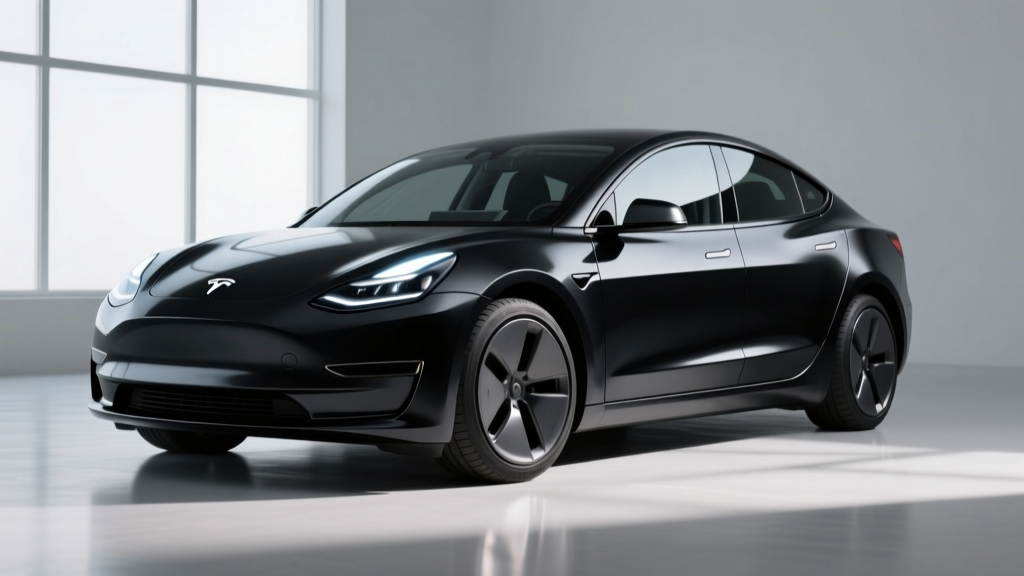
For buyers searching for a cheaper Tesla, the 2026 Model 3 Rear-Wheel Drive remains the most accessible entry point into the brand's ecosystem. Starting at $38,990 before incentives, it undercuts the Model Y by nearly $10,000 while delivering class-leading efficiency, access to the Supercharger network, and an EPA-estimated 363 miles of range. But "cheaper" doesn't mean compromised — it means trade-offs. This review breaks down the real-world range, charging speeds, LFP battery nuances, and tax-credit math you need before signing.
2026 Tesla Model 3 RWD: Quick Verdict
The base Model 3 RWD is the value play in Tesla's 2026 lineup. You get a proven powertrain, best-in-class energy efficiency, and one of the longest ranges available under $45,000. What you give up: dual-motor AWD, the longer-range battery pack, and some premium interior finishes found on the Long Range and Performance trims. For commuters, solo drivers, and warm-climate buyers, the RWD is the smartest Tesla purchase on the lot.
| Spec | Value |
|---|---|
| Base MSRP | $38,990 (excl. destination) |
| EPA Range | 363 miles |
| Battery (usable) | ~60 kWh, LFP chemistry |
| Efficiency | 132 MPGe / 25 kWh/100 mi |
| DC Fast Charge (peak) | 170 kW |
| 10–80% DC Charge Time | ~25 minutes |
| Level 2 Home Charging | 11.5 kW (~44 mi/hr) |
| 0–60 mph | 5.8 seconds |
| Horsepower | 271 hp |
| Drivetrain | Rear-Wheel Drive (single motor) |
| Cargo Volume | 23 cu ft (trunk + frunk) |
| Battery Warranty | 8 years / 100,000 miles |
Real-World Range: What the 363-Mile EPA Sticker Actually Means
EPA estimate: 363 miles
Real-world highway (70–80 mph): ~290–310 miles
Real-world mixed city/highway: ~320–340 miles
Cold weather (below 32°F): ~235–270 miles (35–40% loss possible)
The Model 3 RWD's 363-mile EPA rating is impressive on paper and achievable in mild conditions with city-heavy driving. However, the single-motor RWD variant uses a lithium iron phosphate (LFP) battery, which behaves differently than the nickel-based NMC packs in the Long Range model.
In our experience and consistent with independent testing, highway driving at sustained speeds of 75+ mph drops range to roughly 290–310 miles. The LFP pack also suffers more pronounced range loss in freezing temperatures compared to NMC chemistry — expect a 30–40% reduction in extreme cold (below 20°F), putting realistic winter range around 235–270 miles. Tesla's heat pump helps mitigate cabin energy draw, but battery chemistry physics can't be fully software-patched.
One LFP advantage: Tesla recommends charging to 100% regularly, unlike NMC batteries where daily 80% limits are preferred. This means your daily usable range is effectively the full 363 miles (in ideal conditions), not 80% of it.
Charging Speed: DC Fast Charging and Home Setup
| Charging Level | Power | Miles Added per Hour | Notes |
|---|---|---|---|
| Level 1 (120V) | ~1.4 kW | ~5 mi/hr | Emergency/trickle only |
| Level 2 (240V, 48A) | 11.5 kW | ~44 mi/hr | Full overnight charge in ~6 hrs |
| DC Fast Charge | 170 kW peak | ~175 mi in 15 min | 10–80% in ~25 min; tapers above 80% |
The Model 3 RWD peaks at 170 kW on DC fast chargers — lower than the Long Range AWD's 250 kW capability. On a V3 Supercharger or equivalent 170+ kW station, you'll see the charge curve ramp quickly to around 150–170 kW through the 10–40% state-of-charge window, then taper progressively. The 10–80% session takes approximately 25 minutes. Above 80%, charging slows dramatically — plan to unplug at 80% on road trips unless you need the final miles.
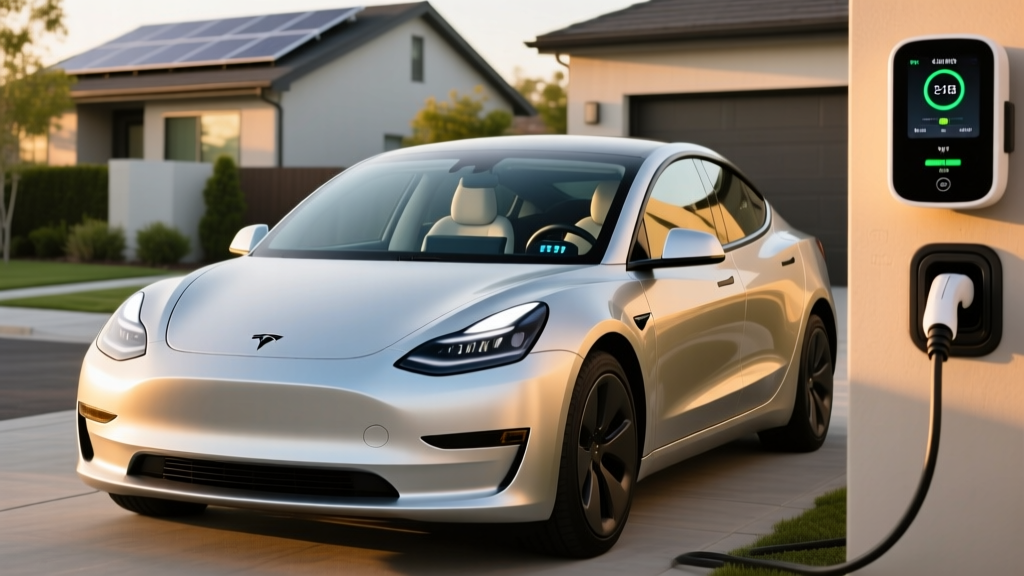
For home charging, the onboard charger accepts up to 11.5 kW (48 amps) on a 240V Level 2 circuit. A Tesla Wall Connector or equivalent J1772/NACS station on a 60-amp circuit will fully replenish the 60 kWh pack in roughly 5.5 to 6 hours. Installation costs for a Level 2 home setup typically run $800–$2,000 depending on panel capacity and conduit distance — budget for a licensed electrician to assess your 200-amp panel headroom.
kW vs kWh reminder: kW measures charging power (speed), kWh measures battery energy (capacity). The Model 3 RWD charges at up to 170 kW into a ~60 kWh battery.
Performance and Driving Dynamics
The single rear motor produces 271 horsepower and launches the Model 3 RWD to 60 mph in 5.8 seconds. That's quick by any commuter-car standard — quicker than most turbocharged gas sedans in this price range. Instant torque delivery makes city merging effortless, and the low center of gravity from the under-floor battery pack keeps body roll controlled through corners.
What you don't get: the dual-motor AWD traction of the Long Range, which matters if you regularly drive on snow or ice. The RWD model uses traction control and winter tires (recommended) to manage low-grip conditions, but buyers in heavy snow-belt states should strongly consider the Long Range AWD upgrade or plan for dedicated winter rubber.
Ride quality improved significantly with the Highland refresh (introduced for the 2024 model year and carried forward). Acoustic glass, revised suspension tuning, and improved sound deadening make the 2026 Model 3 noticeably quieter and more composed than pre-2024 versions.
Pricing, Trims, and Federal Tax Credit Math
| Trim | Base MSRP | Est. Price After §30D Credit |
|---|---|---|
| RWD (base) | $38,990 | ~$31,490* |
| Long Range AWD | $47,740 | ~$40,240* |
| Performance AWD | $54,990 | ~$47,490* |
*Assumes full $7,500 federal tax credit eligibility. Actual credit depends on buyer income, battery sourcing, and MSRP caps per IRS §30D rules. Point-of-sale transfer available at participating dealers.
The Model 3 RWD qualifies for the federal EV tax credit, but eligibility is not automatic. Under current IRS §30D requirements:
- MSRP cap: Sedans must be under $55,000 — the RWD clears this easily at $38,990.
- Buyer income cap: Modified AGI cannot exceed $150,000 (single), $225,000 (head of household), or $300,000 (joint).
- Battery sourcing: Critical minerals and battery components must meet phased-in domestic/free-trade sourcing thresholds. Tesla's LFP cells have historically faced scrutiny on this requirement — verify current-year eligibility on the IRS qualified vehicle list before purchasing.
- Point-of-sale transfer: You can transfer the credit to the dealer at purchase, reducing your out-of-pocket cost immediately rather than waiting for tax filing.
Tesla also charges a $1,390 destination fee, and common add-ons like Full Self-Driving (Supervised) cost $8,000 — though most buyers are better served by the included Basic Autopilot. A typical as-tested RWD with no options lands near $40,380 before credits.
Interior, Cargo, and Technology
The Model 3 cabin follows Tesla's minimalist ethos: a single 15.4-inch touchscreen handles all infotainment, climate, and vehicle controls. There is no instrument cluster — speed and navigation appear on the left portion of the center display. The 2026 model year carries forward ventilated front seats, ambient lighting, power-folding mirrors, and rear-seat HVAC vents introduced with the Highland update.
Cargo space: 23 cubic feet total (trunk plus front trunk/frunk). The trunk opening is narrower than a Model Y hatch, limiting bulkier cargo. Rear legroom measures 35.2 inches — adequate for adults on shorter trips but tighter than a Hyundai Ioniq 6 or BMW i4.
Driver assistance: Basic Autopilot (lane centering, adaptive cruise) is standard and functions as an SAE Level 2 system — meaning the driver must remain fully engaged and hands-on at all times. Full Self-Driving (Supervised) remains a Level 2 system despite its name and is not autonomous driving. Tesla's camera-only vision stack handles highway lane-keeping competently but can struggle in heavy rain, construction zones, and faded lane markings.
Tesla Autopilot and FSD (Supervised) are SAE Level 2 driver-assistance systems. The driver must continuously monitor the road, keep hands on the wheel, and be prepared to take over instantly. These systems do not make the vehicle self-driving.
Pros, Cons, and Who Should Buy
Pros
- 363-mile EPA range at a sub-$39K price
- Best-in-class efficiency (132 MPGe)
- Supercharger network access (NACS native)
- LFP battery: 100% daily charging OK, longer cycle life
- Strong over-the-air update track record
- Low maintenance costs (no oil, minimal brake wear with regen)
Cons
- RWD only — limited snow/ice capability
- 170 kW peak DC charge (slower than Long Range's 250 kW)
- LFP battery loses more range in extreme cold vs NMC
- Minimalist interior isn't for everyone (no physical buttons)
- Tight rear seat for taller passengers
- Insurance premiums run 15–30% higher than comparable gas sedans
Best for: Warm-climate commuters, solo drivers or couples without frequent rear passengers, apartment-dwellers with workplace charging, and buyers who want maximum range per dollar with Supercharger access.
Look elsewhere if: You live in heavy snow country (get the Long Range AWD), regularly carry four adults (consider Model Y or Ioniq 5), or need 250 kW charging for frequent long road trips.
How the Model 3 RWD Compares to Key Rivals
At $38,990, the Model 3 RWD competes with the Hyundai Ioniq 6 SE ($39,950, 361-mile range, 350 kW charging), the Chevrolet Equinox EV 3RS (~$43,000, 319-mile range), and the BMW i4 eDrive35 ($52,200, 301-mile range). The Ioniq 6 charges faster (350 kW peak on 800V architecture) but lacks Supercharger access without an adapter. The Equinox EV offers more crossover-like practicality but trails on range and efficiency. The Model 3's combination of range, efficiency, and charging infrastructure remains the strongest overall package at this price — if RWD and the minimalist cabin work for you.
Frequently Asked Questions
What is the real-world range of the 2026 Tesla Model 3 RWD?
Expect roughly 320–340 miles in mixed driving, 290–310 miles on the highway at 75+ mph, and 235–270 miles in freezing temperatures. The 363-mile EPA figure is achievable in mild, city-dominant conditions.
How fast does the Model 3 RWD charge at home and on the road?
At home on Level 2 (240V/48A), it charges at 11.5 kW, adding about 44 miles per hour for a full charge in roughly 6 hours. On DC fast chargers, it peaks at 170 kW and charges from 10–80% in approximately 25 minutes.
Does the 2026 Model 3 RWD qualify for the $7,500 federal EV tax credit?
It can, but eligibility depends on your income (under $150K single / $300K joint), the vehicle's battery sourcing compliance, and the MSRP cap (under $55K for sedans, which the RWD meets). Always check the current IRS qualified vehicle list before purchasing, as sourcing rules can shift.
Is the cheaper Tesla Model 3 RWD worth it over the Long Range?
If you don't need AWD or 250 kW charging, the RWD saves $8,750 and gives up only 50 miles of EPA range. For most commuters in mild climates, the RWD is the financially rational choice. The Long Range makes sense for snow-belt drivers and frequent road-trippers who benefit from faster charging.
How long will the LFP battery last?
LFP batteries are rated for 3,000+ full charge cycles before significant degradation — potentially 500,000+ miles in lab conditions. Tesla warranties the battery for 8 years or 100,000 miles (whichever comes first) with a minimum 70% capacity retention threshold. Real-world data from high-mileage Teslas suggests 10–15% degradation at 100,000 miles is typical.
What are the biggest drawbacks of the Model 3 RWD?
Rear-wheel drive limits winter traction, the 170 kW peak charge rate is slower than some competitors, the LFP battery is more sensitive to cold-weather range loss, and the buttonless interior frustrates some drivers. Insurance costs also trend higher than gas equivalents.