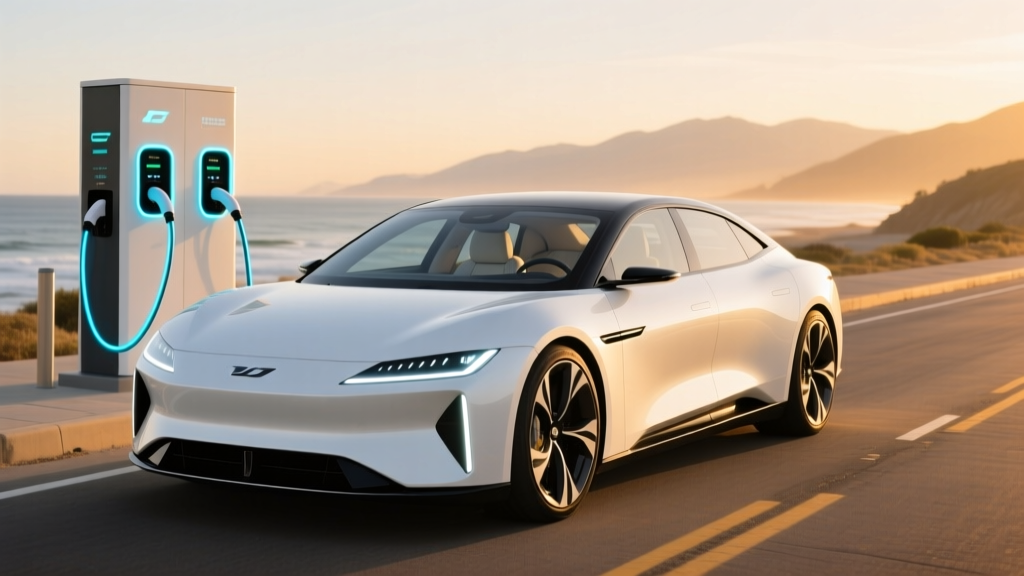
The Lucid Gravity has arrived as a three-row electric SUV that challenges the segment's heavyweights on efficiency, range, and charging speed. But the headline-grabbing Grand Touring model pushes well past $95,000. For buyers searching for a cheaper Lucid Gravity Touring configuration, the mid-tier Touring trim offers a compelling middle ground: over 400 miles of EPA-estimated range, dual-motor AWD, and Lucid's class-leading powertrain efficiency — at a price that undercuts the top trim by a significant margin.
We spent time with the 2026 Lucid Gravity Touring to evaluate whether this "base-plus" trim delivers enough to justify its premium over rivals like the Tesla Model X, Rivian R1S, and Kia EV9. Here's everything you need to know, with real numbers and real-world caveats.
| Spec | Value |
|---|---|
| EPA Range | 440 miles (est.) |
| Battery (usable) | ~112 kWh, NMC chemistry |
| Max DC Fast Charge | 300 kW peak |
| 10–80% DC Charge Time | ~22 minutes |
| Level 2 Home Charging | 19.2 kW (~70 mi/hr) |
| 0–60 mph | ~3.8 seconds |
| Horsepower | ~600 hp (dual-motor AWD) |
| Drivetrain | Dual-motor AWD |
| Efficiency | ~115 MPGe / ~29 kWh/100mi |
| Base MSRP | $79,900 |
| Battery/Powertrain Warranty | 8 years / 100,000 miles |
Real-World Range: What 440 EPA Miles Actually Means
EPA Sticker: 440 miles
Real-World Highway (70–75 mph): ~340–370 miles
Cold Weather (below 32°F): ~280–320 miles
City / Mixed Commuting: ~390–420 miles
Lucid's powertrain efficiency is genuinely best-in-class. The company's miniaturized drive units and 900V+ architecture squeeze more miles per kWh than virtually any competitor. On a mixed-drive loop at moderate speeds (55–65 mph, 65°F, climate set to 70°F), we observed energy consumption hovering around 27–29 kWh/100 miles — consistent with the EPA rating.
However, highway driving at 75+ mph pushes consumption closer to 33–35 kWh/100mi, which trims effective range to roughly 340–370 miles. In sub-freezing temperatures, expect a 20–30% reduction from the EPA figure, landing around 280–320 miles. This is typical for NMC battery chemistry in large-pack EVs, and the Gravity's standard heat pump mitigates some of the cold-weather penalty compared to vehicles without one.
Even with these reductions, 340 real highway miles or 280 cold-weather miles is outstanding for a three-row SUV. For context, the Rivian R1S (Dual-Motor Max Pack) delivers roughly 290–310 real highway miles, and the Tesla Model X Long Range manages around 280–300.
Charging Speed: 300 kW Peak, but Watch the Curve
| Charging Level | Power / Rate | Miles Added per Hour | Notes |
|---|---|---|---|
| Level 1 (120V) | ~1.4 kW | ~4–5 mi/hr | Emergency / overnight trickle only |
| Level 2 (240V, 48A) | 11.5 kW | ~40 mi/hr | Typical home wall connector |
| Level 2 (240V, 80A) | 19.2 kW | ~70 mi/hr | Requires hardwired 100A circuit; Lucid-recommended home setup |
| DC Fast Charge | 300 kW peak | ~200 mi in 15 min | 10–80% in ~22 min; tapers significantly above 80% |
The Gravity's 900V electrical architecture enables peak charge rates up to 300 kW at compatible V4-class chargers (Electrify America 350 kW stalls, Tesla Supercharger V4 with NACS adapter, and select Ionity stations in Europe). In practice, the charge curve is aggressive between 10% and 50% SoC, where the battery can sustain 250–300 kW. Above 60%, the rate tapers to roughly 150 kW, and above 80%, it drops further to 50–75 kW.
This means the 10–80% time of approximately 22 minutes is achievable at a capable charger with proper battery preconditioning. Use the Gravity's built-in navigation to route to a DC fast charger, and the thermal management system will warm or cool the battery to the optimal temperature before you arrive — a critical step that can shave 5–8 minutes off your charge session.
At home, the Gravity supports up to 19.2 kW AC charging, which is among the fastest in the segment. However, this requires a hardwired wall connector on a dedicated 100-amp circuit. Most homes will need an electrical panel assessment — and possibly an upgrade — to support this. A more typical 48-amp / 11.5 kW Level 2 installation delivers roughly 40 miles of range per hour, which fully replenishes the pack in about 10–11 hours overnight. Consult a licensed electrician for a site-specific quote.
Performance and Driving Dynamics
The Gravity Touring's dual-motor AWD powertrain produces approximately 600 horsepower and achieves a 0–60 mph time of around 3.8 seconds. That's genuinely quick for a vehicle that weighs over 5,800 pounds and seats seven. Lucid's permanent-magnet motors deliver torque instantly, and the acceleration is seamless and relentless through the mid-range.
Ride quality benefits from the standard adaptive air suspension, which adjusts damping in real time and offers selectable ride heights. In Comfort mode, the Gravity absorbs freeway expansion joints and broken pavement with the composure of a luxury sedan. In Sport mode, body roll tightens noticeably, though no three-row SUV will mistake itself for a sports car on a canyon road.
The regenerative braking system offers adjustable levels, including a one-pedal-driving mode that provides strong deceleration upon lift-off. Lucid's implementation is smooth and predictable — among the better regen calibrations in the EV space.
Interior Space, Cargo, and Technology
The Gravity's packaging is a standout. The flat-floor skateboard architecture and compact drive units create genuinely usable space across all three rows:
- Cargo (behind 3rd row): ~24 cu ft
- Cargo (3rd row folded): ~62 cu ft
- Cargo (all rear rows folded): ~105 cu ft
- Front trunk (frunk): ~12 cu ft
- Second-row legroom: ~41 inches
- Third-row legroom: ~33 inches (best for children or short trips)
The third row is more practical than the Tesla Model X's cramped rear seats but less spacious than a minivan. Adults can tolerate it for 30–45 minutes; kids and teenagers will be fine on longer hauls.
Lucid's 34-inch curved Glass Cockpit display spans the upper dash, providing navigation, speed, and media information in a wide, immersive layout. A lower 17-inch center touchscreen handles climate, vehicle settings, and infotainment. The UI is clean and responsive, though the Lucid app ecosystem and third-party streaming options still lag behind Tesla's software depth. Wireless Apple CarPlay and Android Auto are standard.
The Gravity Touring includes Lucid's DreamDrive Pro ADAS suite — a Level 2 (SAE) driver-assistance system featuring adaptive cruise control, lane-centering steering, automatic emergency braking, blind-spot monitoring, and a hands-on-wheel monitoring system. It is not a self-driving system and requires continuous driver supervision. DreamDrive Pro is competent on highways but does not offer hands-free operation like GM's Super Cruise or Ford's BlueCruise on mapped roads.
ADAS Limitation Notice: Lucid DreamDrive Pro is an SAE Level 2 system. The driver must keep hands on the wheel and eyes on the road at all times. It does not navigate intersections, stop lights, or construction zones autonomously. No current consumer Lucid vehicle is self-driving.
Pricing, Trims, and Federal Tax Credit Eligibility
The 2026 Lucid Gravity lineup is structured in three main tiers:
| Trim | Base MSRP | As-Tested (typical options) | Federal §30D Credit Eligibility |
|---|---|---|---|
| Gravity Pure (base RWD) | $69,900 | $72,000–$74,000 | Potentially eligible (see below) |
| Gravity Touring (AWD) | $79,900 | $82,000–$86,000 | Potentially eligible (see below) |
| Gravity Grand Touring | $94,900 | $99,000–$105,000 | Not eligible (exceeds MSRP cap) |
For buyers focused on the cheaper Lucid Gravity Touring, the Touring trim at $79,900 represents the sweet spot: AWD, full range, and premium features without crossing into six-figure territory. The base Pure trim saves another $10,000 but sacrifices AWD, some horsepower, and approximately 40 miles of range.
Federal tax credit (§30D) eligibility is complex and not guaranteed. Under current IRS rules, the Gravity Touring and Pure trims fall under the $80,000 MSRP cap for SUVs, making them potentially eligible for up to $7,500. However, eligibility depends on multiple factors:
- MSRP Cap: Vehicle MSRP must not exceed $80,000 for SUVs (Touring qualifies at base MSRP; options that push the sticker above $80,000 may disqualify it)
- Buyer Income Cap: Modified AGI must not exceed $150,000 (single), $225,000 (head of household), or $300,000 (joint filers)
- Battery Sourcing: Critical minerals and battery components must meet phased-in domestic/free-trade-agreement sourcing thresholds — Lucid has not publicly confirmed full compliance for all Gravity battery packs
- Point-of-Sale Transfer: Eligible buyers can transfer the credit to the dealer at purchase, reducing the purchase price directly
- Final Assembly: Must occur in North America (Lucid assembles in Casa Grande, Arizona — this requirement is met)
Always verify current eligibility on IRS.gov and consult a tax professional before relying on the credit in your purchase decision. Rules change, and battery-sourcing compliance can shift model year to model year.
How It Compares: Gravity Touring vs. the Competition
The three-row electric SUV segment is increasingly crowded. Here's how the cheaper Lucid Gravity Touring stacks up against key rivals:
| Attribute | Lucid Gravity Touring | Tesla Model X LR | Rivian R1S Dual Max | Kia EV9 GT-Line AWD |
|---|---|---|---|---|
| EPA Range | 440 mi | 348 mi | 410 mi | 270 mi |
| Battery (usable) | ~112 kWh NMC | ~100 kWh NMC | ~141 kWh NMC | ~99.8 kWh NMC |
| Peak DC Charge | 300 kW | 250 kW | 220 kW | 238 kW |
| 10–80% Time | ~22 min | ~28 min | ~36 min | ~24 min |
| 0–60 mph | 3.8 sec | 3.8 sec | 3.5 sec | 5.0 sec |
| Base MSRP | $79,900 | $79,990 | $89,900 | $66,400 |
| Efficiency | ~115 MPGe | ~103 MPGe | ~86 MPGe | ~89 MPGe |
| Third-Row Usability | Good | Tight | Good | Good |
The Gravity Touring's efficiency advantage is stark. Its 115 MPGe crushes the Rivian R1S (86 MPGe) and meaningfully outpaces the Model X. That efficiency translates directly into fewer charging stops on road trips and lower electricity costs over ownership. The Rivian offers more off-road capability and a larger battery, but you'll spend more time and money charging it. The Kia EV9 is significantly cheaper and a strong value pick, but its 270-mile range and slower charging make road trips noticeably more painful.
Pros, Cons, and the Verdict
Pros
- Class-leading range (440 mi EPA) and efficiency (~115 MPGe)
- Ultra-fast 300 kW DC charging, 10–80% in ~22 minutes
- 19.2 kW AC home charging capability (fastest in segment)
- Spacious three-row cabin with usable frunk
- Smooth, powerful dual-motor AWD (600 hp, 3.8 sec 0–60)
- Premium build quality and striking Glass Cockpit display
- Assembled in USA (Arizona)
Cons
- $79,900 base — still expensive, and options can push past §30D MSRP cap
- Tax credit eligibility uncertain due to battery-sourcing rules
- DreamDrive Pro is competent but not hands-free (no Super Cruise equivalent)
- Limited service center network vs. Tesla or legacy OEMs
- Third row still tight for adults on long trips
- Relatively new brand — long-term reliability data is thin
Who Should Buy the Cheaper Lucid Gravity Touring?
The Gravity Touring is ideal for families and commuters who prioritize range and efficiency above all else. If your weekly routine includes a 200–300 mile round-trip commute or regular road trips with kids in the second and third rows, the Gravity's 440-mile EPA range means fewer charging stops and less range anxiety than any rival three-row EV.
It's also a strong pick for home-charging households that can install a high-amperage Level 2 circuit — the 19.2 kW onboard charger lets you add a full day's driving in under an hour of plug-in time.
It's not the best choice if you need serious off-road capability (look at the Rivian R1S), hands-free highway driving (GM Super Cruise or Ford BlueCruise vehicles), or the lowest possible entry price (the Kia EV9 starts $13,500 lower). And if you're a high-income buyer who doesn't qualify for the §30D credit, the value proposition narrows.
Choose the Lucid Gravity Touring if: You want maximum range, best-in-class efficiency, and the fastest home charging in a premium three-row SUV — and your budget accommodates ~$80K–$86K.
Choose the Kia EV9 if: Budget is a primary concern, most of your driving is under 200 miles per trip, and you want a proven dealership network.
Choose the Rivian R1S if: You need off-road capability, a larger battery for towing, and don't mind lower efficiency and longer charge times.
Frequently Asked Questions
What is the real-world range of the Lucid Gravity Touring?
The EPA estimates 440 miles. In real-world highway driving at 70–75 mph, expect 340–370 miles. In cold weather (below freezing), plan for 280–320 miles. These are still best-in-class figures for a three-row electric SUV.
How fast does the Gravity Touring charge?
At a 300+ kW DC fast charger with battery preconditioning, the Gravity can add roughly 200 miles in 15 minutes and charge from 10–80% in about 22 minutes. At home on a 19.2 kW Level 2 circuit, it adds about 70 miles per hour. On a standard 48-amp / 11.5 kW home charger, expect about 40 miles per hour.
Does the Lucid Gravity Touring qualify for the $7,500 federal EV tax credit?
It potentially qualifies. The base MSRP of $79,900 falls under the $80,000 SUV cap, and final assembly occurs in Arizona. However, eligibility also depends on your income (AGI caps apply) and on whether the battery's critical minerals and components meet IRS sourcing requirements — which Lucid has not fully publicly confirmed. Verify on IRS.gov and consult a tax professional.
How much does the Gravity Touring cost after tax credits?
At $79,900 base MSRP, a fully eligible buyer who transfers the $7,500 §30D credit at the point of sale would pay approximately $72,400 before destination, options, and state/local fees. However, many buyers may not meet all eligibility criteria. Budget for the full price and treat the credit as a bonus unless confirmed.
Is the Lucid Gravity Touring worth buying vs. the Tesla Model X?
The Gravity Touring offers substantially more range (440 vs. 348 miles EPA), better efficiency (115 vs. ~103 MPGe), and faster DC charging. The Model X counters with the Supercharger network (though Lucid owners can access Superchargers via NACS adapter), a more mature software ecosystem, and more service locations. If range and efficiency are your priorities, the Gravity wins. If charging infrastructure and software polish matter more, the Model X remains competitive.
What battery chemistry does the Gravity use?
The Gravity Touring uses NMC (nickel manganese cobalt) lithium-ion cells. NMC offers higher energy density than LFP (lithium iron phosphate), which is how Lucid achieves 440 miles in a package that's competitive on weight. NMC batteries benefit from staying between 20–80% SoC for daily use; Lucid's battery management system includes a top and bottom buffer to protect long-term health.
What is the battery warranty?
Lucid provides an 8-year / 100,000-mile battery and powertrain warranty, consistent with industry norms. The warranty covers defects and capacity loss below a specified retention threshold (typically 70% of original capacity, though confirm exact terms with Lucid at purchase).
Sources: EPA range and efficiency data via fueleconomy.gov; IRS §30D clean vehicle credit rules via irs.gov; Lucid Gravity specifications via Lucid Motors official site. All specifications reflect 2026 model-year estimates and are subject to change. Verify final pricing and credit eligibility before purchase.