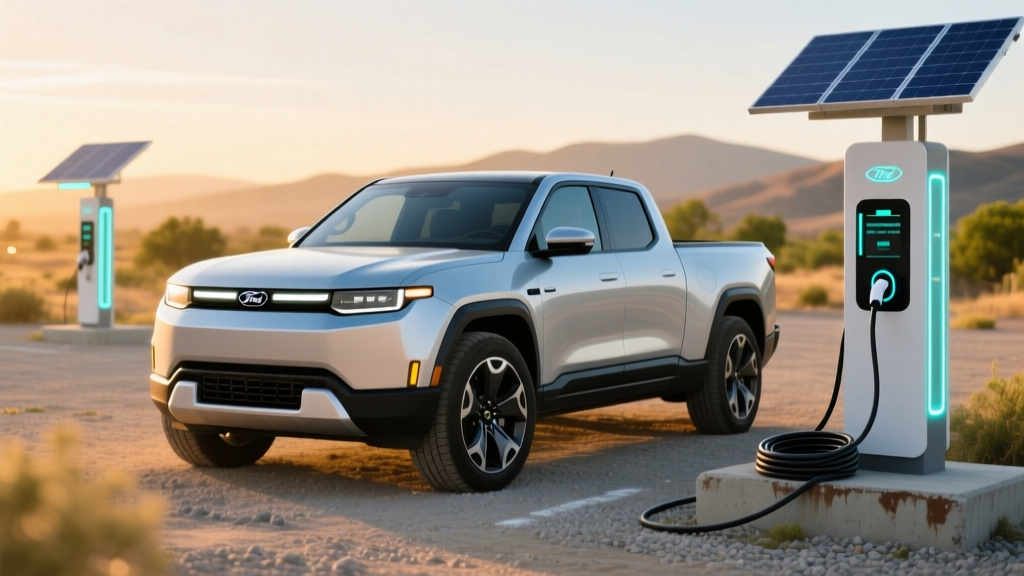
The short answer: The cheapest new electric pickup truck you can buy in 2026 is the Ford Maverick EV, starting around $38,000 before incentives. With the federal §30D tax credit (up to $7,500, subject to income, MSRP, and battery-sourcing rules), effective prices can drop near $30,500. However, "cheap" in the EV truck segment still means $35,000–$50,000 out the door. If you need serious towing or live in a charging desert, a gas or hybrid truck may still cost less to own over five years.
What Counts as a Cheap Electric Pickup Truck in 2026?
The electric truck market has matured since the Ford F-150 Lightning and Rivian R1T launched in 2022, but "affordable" remains relative. Here's the current landscape of budget-oriented electric pickups available or orderable in the US:
| Model | Base MSRP | EPA Range | Battery (kWh) | Peak DC Charge | 0-60 mph | Towing (lbs) |
|---|---|---|---|---|---|---|
| Ford Maverick EV (FWD) | $38,495 | 250 mi | 74 kWh (NMC) | 150 kW | 7.8 sec | 2,000 |
| Ford F-150 Lightning (Std Range) | $54,995 | 240 mi | 98 kWh (NMC) | 150 kW | 4.0 sec | 7,700 |
| Chevrolet Silverado EV (Work Truck) | $52,300 | 280 mi | 100 kWh (NMC) | 200 kW | 5.5 sec | 8,000 |
| Rivian R1T (Dual-Motor Std) | $69,900 | 270 mi | 95 kWh (NMC) | 200 kW | 4.5 sec | 11,000 |
| Tesla Cybertruck (RWD) | $60,990 | 250 mi | 100 kWh (NMC est.) | 250 kW | 6.5 sec | 7,500 |
The Maverick EV is the only electric truck that crosses below $40,000, and it's a compact unibody pickup — think Subaru Baja successor, not a half-ton workhorse. If you need full-size capability, the F-150 Lightning Standard Range remains the entry point, but you're spending $15,000+ more.
Electric Truck vs Gas Truck: 5-Year Cost Breakdown
Upfront price is only half the equation. Let's compare the cheapest electric option (Maverick EV FWD) against its closest gas sibling (Maverick Hybrid FWD) and a conventional gas truck (Maverick 2.0L EcoBoost FWD) over five years and 75,000 miles.
| Cost Factor | Maverick EV (FWD) | Maverick Hybrid (FWD) | Maverick Gas (2.0T) |
|---|---|---|---|
| Base MSRP | $38,495 | $28,995 | $26,495 |
| Federal Tax Credit (§30D) | −$7,500* | $0 | $0 |
| Effective Purchase Price | $30,995 | $28,995 | $26,495 |
| Home Charging Install (L2) | $1,200–$2,500 | $0 | $0 |
| Fuel/Energy (75k mi) | $3,150** | $6,250*** | $8,750*** |
| Maintenance (5 yr) | $1,200 | $2,800 | $3,200 |
| Insurance (5 yr avg) | $9,500 | $7,800 | $7,500 |
| Estimated Depreciation | $14,000 | $10,500 | $11,200 |
| 5-Year Total Cost | $49,045–$50,345 | $46,345 | $47,145 |
* §30D credit eligibility depends on buyer AGI (≤$150k single / $300k joint), MSRP cap ($80k for trucks), and battery critical-mineral sourcing. Verify at IRS.gov and confirm with a tax professional. Point-of-sale transfer is available at participating dealers.
** Based on $0.14/kWh national average, 3.0 mi/kWh efficiency. Actual cost varies by utility rate and public-charging mix.
*** Based on $3.50/gal avg, 42 mpg combined (hybrid) / 26 mpg combined (gas). Source: fueleconomy.gov.
The EV wins on energy and maintenance but loses ground on insurance premiums (EVs typically cost 15–25% more to insure) and steeper depreciation. Over five years, the Maverick EV roughly breaks even with the hybrid — and only pulls ahead if you drive more than 15,000 miles annually or have access to cheap overnight charging.
Real-World Range: What the EPA Sticker Doesn't Tell You
The Maverick EV's EPA rating of 250 miles assumes moderate temperatures, mixed driving, and no payload. Real-world conditions compress that number significantly:
EPA Range: 250 miles
Highway (70 mph, 75°F): ~210–225 miles
Cold Weather (20°F, highway): ~155–175 miles (30–40% loss)
With 1,000-lb payload: ~185–200 miles
Towing 1,500-lb trailer: ~120–140 miles
This is physics, not a flaw. Batteries lose efficiency in cold weather because lithium-ion cells have higher internal resistance at low temperatures, and cabin heating draws 2–5 kW continuously. Towing is especially brutal on range because of aerodynamic drag — a boxy trailer at 65 mph can double your energy consumption per mile.
If your daily commute is under 60 miles round-trip and you can charge at home, range is a non-issue. But if you regularly tow a boat to a lake 100 miles away, you'll need to plan DC fast-charging stops or reconsider.
Charging Reality: Speeds, Costs, and Infrastructure
Charging speed is measured in kilowatts (kW) — the rate of energy delivery — while battery capacity is measured in kilowatt-hours (kWh) — the total energy stored. Confusing these two is the most common EV mistake. The Maverick EV's 150 kW peak DC charge rate means it can theoretically accept 150 kW of power, but only briefly.
| Charging Level | Power (kW) | Miles Added/Hour | Typical Use Case | Cost per Full Charge |
|---|---|---|---|---|
| Level 1 (120V outlet) | 1.4 kW | ~4 mi/hr | Overnight top-up | ~$3.50 |
| Level 2 (240V, 48A home) | 11.5 kW | ~34 mi/hr | Daily home charging | ~$10.50 |
| DC Fast (150 kW peak) | 150 kW → ~80 avg | ~240 mi/hr (peak) | Road trips | ~$22–$30 |
The Maverick EV's 10–80% DC fast charge takes approximately 28–32 minutes on a 150+ kW station. However, the charge curve tapers sharply above 80% State of Charge (SoC) to protect battery longevity — going from 80% to 100% can take nearly as long as 10% to 80%. For road trips, plan stops at 80% and keep moving.
Home Level 2 charging requires a 240V circuit (like a dryer outlet) and typically costs $1,200–$2,500 installed by a licensed electrician, depending on your panel capacity and run distance. If your home has a 100-amp panel that's already near capacity, a $2,000–$4,000 panel upgrade may be necessary — a cost many first-time EV buyers overlook.
Federal Tax Credit: What You Actually Qualify For
The §30D Clean Vehicle Credit can reduce your federal tax liability by up to $7,500, but it's far from automatic. Here's the eligibility checklist for 2026:
- MSRP cap: Truck must be priced ≤$80,000 (includes vans, SUVs, and pickups)
- Buyer income cap: Modified AGI ≤$150,000 (single) or $300,000 (married filing jointly)
- Battery sourcing: At least 80% of critical minerals must be sourced from the US or FTA-partner countries; 100% of battery components must be manufactured or assembled in North America (2026 threshold)
- Assembly: Vehicle must undergo final assembly in North America
- Point-of-sale transfer: You can transfer the credit to the dealer at purchase for an immediate price reduction, even if you have no tax liability
The Maverick EV qualifies for the full $7,500 as of early 2026, but the F-150 Lightning and Silverado EV face partial or zero credit depending on battery-sourcing compliance, which shifts as supply chains evolve. Always verify current eligibility on fueleconomy.gov before signing a purchase agreement.
Common Misconceptions About Cheap Electric Trucks
| Myth | Fact |
|---|---|
| "EV trucks can't tow anything" | The F-150 Lightning tows 7,700 lbs (Std Range) and 10,000 lbs (Ext Range). But towing cuts range 40–50%. |
| "The battery will need replacing in 5 years" | Ford, Chevy, and Rivian warranty their batteries for 8 years / 100,000 miles with a ≥70% capacity retention threshold. Real-world degradation data from older EVs shows ~10–15% loss at 150,000 miles. |
| "Charging takes too long for road trips" | A 10–80% DC fast charge takes 25–35 minutes — about the time for a rest stop. The real bottleneck is charger availability in rural areas. |
| "Electric trucks are worse in winter" | Range drops 25–40% in sub-freezing temps, but EVs start instantly, don't need warm-up idling, and can precondition the cabin while plugged in — using grid power instead of battery. |
| "I need a Tesla to use Superchargers" | Since 2024, Ford and other non-Tesla EVs can use Tesla Superchargers (NACS adapter required). The CCS-to-NACS transition is nearly complete across major automakers. |
Decision Framework: Should You Buy a Cheap Electric Pickup?
Buy the Maverick EV (or similar compact EV truck) if:
- Your daily driving is under 80 miles round-trip
- You have access to Level 2 home charging (garage or driveway with 240V)
- You rarely tow more than 1,500 lbs or haul heavy payloads
- You qualify for the §30D tax credit (check income and sourcing rules)
- You live in a moderate or warm climate (less cold-weather range penalty)
- You value low running costs and minimal maintenance over maximum capability
Stick with a gas or hybrid truck if:
- You regularly tow over 3,000 lbs or drive 200+ miles between stops
- You live in an apartment or street-park without charging access
- Your area has limited DC fast-charging infrastructure (check PlugShare or A Better Routeplanner)
- You need a full-size bed and 6,000+ lb towing (F-150 Lightning costs $15K+ more)
- You drive in extreme cold (below 10°F) for much of the winter
- Your total budget is under $30,000 — a used gas Maverick or Ranger may be smarter
Frequently Asked Questions
What's the cheapest electric pickup truck available in 2026?
The Ford Maverick EV FWD starts at $38,495. After the $7,500 federal tax credit (if eligible), the effective price drops to approximately $30,995 — making it the most affordable new electric truck on the market. No other electric pickup currently undercuts $50,000.
How does the Maverick EV compare to a gas Maverick on cost?
Over five years and 75,000 miles, total ownership costs are within $2,000–$4,000 of each other. The EV saves roughly $5,600 in fuel and maintenance but pays back $2,000+ more in insurance and steeper depreciation. The hybrid Maverick (42 mpg combined) is often the most cost-effective option overall.
Can I charge an electric truck on a regular household outlet?
Yes, but slowly. A standard 120V Level 1 outlet adds about 4 miles of range per hour — roughly 40–50 miles overnight. That works for light daily use but won't replenish a depleted battery in reasonable time. A 240V Level 2 home charger ($1,200–$2,500 installed) adds ~34 miles per hour and is strongly recommended.
What happens if the battery degrades past the warranty?
Battery replacement for a compact EV truck currently runs $12,000–$18,000 out of warranty. However, real-world data from older EVs (Nissan Leaf, early Model S) shows most batteries retain 80–90% capacity at 150,000 miles with proper care — meaning avoiding frequent 100% charges, minimizing DC fast-charging, and keeping the battery between 20–80% SoC for daily use.
Are electric trucks good for towing?
They're capable but range-limited. The F-150 Lightning tows up to 10,000 lbs, but expect range to drop from 320 miles (Ext Range EPA) to approximately 140–170 miles while towing at highway speed. For short tows around town, an EV truck excels — instant torque, no transmission shifting, and regenerative braking on descents. For long-distance towing, gas or diesel remains more practical in 2026.