If you want to charge an electric car at home, you have two practical options: plug into a standard 120V outlet (Level 1) for slow overnight top-ups, or install a 240V Level 2 charger for significantly faster charging. Level 1 adds roughly 3–5 miles of range per hour — enough for commuters driving under 40 miles daily. Level 2 delivers 25–45 miles per hour of charging, fully replenishing most EV batteries overnight. Expect to pay $0 for Level 1 (using the car's included cord) and $500–$2,500 for a Level 2 setup including equipment and electrician labor. For most EV owners, Level 2 is the standard because it keeps charging effortless and preserves battery health with proper thermal management.
The Quick Answer: How Home EV Charging Actually Works
Level 1 (120V): Plugs into any standard household outlet. Delivers 1.2–1.9 kW. Adds 3–5 miles of range per hour. Full charge of a 75 kWh battery takes 40–60 hours. Cost: $0 if your car includes a cord.
Level 2 (240V): Requires a dedicated circuit and hardwired or NEMA 14-50 outlet installation by a licensed electrician. Delivers 7.2–19.2 kW. Adds 25–45+ miles of range per hour. Full charge of a 75 kWh battery takes 4–10 hours. Cost: $500–$2,500 installed.
Bottom line: If your daily driving exceeds 40 miles or you want same-day turnaround, Level 2 is the realistic choice. Level 1 works as a supplemental or low-budget option for short commutes.
Home charging is where the electric vehicle ownership experience diverges most sharply from gasoline. Instead of weekly stops at a fuel station, you start each morning with a full or near-full battery — provided you have reliable access to a charging point. According to the U.S. Department of Energy, over 80% of EV charging happens at home, making it the single most important factor in daily EV convenience.
Level 1 vs. Level 2: What You Need and What It Costs
Before comparing hardware, it's critical to understand the difference between kW (kilowatts) and kWh (kilowatt-hours). kW measures the rate of power delivery — how fast energy flows into your car. kWh measures the total energy your battery stores — like the size of a gas tank. A 7.2 kW Level 2 charger delivers 7.2 kWh of energy per hour into your battery.
| Factor | Level 1 (120V) | Level 2 (240V) |
|---|---|---|
| Power delivery | 1.2–1.9 kW | 7.2–19.2 kW |
| Miles of range per hour | 3–5 mi/hr | 25–45+ mi/hr |
| Time to charge 75 kWh battery (10–100%) | 40–60 hours | 4–10 hours |
| Equipment cost | $0 (included cord) | $300–$700 (charger unit) |
| Electrical work required | None | Dedicated 40–80A circuit, panel upgrade possible |
| Installation cost (electrician + permit) | $0 | $300–$1,800+ |
| Total setup cost | $0 | $500–$2,500+ |
| Best for | Under 40 mi/day, budget-conscious | 40+ mi/day, fast turnaround, battery longevity |
The Panel-Upgrade Gotcha
Most homes built after 1990 have a 200-amp electrical panel, which can typically support a 40–50 amp Level 2 circuit without issue. However, older homes with 100-amp panels or those already running high-draw appliances (electric range, dryer, HVAC) may need a panel upgrade to 200 amps, which adds $1,500–$3,500 to the project. Always have a licensed electrician perform a load calculation before committing to a charger purchase.
Level 2 Charger Hardware Picks (2025–2026)
Popular, well-reviewed Level 2 units include the ChargePoint Home Flex (up to 50A, ~$550), Emporia Level 2 EV Charger (up to 48A, ~$400), and the Wallbox Pulsar Plus (up to 48A, ~$650). Most offer Wi-Fi connectivity for scheduling off-peak charging, which can significantly reduce electricity costs on time-of-use utility plans.
Real Costs: Charging an EV at Home vs. Fueling a Gas Car
The financial case for home charging rests on the per-mile energy cost, which is almost always lower than gasoline — though the gap varies by your local electricity rate and the fuel economy of the gas car you'd otherwise drive.
| Metric | EV (Home Charging) | Gas Car (30 MPG Combined) | Hybrid (50 MPG Combined) |
|---|---|---|---|
| Average energy/fuel price | $0.16/kWh (national avg.) | $3.30/gallon | $3.30/gallon |
| Energy used per 100 miles | 30 kWh (typical midsize EV) | 3.33 gallons | 2.0 gallons |
| Cost per 100 miles | $4.80 | $11.00 | $6.60 |
| Cost per mile | $0.048 | $0.11 | $0.066 |
| Annual cost (12,000 mi/yr) | $576 | $1,320 | $792 |
| 5-year fuel/energy cost | $2,880 | $6,600 | $3,960 |
Sources: fueleconomy.gov, EIA average retail electricity rate ($0.16/kWh residential, 2025). Gas price reflects 2025 national average per EIA. Your local rates may differ significantly.
Over five years and 60,000 miles, the EV charged at home saves roughly $3,720 compared to a 30 MPG gas car and about $1,080 compared to a 50 MPG hybrid — purely on energy costs. These savings widen in states with lower electricity rates (Louisiana, Idaho) and narrow in high-cost states (California, Hawaii) unless you charge during off-peak hours on a time-of-use plan.
Time-of-Use Rates: The Hidden Savings Lever
Many utilities offer time-of-use (TOU) plans where electricity drops to $0.08–$0.12/kWh overnight (typically 9 PM–6 AM) and spikes to $0.25–$0.40/kWh during peak afternoon hours. A Level 2 charger with scheduled charging lets you exploit this automatically — plugging in at 6 PM but not drawing power until 10 PM. On a TOU plan, your effective home charging cost can drop to $0.025–$0.036 per mile, widening the gap against gas substantially.
Total Ownership Cost: EV vs. Gas vs. Hybrid
Energy savings alone don't tell the full story. A first-time EV buyer should weigh the complete ownership picture: purchase price, incentives, maintenance, insurance, and depreciation.
| Cost Category (5-Year) | Midsize EV (e.g., Hyundai Ioniq 5) | Midsize Gas (e.g., Toyota Camry) | Midsize Hybrid (e.g., Camry Hybrid) |
|---|---|---|---|
| Base MSRP | $42,600 | $28,400 | $30,400 |
| Federal tax credit (§30D) | Up to $7,500 (see eligibility) | $0 | $0 |
| Effective purchase price | ~$35,100 | $28,400 | $30,400 |
| Energy/fuel (12K mi/yr) | $2,880 | $6,600 | $3,960 |
| Maintenance (5 yr) | ~$1,800 | ~$3,500 | ~$3,200 |
| Insurance (5 yr avg.) | ~$9,500 | ~$7,200 | ~$7,500 |
| Home charger install | $1,200 (typical Level 2) | $0 | $0 |
| Estimated 5-year total | ~$50,480 | ~$45,700 | ~$45,060 |
Key observations from this comparison:
- Maintenance savings are real. EVs eliminate oil changes, spark plugs, timing belts, and most brake wear (regenerative braking extends pad life to 100,000+ miles in many cases). Expect to spend roughly half on maintenance versus a gas car.
- Insurance costs more for EVs. Premiums run 15–25% higher on average due to higher repair costs and battery replacement risk. Always get quotes before purchasing.
- The tax credit is not guaranteed. Under current IRS §30D rules, the $7,500 credit requires the vehicle to meet critical-mineral and battery-component sourcing requirements, the buyer's AGI must not exceed $150K (single) or $300K (joint), and the vehicle MSRP must be under $55,000 (cars) or $80,000 (SUVs/trucks). Credits can now be transferred to the dealer at point of sale as an upfront discount.
- The gap closes with the credit. When the full $7,500 credit applies, the EV's 5-year total cost drops to roughly $50,480 — still higher than a gas Camry, but the gap narrows every year as gas prices fluctuate and electricity remains stable.
Real-World Considerations for Home Charging
Do You Actually Have Home Charging Access?
This is the make-or-break question. Home charging assumes you have a garage, carport, or driveway with access to an electrical outlet or the ability to run a dedicated 240V circuit. If you live in an apartment, condo, or street-park, home charging becomes significantly harder.
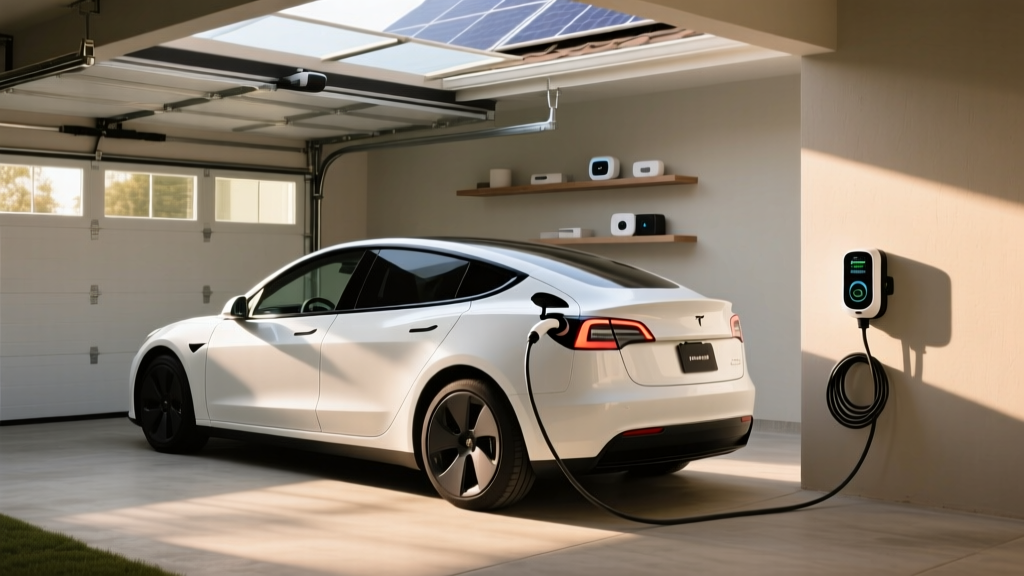
Single-family homeowners with a garage or driveway: You're in the ideal scenario. A licensed electrician can typically install a NEMA 14-50 outlet or hardwire a Level 2 charger in 2–4 hours.
Condo/apartment dwellers: Many states now have "right to charge" laws (California, Colorado, Florida, and others) that prevent HOAs from unreasonably blocking charger installation, but shared electrical infrastructure complicates things. Talk to your property manager early and investigate whether your building has or plans EV-ready parking.
Street parkers: Without dedicated off-street parking, home charging is impractical. You'll rely on workplace charging, public Level 2 stations, and DC fast chargers. This is viable for some but adds friction and cost compared to home-based charging.
Cold-Weather Charging Realities
Lithium-ion batteries charge slower and lose range in cold temperatures. In sub-freezing climates, expect 20–30% range reduction in winter and slower Level 2 charge acceptance until the battery warms. A Level 2 charger with scheduled preconditioning (heating the battery while still plugged in) mitigates this — you leave home with a warm battery and full range even on 15°F mornings. This is a major practical advantage of Level 2 over Level 1, which may not provide enough energy to both charge and precondition simultaneously.
Driving Patterns That Determine Your Setup
If your daily round-trip commute is under 40 miles → Level 1 is sufficient. You'll recover your daily driving in 8–12 hours of overnight charging. Save the installation cost.
If your daily driving is 40–80 miles → Level 2 is strongly recommended. Level 1 will technically work but leaves little buffer for unexpected trips or cold-weather losses.
If your daily driving exceeds 80 miles → Level 2 is essential. You need to recover 80+ miles overnight, which only a 240V circuit can reliably deliver.
If you take regular road trips (200+ miles) → Level 2 at home plus familiarity with DC fast-charging networks (Tesla Supercharger, Electrify America, EVgo) along your routes. Home charging handles daily use; fast chargers handle the long haul.
If you can't install a home charger → Verify that workplace charging or reliable public Level 2 stations exist within your routine before buying an EV. Without predictable access, EV ownership becomes significantly less convenient.
Common Misconceptions About Home EV Charging
| Myth | Fact |
|---|---|
| "You need a special charger that comes with the car." | Most EVs include a dual-voltage mobile cord that works on 120V and 240V (with the right adapter/outlet). Dedicated wall units are optional upgrades. |
| "Home charging will spike my electric bill massively." | Adding 30 kWh/day (enough for ~100 miles of driving) costs about $4.80 at the national average rate. That's $144/month for 3,000 miles — far less than the gas equivalent. |
| "You need a Tesla to charge at home." | Every EV charges at home on standard J1772 (Level 1/2). Tesla's NACS connector is now being adopted industry-wide, but adapters are available and new vehicles increasingly ship with NACS ports natively. |
| "Level 1 charging damages the battery." | Level 1 is slow but safe. In fact, slower charging generates less heat and may slightly benefit long-term battery health. The downside is convenience, not damage. |
| "I need a 200-amp panel upgrade for Level 2." | Many 200-amp panels can support a 40–50 amp EV circuit without upgrades. Only older or heavily loaded panels typically need replacement. An electrician's load calculation determines this. |
| "Charging to 100% every night is best." | For NMC batteries, daily charging to 80% prolongs battery life. LFP batteries tolerate daily 100% charges better. Set your car's charge limit to 80% for daily use and 100% only before long trips. Check your owner's manual for chemistry-specific guidance. |
Frequently Asked Questions
Can I install a Level 2 charger myself?
Technically, a competent DIYer can wire a NEMA 14-50 outlet, but most jurisdictions require a permit and inspection for new 240V circuits. Improper installation creates fire risk and may void your homeowner's insurance. Hiring a licensed electrician (cost: $300–$1,800 depending on run length and panel access) is the standard recommendation.
How much does it cost to charge an EV at home per month?
At the national average electricity rate of $0.16/kWh and a typical efficiency of 3 miles per kWh, driving 1,000 miles per month costs roughly $53 in electricity. Compare that to about $110 in gasoline for a 30 MPG car at $3.30/gallon. On a time-of-use plan with off-peak rates, the EV cost drops to $27–$40/month.
Does home charging count toward the federal tax credit?
The federal §30D credit applies to the vehicle, not the charger. However, a separate §30C Alternative Fuel Vehicle Refueling Property Credit offers up to $1,000 (30% of cost, capped) for home charger installation, subject to census-tract eligibility requirements. Check IRS guidance on §30C for current qualification maps.
What if my home has a 100-amp electrical panel?
A 100-amp panel can sometimes support a lower-amperage Level 2 charger (16–24 amp, delivering 3.8–5.8 kW) without an upgrade, especially if you have gas appliances rather than electric. For a full-power 40–48 amp charger, a panel upgrade to 200 amps will likely be needed at a cost of $1,500–$3,500. An electrician's load calculation will give you a definitive answer.
Is it safe to charge an EV in the rain or in an unsheltered driveway?
Yes. EV chargers and vehicle inlets are designed and rated for outdoor use (typically NEMA 4 or IP65 rated). Charging in rain, snow, or cold is standard practice. The connector and vehicle communicate before any current flows, and ground-fault protection is built in. That said, a weatherproof cover or simple carport extends equipment life.
Should I get a hardwired charger or a plug-in (NEMA 14-50) setup?
Hardwired chargers can deliver higher amperage (up to 48–80A continuous) because they don't require the 80% derating that plug-in circuits do per NEC rules. A NEMA 14-50 outlet on a 50-amp breaker delivers a maximum of 40A continuous (9.6 kW). Hardwiring also eliminates a potential failure point (the outlet itself). If you want maximum charge speed or plan to stay in your home long-term, hardwire. If you want portability or may move, a 14-50 outlet is more flexible.
Bottom Line: Is Home Charging Right for Your EV Purchase?
Charging an electric car at home is the defining convenience advantage of EV ownership — and the economics work decisively in your favor if you have off-street parking and a compatible electrical setup. A Level 2 installation running $1,000–$1,500 typically pays for itself within 2–4 years through fuel savings alone, depending on your mileage and local rates.
Before committing to an EV purchase, verify three things: (1) you have reliable access to a charging location at home or work, (2) your electrical panel can support the circuit you need, and (3) your daily driving pattern aligns with the range and charging speed your setup provides. If all three check out, home charging transforms EV ownership from a logistical challenge into the most convenient car-owning experience available — you never visit a gas station again for daily driving, and you start every morning with a full battery.