Quick Verdict: The Value King Still Has a Charging Achilles' Heel
The Chevrolet Bolt EV and its longer-wheelbase sibling, the Bolt EUV, remain the most affordable long-range electric vehicles on the US market. With an EPA-estimated 259 miles (EV) and 247 miles (EUV) of range, a starting MSRP under $27,000, and eligibility for the full $7,500 federal tax credit, the Bolt punches far above its price class. But if you're researching how to charge the Chevy Bolt efficiently — especially on road trips — you need to understand one critical limitation: its DC fast-charging speed peaks at just 55 kW, making it one of the slowest-charging modern EVs at public fast chargers.
For daily commuting and home charging, the Bolt is outstanding. For cross-country road trips requiring multiple DC fast stops, it demands patience. Here's every number you need to make an informed decision.
2026 Chevy Bolt EV & EUV: Core Specifications
| Spec | Bolt EV (2LT) | Bolt EUV (2LT) |
|---|---|---|
| EPA Range | 259 miles | 247 miles |
| Battery (usable) | 65 kWh (NMC) | 65 kWh (NMC) |
| Efficiency | 120 MPGe / 28 kWh/100mi | 115 MPGe / 29 kWh/100mi |
| Motor / Drivetrain | 200 hp / FWD | 200 hp / FWD |
| 0–60 mph | ~6.5 sec | ~7.0 sec |
| Max DC Fast Charge | 55 kW (CCS) | 55 kW (CCS) |
| 10–80% DC Time | ~55 minutes | ~55 minutes |
| Level 2 AC Charge Rate | 11.5 kW (48A) | 11.5 kW (48A) |
| Cargo Volume | 16.3 cu ft (57.0 folded) | 16.3 cu ft (57.0 folded) |
| Rear Legroom | 36.0 in | 39.1 in |
| Base MSRP | $26,500 | $27,800 |
| Battery Warranty | 8 yr / 100,000 mi | 8 yr / 100,000 mi |
Real-World Range: What the EPA Sticker Doesn't Tell You
The Bolt's 65 kWh NMC (nickel-manganese-cobalt) battery pack delivers strong city efficiency thanks to aggressive regenerative braking — Chevy's one-pedal driving mode recovers substantial energy in stop-and-go traffic, which is why the Bolt's city MPGe actually exceeds its highway figure. On fueleconomy.gov, the Bolt EV posts 131 MPGe city and 109 MPGe highway.
For context, a 40-mile round-trip commute with home charging means most Bolt owners will charge once or twice a week, rarely dipping below 50% State of Charge (SoC). The range is genuinely sufficient for the vast majority of daily driving — it's the road-trip charging experience where limitations emerge.
Charging the Chevy Bolt: DC Fast, Level 2, and Level 1 Speeds
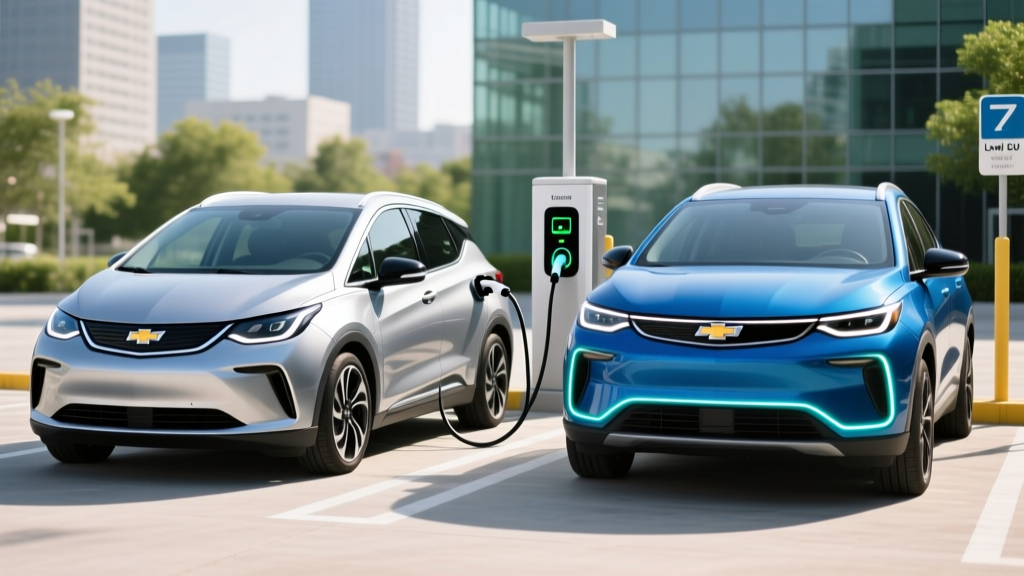
Understanding how to charge the Chevy Bolt effectively requires separating three distinct scenarios: public DC fast charging, home Level 2 charging, and emergency Level 1 trickle charging. The Bolt uses the CCS1 (Combined Charging System) connector standard, though GM has committed to transitioning future models to the NACS (Tesla) connector. As of the 2026 model year, the Bolt retains CCS, meaning you can use Electrify America, EVgo, and ChargePoint DC fast stations natively — and access Tesla Superchargers using GM's approved NACS adapter.
| Charging Level | Power (kW) | Miles Added per Hour | Full Charge Time |
|---|---|---|---|
| Level 1 (120V household) | ~1.4 kW | ~4 miles/hr | ~65 hours (0–100%) |
| Level 2 (240V, 48A home) | 11.5 kW | ~39 miles/hr | ~7 hours (0–100%) |
| DC Fast Charge (CCS) | 55 kW peak | ~180 miles/hr (peak) | ~55 min (10–80%) |
The 55 kW Problem on Road Trips
Here's where the Bolt's charging story gets complicated. At 55 kW peak, the Bolt charges at roughly one-quarter the speed of a Hyundai Ioniq 5 (which peaks at 240 kW on 800V architecture) or a Tesla Model 3 (which peaks at 250 kW). On a road trip requiring two DC fast stops, the Bolt adds roughly 30 minutes of charge time per stop compared to competitors.
The Bolt's charge curve is relatively flat between 10% and 50% SoC, holding close to its 55 kW peak. Above 60%, it tapers gradually to around 40 kW, and above 80%, it drops further to roughly 20–25 kW. This means the 10–80% charge takes approximately 55 minutes — functional but noticeably slower than the 18–25 minute stops typical of modern 150+ kW-capable EVs.
Practical road-trip strategy: Plan stops at locations with amenities (restaurants, shopping) where a 45–60 minute dwell time feels natural. Use apps like PlugShare or A Better Routeplanner to pre-plan. The Bolt's range is long enough that you'll typically stop every 180–200 miles on the highway anyway.
Home Level 2 Charging: Where the Bolt Excels
The Bolt's 11.5 kW onboard charger is a genuine strength. Many budget EVs ship with 7.2 kW or even 6.6 kW onboard chargers, meaning the Bolt charges at home faster than competitors like the Nissan Leaf or base Hyundai Kona Electric. With a 48-amp Level 2 home charger on a 240V/60A circuit, you'll add approximately 39 miles of range per hour — easily replenishing a full day's driving overnight.
For home charging setup, expect to invest $500–$800 in a quality Level 2 EVSE (ChargePoint Home Flex, Emporia Level 2, or Grizzl-E are proven options) plus $500–$2,000 for professional electrician installation depending on your panel capacity and run distance. If your electrical panel is at capacity, a panel upgrade can add $1,500–$3,000.
Pricing, Trims, and Federal Tax Credit Eligibility
| Trim | MSRP | Est. §30D Credit | Effective Price |
|---|---|---|---|
| Bolt EV 2LT | $26,500 | $7,500* | ~$19,000 |
| Bolt EUV 2LT | $27,800 | $7,500* | ~$20,300 |
| Bolt EUV Premier | $32,400 | $7,500* | ~$24,900 |
*Federal tax credit eligibility under IRS §30D is subject to the following requirements:
- MSRP cap: Vehicle must have an MSRP below $55,000 (sedans/hatchbacks) — the Bolt qualifies easily.
- Buyer income cap: Modified AGI must not exceed $150,000 (single), $225,000 (head of household), or $300,000 (married filing jointly).
- Battery sourcing: Critical minerals and battery components must meet phased-in domestic-content thresholds that tighten annually. Verify current-year compliance on the IRS qualified vehicles list before purchasing.
- Point-of-sale transfer: As of 2024+, you can transfer the credit to the dealer at purchase, reducing your out-of-pocket cost immediately rather than waiting for tax filing.
The Bolt's sub-$27,000 MSRP combined with the $7,500 credit makes it the most affordable 250+ mile EV in America by a significant margin. No competitor comes close to the ~$19,000 effective price point. Always confirm eligibility with a tax professional and check the fueleconomy.gov tax credit database for current model-year qualification status.
Performance, Tech, and Daily Livability
The Bolt's single front-mounted motor produces 200 horsepower and 266 lb-ft of torque, delivered to the front wheels. The 0–60 mph time of approximately 6.5 seconds (EV) is genuinely quick for the price class — quicker than most gas-powered compact hatchbacks. Instant electric torque makes the Bolt feel responsive in city merging and passing situations.
However, the FWD-only drivetrain means no all-wheel-drive option. For buyers in heavy snow regions, this is a notable limitation compared to the Tesla Model 3 (available AWD) or Hyundai Ioniq 5 (available AWD). The Bolt's relatively narrow all-season tires can struggle for traction in aggressive winter conditions, though the low center of gravity from the floor-mounted battery aids stability.
Interior and Cargo
The Bolt EV offers 16.3 cubic feet of cargo space behind the rear seats, expanding to 57.0 cubic feet with the rear seats folded. The Bolt EUV shares these cargo figures but adds 3.1 inches of rear legroom (39.1 inches vs. 36.0), making it meaningfully more comfortable for adult rear passengers. Neither offers a frunk (front trunk) — the space under the hood houses conventional drivetrain components.
Infotainment and Driver Assistance
A 10.2-inch touchscreen with wireless Apple CarPlay and Android Auto comes standard. The interface is responsive and straightforward, though it lacks the visual polish of Tesla's or Hyundai's systems. Chevy's Super Cruise hands-free driving system is not available on the Bolt — you get standard Chevy Safety Assist 2.0, which includes automatic emergency braking, lane-keeping assist, adaptive cruise control, and following-distance indicator. These are SAE Level 1 driver-assist features, meaning the driver must remain fully engaged at all times.
Who Should Buy the Chevy Bolt — and Who Shouldn't
- Budget-conscious buyers wanting maximum range per dollar
- Daily commuters with home charging access (sub-80-mile round trips)
- Urban and suburban drivers who rarely take long road trips
- Second-car EV adopters adding an electric commuter to a multi-car household
- Buyers who qualify for the full $7,500 federal tax credit
- Frequent road-trippers who need fast DC charging (look at Ioniq 5, Model 3, or EV6)
- Buyers in heavy-snow regions needing AWD
- Those who prioritize premium interior materials or advanced driver-assist tech
- Drivers who regularly carry four adults (EUV rear space helps but is still compact)
Competitive Comparison: Bolt vs. the Alternatives
| Spec | Chevy Bolt EV | Hyundai Kona Electric | Tesla Model 3 RWD | Nissan Leaf SV+ |
|---|---|---|---|---|
| Base MSRP | $26,500 | $32,975 | $38,990 | $36,190 |
| EPA Range | 259 mi | 261 mi | 272 mi | 212 mi |
| DC Fast Charge | 55 kW | 100 kW | 170 kW | 100 kW (CHAdeMO) |
| 10–80% DC Time | ~55 min | ~43 min | ~25 min | ~60 min |
| Federal Credit | $7,500 | $7,500* | $7,500* | $7,500* |
| Effective Price | ~$19,000 | ~$25,475 | ~$31,490 | ~$28,690 |
*Credit eligibility varies by model year, battery sourcing compliance, and buyer income. Verify on IRS.gov.
The Bolt's effective price after the tax credit is $6,000–$12,000 less than any competitor offering comparable range. The trade-off is clear: you accept 55 kW DC charging in exchange for massive upfront savings. If your driving is 95% local commuting with home charging, that trade-off is overwhelmingly worth it.
Battery Longevity and Warranty Coverage
Chevrolet backs the Bolt's 65 kWh NMC battery pack with an 8-year/100,000-mile warranty guaranteeing a minimum of 60% capacity retention. In practice, GM's NMC packs have demonstrated strong longevity — data from Bolt owners at 100,000+ miles shows typical degradation of 8–12%, meaning most packs retain 88–92% of original capacity. The Bolt's active thermal management system (liquid cooling/heating) is a key factor, as it keeps the battery in its optimal temperature range during charging and heavy use.
One note for prospective buyers: GM issued a battery recall for 2017–2019 Bolt EVs due to manufacturing defects that could cause fires at high SoC. All affected vehicles have been remediated with replacement battery modules, and 2022+ models use an updated cell design not subject to the recall. If buying used, verify recall completion via the VIN on NHTSA.gov.
Frequently Asked Questions
What is the real-world range of the Chevy Bolt?
The EPA estimates 259 miles for the Bolt EV and 247 miles for the Bolt EUV. In real-world mixed driving, expect 230–250 miles. Highway-only driving at 75 mph reduces that to roughly 210–225 miles. In freezing weather, plan for 170–200 miles of usable range.
How fast does the Chevy Bolt charge at home?
On a 240V Level 2 home charger at 48 amps, the Bolt charges at 11.5 kW, adding approximately 39 miles of range per hour. A full 0–100% charge takes roughly 7 hours — easily achievable overnight. On a standard 120V household outlet (Level 1), expect about 4 miles of range per hour.
How fast does the Chevy Bolt DC fast charge?
The Bolt peaks at 55 kW on DC fast chargers using the CCS1 connector. A 10–80% charge takes approximately 55 minutes. This is significantly slower than competitors like the Tesla Model 3 (~25 min) or Hyundai Ioniq 5 (~18 min). Plan road-trip stops accordingly.
Does the Chevy Bolt qualify for the $7,500 federal tax credit?
The Bolt EV and EUV have historically qualified for the full $7,500 federal EV tax credit under IRS §30D. Eligibility depends on battery-sourcing requirements that tighten annually, buyer income limits ($150K single / $300K married), and the vehicle's MSRP (must be under $55,000). Verify current-year qualification on the IRS qualified vehicles list and consult a tax professional before purchasing.
Is the Chevy Bolt worth buying in 2026?
For budget-focused buyers who primarily commute and charge at home, the Bolt remains the best value in electric vehicles. At roughly $19,000 after the federal credit, nothing else offers 259 miles of range at this price. The trade-offs — slow DC charging, no AWD, modest interior — are acceptable for the right use case. If you road-trip frequently or need all-weather capability, look at the Tesla Model 3, Hyundai Ioniq 5, or Chevrolet Equinox EV instead.
Can I charge the Chevy Bolt at Tesla Superchargers?
Yes, with GM's approved NACS adapter, Bolt owners can access Tesla's Supercharger network. However, the Bolt's 55 kW peak charge rate still applies — the adapter grants access to the network, but does not increase the vehicle's charging speed. Expect the same ~55-minute 10–80% times at Superchargers.