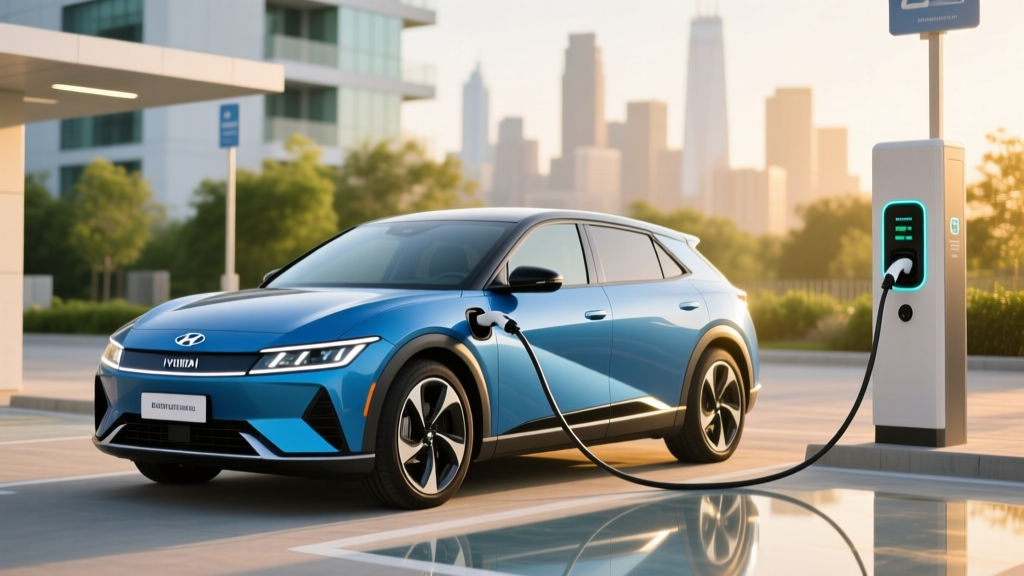
If you have been watching the used EV market, you already know the Hyundai Ioniq 5 is one of the most compelling electric crossovers built in the last five years. But buying a certified pre-owned Hyundai Ioniq 5 in 2026 presents a unique value proposition: you get Hyundai's robust CPO warranty extension, access to the Tesla Supercharger network via the native NACS port on newer models, and a vehicle with 800-volt architecture that still outpaces most rivals in charging speed. This guide covers exactly what to expect from a CPO Ioniq 5 — real-world range, charging realities, tax credit nuances for used EVs, and whether the CPO premium is worth it.
Hyundai Ioniq 5 CPO: Quick Specs at a Glance
Before we get into the ownership experience, here are the hard numbers for the most common CPO inventory you will find — the 2022–2024 model years with the Long Range battery pack.
| Spec | Value |
|---|---|
| EPA Range | 260 miles (AWD) / 303 miles (RWD) |
| Battery Capacity | 77.4 kWh usable (NMC lithium-ion) |
| Battery Chemistry | NMC (Nickel Manganese Cobalt) |
| Max DC Fast Charge | ~235 kW peak (800V architecture) |
| 10–80% DC Charge Time | ~18 minutes (optimal conditions) |
| Level 2 Home Charge Rate | 10.9 kW (adds ~37 miles/hr) |
| 0–60 mph | 4.5 seconds (AWD) / 7.2 seconds (RWD) |
| Horsepower | 320 hp (AWD) / 168 hp (RWD) |
| Drivetrain | Dual-motor AWD or single-motor RWD |
| MPGe (Combined) | 98 MPGe (AWD) / 114 MPGe (RWD) |
| Efficiency | 34 kWh/100 mi (AWD) / 30 kWh/100 mi (RWD) |
| Cargo (rear seats up) | 27.2 cu ft |
| Cargo (rear seats folded) | 59.3 cu ft |
| Rear Legroom | 39.4 inches |
| Original MSRP (2024 SEL AWD) | ~$49,850 (before incentives) |
| Typical CPO Price (2026) | $28,000–$36,000 depending on trim/miles |
| Battery/Powertrain Warranty | 10 yr / 100,000 mi (original); CPO extends to 10 yr/100k from original in-service date |
Real-World Range: What the EPA Sticker Doesn't Tell You
The EPA rates the Ioniq 5 Long Range AWD at 260 miles and the RWD at 303 miles. Those numbers come from fueleconomy.gov, and they are a reasonable baseline for mixed suburban driving in moderate temperatures. But real-world range is rarely the EPA number.
EPA Estimate: 260 mi (AWD) / 303 mi (RWD)
Highway (70–80 mph, moderate weather): ~220–240 mi (AWD) / ~260–280 mi (RWD)
Cold Weather (below 32°F, highway): ~170–200 mi (AWD) / ~210–240 mi (RWD)
City/Stop-and-Go (regen-heavy): ~270–290 mi (AWD) / ~310–330 mi (RWD)
Range drops 15–30% in freezing temperatures due to battery resistance and cabin heating demands. The Ioniq 5's heat pump (standard on most trims) helps mitigate this compared to EVs without one.
On a 300-mile road trip at sustained 75 mph in 45°F weather, expect to arrive with roughly 15–20% state of charge in the AWD model — meaning one DC fast-charge stop is mandatory. The RWD model stretches further but still benefits from a brief top-up on longer runs. The Ioniq 5's efficiency of 30–34 kWh per 100 miles is competitive with the Ford Mustang Mach-E and slightly behind the Tesla Model Y's class-leading ~28 kWh/100 mi.
800V Charging Architecture: Still a Standout Advantage
The Ioniq 5's 800-volt electrical architecture remains one of its strongest selling points on the CPO market. While most competitors in the $30,000 range use 400V systems limited to 150 kW peak charging, the Ioniq 5 can accept up to ~235 kW at a compatible DC fast charger.
| Charge Level | Power (kW) | Speed (miles added/hr) | Notes |
|---|---|---|---|
| Level 1 (120V household) | ~1.4 kW | ~5 mi/hr | Emergency/trickle only |
| Level 2 (240V home) | 10.9 kW | ~37 mi/hr | Full charge in ~7–8 hours |
| DC Fast (350 kW station) | ~235 kW peak | — | 10–80% in ~18 min |
| DC Fast (150 kW station) | ~130–150 kW | — | 10–80% in ~25–28 min |
| DC Fast (50 kW station) | 50 kW | — | 10–80% in ~60+ min |
Charging curve reality check: The Ioniq 5 peaks near 235 kW only between roughly 10–45% state of charge on a 350 kW charger. Above 55%, the rate tapers to ~150 kW, and above 80%, it drops further to ~60–80 kW to protect the NMC battery. This is normal behavior for all lithium-ion packs, but it means the advertised "18-minute" time applies to the 10–80% window, not a full charge.
NACS vs CCS on CPO models: Model years 2022–2024 shipped with CCS1 ports. Starting with the 2025 model year, Hyundai adopted the native NACS (Tesla) connector. If you are buying a 2022–2024 CPO Ioniq 5, you will use CCS at Electrify America, EVgo, and similar networks — or use a Hyundai-provided NACS adapter for Tesla Supercharger access. Hyundai began distributing CCS-to-NACS adapters to existing owners, so confirm with the CPO dealer whether the adapter is included.
Performance, Ride Quality, and Daily Driving
The dual-motor AWD Ioniq 5 produces 320 horsepower and 446 lb-ft of torque, delivering a 0–60 mph time of approximately 4.5 seconds. That is genuinely quick for a family crossover and puts it in the same ballpark as the Tesla Model Y Long Range. The single-motor RWD model at 168 hp and 7.2 seconds to 60 mph is adequate for commuting but feels notably less eager during highway merges.
Ride quality is where the Ioniq 5 differentiates from the firmer, sportier Model Y. Hyundai tuned the suspension for comfort, and the result is a compliant, quiet cruiser that absorbs potholes and expansion joints without drama. The 116.1-inch wheelbase creates a spacious cabin with 39.4 inches of rear legroom — more than the Model Y and comparable to a midsize sedan. The flat floor (thanks to the dedicated E-GMP platform) makes the rear center seat genuinely usable for a passenger, not just a penalty spot.
The 27.2 cu ft cargo area behind the rear seats is competitive for the segment, expanding to 59.3 cu ft with the 60/40 split folded. The front trunk (frunk) on AWD models is small — roughly 0.85 cu ft, enough for a charging cable bag. RWD models offer a slightly larger frunk at 2.0 cu ft since there is no front motor.
Tech, Driver Assistance, and Interior Quality
The Ioniq 5's cabin uses a dual 12.3-inch display setup — one for the instrument cluster, one for infotainment — running Hyundai's well-regarded software with wireless Apple CarPlay and Android Auto. Physical buttons for climate control (on 2023+ models) are a welcome usability improvement over the all-touch approach of some competitors.
Driver assistance (SAE Level 2): Hyundai's Highway Driving Assist 2 (HDA2) combines adaptive cruise control with lane centering and can execute lane changes when you activate the turn signal. It is a capable Level 2 system — meaning you must keep your hands on the wheel and remain fully engaged. It is not autonomous driving. HDA2 works well on divided highways but can be conservative in construction zones and may disengage on faded lane markings.
HDA2 is an SAE Level 2 driver-assistance system. It does not make the Ioniq 5 self-driving. The driver must maintain full attention, keep hands on the steering wheel, and be prepared to take over immediately. The system will issue escalating warnings and eventually bring the vehicle to a stop if it detects driver inattention.
Notable drawbacks: The Ioniq 5 lacks a rear wiper (a common complaint in rainy climates), and the panoramic camera feed can lag slightly. Early 2022 models had some reports of 12V auxiliary battery drain issues — Hyundai addressed this with software updates and an integrated 12V lithium battery in later builds, but verify the fix was applied on any CPO 2022 model you consider.
CPO Pricing, Tax Credits, and Total Cost
Certified pre-owned Ioniq 5 prices in 2026 reflect the broader used EV market correction. Here is what you can expect to pay:
| Model Year / Trim | Typical CPO Price | Original MSRP |
|---|---|---|
| 2022 SE Standard Range (RWD, 58 kWh) | $22,000–$26,000 | ~$44,000 |
| 2022 SEL/Limited AWD (Long Range) | $26,000–$32,000 | ~$49,000–$56,000 |
| 2023 SEL AWD | $28,000–$34,000 | ~$49,850 |
| 2024 SEL AWD | $32,000–$36,000 | ~$49,850 |
| 2024 Limited AWD | $34,000–$38,000 | ~$56,500 |
Federal Used EV Tax Credit (§25E)
Here is where CPO buyers need to pay close attention. The federal used EV tax credit (IRS §25E, sometimes confused with the new-vehicle §30D credit) offers up to $4,000 — calculated as 30% of the sale price, capped at $4,000 — for qualifying pre-owned electric vehicles. Key eligibility rules from irs.gov:
- Vehicle sale price must be $25,000 or less — this is a hard cap. Many CPO Ioniq 5 Long Range models exceed this threshold, making them ineligible.
- Buyer income limits: Modified adjusted gross income cannot exceed $75,000 (single), $112,500 (head of household), or $150,000 (joint filers).
- Vehicle must be at least 2 model years old — so in 2026, model year 2024 or older qualifies.
- Must be purchased from a licensed dealer (private-party sales do not qualify).
- First time the vehicle has been transferred since August 16, 2022 — critical for tracking prior ownership history.
- Battery capacity must be at least 7 kWh — all Ioniq 5 variants meet this.
Practical implication: A 2022 SE Standard Range Ioniq 5 priced at $24,500 from a dealer would qualify for the full $4,000 credit (30% of $24,500 = $7,350, capped at $4,000), bringing your effective cost to ~$20,500. But a 2023 SEL AWD at $31,000 exceeds the $25,000 sale price cap and receives no federal credit. This makes the Standard Range and lower-trim models disproportionately attractive from a tax perspective.
- ☐ Sale price ≤ $25,000 (hard cap)
- ☐ Buyer MAGI ≤ $75k (single) / $150k (joint)
- ☐ Vehicle is ≥ 2 model years old
- ☐ Purchased from licensed dealer
- ☐ First qualified transfer since 8/16/2022
- ☐ Battery ≥ 7 kWh (Ioniq 5 passes)
- ☐ Consult a tax professional for your specific situation
CPO Warranty Coverage
Hyundai's CPO program extends the original 5-year/60,000-mile new-vehicle warranty to 10 years/100,000 miles from the original in-service date. The battery and powertrain warranty also carries the 10-year/100,000-mile coverage. This is one of the strongest CPO programs in the industry and a major reason to choose CPO over a private-party used Ioniq 5. If the original car was put into service in March 2023, your CPO warranty runs through March 2033 or 100,000 miles — whichever comes first.
Ioniq 5 CPO vs. Key Competitors
The CPO EV crossover market in 2026 gives you several alternatives at similar price points. Here is how the Ioniq 5 stacks up on the metrics that matter:
| Spec | Hyundai Ioniq 5 AWD | Tesla Model Y LR AWD | Ford Mach-E ER AWD | VW ID.4 AWD Pro S |
|---|---|---|---|---|
| EPA Range | 260 mi | 304 mi | 270 mi | 249 mi |
| Battery | 77.4 kWh NMC | ~75 kWh NMC | 88 kWh NMC | 82 kWh NMC |
| Peak DC Charge | ~235 kW | ~250 kW | ~150 kW | ~170 kW |
| 10–80% DC Time | ~18 min | ~20 min | ~38 min | ~29 min |
| 0–60 mph | 4.5 sec | 4.8 sec | 5.1 sec | 5.4 sec |
| Cargo (seats up) | 27.2 cu ft | 30.2 cu ft | 29.7 cu ft | 30.3 cu ft |
| CPO Warranty | 10yr/100k mi | None (Tesla has no CPO program) | 7yr/100k mi (Gold Check) | 7yr/100k mi (CPO) |
Where the Ioniq 5 wins: Charging speed (800V architecture is unmatched at this price point), CPO warranty length, and cabin comfort. Where it loses: The Model Y offers more range and cargo space; the Mach-E and ID.4 offer more cargo volume. The Ioniq 5's 260-mile AWD range is the lowest of this group, which matters if you regularly drive 200+ miles without a stop.
Who Should Buy a CPO Hyundai Ioniq 5?
- Commuters with home Level 2 charging who want a comfortable, quiet daily driver
- Buyers who prioritize fast DC charging for occasional road trips
- Families needing spacious rear seating for car seats or tall passengers
- Value seekers who want maximum CPO warranty coverage
- Tech-forward buyers who appreciate V2L (vehicle-to-load) capability to power devices
- You regularly drive 250+ miles between charging stops (consider Model Y LR or RWD Ioniq 5)
- You need maximum cargo space for gear, dogs, or large hauls
- You live in extreme cold without a garage (range loss compounds)
- You want a native NACS port without using an adapter (look at 2025+ models)
- The $25,000 used-EV credit cap eliminates the tax benefit for your target trim
Frequently Asked Questions
What is the real-world range of a certified pre-owned Hyundai Ioniq 5?
Expect 220–240 highway miles in the AWD model and 260–280 in the RWD under moderate conditions. In freezing weather, reduce those figures by 20–30%. City driving with regenerative braking can actually exceed EPA estimates, reaching 270–290 miles in the AWD.
How fast does the CPO Ioniq 5 charge at home and on the road?
At home on a 240V Level 2 charger (10.9 kW), a full charge takes roughly 7–8 hours, adding about 37 miles of range per hour. On a 350 kW DC fast charger, the 800V architecture enables 10–80% charging in approximately 18 minutes under optimal conditions. On a 150 kW charger, expect 25–28 minutes for the same window.
Does a certified pre-owned Ioniq 5 qualify for a federal tax credit?
It may qualify for the used EV tax credit (§25E) of up to $4,000, but only if the sale price is $25,000 or less and your income falls within IRS limits ($75k single / $150k joint). Many Long Range AWD CPO models exceed the $25,000 cap. The new-vehicle §30D credit of up to $7,500 does not apply to used purchases. Always consult a tax professional and verify eligibility on irs.gov.
Is a CPO Ioniq 5 worth it versus a new 2026 model?
A 2022–2024 CPO Ioniq 5 SEL AWD at $28,000–$34,000 represents 35–45% savings versus a new 2026 Ioniq 5 at similar trim. You sacrifice the native NACS port, the latest software features, and some range (the 2025+ refresh added a slightly larger battery). But you gain the same 10yr/100k powertrain warranty through Hyundai's CPO program, making the depreciation savings hard to ignore if the spec sheet meets your needs.
What should I check before buying a CPO Ioniq 5?
Verify the battery state of health (SoH) through the dealer's diagnostic report — anything above 90% capacity retention is healthy for a 2–3 year old pack. Confirm the 12V battery fix was applied on 2022 models. Check whether the CCS-to-NACS adapter is included. Review the vehicle's charging history if available, and test DC fast charging at a station during your test drive to confirm the 800V system is functioning properly.
How does the Ioniq 5 CPO warranty compare to buying privately?
Hyundai's CPO program extends coverage to 10 years/100,000 miles from the original in-service date for both the powertrain and the EV battery. A private-party purchase inherits only whatever remains of the original warranty with no extension. Given the potential cost of EV battery replacement ($8,000–$15,000 out of warranty), the CPO premium of $1,000–$3,000 over a private sale is generally justified.