Quick Answer: What Is Caterpillar Electric Dozer Technology?
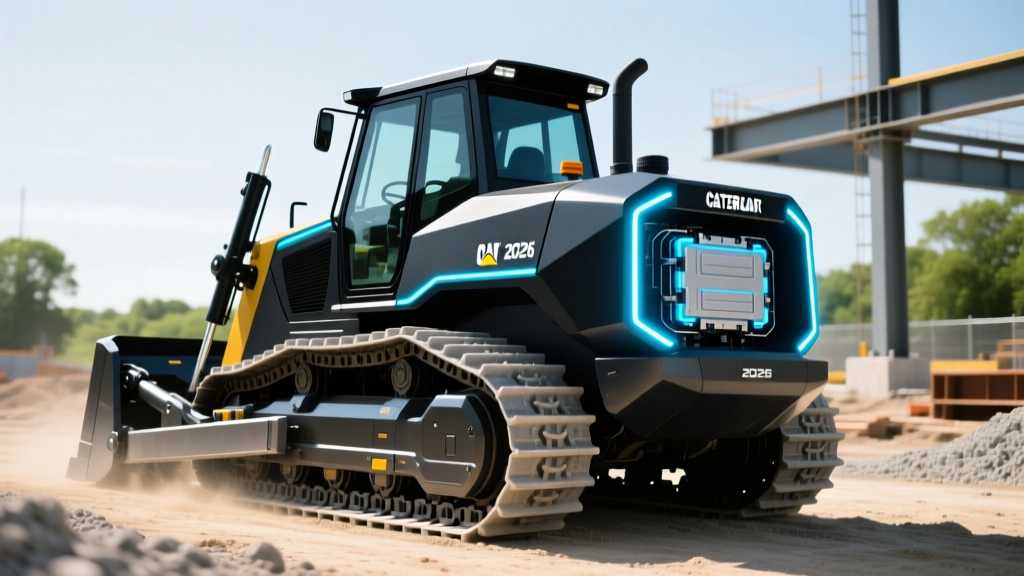
Caterpillar's electric dozer platform replaces the diesel engine with a high-voltage lithium-ion battery pack (typically 300–600 kWh usable capacity, NMC chemistry) and one or more electric traction motors delivering 200–400+ HP equivalent. As of 2026, Cat's electric dozer lineup — including models like the announced 70–100 HP-class compact electric dozers and larger prototype units — targets zero tailpipe-emission earthmoving with DC fast charging at 150–350 kW, achieving 10–80% State of Charge in roughly 30–45 minutes depending on pack size. Real-world runtime varies heavily by load profile: light grading may yield 6–8 hours per charge, while heavy blade work can cut that to 3–4 hours. Pricing for compact-class electric dozers starts in the $250,000–$400,000 range before incentives — a significant premium over comparable diesel units at $150,000–$220,000 — but fuel and maintenance savings of $15,000–$30,000 annually narrow the gap over a 5-year ownership cycle.
Caterpillar Electric Dozer Specs: Battery, Power, and Charging
Caterpillar has been developing battery-electric construction equipment since its first prototype demonstrations in 2022–2023, with commercial availability expanding through 2025 and 2026. The technology shares DNA with the broader heavy-duty EV ecosystem — high-voltage architectures, liquid-cooled battery packs, and DC fast charging — but adapted for the brutal duty cycles of earthmoving.
| Specification | Compact Electric Dozer (70–100 HP class) | Mid-Size Electric Dozer (150–200 HP class, announced) |
|---|---|---|
| Battery Capacity (usable) | ~300 kWh, NMC | ~500–600 kWh, NMC (est.) |
| Motor Output | 200–280 HP equivalent | 350–450 HP equivalent (est.) |
| Peak Torque | ~800–1,200 lb-ft | ~1,500–2,000+ lb-ft (est.) |
| DC Fast Charge Rate | 150–250 kW peak | 250–350 kW peak (est.) |
| 10–80% Charge Time | ~35–45 min | ~45–60 min (est.) |
| Level 2 Charge Rate | ~40–80 kW | ~80–120 kW (est.) |
| Runtime (mixed duty) | 4–6 hours | 4–7 hours (est.) |
| Operating Weight | ~18,000–25,000 lbs | ~35,000–50,000 lbs (est.) |
| Estimated Base Price | $250,000–$400,000 | $500,000–$700,000+ (est.) |
Key distinction — kW vs. kWh: The battery capacity is measured in kilowatt-hours (kWh), representing total energy stored — think of it as the "fuel tank size." The charge rate is measured in kilowatts (kW), representing how fast energy flows into the pack — the "pump speed." A 300 kWh battery charging at 200 kW peak won't sustain that rate for the full session; the charge curve tapers significantly above 80% State of Charge to protect cell longevity.
For site-level charging, most operations will need a dedicated Level 2 charger (40–80 kW for compact units) installed at the yard, plus access to a DC fast charger for midday top-ups on large job sites. Caterpillar has partnered with charging infrastructure providers to offer site-specific solutions, but expect electrical infrastructure upgrades — a 480V three-phase service and potentially a dedicated transformer — to add $25,000–$80,000 to your total deployment cost, according to Caterpillar's official equipment pages.
Electric Dozer vs. Diesel Dozer: Cost and Performance Comparison
The decision between an electric dozer and a conventional diesel dozer hinges on duty cycle, site infrastructure, fuel costs, and regulatory pressure. Here's how the numbers compare for a compact-class (D3/D4 equivalent) dozer running approximately 1,500 hours per year:
| Cost Factor (Annual) | Diesel Dozer | Electric Dozer | Annual Difference |
|---|---|---|---|
| Fuel/Energy | $18,000–$24,000 (diesel at ~$4.00/gal, 4–5 gal/hr) | $4,500–$9,000 (electric at ~$0.10–$0.15/kWh) | Electric saves $10,000–$18,000 |
| Engine Maintenance (oil, filters, DEF) | $3,000–$5,000 | $500–$1,000 (no engine oil, DEF, or fuel filters) | Electric saves $2,500–$4,000 |
| Drivetrain Maintenance | $2,000–$3,500 (transmission, hydraulics) | $1,500–$2,500 (simplified, fewer moving parts) | Electric saves $500–$1,500 |
| Insurance | $2,500–$4,000 | $3,000–$5,000 (higher replacement cost) | Electric costs $500–$1,000 more |
| Downtime Cost (estimated) | $3,000–$5,000 | $2,000–$3,500 (fewer failure points) | Electric saves $500–$2,000 |
| Total Annual Operating Cost | $28,500–$41,500 | $11,500–$21,000 | Electric saves $13,500–$24,500 |
Over a 5-year ownership period, operating cost savings of $67,500–$122,500 offset a significant portion of the $100,000–$200,000 purchase price premium. However, the breakeven timeline depends heavily on your local electricity rates, diesel prices, and annual utilization hours. Operations running 2,000+ hours per year in high-diesel-cost regions (California, Northeast) will breakeven faster than low-utilization operations in regions with cheap diesel.
Real-World Ownership: Charging Infrastructure, Climate, and Duty Cycle
Buying an electric dozer is not like buying an electric car. The charging infrastructure requirements are industrial-scale, and the duty cycle determines whether the battery pack can keep up with your workday.
Charging Access and Site Requirements
Most electric dozer deployments require:
- Yard-based Level 2 charging: A 480V three-phase connection with a 40–80 kW charger for overnight replenishment. Full recharge of a 300 kWh pack at 60 kW takes approximately 5 hours — adequate for overnight turnaround.
- On-site DC fast charging: For multi-shift operations or remote sites, a 150–350 kW DC fast charger enables 30–45 minute top-ups during breaks. These units cost $80,000–$200,000+ installed and require substantial electrical service.
- Mobile charging solutions: Battery-electric or diesel-generator mobile chargers exist for remote sites without grid access, though they add cost and complexity.
Climate Impact on Runtime
Battery performance in construction equipment faces the same physics as passenger EVs. In cold climates (below 20°F / -7°C), expect 15–30% runtime reduction due to increased internal resistance and energy consumed by battery thermal management systems. Caterpillar's packs use active liquid cooling/heating, which mitigates but does not eliminate cold-weather losses. In extreme heat (above 100°F / 38°C), thermal management draws additional power, reducing available runtime by 5–15%.
Duty Cycle Reality
A dozer pushing heavy clay or rock consumes significantly more energy per hour than one performing light finish grading. Caterpillar rates runtime based on mixed-duty cycles, but real-world variance is substantial:
- Light grading / spreading: 6–8 hours on a 300 kWh pack
- Mixed earthmoving: 4–6 hours
- Heavy pushing / ripping: 3–4 hours
If your operation requires 8+ hours of continuous heavy pushing, an electric dozer in the current compact class may require a midday charge stop — which is feasible with DC fast charging infrastructure but requires scheduling adjustments.
Common Misconceptions About Electric Construction Equipment
| Myth | Fact |
|---|---|
| "Electric dozers don't have enough torque for real earthmoving." | Electric motors deliver peak torque from 0 RPM. A 200 HP-class electric traction motor can produce 800–1,200 lb-ft instantly — often exceeding the torque curve of a comparable diesel at low RPM where dozing work happens. |
| "The battery will need replacement in 3–5 years." | Industrial NMC packs are designed for 3,000–5,000+ charge cycles before reaching 80% State of Health. At one cycle per day, that's 8–14 years of service. Caterpillar typically warranties traction batteries for 5–8 years or a specified cycle count, whichever comes first. |
| "You can't use electric equipment in cold weather." | Active thermal management systems maintain battery temperature, though runtime decreases 15–30% in extreme cold. Many northern-climate operations run electric equipment year-round with adjusted expectations. |
| "Electric dozers are always cheaper to own." | Not universally. Low-utilization operations (<800 hrs/year), regions with very cheap diesel, or sites without grid access may not achieve breakeven within the machine's service life. Run the numbers for your specific case. |
| "There are no incentives for electric construction equipment." | Federal and state incentives exist but differ from passenger vehicle credits. The IRS §45W commercial clean vehicle credit (up to $40,000 for vehicles over 14,000 lbs GVWR) may apply to certain equipment, and programs like EPA's DERA, state-level clean equipment grants, and utility make-ready programs can offset $20,000–$100,000+. Consult a tax professional for eligibility — rules are complex and change frequently. See IRS §45W guidelines for current details. |
5-Year Total Cost of Ownership Breakdown
| Cost Category | Diesel Dozer (Compact Class) | Electric Dozer (Compact Class) |
|---|---|---|
| Purchase Price | $175,000 | $325,000 |
| Charging Infrastructure | $0 | $50,000–$80,000 |
| Incentives / Credits | $0 | –$40,000 to –$80,000 (estimated) |
| Fuel/Energy (5 years, 1,500 hrs/yr) | $105,000 | $32,500 |
| Maintenance (5 years) | $27,500 | $10,000 |
| Insurance (5 years) | $16,000 | $20,000 |
| Estimated Resale Value (Year 5) | –$70,000 | –$100,000 (emerging market, higher uncertainty) |
| Net 5-Year Cost | $253,500 | $217,500–$257,500 |
The 5-year TCO shows that electric dozers can reach cost parity or modest savings, but the outcome is highly sensitive to utilization hours, energy costs, and incentive availability. The resale value of electric construction equipment remains uncertain in 2026 — the secondary market is still developing, and battery State of Health at trade-in time will heavily influence residual values.
Decision Framework: Should You Buy an Electric Dozer?
Choose an Electric Dozer If:
- Your operation runs 1,200+ hours per year (higher utilization = faster breakeven)
- You have access to grid power at your yard or job site (or can invest in infrastructure)
- You operate in a region with high diesel costs ($4.00+/gallon) and moderate electricity rates ($0.10–$0.18/kWh)
- You face emissions regulations (urban job sites, government contracts requiring zero-emission equipment, California's off-road equipment rules)
- Noise restrictions matter (electric dozers operate 10–15 dBA quieter than diesel equivalents, enabling work in residential areas or extended hours)
- You qualify for federal §45W credits, state clean equipment grants, or utility incentive programs
Stick with Diesel (or Wait) If:
- Your annual utilization is below 800 hours (the purchase premium may not be recouped)
- You work on remote sites without grid access and mobile charging is impractical
- Your duty cycle demands 8+ continuous hours of heavy pushing without break opportunities for charging
- You need proven long-term resale value in a mature secondary market
- Your local diesel prices are low ($3.00/gal or below) and electricity rates are high ($0.20+/kWh)
Frequently Asked Questions
What is the battery lifespan on a Caterpillar electric dozer?
Caterpillar designs industrial battery packs for 3,000–5,000+ full charge cycles before capacity drops below 80% of original. At typical construction usage (one partial cycle per day), this translates to 8–15 years of service. Battery warranties generally cover 5–8 years with a capacity retention threshold (commonly 70–80% SoH). Replacement cost for a 300 kWh industrial pack in 2026 is estimated at $60,000–$100,000, though prices continue declining as battery manufacturing scales.
How does electric dozer charging compare to passenger EV charging?
The physics are the same, but the scale differs dramatically. A passenger EV like a Tesla Model Y has a ~75 kWh battery and charges at up to 250 kW. A compact electric dozer with a 300 kWh battery charging at 200 kW takes proportionally longer. The connector standards also differ — heavy equipment often uses CCS2 or proprietary high-current connectors rated for sustained industrial use rather than automotive J1772/NACS plugs.
Can I charge an electric dozer from a standard job site generator?
A typical portable diesel generator (20–50 kW output) can provide slow Level 2-equivalent charging, adding roughly 10–20% of a 300 kWh pack per hour. This is adequate for overnight top-ups at remote sites but not for rapid midday turnaround. Purpose-built mobile battery chargers or high-capacity generators (100+ kW) are more practical for remote operations.
Do electric dozers qualify for the same tax credits as electric cars?
No. The IRS §30D clean vehicle credit (up to $7,500) applies to light-duty passenger vehicles. Construction equipment may qualify under the §45W commercial clean vehicle credit, which provides up to $40,000 for qualifying vehicles over 14,000 lbs GVWR — though eligibility depends on specific vehicle classification, battery sourcing requirements, and entity type (tax-exempt organizations may access direct pay provisions). Always consult a tax professional and verify current-year IRS guidance before making purchase decisions based on incentive assumptions.
What happens if the battery fails out of warranty?
Out-of-warranty battery replacement for a 300 kWh pack runs an estimated $60,000–$100,000 in 2026. However, NMC cells in industrial applications rarely fail catastrophically — gradual capacity loss (degradation) is the norm. At 70–80% State of Health, the machine remains functional with reduced runtime. Some operations may find a degraded pack acceptable for lighter duties, deferring replacement. Caterpillar and third-party providers are also developing battery refurbishment and cell-level repair services for heavy equipment, which could reduce replacement costs over time.
How does regenerative braking work on a dozer?
Electric dozers use regenerative braking and hydraulic system energy recovery to recapture energy during deceleration and blade-lowering operations. Unlike passenger EVs where regen extends range by 5–15%, dozer regen gains are more variable — significant during stop-start grading work but minimal during continuous pushing. Expect regen to contribute roughly 5–12% energy recovery in mixed-duty cycles.
Sources: Caterpillar official equipment specifications (cat.com), IRS Commercial Clean Vehicle Credit guidelines (irs.gov). Pricing and availability are estimates based on 2026 market data and announced specifications; confirm with your local Cat dealer for exact model availability and pricing in your region.