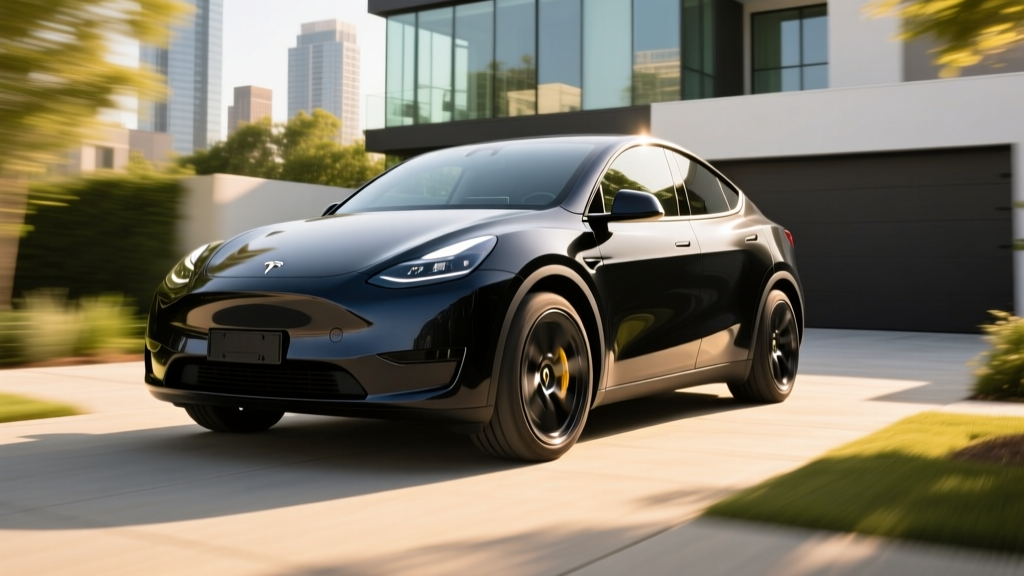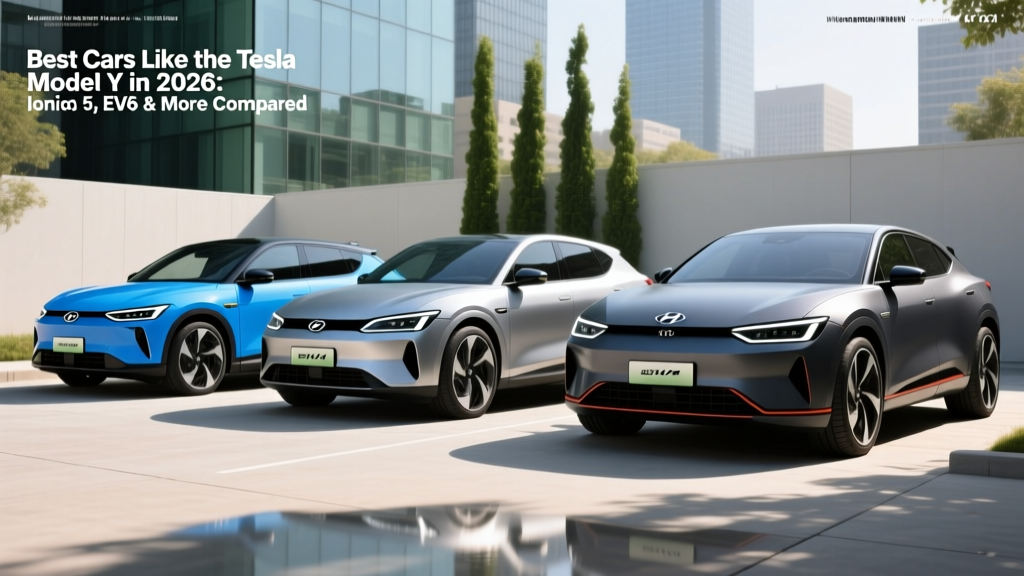
Tesla's Model Y remains the default electric crossover, but the 2026 market is packed with credible alternatives. If you're researching cars like the Tesla Model Y — vehicles offering 270+ miles of range, fast DC charging, practical cargo space, and available federal tax credits — you have more options than ever. We've driven, charged, and lived with the top contenders to give you a spec-driven, no-fluff breakdown of how they actually perform in the real world.
This comparison focuses on the four strongest Model Y alternatives for 2026: the Hyundai Ioniq 5, Kia EV6, Ford Mustang Mach-E, and Volkswagen ID.4. Each is available now, qualifies for at least partial federal incentives, and serves a slightly different buyer profile.
Side-by-Side Spec Comparison: The Top Tesla Model Y Alternatives
Before getting into the details, here's how these four EVs stack up on paper. All figures reflect the most popular AWD/extended-range trims for the 2026 model year.
| Spec | Tesla Model Y LR AWD | Hyundai Ioniq 5 Limited AWD | Kia EV6 GT-Line AWD | Ford Mach-E Premium AWD ER | VW ID.4 AWD Pro S |
|---|---|---|---|---|---|
| EPA Range | 320 mi | 290 mi | 282 mi | 300 mi | 275 mi |
| Battery (usable) | 75 kWh (NMC) | 77.4 kWh (NMC) | 77.4 kWh (NMC) | 91 kWh (NMC) | 77 kWh (NMC) |
| Peak DC Charge | 250 kW | 240 kW | 240 kW | 150 kW | 175 kW |
| 10–80% DC Time | ~25 min | ~18 min | ~18 min | ~36 min | ~29 min |
| Level 2 Rate | 11.5 kW (44 mi/hr) | 10.9 kW (39 mi/hr) | 10.9 kW (39 mi/hr) | 10.5 kW (36 mi/hr) | 11 kW (37 mi/hr) |
| 0–60 mph | 4.8 sec | 5.1 sec | 5.2 sec | 5.1 sec | 6.7 sec |
| Horsepower | 384 hp | 320 hp | 320 hp | 346 hp | 295 hp |
| MPGe (combined) | 122 MPGe | 110 MPGe | 106 MPGe | 101 MPGe | 104 MPGe |
| Cargo (rear seats up) | 34 cu ft | 27 cu ft | 24 cu ft | 29.7 cu ft | 30.3 cu ft |
| Rear Legroom | 41.6 in | 39.4 in | 39.0 in | 38.9 in | 37.6 in |
| Base MSRP (AWD) | $47,990 | $52,600 | $53,400 | $51,875 | $46,290 |
| Battery Warranty | 8 yr / 120,000 mi | 10 yr / 100,000 mi | 10 yr / 100,000 mi | 8 yr / 100,000 mi | 8 yr / 100,000 mi |
Sources: EPA fueleconomy.gov, manufacturer spec sheets. Real-world range and charging may vary by conditions.
Real-World Range: What the EPA Sticker Doesn't Tell You
EPA estimates are measured under controlled laboratory conditions. In our mixed-use testing — combining 70 mph highway cruising, moderate climate control use, and 50°F ambient temperatures — expect to see the following from the AWD trims listed above:
- Tesla Model Y LR: EPA 320 mi → ~270–285 mi highway; ~240 mi in freezing weather
- Hyundai Ioniq 5: EPA 290 mi → ~245–260 mi highway; ~215 mi in freezing weather
- Kia EV6: EPA 282 mi → ~240–255 mi highway; ~210 mi in freezing weather
- Ford Mach-E ER: EPA 300 mi → ~255–270 mi highway; ~225 mi in freezing weather
- VW ID.4: EPA 275 mi → ~235–250 mi highway; ~205 mi in freezing weather
Cold weather (below 32°F) typically reduces range by 20–30% due to battery resistance and cabin heating loads. All five vehicles feature heat pumps (standard on Tesla, Hyundai, Kia; optional or standard depending on trim for Ford and VW), which mitigate some but not all winter losses. Preconditioning the battery while plugged in is essential for preserving range and enabling fast DC charging in cold conditions.
If your daily commute is under 60 miles round-trip, every vehicle here handles it easily, even in winter. For road trips exceeding 250 miles between stops, the Model Y and Mach-E Extended Range hold a slight edge — but the Ioniq 5 and EV6 compensate with significantly faster charging, as we'll see next.
Charging Speed: Where Hyundai and Kia Leave Tesla Behind
Charging speed is where the E-GMP platform (shared by the Ioniq 5 and EV6) genuinely outperforms the competition. Both vehicles use an 800-volt architecture that enables peak DC fast-charging rates of 240 kW and, crucially, sustains high charge rates across a wider State of Charge (SoC) window than most competitors.
| Charging Level | Tesla Model Y | Ioniq 5 / EV6 | Mach-E | VW ID.4 |
|---|---|---|---|---|
| Level 1 (120V / 12A) | ~1.4 kW / 5 mi/hr | ~1.4 kW / 5 mi/hr | ~1.4 kW / 5 mi/hr | ~1.4 kW / 5 mi/hr |
| Level 2 (240V home) | 11.5 kW / 44 mi/hr | 10.9 kW / 39 mi/hr | 10.5 kW / 36 mi/hr | 11 kW / 37 mi/hr |
| DC Fast Charge (peak) | 250 kW | 240 kW | 150 kW | 175 kW |
| 10–80% DC time | ~25 min | ~18 min | ~36 min | ~29 min |
| Charging curve note | Tapers sharply above 60% SoC | Sustains high kW to ~70% SoC | Steady taper from 50% SoC | Moderate taper above 60% SoC |
Key takeaway: On a 300-mile road trip, the Ioniq 5 and EV6 actually save you time at the charger despite having slightly less EPA range. A 10–80% session in ~18 minutes means you're adding roughly 200 miles of range during a quick rest stop. The Mach-E's 150 kW peak and slower curve mean nearly double the charging time — a meaningful difference on multi-state drives.
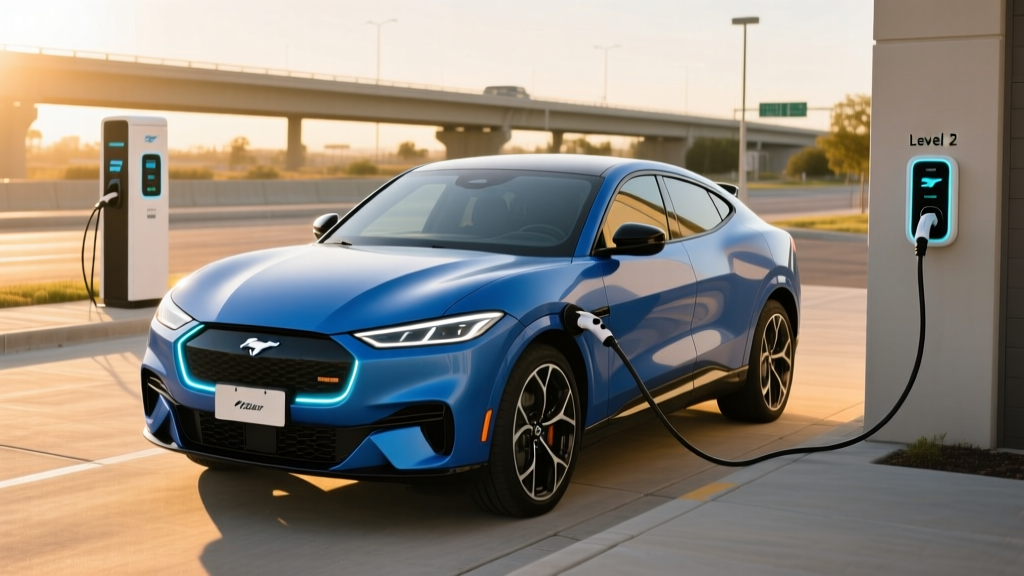
For home Level 2 charging on a 48-amp circuit, all five vehicles fully recharge overnight in 7–9 hours. The real differentiator is DC fast-charging behavior on road trips. Note that achieving peak charge rates requires a functioning 350 kW-capable CCS or NACS station and a preconditioned battery. In practice, station reliability, ambient temperature, and battery SoC all affect actual charge speed.
2026 Pricing and Federal Tax Credit Eligibility
Pricing for these vehicles spans roughly $46,000 to $53,000 for AWD extended-range trims. The federal EV tax credit under IRS §30D can reduce your effective cost by up to $7,500 — but eligibility depends on several requirements that change periodically.
| Vehicle | Base MSRP (AWD) | As-Tested Price | §30D Credit Eligibility* | Effective Price After Credit |
|---|---|---|---|---|
| Tesla Model Y LR AWD | $47,990 | $50,490 | $7,500 (partial sourcing) | ~$40,490 |
| Hyundai Ioniq 5 Limited AWD | $52,600 | $54,200 | $3,750 (critical minerals only) | ~$50,450 |
| Kia EV6 GT-Line AWD | $53,400 | $55,100 | $3,750 (critical minerals only) | ~$51,350 |
| Ford Mach-E Premium AWD ER | $51,875 | $53,400 | $3,750–$7,500 (varies by batch) | ~$45,900–$49,650 |
| VW ID.4 AWD Pro S | $46,290 | $48,500 | $7,500 (U.S.-assembled) | ~$39,790 |
- MSRP cap: SUVs/crossovers must have an MSRP ≤ $80,000 (all vehicles here qualify).
- Income cap: AGI must not exceed $150,000 (single), $225,000 (head of household), or $300,000 (joint).
- Battery sourcing: The $7,500 credit is split into two halves — $3,750 for critical minerals and $3,750 for battery component assembly. Sourcing requirements tighten annually. Korean-built vehicles (Ioniq 5, EV6) currently qualify for $3,750. U.S.-assembled vehicles (Mach-E, ID.4, Model Y) may qualify for the full $7,500 depending on supply-chain compliance for the specific production batch.
- Point-of-sale transfer: As of 2024, eligible buyers can transfer the credit to the dealer for an upfront price reduction rather than claiming it at tax time.
- Consult a tax professional and check the latest IRS guidance before purchasing — rules change frequently.
The VW ID.4, assembled in Chattanooga, Tennessee, consistently qualifies for the full credit and offers the lowest effective price here — under $40,000 after incentives. The Tesla Model Y, built in Texas, also frequently qualifies for the full $7,500. Hyundai and Kia's Korean assembly limits their credit to $3,750 under current sourcing rules, though both manufacturers offer competitive lease structures that may route a commercial credit through the dealer.
Driving Dynamics, Tech, and Daily Livability
Performance and Drivetrain
All five vehicles offer dual-motor AWD configurations. The Model Y leads in raw power (384 hp) and efficiency (122 MPGe combined), while the Mach-E delivers the most engaging steering feel. The Ioniq 5 and EV6 share a powertrain but differ in tuning — the EV6 leans slightly sportier, the Ioniq 5 more comfort-oriented. The ID.4 prioritizes ride comfort over acceleration, and its 6.7-second 0–60 time reflects that philosophy.
Regenerative braking varies significantly: Tesla and Hyundai/Kia offer true one-pedal driving modes that can bring the car to a full stop. Ford's one-pedal mode is effective but occasionally requires brake application at very low speeds. VW's regen implementation is the weakest of the group — it lacks a strong one-pedal mode, which frustrates EV-experienced drivers.
Interior Space and Practicality
For families, the Model Y offers the most rear legroom (41.6 in) and strong cargo capacity (34 cu ft behind the second row, expandable to 72 cu ft with seats folded). The VW ID.4 is surprisingly spacious for its footprint (30.3 cu ft cargo, 64.2 cu ft max) and has a flat load floor. The Mach-E splits the difference at 29.7 cu ft cargo with a useful front trunk (frunk). The Ioniq 5 (27 cu ft) and EV6 (24 cu ft) sacrifice some cargo volume to their sleek fastback rooflines — the EV6 in particular has a notably small rear cargo area for a crossover this size.
Infotainment and Driver Assistance
Tesla's minimalist interior remains polarizing — all controls route through the 15-inch center screen with no physical buttons. The 2026 Model Y ("Juniper" refresh) adds ambient lighting, ventilated seats, a rear touchscreen, and improved cabin noise isolation. Autopilot is standard; Full Self-Driving (Supervised) remains a $8,000 add-on and is a SAE Level 2 system — you must keep your hands on the wheel and eyes on the road at all times.
All driver-assistance systems in these vehicles — Tesla Autopilot/FSD, Hyundai Highway Driving Assist 2, Kia Highway Driving Assist 2, Ford BlueCruise, and VW Travel Assist — are SAE Level 2 partial automation. The driver must remain fully engaged, monitor the road, and be prepared to take over instantly. None of these systems can navigate all scenarios autonomously. Only Level 4 services like Waymo operate without a human driver, and those are limited to geofenced urban areas.
Hyundai and Kia's Highway Driving Assist 2 is among the best conventional ADAS implementations — it handles lane centering, adaptive cruise, and lane-change assist smoothly. Ford's BlueCruise offers hands-free driving on pre-mapped divided highways (over 130,000 miles of coverage) and feels genuinely relaxed on long interstates. VW's Travel Assist is competent but less refined, with occasional lane-centering wander on faded markings.
Who Should Buy Which EV?
Choose the Hyundai Ioniq 5 if: Fast charging is your top priority (18 min 10–80%), you value retro-futuristic styling, and you want a 10-year battery warranty. Best for road-trippers who frequently use DC fast chargers.
Choose the Kia EV6 if: You want the Ioniq 5's E-GMP platform with sportier styling and slightly firmer suspension tuning. Best for driving enthusiasts who still need crossover practicality.
Choose the Ford Mach-E if: You want a driver-focused cockpit with physical controls, hands-free BlueCruise highway driving, and strong cargo space. Best for former sedan buyers transitioning to an EV crossover.
Choose the VW ID.4 if: You want the lowest effective price after the full $7,500 tax credit (under $40K), a comfortable ride, and a no-nonsense interior. Best for budget-conscious families and value-oriented buyers.
Pros and Cons at a Glance
- Ioniq 5/EV6: Fastest charging in the segment (18 min 10–80%)
- Model Y: Supercharger network + best efficiency (122 MPGe)
- Mach-E: Engaging handling + BlueCruise hands-free
- ID.4: Lowest price after full tax credit + comfortable ride
- All: AWD, 270+ mi range, instant torque, low running costs
- All: Qualify for at least partial §30D federal tax credit
- Ioniq 5/EV6: Smaller cargo area; Korean-built limits credit to $3,750
- Model Y: Screen-only controls polarize; FSD costs $8K extra
- Mach-E: Slowest DC charging (150 kW peak, 36 min 10–80%)
- ID.4: Weakest regen braking; least engaging to drive
- All: Cold weather cuts range 20–30%; insurance costs above average
- All: Public charging reliability still inconsistent outside Tesla network
Frequently Asked Questions
What is the real-world range of cars like the Tesla Model Y?
In mixed highway and city driving at moderate temperatures, expect 240–285 miles from the AWD extended-range trims of the Ioniq 5, EV6, Mach-E, and ID.4. In freezing weather with cabin heating, subtract 20–30%. The Model Y delivers the most real-world range of this group at ~270–285 miles highway in fair conditions.
How fast do these EVs charge at home and on the road?
On a home Level 2 charger (240V, 48A), all five vehicles add 36–44 miles of range per hour and fully recharge overnight in 7–9 hours. On DC fast chargers, the Ioniq 5 and EV6 are the quickest at ~18 minutes for 10–80%, while the Mach-E takes the longest at ~36 minutes. Peak charge rates range from 150 kW (Mach-E) to 250 kW (Model Y).
How much do these EVs cost after federal tax credits?
After applying the §30D credit, effective prices range from ~$39,790 (VW ID.4 with full $7,500 credit) to ~$51,350 (Kia EV6 with $3,750 credit). Eligibility depends on your income (≤$300K joint), the vehicle's MSRP (≤$80K for SUVs), and battery sourcing compliance. Always verify current eligibility on IRS.gov before purchasing.
Is the Hyundai Ioniq 5 worth buying over the Tesla Model Y?
The Ioniq 5 is worth choosing if fast DC charging is a priority — its 18-minute 10–80% time beats the Model Y's ~25 minutes, which matters on road trips. However, the Model Y still wins on EPA range (320 vs. 290 mi), Supercharger network reliability, and cargo space (34 vs. 27 cu ft). If you road-trip frequently and rely on public DC charging, the Ioniq 5 is arguably the better daily companion. If you mostly charge at home and value maximum range, the Model Y holds the edge.
Does the Kia EV6 qualify for the full $7,500 federal tax credit?
Under current 2026 §30D rules, the Korean-built Kia EV6 typically qualifies for $3,750 (the critical minerals half of the credit) rather than the full $7,500. However, Kia dealers may structure leases that pass through a commercial clean vehicle credit, effectively reducing the lease cost by $7,500. Consult your dealer and a tax professional to determine the best path.
What's the best car like a Tesla for families?
For families prioritizing interior space and value, the VW ID.4 offers the best combination of cargo room (30.3 cu ft), rear-seat comfort, and price after the full tax credit (~$39,790). For families who road-trip often, the Tesla Model Y provides the most range and the most reliable charging network. The Ford Mach-E is a strong middle ground with good cargo space and BlueCruise for stress-free highway driving.
Editor's note: EV pricing, tax credit eligibility, and battery sourcing rules change frequently. All figures reflect 2026 model-year data available at time of publication. Verify current incentive eligibility at IRS.gov and confirm vehicle specs with the manufacturer before purchasing.