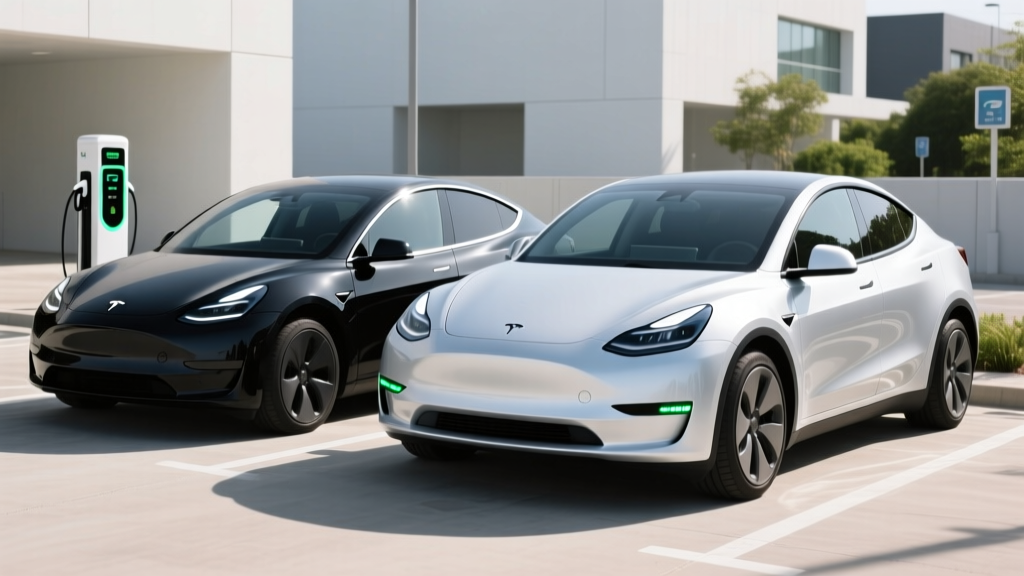
Searching for carro Tesla precio in 2026 means navigating a lineup that has shifted dramatically over the past two years. Tesla's two volume sellers — the refreshed Model 3 and the redesigned Model Y — now anchor the brand's US strategy, with pricing that undercuts many legacy rivals once federal incentives are factored in. But the sticker price is only the beginning. Battery chemistry, real-world range, Supercharger access, and the evolving §30D tax credit rules all shape what you actually pay and what you actually get.
This guide breaks down every current Tesla model available for purchase in the US as of early 2026, with exact MSRP figures, EPA range data, charging specs, and the income and sourcing requirements that determine whether you qualify for up to $7,500 in federal tax credits. We'll focus primarily on the Model 3 and Model Y — the vehicles most buyers are cross-shopping — while touching on the Model S, Model X, and Cybertruck for completeness.
Tesla Model 3: The Entry-Point Sedan
The refreshed Model 3 (internally called "Highland") carries over into the 2026 model year with minor equipment tweaks. It remains the most affordable way into a new Tesla and one of the most efficient EVs on the market. The rear-wheel-drive Long Range variant is the sweet spot for most buyers: strong range, eligible for the full tax credit, and priced below the MSRP cap.
| Attribute | RWD (Standard) | Long Range RWD | Long Range AWD | Performance |
|---|---|---|---|---|
| Base MSRP | $38,990 | $42,490 | $47,490 | $52,990 |
| EPA Range | 272 mi | 363 mi | 346 mi | 315 mi |
| Battery (usable) | ~57.5 kWh (LFP) | ~75 kWh (NMC) | ~75 kWh (NMC) | ~75 kWh (NMC) |
| 0-60 mph | 5.8 sec | 4.9 sec | 4.2 sec | 2.9 sec |
| Horsepower | 271 hp | 346 hp | 384 hp | 510 hp |
| Drivetrain | RWD | RWD | Dual-Motor AWD | Dual-Motor AWD |
| Efficiency | 132 MPGe / 25 kWh/100mi | 132 MPGe / 25 kWh/100mi | 125 MPGe / 27 kWh/100mi | 119 MPGe / 28 kWh/100mi |
| Max DC Fast Charge | 170 kW | 250 kW | 250 kW | 250 kW |
| 10-80% DCFC Time | ~25 min | ~22 min | ~22 min | ~22 min |
| Level 2 Home Charge | 11.5 kW (~44 mi/hr) | 11.5 kW (~44 mi/hr) | 11.5 kW (~44 mi/hr) | 11.5 kW (~44 mi/hr) |
Tesla Model Y: The Family Crossover
The redesigned Model Y ("Juniper") launched in 2025 and continues into 2026 with a full-width light bar, updated interior, and revised suspension tuning. It competes directly with the Hyundai Ioniq 5, Ford Mustang Mach-E, and Chevrolet Equinox EV. The Long Range AWD variant is the best-seller and qualifies for the federal credit when sourced with compliant battery minerals.
| Attribute | RWD | Long Range AWD | Performance |
|---|---|---|---|
| Base MSRP | $44,990 | $49,990 | $54,990 |
| EPA Range | 300 mi | 327 mi | 295 mi |
| Battery (usable) | ~57.5 kWh (LFP) | ~75 kWh (NMC) | ~75 kWh (NMC) |
| 0-60 mph | 6.6 sec | 4.8 sec | 3.5 sec |
| Horsepower | 295 hp | 384 hp | 456 hp |
| Drivetrain | RWD | Dual-Motor AWD | Dual-Motor AWD |
| Efficiency | 123 MPGe / 27 kWh/100mi | 118 MPGe / 29 kWh/100mi | 111 MPGe / 30 kWh/100mi |
| Max DC Fast Charge | 170 kW | 250 kW | 250 kW |
| 10-80% DCFC Time | ~25 min | ~22 min | ~22 min |
| Level 2 Home Charge | 11.5 kW (~36 mi/hr) | 11.5 kW (~36 mi/hr) | 11.5 kW (~36 mi/hr) |
Charging Speed & Infrastructure
Charging speed is where Tesla retains a significant advantage. The Supercharger network — now exceeding 6,000 US stations with V3 (250 kW) and expanding V4 posts — remains the most reliable DC fast-charging ecosystem in North America. Tesla's NACS connector is now the de facto standard, with Ford, GM, Rivian, and others adopting it via adapter or native port.
| Level | Power / Voltage | Speed (miles per hour) | Use Case |
|---|---|---|---|
| Level 1 (120V) | 1.4 kW | ~5 mi/hr | Overnight trickle; emergency top-up |
| Level 2 (240V, 48A) | 11.5 kW | 36-44 mi/hr | Home daily charging (Wall Connector) |
| DC Fast (V3 Supercharger) | 250 kW peak | ~1,000 mi/hr peak | Road trips; 10-80% in ~22 min |
| DC Fast (V4 Supercharger) | Up to 350 kW | ~1,200 mi/hr peak | Future-proofing; current Teslas cap at 250 kW |
Important note on the charge curve: Tesla's 250 kW peak rate is not sustained. The battery charges fastest between 10-40% SoC, then progressively tapers. From 80-100%, charging slows dramatically to protect cell longevity — expect the final 20% to take as long as the 10-80% session. For road trips, charge to 80% and move on; only charge to 100% at your destination or when needed for the next leg.
Federal Tax Credit Eligibility (IRS §30D)
The federal EV tax credit under IRS §30D remains a critical factor in the carro Tesla precio equation. For 2026, the credit structure includes strict income caps, MSRP limits, and battery critical-mineral sourcing requirements. Here is how current Tesla models align:
| Model / Trim | MSRP | MSRP Cap Eligible? | Est. Credit | Effective Price |
|---|---|---|---|---|
| Model 3 RWD | $38,990 | Yes (sedan cap: $55,000) | Up to $7,500* | ~$31,490 |
| Model 3 Long Range RWD | $42,490 | Yes | Up to $7,500* | ~$34,990 |
| Model 3 Long Range AWD | $47,490 | Yes | Up to $7,500* | ~$39,990 |
| Model 3 Performance | $52,990 | Yes | Up to $7,500* | ~$45,490 |
| Model Y RWD | $44,990 | Yes (SUV/truck cap: $80,000) | Up to $7,500* | ~$37,490 |
| Model Y Long Range AWD | $49,990 | Yes | Up to $7,500* | ~$42,490 |
| Model Y Performance | $54,990 | Yes | Up to $7,500* | ~$47,490 |
| Model S | $79,990 | Yes (sedan cap: $55,000 — exceeds) | $0 | $79,990 |
| Model X | $84,990 | Yes (SUV cap: $80,000 — exceeds) | $0 | $84,990 |
| Cybertruck AWD | $79,990 | Yes (truck cap: $80,000) | Up to $7,500* | ~$72,490 |
*Credit eligibility depends on buyer income (AGI ≤ $150,000 single / $300,000 joint), battery critical-mineral sourcing compliance, and final assembly in North America. All Tesla US-market vehicles are assembled in Fremont, CA or Austin, TX. Credit is non-refundable but can be transferred to the dealer as a point-of-sale rebate under the 2024 rule update. Verify current sourcing compliance on fueleconomy.gov before purchasing, as mineral-supply chains shift quarterly.
- Income cap: Modified AGI ≤ $150,000 (single), $225,000 (head of household), $300,000 (married filing jointly)
- MSRP cap: Sedans ≤ $55,000; SUVs, vans, trucks ≤ $80,000
- Battery sourcing: Critical minerals and battery components must meet escalating domestic/free-trade-agreement thresholds (increases annually through 2029)
- Final assembly: Must occur in North America (all US Teslas qualify)
- Transfer option: Credit can be applied at point of sale, reducing out-of-pocket cost immediately
Tech, Interior & Driver Assistance
Tesla's cabin philosophy remains minimalist: a single 15.4-inch touchscreen controls virtually everything, including glovebox release and mirror adjustment. The 2026 Model 3 Highland and Model Y Juniper refreshes add ventilated front seats, ambient lighting, a rear passenger screen (Model 3), and improved acoustic glass. Build quality has measurably improved since the Fremont and Shanghai production updates.
Cargo space: The Model 3 offers 23 cu ft of trunk space (plus a small frunk). The Model Y provides 34 cu ft behind the second row and 72 cu ft with seats folded — competitive with the Ioniq 5 (27/59 cu ft) and ahead of the Mach-E (29/60 cu ft). The optional third-row seat in the Model Y adds two small seats suitable only for children under 5'2".
Autopilot & FSD (Supervised): Every Tesla ships with Basic Autopilot (lane centering + adaptive cruise). Enhanced Autopilot ($6,000) adds auto lane change, Navigate on Autopilot, and Smart Summon. Full Self-Driving (Supervised) remains a $8,000 add-on or $99/month subscription. FSD is an SAE Level 2 system — it requires continuous driver supervision, hands-on or eyes-on depending on firmware version, and does not make the vehicle autonomous. It performs well on highways but remains inconsistent in complex urban scenarios. Waymo's Level 4 robotaxi service operates without a driver but is geofenced and not available for purchase.
Warranty & Long-Term Ownership
Tesla's warranty structure is straightforward:
- Basic vehicle: 4 years / 50,000 miles
- Battery & drive unit (RWD/LFP): 8 years / 100,000 miles, minimum 70% capacity retention
- Battery & drive unit (Long Range/Performance/NMC): 8 years / 120,000 miles, minimum 70% capacity retention
The 70% retention threshold is industry-standard (matching Hyundai, Ford, and GM). Tesla's LFP batteries in the RWD trims are rated for 3,000+ charge cycles with minimal degradation — potentially 500,000+ miles before hitting the 70% floor. NMC packs in Long Range and Performance models typically show 8-12% degradation over the first 100,000 miles, then plateau. Real-world fleet data from Recurrent Auto and Tesla's own impact reports confirm most Model 3/Y packs retain 85-90% capacity at 100,000 miles.
Pros, Cons & Buyer Fit
Pros
- Class-leading efficiency (Model 3 at 25 kWh/100mi)
- Supercharger network reliability — best public DCFC experience in the US
- Strong real-world range, especially Long Range trims
- Over-the-air updates add features post-purchase
- Tax-credit-eligible trims bring effective price below $32,000
- LFP battery longevity in RWD trims
- Minimalist interior with excellent infotainment responsiveness
Cons
- No physical buttons — touchscreen-only controls frustrate some drivers
- FSD costs $8,000 extra and remains Level 2 (not autonomous)
- Rear visibility limited in Model 3 (no rear wiper on early Highland builds)
- Service center wait times can be long in metro areas
- Insurance premiums 15-25% higher than comparable ICE sedans
- Cold-weather range loss of 20-30% is significant in northern states
- No Apple CarPlay or Android Auto
Who Should Buy a Tesla in 2026?
Choose the Model 3 Long Range RWD if: You commute 30-80 miles daily, want maximum range per dollar, can charge at home, and don't need AWD. At ~$34,990 after the tax credit, it's one of the best value-per-mile EVs available.
Choose the Model Y Long Range AWD if: You need cargo space for a family, want AWD for snow/rain, and plan road trips. The 327-mile EPA range and Supercharger access make it the default electric family hauler.
Look at competitors (Ioniq 5, Equinox EV, Mach-E) if: You prefer physical controls, need Apple CarPlay, want a more traditional dealership service experience, or find a better local incentive stack.
Skip the Model S/X if: You were hoping for the tax credit — both exceed the MSRP cap and start above $79,000.
Frequently Asked Questions
What is the real-world range of the Tesla Model 3 and Model Y?
The Model 3 Long Range RWD delivers approximately 300-320 miles in mixed real-world driving and 250-280 miles in cold weather. The Model Y Long Range AWD yields about 270-290 miles highway, dropping to 230-250 miles in winter conditions. City driving with frequent regenerative braking often matches or exceeds EPA estimates for both models.
How fast do Tesla vehicles charge at home and on the road?
At home on a Level 2 Wall Connector (11.5 kW / 48A), the Model 3 gains about 44 miles of range per hour, and the Model Y gains about 36 miles per hour — enough for a full overnight charge. On a V3 Supercharger (250 kW peak), both Long Range models charge from 10-80% in approximately 22 minutes, though the charge curve tapers significantly above 80%.
How much does a Tesla cost after federal tax credits?
The Model 3 RWD starts at $38,990 and can drop to approximately $31,490 with the full $7,500 §30D credit (if income and sourcing requirements are met). The Model Y Long Range AWD starts at $49,990 and drops to roughly $42,490. The Model S and Model X exceed MSRP caps and do not qualify. Always verify current battery-sourcing compliance on fueleconomy.gov before purchasing.
Is a Tesla worth buying vs. competitors like the Ioniq 5 or Equinox EV?
Tesla wins on Supercharger network access, efficiency, and software. The Hyundai Ioniq 5 offers faster 800V charging (10-80% in ~18 min at 350 kW chargers), physical buttons, and Apple CarPlay. The Chevrolet Equinox EV undercuts on price with a 319-mile range at ~$33,000 after credit. If Supercharger reliability matters most to you, Tesla still leads. If you want a more traditional interface or faster peak charging, cross-shop aggressively.
What are the biggest pros and cons of owning a Tesla?
Pros: best-in-class charging network, strong efficiency, long range, OTA updates, LFP battery longevity, and competitive post-credit pricing. Cons: touchscreen-only controls, no CarPlay, higher insurance costs, service-center wait times, and FSD's $8,000 cost for a Level 2 system that still requires full driver attention.
Does the Tesla Model 3 or Model Y qualify for the federal EV tax credit?
Yes — most Model 3 and Model Y trims qualify for up to $7,500 under §30D, provided the buyer's AGI falls within limits ($150K single / $300K joint), the vehicle's MSRP is under the cap ($55K sedans / $80K SUVs), and the battery meets critical-mineral sourcing thresholds. The credit can be transferred to the dealer at point of sale. Model S and Model X do not qualify due to MSRP cap exceedance. Check IRS.gov for the latest rules.