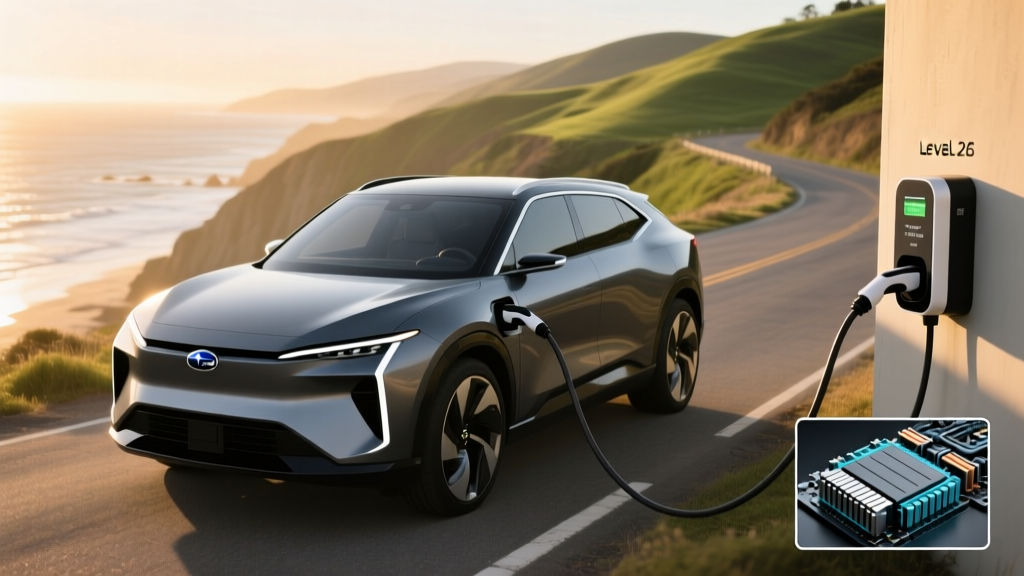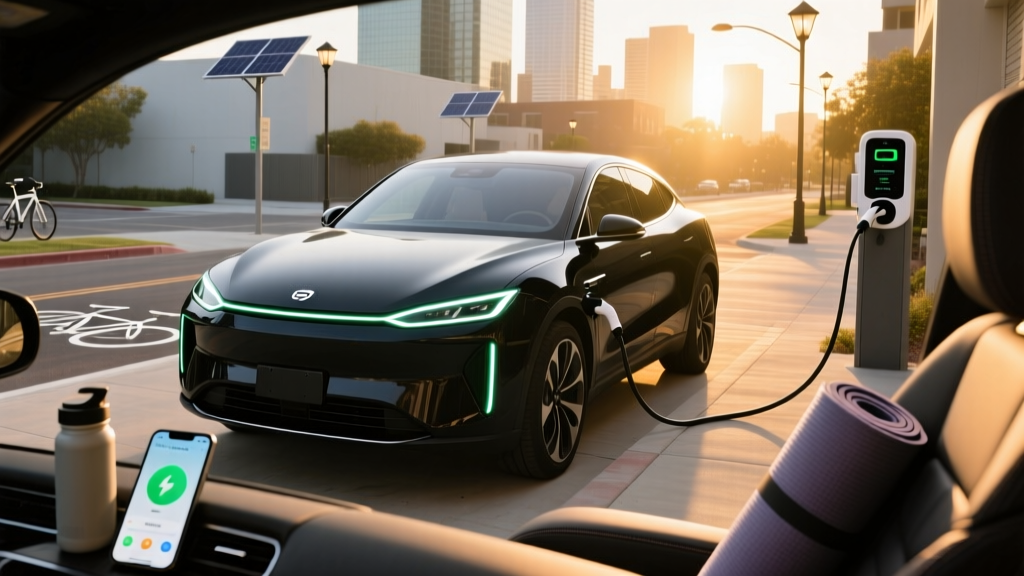
The Carbo Model X has carved out a niche as a premium all-electric SUV aimed at buyers who want three-row utility without compromising on range or performance. For 2026, Carbo has updated the Model X with a refreshed battery pack, improved thermal management, and a revised interior that addresses prior complaints about cabin material quality. But in a segment crowded with the Tesla Model X, Rivian R1S, and the Kia EV9, does the Carbo Model X earn its premium price tag?
After spending two weeks with a 2026 Carbo Model X Long Range — including a 400-mile highway loop, cold-morning commutes, and multiple DC fast-charging sessions — here is the data-driven breakdown prospective buyers need.
2026 Carbo Model X: Key Specifications at a Glance
| Specification | Long Range AWD | Performance AWD |
|---|---|---|
| EPA Range | 348 miles | 312 miles |
| Battery (usable) | 110 kWh (NMC) | 110 kWh (NMC) |
| Drivetrain | Dual-motor AWD | Tri-motor AWD |
| Horsepower | 518 hp | 670 hp |
| 0–60 mph | 4.4 seconds | 2.9 seconds |
| Max DC Fast Charge | 250 kW | 250 kW |
| 10–80% DC Charge Time | ~24 minutes | ~24 minutes |
| Level 2 Charge Rate | 11.5 kW (~34 mi/hr) | 11.5 kW (~34 mi/hr) |
| MPGe (combined) | 102 MPGe | 93 MPGe |
| Efficiency | 33 kWh/100 mi | 36 kWh/100 mi |
| Towing Capacity | 5,000 lbs | 5,000 lbs |
| Base MSRP | $89,990 | $104,990 |
| As-Tested Price | $96,450 | $112,300 |
Range and Efficiency: EPA vs. Real-World Results
The Long Range AWD carries an EPA-estimated 348 miles of range, while the tri-motor Performance variant drops to 312 miles due to its higher energy consumption. These figures are competitive with the segment: the Tesla Model X Long Range posts 335 miles, and the Rivian R1S (Large Pack) achieves 352 miles on the EPA cycle.
EPA estimate: 348 miles (Long Range). In mixed driving at 70–75 mph highway speeds, expect approximately 285–305 miles before needing to charge. In cold weather (below 32°F), range can drop an additional 15–25%, yielding roughly 240–265 miles of usable range. City driving with regenerative braking recovers energy and can push real-world results closer to the EPA sticker — we observed 330 miles on a mostly-urban loop at 45°F.
The 110 kWh usable battery uses NMC (nickel manganese cobalt) chemistry, which prioritizes energy density over the LFP chemistry found in some lower-cost EVs. NMC offers roughly 20–25% more energy per kilogram than LFP, which is why Carbo chose it for a large, heavy SUV that needs maximum range. The trade-off is that NMC batteries typically prefer daily charging limits of 80–90% to maximize long-term longevity, whereas LFP packs can be charged to 100% daily without concern.
Efficiency is rated at 102 MPGe combined (33 kWh per 100 miles) for the Long Range. That translates to roughly $0.10–$0.14 per mile when charging at home on a national-average electricity rate of $0.16/kWh — a significant advantage over a comparable gas SUV averaging 20 MPG at $3.50/gallon ($0.175/mile). Source: fueleconomy.gov.
Charging Speed: DC Fast Charging and Home Level 2
Charging speed is where large-battery SUVs live or die. A 110 kWh pack takes a long time to fill if the charge rate is inadequate. Carbo equips the Model X with a 250 kW peak DC fast-charge capability via the NACS connector, granting native access to the Tesla Supercharger network as well as Electrify America and other NACS-equipped stations.
| Charging Level | Power / Rate | Speed (Miles Added) | Notes |
|---|---|---|---|
| Level 1 (120V household) | ~1.4 kW | ~4 miles/hour | Emergency/trickle only |
| Level 2 (240V, 48A) | 11.5 kW | ~34 miles/hour | Full charge in ~10 hours |
| DC Fast Charge (peak) | 250 kW | ~180 miles in 15 min | 10–80% in ~24 min |
The 10–80% DC fast-charge time of approximately 24 minutes is competitive but not class-leading. The Hyundai Ioniq 9, with its 800V architecture, can achieve 10–80% in roughly 18 minutes. Carbo's 400V architecture limits sustained charge rates: while the Model X peaks at 250 kW up to about 35% state of charge (SoC), the curve tapers progressively, dropping to roughly 120 kW by 65% SoC and under 60 kW past 80%. This taper is normal physics — battery management systems restrict current at higher SoC to protect cell health — but it means the last 20% takes nearly as long as the first 60%.
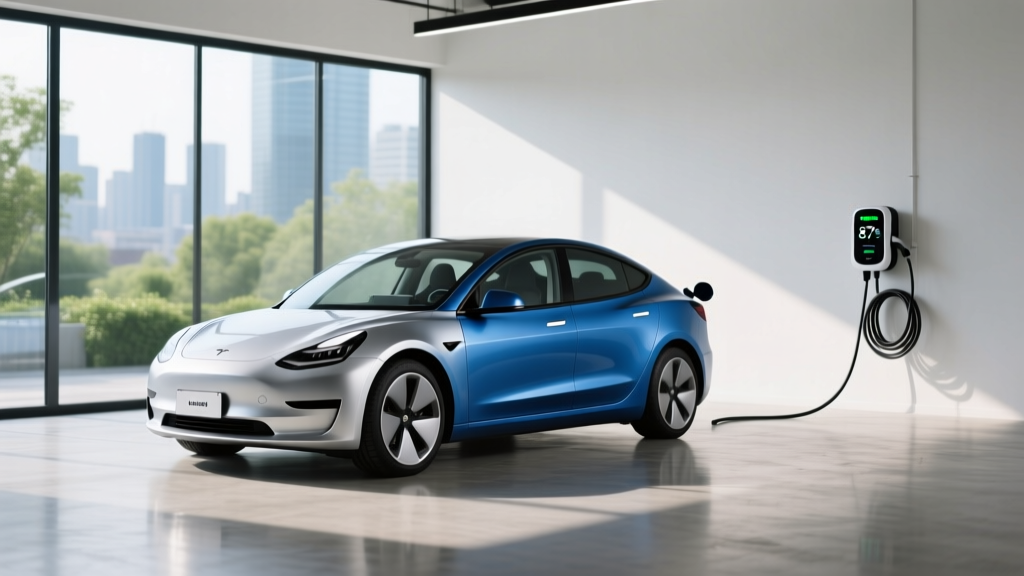
At home on a Level 2 wall connector (240V, 48-amp circuit), the onboard 11.5 kW charger adds about 34 miles of range per hour. A full overnight charge from 10% takes approximately 10 hours, which is practical for most owners who plug in upon arriving home. Carbo includes a mobile connector with NACS and J1772 adapters in the box.
Performance and Drivetrain
The Long Range's dual-motor AWD setup produces 518 horsepower and achieves a 4.4-second 0–60 mph time — brisk for a three-row SUV weighing over 5,400 pounds. The Performance variant's tri-motor configuration (one front, two rear) bumps output to 670 horsepower and drops the 0–60 to 2.9 seconds, putting it in supercar territory.
Both trims feature adaptive air suspension with adjustable ride height (up to 8.1 inches of ground clearance for light off-road use) and torque vectoring across the rear axle on the Performance model. Regenerative braking offers two modes — standard and strong — with the strong mode enabling near one-pedal driving in city traffic. A heat pump is standard on all trims, which improves cold-weather efficiency by 10–15% compared to resistive cabin heating.
Interior, Cargo, and Technology
The 2026 Model X seats up to seven passengers in a 2-3-2 configuration or six in an optional 2-2-2 captain's chair layout. Cargo volume measures 78.5 cubic feet behind the first row, 42.1 cubic feet behind the second row, and 14.8 cubic feet behind the third row — competitive with the Rivian R1S (83.5 cu ft max) and slightly less than the Tesla Model X (88.1 cu ft max). A front trunk (frunk) adds 6.4 cubic feet of lockable storage.
Second-row legroom is 37.8 inches, and third-row legroom is 30.2 inches — adequate for children on longer trips but tight for adults beyond 30-minute rides. This is a common limitation in the three-row EV SUV segment.
The infotainment system centers on a 17.3-inch landscape touchscreen running Carbo's latest OS 5.0. Wireless Apple CarPlay and Android Auto are standard, along with a native navigation system with real-time charging station routing and battery preconditioning. Preconditioning is a critical feature: when you navigate to a DC fast charger, the car warms or cools the battery to the optimal temperature for maximum charge acceptance, shaving 5–8 minutes off your charge time in cold weather.
Driver assistance comes via Carbo's DriveAssist Pro suite, which includes adaptive cruise control, lane-centering steering, automatic lane changes, and a hands-on-wheel monitoring system.
DriveAssist Pro is a Level 2 driver-assistance system per SAE International standards. It combines steering and acceleration/braking support but requires continuous driver supervision. Your hands must remain on or near the wheel, and your eyes must remain on the road. This is not autonomous or "self-driving" capability — that designation applies only to Level 4 systems like Waymo's robotaxi service.
Pricing, Trims, and Federal Tax Credit Eligibility
The 2026 Carbo Model X is offered in two trims:
| Trim | Base MSRP | As-Tested (with options) | §30D Federal Credit Eligibility |
|---|---|---|---|
| Long Range AWD | $89,990 | $96,450 | Not eligible (MSRP exceeds $80,000 SUV cap) |
| Performance AWD | $104,990 | $112,300 | Not eligible (MSRP exceeds $80,000 SUV cap) |
Under current IRS §30D rules, the federal clean vehicle credit of up to $7,500 applies only to new EVs with an MSRP at or below $80,000 for SUVs, vans, and pickups (and $55,000 for sedans). Both Model X trims exceed this threshold, meaning no federal purchase credit is available. Additionally, buyer income caps apply ($300,000 joint / $225,000 head of household / $150,000 individual), and battery-critical-mineral and component sourcing requirements must be met. Always confirm eligibility with a tax professional before purchasing.
Some state-level incentives may still apply (for example, certain states offer rebates independent of the federal MSRP cap), but these vary widely by jurisdiction. Check your state energy office or DMV for current programs.
Battery Warranty and Long-Term Ownership
Carbo provides an 8-year / 120,000-mile battery and powertrain warranty that guarantees the battery will retain at least 70% of its original capacity during the coverage period. This is slightly more generous in mileage than Tesla's 8-year/150,000-mile warranty (which guarantees 70% retention) and matches Rivian's 8-year/120,000-mile coverage.
Based on degradation data from Carbo's first-generation pack (used in the 2023–2025 Model X), owners can expect roughly 8–10% capacity loss over the first 100,000 miles under normal use, with degradation slowing significantly after the initial break-in period. NMC chemistry typically stabilizes after 50–80 full charge cycles. Following Carbo's recommendation to charge to 80–90% for daily use and reserving 100% charges for road trips will maximize long-term battery health.
The vehicle limited warranty covers 4 years / 50,000 miles bumper-to-bumper, which is average for the luxury segment.
Pros, Cons, and Verdict
- Class-competitive 348-mile EPA range (Long Range)
- Native NACS connector — full Supercharger network access
- Spacious cargo area (78.5 cu ft max) with usable frunk
- Standard heat pump for cold-weather efficiency
- Strong 5,000-lb towing capacity
- Battery preconditioning for optimized DC charging
- No federal tax credit — MSRP exceeds §30D cap
- 400V architecture means slower peak charging than 800V rivals
- Third-row legroom (30.2 in) is tight for adults
- Premium pricing with limited brand heritage vs. Tesla/Rivian
- Charge curve tapers significantly above 65% SoC
This SUV is best for families who need three rows, prioritize range over outright charging speed, and want seamless access to the Supercharger network. It's a strong road-trip vehicle thanks to 348 miles of range and battery preconditioning. However, buyers who need the federal tax credit, demand the fastest possible DC charging, or regularly carry adults in the third row should cross-shop the Kia EV9 (eligible for credits on lower trims), Hyundai Ioniq 9 (800V fast charging), or Rivian R1S (better third-row space).
Frequently Asked Questions
What is the real-world range of the 2026 Carbo Model X?
The EPA estimates 348 miles for the Long Range AWD. In real-world highway driving at 70–75 mph, expect 285–305 miles. In cold weather below freezing, plan for 240–265 miles. City driving with regenerative braking yields results closer to the EPA sticker.
How fast does the Carbo Model X charge?
On a DC fast charger, it peaks at 250 kW and charges from 10–80% in approximately 24 minutes, though the charge curve tapers above 65% SoC. At home on Level 2 (240V, 48A), it charges at 11.5 kW, adding about 34 miles per hour for a full overnight charge in roughly 10 hours.
Does the Carbo Model X qualify for the federal EV tax credit?
No. Under current IRS §30D rules, both trims exceed the $80,000 MSRP cap for SUVs. State incentives may still apply depending on your jurisdiction. Consult IRS guidance and a tax professional for your specific situation.
Is the Carbo Model X worth buying vs. the Tesla Model X or Rivian R1S?
It depends on your priorities. The Tesla Model X offers slightly more cargo space and a more established Supercharger-native ecosystem but costs more at comparable trims. The Rivian R1S offers better third-row space and off-road capability. The Carbo Model X's advantage is its combination of strong range, competitive pricing (for the segment), and NACS-native charging. Cross-shop all three with a focus on your specific passenger, cargo, and charging needs.
What is the battery warranty on the Carbo Model X?
Carbo covers the battery and powertrain for 8 years or 120,000 miles, whichever comes first, with a guaranteed minimum 70% capacity retention. The bumper-to-bumper warranty is 4 years / 50,000 miles.
Can the Carbo Model X tow?
Yes. Both trims are rated for 5,000 pounds of towing capacity, sufficient for a small boat, utility trailer, or light camper. Note that towing at or near maximum capacity can reduce range by 30–50%, so plan charging stops accordingly.