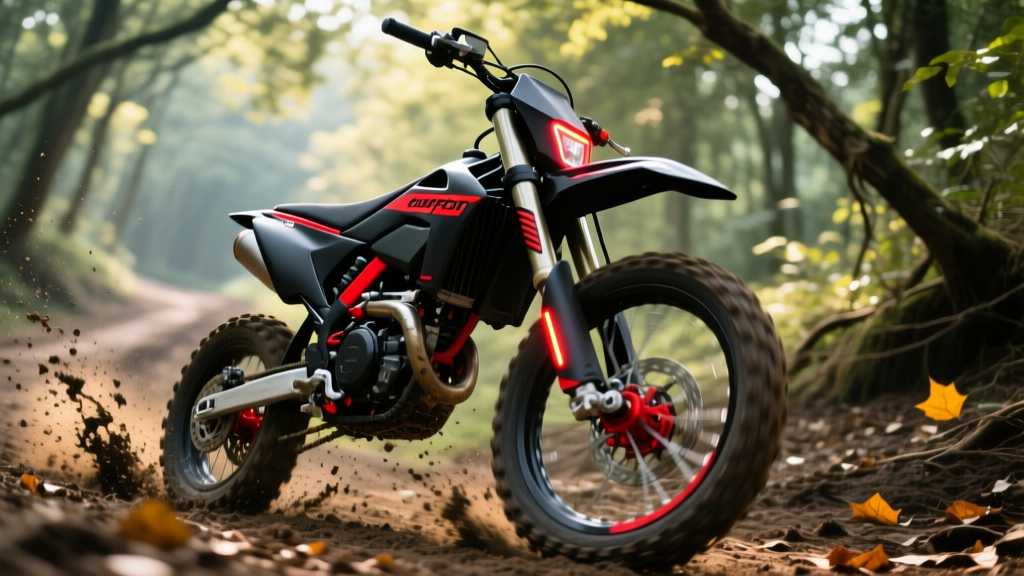
Quick Verdict: Is the Caofen F80 Electric Dirt Bike Right for You?
The Caofen F80 electric dirt bike tops out at a restricted 32 km/h (~20 mph) in its off-road configuration, making it best suited for trail riding, farm use, and beginner riders rather than motocross or high-speed desert runs. With a typical 3–5 kWh battery pack and a price point hovering around $3,500–$5,500 depending on the dealer and configuration, it undercuts most gas-powered 250cc trail bikes on running costs but falls short on range and top speed for aggressive riders. If you need quiet, low-maintenance trail access and can charge from a standard 120V outlet, the F80 is a practical tool. If you want 60+ mph speeds or 100-mile range, look at full-size electric motorcycles like the Zero FX or KTM Freeride E-XC instead.
Caofen F80 Electric Dirt Bike: What the 32 km/h Speed Limit Actually Means
The "32 km/h speed off road" spec that appears in Caofen F80 listings is not a performance ceiling imposed by the motor — it's a regulatory restriction. Many markets classify electric two-wheelers differently based on top speed. Bikes limited to 32 km/h (approximately 20 mph) often avoid registration, licensing, and insurance requirements that apply to faster electric motorcycles. Caofen, a Chinese manufacturer that exports globally, configures the F80 to hit this threshold in markets where that classification matters.
In practice, 32 km/h is comparable to a brisk bicycle commute or a slow trail crawl. For context:
- Gas 125cc dirt bike: 55–70 mph top speed
- Gas 250cc trail bike (Honda CRF250F): 60–75 mph
- Zero FX (electric, full-size): 85 mph
- KTM Freeride E-XC: 50+ mph (unrestricted)
- Caofen F80 (restricted): ~20 mph / 32 km/h
The F80's motor typically produces between 5–8 kW of peak power (roughly 7–11 horsepower), which is adequate for moderate inclines and loose terrain at low speed but will feel anemic on steep, technical climbs where a gas 250cc puts out 30+ HP. Some dealers and owners report that the F80 can be "unrestricted" via controller settings to reach 45–55 km/h, but this may void the warranty and change the vehicle's legal classification in your jurisdiction.
Battery, Range, and Charging: The Numbers That Matter
The Caofen F80 typically ships with a lithium-ion battery pack in the 3.0–5.0 kWh range, depending on configuration. Caofen does not publish a single standardized spec sheet the way major OEMs do, so exact figures vary by dealer and model year. Here's what you can expect based on available specifications and owner reports:
| Specification | Caofen F80 (Typical Config) |
|---|---|
| Battery Capacity | 3.0–5.0 kWh (lithium-ion, NMC chemistry) |
| Motor Peak Power | 5–8 kW (~7–11 HP) |
| Top Speed (Restricted) | 32 km/h (~20 mph) |
| Top Speed (Unrestricted, reported) | 45–55 km/h (~28–34 mph) |
| Claimed Range | 50–80 km (31–50 miles) |
| Real-World Trail Range | 30–50 km (19–31 miles) under mixed off-road load |
| Charge Time (120V household) | 3–5 hours (0–100%) |
| Charge Time (240V, if supported) | 1.5–2.5 hours |
| Charger Included | Yes, standard 120V portable charger |
| Weight (wet) | ~80–100 kg (176–220 lbs) |
| Price Range (USD) | $3,500–$5,500 depending on dealer |
Real-World Range Reality: Caofen's claimed 50–80 km range assumes flat terrain, moderate speed, and a lighter rider. On actual off-road trails with elevation changes, loose surfaces, and aggressive throttle use, expect 30–50 km (19–31 miles). Cold weather (below 40°F / 5°C) can reduce range by 15–25% due to lithium-ion chemistry limitations and increased rolling resistance in wet or muddy conditions.
Charging is straightforward: the included portable charger plugs into a standard NEMA 5-15 household outlet (120V, 15A). At roughly 0.8–1.2 kW charge rate, a fully depleted 4 kWh battery takes about 3.5–5 hours. There's no DC fast charging — this is a Level 1 only setup for most configurations. That's fine for overnight charging at home or at a cabin, but it means you can't "top up" quickly during a day of riding the way you could with a gas bike and a fuel can.
Electric Dirt Bike vs Gas Dirt Bike: Cost and Ownership Compared
The core decision for most buyers comes down to whether the F80's lower running costs and simpler maintenance justify its limited speed and range compared to a conventional gas dirt bike. Here's a five-year ownership comparison:
| Factor | Caofen F80 (Electric) | Honda CRF250F (Gas, Baseline) |
|---|---|---|
| Purchase Price | $3,500–$5,500 | $8,500–$9,200 |
| Fuel/Energy Cost Per Hour of Riding | $0.15–$0.40 (electricity) | $3.50–$6.00 (gasoline, 91 octane) |
| Annual Maintenance | $50–$150 (brake pads, chain, tires) | $400–$800 (oil, filters, valves, chain, sprockets) |
| 5-Year Fuel/Energy Cost (100 hrs/yr) | $75–$200 | $1,750–$3,000 |
| 5-Year Maintenance Cost | $250–$750 | $2,000–$4,000 |
| Noise Level | Near-silent (70–80 dB) | 94–102 dB (often restricted on public trails) |
| Registration/Insurance Required | Often not (at 32 km/h classification) | Varies by state; OHV registration common |
| Range Per Tank/Charge | 19–31 miles (real-world trail) | 60–90 miles (2.1-gal tank, trail riding) |
| Refuel/Recharge Time | 3–5 hours (Level 1) | 2 minutes (fuel can) |
The financial case for the F80 is compelling if you ride 50–100 hours per year. Over five years, you'd save roughly $3,000–$5,500 in fuel and maintenance compared to a gas 250cc trail bike. The F80 also pays for itself faster because the upfront cost is lower. However, those savings come with hard trade-offs: you can't ride all day without recharging, you can't carry a spare "fuel can" (a spare battery weighs 30+ lbs and costs $800–$1,500), and you won't keep up with gas bikes on open desert or fire roads.
Real-World Ownership: What First-Time Electric Dirt Bike Buyers Should Know
Buying an electric dirt bike from a Chinese manufacturer like Caofen is not the same experience as walking into a Honda or KTM dealership. Here are the practical realities:
Dealer Support and Parts Availability
Caofen sells through a network of independent importers and online dealers. Parts availability varies widely — consumables like brake pads, chains, and tires are standard sizes you can source anywhere, but proprietary components (motor controller, battery management system, frame-specific bodywork) may require ordering from the importer with 2–6 week lead times. Before purchasing, confirm that your dealer stocks spare batteries, controllers, and chargers.
Home Charging Access
You need a standard 120V outlet within reach of where you store the bike — a garage, shed, or covered porch. The F80's charger draws about 8–10 amps, well within a standard 15A circuit. If you're charging from an outdoor outlet, ensure it's GFCI-protected and rated for outdoor use. Riders who keep their bike at a remote trail property without grid power will need a generator or solar setup to recharge, which adds $500–$2,000 in equipment.
Climate and Battery Care
Lithium-ion NMC batteries degrade faster when stored at extreme temperatures or at 100% state of charge for extended periods. Best practice: store the F80 between 40–80°F, charge to 80% if it won't be ridden for more than a week, and never leave it at 0% for more than a few days. In freezing conditions, the battery management system (BMS) may limit power output to protect the cells — expect reduced acceleration and range below 32°F.
Insurance and Registration
At the 32 km/h restricted speed, the F80 is often classified as an electric bicycle or low-speed vehicle depending on your state. Most states do not require registration or insurance for off-road use on private land, but trail systems managed by state or federal agencies (BLM, USFS) may have specific requirements. Check with your local land management office before riding on public trails.
Common Misconceptions About the Caofen F80 and Electric Dirt Bikes
| Myth | Fact |
|---|---|
| "Electric dirt bikes have no power for real trails." | The F80's 5–8 kW motor delivers strong low-end torque — better than a gas 125cc off the line. It struggles on sustained steep climbs where gas 250cc bikes excel, but handles moderate technical terrain well. |
| "The battery will die in a year." | NMC lithium-ion cells typically retain 80%+ capacity after 500–800 full charge cycles. At 100 rides per year, that's 5–8 years before noticeable degradation. Caofen's warranty varies by dealer — get it in writing. |
| "You can't ride in the rain." | The F80 is rated IP65 or higher for water resistance. It handles rain, mud, and stream crossings. Avoid submerging the battery compartment or pressure-washing directly at electrical connectors. |
| "32 km/h is too slow to be useful." | For trail riding, farm work, and property maintenance, 20 mph is adequate and often faster than you'd ride on tight singletrack anyway. The restriction matters more for fire roads and open desert. |
| "It qualifies for the $7,500 federal EV tax credit." | It does not. The IRS §30D clean vehicle credit applies to four-wheeled vehicles with a GVWR under 14,000 lbs. Electric motorcycles and dirt bikes are excluded from the federal credit, though some states offer separate incentives for electric two-wheelers. |
Decision Framework: Should You Buy the Caofen F80?
Buy the Caofen F80 if:
- You ride tight, technical singletrack where 20 mph is plenty
- Noise restrictions are a concern (HOA trails, shared-use areas, neighbors)
- You want minimal maintenance — no oil changes, valve adjustments, or jetting
- You have access to a 120V outlet where the bike is stored
- Your budget is under $6,000 and you want a new electric bike, not a used gas bike
- You're a beginner or buying for a younger rider and want a speed-limited platform
Look elsewhere if:
- You ride open desert, fire roads, or motocross tracks where 40+ mph is needed
- You need 60+ miles of range per ride session
- You want dealer-supported warranty service within 30 miles of your home
- You ride multi-day events or need quick refueling between loops
- You want a bike with established resale value and a robust used-parts market
For riders who need more speed and range but still want electric, the Zero FX ($12,500+, 46 HP, 85 mph, ~45-mile real-world trail range) and the KTM Freeride E-XC ($11,000+, 24 HP, 50+ mph, ~30-mile range) are proven alternatives with dealer networks. For budget buyers who just need a quiet trail tool, the F80 fills a niche that gas bikes can't match on running cost and simplicity.
Frequently Asked Questions
How fast does the Caofen F80 electric dirt bike actually go?
In its restricted configuration, the F80 tops out at 32 km/h (approximately 20 mph). Some owners report that adjusting the motor controller settings can unlock speeds of 45–55 km/h (28–34 mph), but this may void the warranty and change the bike's legal classification. For comparison, a gas-powered Honda CRF250F reaches 60–75 mph.
How long does the Caofen F80 battery last on a single charge?
On real off-road trails with mixed terrain and moderate throttle use, expect 30–50 km (19–31 miles) from a full charge. Flat, low-speed riding on packed dirt may extend this to 60+ km. Cold weather and aggressive riding reduce range by 15–25%. The battery pack typically retains 80%+ of its original capacity after 500–800 full charge cycles.
Can I charge the Caofen F80 from a regular wall outlet?
Yes. The F80 includes a portable charger that plugs into a standard 120V (NEMA 5-15) household outlet. A full charge from empty takes approximately 3–5 hours depending on battery capacity. The charger draws about 0.8–1.2 kW, so it won't overload a standard 15A circuit.
Does the Caofen F80 qualify for any federal tax credits?
No. The IRS §30D clean vehicle tax credit applies only to four-wheeled motor vehicles. Electric motorcycles and dirt bikes do not qualify for the federal credit. Some states and utilities offer separate rebates for electric two-wheelers — check with your state energy office or local utility.
Is the Caofen F80 street legal?
In most U.S. states, the F80 is not street legal as delivered. It lacks DOT-required equipment (turn signals, mirrors, horn, speedometer, DOT-approved tires) and does not come with a Manufacturer's Certificate of Origin (MCO) that states accept for on-road registration. It is designed for off-road and private property use. Some states have low-speed vehicle or electric bicycle classifications that may apply — consult your state DMV.
What maintenance does the Caofen F80 require?
Far less than a gas dirt bike. Expect to maintain the chain (lubrication and tension adjustment every 5–10 hours), brake pads (replacement every 500–1,000 miles depending on use), tires, and suspension pivots. There is no engine oil, air filter, spark plug, coolant, or valve adjustment. The motor and controller are sealed and require no routine service.