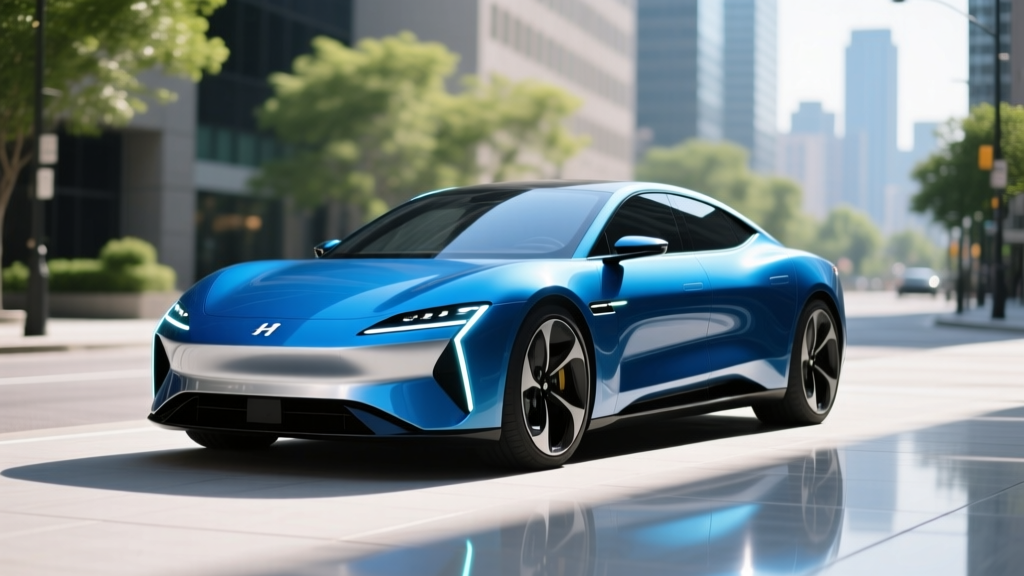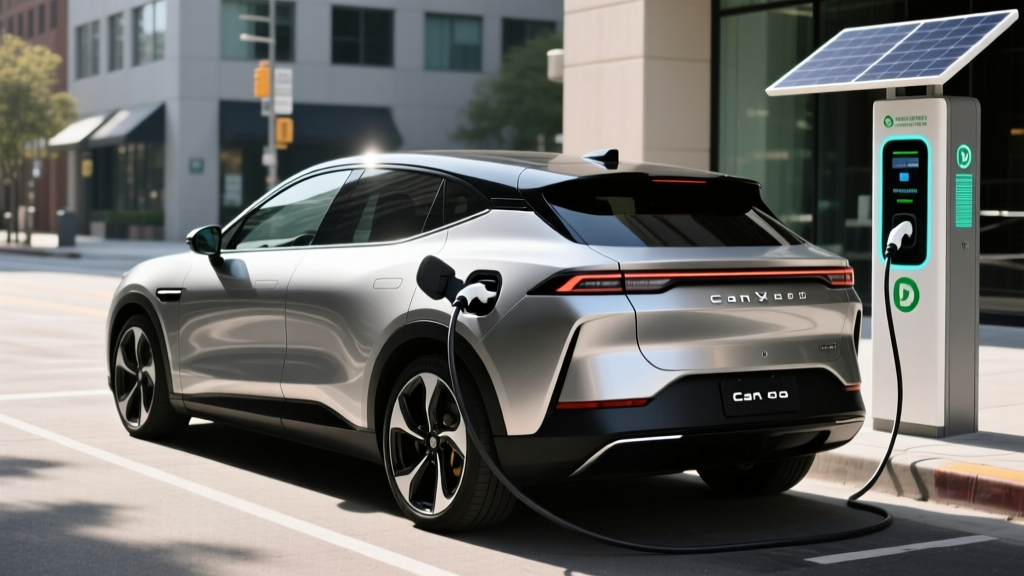
Canoo has long promised to disrupt the electric-vehicle market with its skateboard-platform approach, and the Canoo Ticker is the startup's latest attempt to deliver an affordable, compact electric crossover aimed squarely at urban commuters and budget-conscious EV shoppers. But with a history of production delays, financial restructuring, and shifting timelines, the question for 2026 buyers is straightforward: does the Ticker actually exist in drivable form, and if so, does the spec sheet hold up against established competitors like the Chevrolet Equinox EV, Hyundai Kona Electric, and Volvo EX30?
This review covers everything we know about the Canoo Ticker's range, battery, charging performance, pricing, and real-world usability — with clear labels on what is confirmed versus what remains preliminary or announced.
Canoo Ticker Spec Sheet at a Glance
| Spec | Value (Announced/Estimated) |
|---|---|
| EPA Range (est.) | ~200–250 miles (unconfirmed by EPA) |
| Battery Capacity | ~60–80 kWh usable (chemistry TBD; LFP likely for base) |
| Drivetrain | RWD standard; AWD available (dual-motor) |
| Horsepower | ~200 hp (RWD) / ~300 hp (AWD, est.) |
| 0–60 mph | ~7.0 sec (RWD) / ~5.5 sec (AWD, est.) |
| Max DC Fast Charge | ~150 kW (peak, est.) |
| 10–80% DC Charge Time | ~30 minutes (est.) |
| Level 2 Home Charge Rate | ~11.5 kW / ~25–30 mi/hr |
| Base MSRP (target) | ~$30,000–$35,000 |
| Federal Tax Credit (§30D) | Eligibility uncertain — depends on battery sourcing and final assembly |
| Battery/Powertrain Warranty | Not yet published (industry standard: 8 yr/100,000 mi) |
Range, Efficiency & Real-World Expectations
Canoo has targeted an EPA-estimated range of roughly 200 to 250 miles depending on trim and drivetrain configuration. The base RWD model with the smaller battery pack would sit near 200 miles, while an extended-range or AWD variant with a larger pack could approach 250 miles. However, no EPA certification has been published on fueleconomy.gov as of this writing, so these numbers remain manufacturer estimates.
EPA Estimate: ~200–250 mi (unconfirmed)
Real-World Highway (70+ mph): Expect ~160–210 mi — highway speeds above 65 mph increase aerodynamic drag significantly in compact crossovers, reducing range by 15–20% vs. city driving.
Cold Weather (below 32°F): Expect an additional 20–30% reduction, putting effective winter range at roughly 130–170 mi. LFP chemistry (if used in the base pack) is more susceptible to cold-weather range loss than NMC, and cold batteries charge slower on DC fast chargers unless preconditioned.
Bottom line: A 200-mile EPA sticker means ~160 miles of practical highway range in winter. Plan road trips accordingly.
Efficiency targets have not been published in MPGe or kWh/100mi. For context, competitors in this segment achieve roughly 100–120 MPGe combined (28–34 kWh/100mi). If the Ticker's skateboard platform and relatively compact footprint deliver comparable efficiency, a 70 kWh usable pack would yield approximately 210–230 miles EPA — aligning with Canoo's mid-range claim.
Charging Speed: DC Fast, Level 2 & Connector Details
Canoo has indicated the Ticker will support DC fast charging at a peak rate of approximately 150 kW, which is competitive with the Hyundai Kona Electric (peak ~100 kW on the previous gen, improved on newer models) but trails the Chevrolet Equinox EV's available ~190 kW capability. At 150 kW peak, a 10–80% charge should take roughly 30 minutes — assuming the battery management system sustains a reasonable charge curve and does not taper aggressively above 60% SoC.
| Charging Level | Power | Speed (Miles Added/Hour) | Notes |
|---|---|---|---|
| Level 1 (120V household) | ~1.4 kW | ~3–4 mi/hr | Emergency/trickle only; full charge takes 50+ hours |
| Level 2 (240V home/public) | ~11.5 kW | ~25–30 mi/hr | Full overnight charge in ~6–8 hours; requires 48A circuit |
| DC Fast Charge | ~150 kW peak | ~150+ mi in 30 min | 10–80% in ~30 min; expect taper above 80% SoC |
Connector question: Canoo has not confirmed whether the Ticker will ship with a NACS (Tesla-style) port or CCS1. Given the industry's rapid shift toward NACS in 2025–2026 — with Ford, GM, Hyundai, and others adopting it — it would be a significant miss if the Ticker launches without NACS compatibility or at minimum a CCS-to-NACS adapter included in the box. Buyers should verify this before placing a deposit.
Charge curve reality check: The advertised "150 kW peak" is not sustained across the entire session. Most EVs in this class hold peak rate between 10–40% SoC, then taper progressively. A realistic 10–80% session averages closer to 90–110 kW sustained, which is why the 30-minute estimate is reasonable but not exceptional. Preconditioning the battery before arriving at a DC charger will be critical — especially in cold weather — to hit peak rates.
Performance, Drivetrain & Platform
The Canoo Ticker rides on the company's multi-purpose platform (MPP) skateboard architecture, which houses the battery pack, electric motor(s), and suspension in a flat chassis. This approach maximizes interior volume relative to the vehicle's exterior footprint — a concept proven by Hyundai's E-GMP and VW's MEB platforms.
The base rear-wheel-drive (RWD) configuration is expected to produce around 200 horsepower with a 0–60 mph time in the 7.0-second range. An optional all-wheel-drive (AWD) dual-motor setup could push output to approximately 300 horsepower and drop the 0–60 time to roughly 5.5 seconds. These figures are competitive for the compact EV crossover segment, where the Kona Electric delivers 201 hp (FWD) and the Equinox EV AWD produces up to 288 hp.
Canoo has emphasized a relatively low center of gravity thanks to the skateboard layout, which should translate to composed handling in urban and suburban driving. However, independent suspension tuning details, curb weight, and regenerative braking modes (one-pedal driving capability) have not been fully detailed.
Interior, Cargo & Technology
The Ticker's skateboard platform promises a flat floor and maximized cabin space. Canoo has targeted the following interior dimensions (preliminary):
- Seating: 5 passengers
- Rear legroom: ~38 inches (est.)
- Cargo volume (behind rear seats): ~22–25 cu ft
- Cargo volume (rear seats folded): ~50–55 cu ft
- Frunk (front trunk): Small storage compartment expected, ~2–3 cu ft
For comparison, the Hyundai Kona Electric offers 25.5 cu ft behind the rear row and 63.7 cu ft with seats folded. If the Ticker hits the lower end of its cargo estimate, it will trail the segment; at the upper end, it will be competitive.
Technology highlights (announced):
- Central touchscreen infotainment (size TBD — likely 12.3-inch class)
- Wireless Apple CarPlay and Android Auto
- Over-the-air (OTA) software updates
- Standard ADAS suite: automatic emergency braking, lane-keeping assist, adaptive cruise control
- Available 360-degree camera and parking assist
Notable drawbacks: Canoo's financial instability raises questions about long-term software support, OTA update cadence, and parts availability. A flashy infotainment system means little if the company cannot sustain the engineering team behind it. Additionally, the Ticker's ADAS features are SAE Level 2 driver-assist — meaning the driver must remain fully engaged with hands on or near the wheel at all times. This is not autonomous or self-driving capability.
Pricing, Trims & Federal Tax Credit Eligibility
Canoo has targeted a base MSRP in the $30,000–$35,000 range, positioning the Ticker as one of the most affordable new EVs on the market if that price holds at production. A well-equipped AWD variant could push toward $40,000–$45,000.
| Trim | Est. MSRP | §30D Credit (Max) | Effective Price (Best Case) |
|---|---|---|---|
| Base RWD | ~$30,000–$35,000 | Up to $7,500* | ~$22,500–$27,500 |
| Mid AWD | ~$38,000–$42,000 | Up to $7,500* | ~$30,500–$34,500 |
| Premium AWD | ~$43,000–$48,000 | Up to $7,500* | ~$35,500–$40,500 |
*Federal tax credit (§30D) caveats — critical for buyers: The IRS §30D clean vehicle credit is not a guaranteed $7,500 for every EV. Eligibility depends on:
- MSRP cap: SUVs/crossovers must be priced at or below $80,000; sedans at or below $55,000. The Ticker should clear this threshold easily.
- Buyer income cap: Modified adjusted gross income must not exceed $150,000 (single), $225,000 (head of household), or $300,000 (joint filers).
- Battery sourcing requirements: A percentage of critical minerals and battery components must be sourced from the US or free-trade-agreement countries. This is the biggest wildcard for Canoo — if the Ticker's battery cells or minerals are sourced from a "foreign entity of concern" (e.g., certain Chinese suppliers), the credit could be reduced to $3,750 or eliminated entirely.
- Final assembly: The vehicle must undergo final assembly in North America. Canoo's planned Oklahoma production facility would satisfy this, but only if production actually occurs there.
- Point-of-sale transfer: As of 2024+, buyers can transfer the credit to the dealer at purchase, reducing the upfront cost rather than waiting for a tax refund. This is available if all other requirements are met.
Bottom line on tax credits: Do not assume the full $7,500. Canoo must publish detailed battery-sourcing documentation, and the IRS must certify the vehicle. Check the fueleconomy.gov tax credit database before committing.
Warranty, Ownership Costs & Reliability Outlook
Canoo has not published official warranty terms for the Ticker. The industry standard for EV battery and powertrain coverage is 8 years / 100,000 miles with a capacity retention threshold of 70% (as mandated by CARB-emitting states and adopted by most automakers). Bumper-to-bumper coverage typically runs 3 years / 36,000 miles.
The reliability elephant in the room: Canoo is a startup that has faced significant financial headwinds, including workforce reductions, production delays, and Nasdaq compliance warnings. For buyers, this creates real ownership risk:
- Parts availability: If Canoo scales back or ceases operations, replacement parts (body panels, proprietary electronics, battery modules) could become scarce.
- Service network: Unlike Tesla, Ford, or Hyundai, Canoo has no established dealer or service-center network. Collision repair and warranty service logistics remain unproven.
- Insurance costs: Insurers typically charge higher premiums for startup EVs due to limited repair data and parts uncertainty. Expect quotes 20–40% above equivalent models from established brands.
- Resale value: Depreciation risk is elevated. A Canoo Ticker could lose 50–60% of its value in three years versus the 35–45% typical for mainstream compact EVs, simply due to brand uncertainty.
How the Canoo Ticker Stacks Up Against Competitors
| Attribute | Canoo Ticker (Est.) | Chevy Equinox EV | Hyundai Kona Electric | Volvo EX30 |
|---|---|---|---|---|
| EPA Range | ~200–250 mi | Up to 319 mi | 261 mi | 265 mi |
| Base MSRP | ~$30,000–$35,000 | ~$33,000 | ~$32,975 | ~$36,150 |
| DC Fast Charge (Peak) | ~150 kW | ~190 kW | ~100 kW | ~153 kW |
| 0–60 mph | ~7.0 sec (RWD) | ~8.0 sec (FWD) | ~7.5 sec | ~6.2 sec (ER) |
| Service Network | Unproven | Extensive (GM dealers) | Extensive | Moderate (Volvo dealers) |
| Production Status | Pre-production | On sale | On sale | On sale |
✅ Pros
- Aggressive target pricing undercuts most competitors
- Skateboard platform promises spacious interior for its footprint
- AWD option available for all-weather buyers
- Compact size ideal for urban parking and commuting
- If §30D credit qualifies, effective price could dip below $25,000
❌ Cons
- Not yet in confirmed production — availability uncertain
- Canoo's financial instability poses long-term ownership risk
- No established service network or proven parts supply chain
- EPA range and efficiency not yet certified
- Insurance and depreciation likely worse than established brands
- Tax credit eligibility uncertain due to battery-sourcing unknowns
Who Should Buy the Canoo Ticker — and Who Should Wait
🎯 Decision Framework
Consider the Ticker if:
- You want a compact, affordable EV primarily for urban/suburban commuting under 40 miles round-trip
- You have reliable home charging (Level 2) and rarely need DC fast charging
- You're comfortable with startup risk and can absorb potentially higher depreciation
- The final production price lands at or below $30,000 and the §30D credit is confirmed
Choose an established competitor instead if:
- You need a proven service network and reliable parts availability
- You regularly drive 200+ miles on highways and need confirmed EPA range above 250 miles
- You plan to keep the vehicle 5+ years and want predictable resale value
- You want to take delivery in 2026 without waiting for a startup to ramp production
Frequently Asked Questions
What is the real-world range of the Canoo Ticker?
Canoo targets 200–250 miles EPA, but this is unconfirmed. In real-world highway driving at 70+ mph, expect 160–210 miles. In cold weather (below freezing), effective range could drop to 130–170 miles. Until the EPA certifies the vehicle on fueleconomy.gov, treat all range figures as estimates.
How fast does the Canoo Ticker charge at home and on the road?
Estimated DC fast charging peaks at ~150 kW, delivering a 10–80% charge in approximately 30 minutes. At home on a Level 2 (240V/48A) charger, the Ticker should add roughly 25–30 miles of range per hour, achieving a full charge in 6–8 hours. Level 1 (120V) trickle charging adds only 3–4 miles per hour and is not practical as a primary charging method.
How much does the Canoo Ticker cost after tax credits?
Target base MSRP is $30,000–$35,000. If the vehicle qualifies for the full $7,500 federal §30D credit (which depends on battery sourcing, final assembly location, and your income), the effective price could drop to $22,500–$27,500. However, credit eligibility is not guaranteed — verify on irs.gov and fueleconomy.gov before purchasing.
Is the Canoo Ticker worth buying vs. the Chevy Equinox EV or Kona Electric?
On paper, the Ticker's target price is compelling. In practice, the Equinox EV offers up to 319 miles of confirmed EPA range, an extensive GM dealer service network, and proven production — making it a far lower-risk purchase. The Kona Electric similarly offers confirmed specs, widespread availability, and Hyundai's 10-year/100,000-mile powertrain warranty. The Ticker only makes sense if its production price undercuts competitors by $5,000+ and Canoo demonstrates financial stability.
Does the Canoo Ticker qualify for the $7,500 federal EV tax credit?
Possibly, but it is not confirmed. Under IRS §30D rules, the Ticker must meet MSRP caps (likely satisfied), buyer income limits, North American final assembly (dependent on Canoo's Oklahoma plant), and battery-sourcing requirements (unknown). If battery components or critical minerals come from a foreign entity of concern, the credit could be reduced or eliminated. Always check the latest IRS guidance and fueleconomy.gov listings.
What are the biggest risks of buying a Canoo Ticker?
The primary risk is Canoo's financial health. If the company cannot sustain production, owners face potential difficulties with warranty service, parts availability, software updates, and resale value. Insurance premiums may also be higher due to limited actuarial data. These are not hypothetical concerns — several EV startups (Fisker, Lordstown) have failed, leaving early buyers stranded.