The Canoo Pickup: What You Need to Know Before You Buy
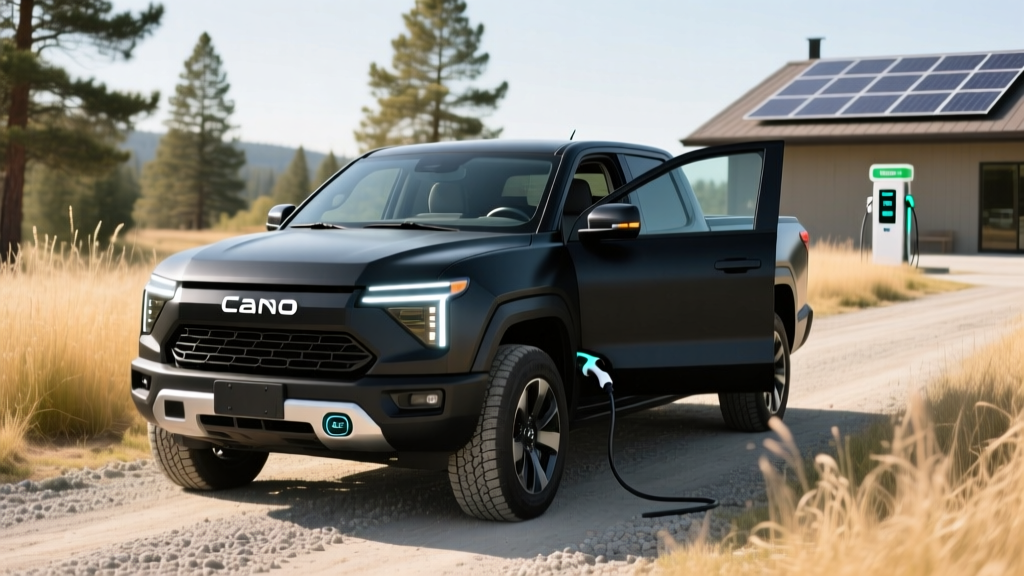
If you've been following the electric truck space, you've likely seen the Canoo Pickup pop up in headlines. Canoo has positioned itself as an American EV startup with a modular "skateboard" platform, and the Pickup is their entry into the increasingly crowded electric truck segment dominated by the Ford F-150 Lightning, Rivian R1T, and Tesla Cybertruck. But specs on paper don't always translate to real-world capability. This review breaks down the Canoo Pickup's range, charging performance, pricing, and practical ownership considerations so you can decide whether it belongs on your shortlist.
Important note: As of early 2026, Canoo has faced significant financial and operational challenges, including production delays and restructuring. The specs below reflect Canoo's most recently published figures and announced configurations. Always verify current availability and final production specs directly with Canoo or an authorized dealer before making a purchase decision.
Range, Battery, and Efficiency
| Spec | Value |
|---|---|
| EPA Estimated Range | ~200 miles (est., single motor); ~250 miles (est., dual motor) |
| Battery Capacity | ~80 kWh usable (announced, chemistry TBD — likely NMC) |
| Drivetrain | Rear-wheel drive (single motor) or AWD (dual motor) |
| Horsepower | Up to ~500 hp (dual motor, announced) |
| 0-60 mph | Not yet published (est. ~5.5-6.5 sec dual motor) |
| Towing Capacity | ~1,800 lbs (announced, light-duty) |
| Payload Capacity | ~1,800 lbs (announced) |
| Bed Length | ~6 ft (standard); extendable with fold-out tailgate |
| Base MSRP | ~$35,000 (announced, single motor base) |
Canoo's announced EPA range estimates of 200-250 miles place the Pickup in the lower tier of electric trucks. The Ford F-150 Lightning offers up to 320 miles EPA, and the Rivian R1T achieves up to 410 miles with its Max Pack. In real-world driving, expect highway range to drop 15-20% below EPA figures at sustained 70-80 mph speeds. Cold-weather driving (below 30°F) can reduce range by an additional 20-30%, meaning a 250-mile EPA rating could yield as little as 150-175 miles in winter highway conditions. For daily commuting under 60 miles round-trip, this is manageable with home charging. For road trips, frequent DC fast-charging stops will be necessary.
Charging Speed: DC Fast Charging and Home Level 2
| Charging Level | Power / Rate | Estimated Time or Miles Added |
|---|---|---|
| Level 1 (120V household) | ~1.4 kW | ~3-5 miles per hour |
| Level 2 (240V home/public) | ~11.5 kW (est.) | ~30-35 miles per hour; full charge ~7-8 hours |
| DC Fast Charging | ~150 kW peak (announced) | 10-80% in ~30 minutes (est.) |
The Canoo Pickup's announced DC fast-charging peak of approximately 150 kW is modest compared to segment leaders. The F-150 Lightning peaks at 150 kW on extended-range models, while the Rivian R1T and Tesla Cybertruck support faster charging architectures. A key consideration is the charge curve — peak kW is only sustained at lower states of charge (typically 10-40%). Above 80% SoC, charging speed tapers significantly to protect battery health, so a 10-80% estimate of ~30 minutes doesn't mean a 10-100% session takes proportionally longer. Plan to charge to 80% on road trips and top off at your destination or next stop.
For home charging, a Level 2 installation on a 240V/48A circuit will fully replenish the battery overnight. Expect installation costs of $800-$2,500 depending on your electrical panel capacity and run length from panel to garage. If your home has a 100A panel, an upgrade to 200A ($1,500-$3,000) may be required — a factor many buyers overlook.
Performance and Drivetrain
Canoo has announced both single-motor rear-wheel-drive and dual-motor all-wheel-drive configurations for the Pickup. The dual-motor variant is expected to produce around 500 horsepower, which would deliver brisk acceleration for a compact truck. However, without published 0-60 mph times or independent testing, these remain preliminary figures.
The Canoo Pickup is notably smaller than full-size electric trucks like the F-150 Lightning or Silverado EV. Its compact footprint makes it more maneuverable in urban environments and easier to park, but it sacrifices towing and payload capacity. The announced 1,800-pound towing rating is light-duty — suitable for a small trailer or jet ski, but not for boat hauling or heavy equipment. If towing is a priority, the F-150 Lightning (up to 10,000 lbs) or Rivian R1T (up to 11,000 lbs) are far more capable.
Pricing, Trim Levels, and Tax Credit Eligibility
| Configuration | Announced MSRP | Est. Price After §30D Credit |
|---|---|---|
| Single Motor (Base) | ~$35,000 | ~$27,500 (if eligible for $7,500) |
| Dual Motor AWD | ~$45,000-$50,000 (est.) | ~$37,500-$42,500 (if eligible) |
A base price around $35,000 would make the Canoo Pickup one of the most affordable electric trucks on the market — if it reaches production at that price point. However, federal tax credit eligibility under IRS §30D is not guaranteed. To qualify for the full $7,500 credit, the vehicle must meet several requirements:
- MSRP Cap: Pickup trucks must have an MSRP at or below $80,000 (the Canoo Pickup clears this easily).
- Buyer Income Cap: Adjusted gross income must not exceed $150,000 (single filer), $225,000 (head of household), or $300,000 (joint filers).
- Battery Sourcing: Critical minerals and battery components must meet phased-in percentage thresholds from US or free-trade-agreement countries. Canoo's supply chain details are not fully public, making credit eligibility uncertain.
- Final Assembly: The vehicle must undergo final assembly in North America. Canoo's planned production facility is in Oklahoma, which would satisfy this requirement if operational.
As of 2026, the §30D credit can be transferred to the dealer at point of sale, effectively reducing your purchase price upfront. However, always confirm eligibility with your tax professional and check the latest IRS guidance at irs.gov before committing.
Interior, Cargo, and Technology
The Canoo Pickup's interior reflects its compact, utilitarian positioning. Canoo has emphasized a minimalist cabin with a focus on durability and easy cleaning — appropriate for a work-oriented truck. The bed features a fold-out tailgate that extends the effective bed length, and Canoo has teased modular accessories like bed dividers and integrated storage.
On the technology front, Canoo has announced a central touchscreen infotainment system, over-the-air (OTA) software updates, and basic driver-assistance features. However, detailed specs on screen size, processor, and specific ADAS capabilities (lane-keeping, adaptive cruise, etc.) remain sparse. The Canoo Pickup is not expected to offer advanced driver-assist systems on par with Ford's BlueCruise or GM's Super Cruise — both of which are SAE Level 2 systems requiring active driver supervision.
Passenger space is limited by the compact platform. Expect seating for up to five, but rear legroom will be tighter than in full-size crew cabs. Cargo volume figures have not been published.
Warranty and Long-Term Ownership
Canoo has not published detailed warranty terms for the Pickup. Industry standard for EV battery and powertrain coverage is 8 years/100,000 miles, with a capacity retention threshold of 70% (meaning the warranty covers replacement or repair if the battery degrades below 70% of original capacity within that period). Rivian offers 8 years/175,000 miles on the R1T battery. Ford covers the F-150 Lightning battery for 8 years/100,000 miles.
Given Canoo's status as a startup with limited production history, long-term reliability data does not exist. This is a significant risk factor. Established manufacturers have dealer networks, parts supply chains, and service infrastructure that Canoo is still building. If you're considering the Canoo Pickup, factor in the possibility of limited service center access and longer wait times for repairs.
Pros and Cons
Pros
- Potentially one of the most affordable electric trucks if pricing holds
- Compact size ideal for urban driving and tight parking
- Modular bed design with fold-out tailgate for extended cargo
- Low operating costs vs. gas trucks (electricity vs. fuel, fewer moving parts)
Cons
- Range (200-250 mi) trails F-150 Lightning and Rivian R1T significantly
- Light-duty towing (1,800 lbs) limits utility for heavy hauling
- Startup risk: production delays, limited service network, uncertain long-term support
- DC fast-charging speed (150 kW peak) is average, not class-leading
- Detailed specs and warranty terms not fully published
Who Should Consider the Canoo Pickup?
The Canoo Pickup is best suited for urban and suburban drivers who need a compact, maneuverable electric truck for light-duty tasks — think weekend hardware store runs, small landscaping jobs, or a commuter vehicle with an open bed. It's not a replacement for a full-size work truck, and it's not ideal for frequent road trips or heavy towing.
If you need more range, the Rivian R1T (up to 410 miles EPA) or F-150 Lightning Extended Range (320 miles EPA) are stronger choices, albeit at higher price points. If budget is the primary driver and you can accept the startup risk, the Canoo Pickup's announced pricing is compelling — but proceed with caution and verify production status and delivery timelines before placing a deposit.
Frequently Asked Questions
What is the real-world range of the Canoo Pickup?
Canoo's announced EPA estimates are 200 miles (single motor) and 250 miles (dual motor). Real-world highway driving at 70-80 mph typically reduces range by 15-20%, and cold weather can cut it by an additional 20-30%. Expect 150-200 miles in mixed real-world conditions, less in winter.
How fast does the Canoo Pickup charge?
Announced DC fast-charging peaks at ~150 kW, with an estimated 10-80% time of ~30 minutes. Home Level 2 charging at ~11.5 kW adds roughly 30-35 miles per hour, allowing a full overnight charge.
How much does the Canoo Pickup cost after tax credits?
The announced base MSRP is ~$35,000. If you qualify for the full $7,500 federal §30D credit (subject to income, battery sourcing, and assembly requirements), the effective price could drop to ~$27,500. Always verify eligibility with a tax professional and check IRS guidance.
Is the Canoo Pickup worth buying vs. competitors?
If it reaches production at the announced price, it would be the most affordable electric truck. However, its range, towing capacity, and charging speed trail the Ford F-150 Lightning and Rivian R1T. The startup risk and limited service network are also significant considerations. For buyers prioritizing proven reliability and capability, the F-150 Lightning or R1T are safer bets.
Does the Canoo Pickup qualify for the federal EV tax credit?
Eligibility is uncertain. The vehicle must meet MSRP, buyer income, battery sourcing, and North American assembly requirements under §30D. Canoo's Oklahoma production plan satisfies the assembly requirement, but battery sourcing details are not fully public. Confirm eligibility before purchase.
Can the Canoo Pickup tow a boat or trailer?
The announced towing capacity is ~1,800 pounds, which is light-duty. It can handle a small utility trailer or jet ski, but not a boat on a dual-axle trailer or heavy equipment. If towing is a priority, look at the F-150 Lightning (up to 10,000 lbs) or Rivian R1T (up to 11,000 lbs).
Sources: Canoo official specifications (preliminary/announced), IRS §30D Clean Vehicle Credit, fueleconomy.gov for segment comparison data.