Quick Verdict: The Canoo Lifestyle Vehicle Explained
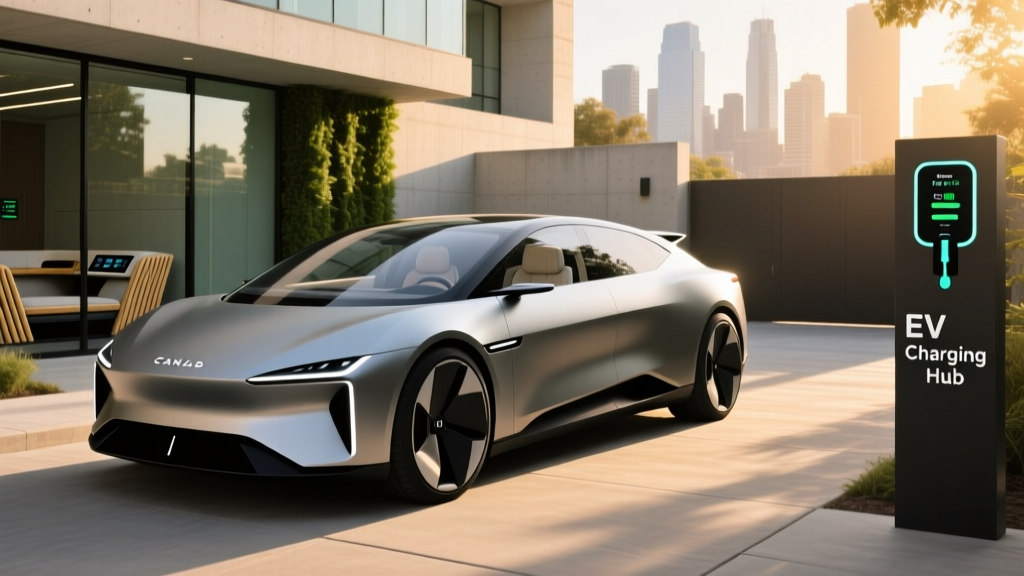
The Canoo Lifestyle Vehicle remains one of the most visually distinctive electric vehicles on the market — a cab-forward, skateboard-platform EV that maximizes interior volume within a compact footprint. Originally conceived as a subscription-only vehicle, Canoo pivoted to direct sales and fleet delivery, with the consumer Lifestyle Vehicle (LV) reaching early buyers after years of development delays and financial restructuring. For 2026, the LV is available in limited markets, primarily targeting urban commuters and small fleet operators who prioritize interior space efficiency over highway performance.
This is not a vehicle for road-trippers or performance seekers. It is a purpose-built urban hauler with genuinely innovative packaging, a usable but unexceptional range, and a pricing story complicated by Canoo's uncertain production trajectory. If you can actually get one delivered, it's a compelling city EV. The "if" is doing a lot of work in that sentence.
| Spec | Value |
|---|---|
| EPA Est. Range | ~250 miles (estimated; not yet EPA-certified at press time) |
| Battery Capacity | 80 kWh (usable), NMC chemistry |
| Max DC Fast Charge | ~150 kW peak |
| 10-80% DC Charge Time | ~30 minutes (estimated) |
| Level 2 Home Charging | ~11.5 kW (approx. 30-35 mi/hr) |
| 0-60 mph | ~6.3 seconds (single-motor RWD) |
| Horsepower | ~300 hp / 332 lb-ft torque |
| Drivetrain | Rear-wheel drive (single motor); AWD announced |
| EPA Efficiency | ~100 MPGe combined (estimated) |
| Cargo Volume | ~120 cu ft (seats folded); ~45 cu ft behind rear seats |
| Base MSRP | ~$34,000 (estimated, before incentives) |
| Federal Tax Credit (§30D) | Eligibility uncertain — battery sourcing unconfirmed |
| Battery Warranty | 8 years / 100,000 miles (stated target) |
Note: Canoo has not published a full EPA-certified spec sheet as of early 2026. Figures above reflect Canoo's stated targets and industry estimates. Always verify with the manufacturer and fueleconomy.gov before purchasing.
Range and Efficiency: 250 Miles on Paper, Less in Practice
Canoo has targeted approximately 250 miles of range from the LV's 80 kWh NMC battery pack. That number is competitive for the vehicle's class — roughly on par with a base Standard Range Ford Mustang Mach-E or a Hyundai Ioniq 5 Standard Range — but it trails the extended-range versions of those competitors by 50-70 miles.
Real-World Range Expectations
EPA Estimate: ~250 miles
Highway (70-80 mph): Expect ~190-210 miles. The LV's boxy, upright profile creates significant aerodynamic drag at highway speeds, which disproportionately cuts range. The flat-front design prioritizes interior volume over slipperiness.
Cold Weather (below 32°F): Expect ~160-185 miles. NMC chemistry loses roughly 20-30% range in freezing temperatures without consistent preconditioning. Canoo has stated the LV includes a heat pump, which mitigates cabin-heating energy draw but cannot fully offset cold-induced battery resistance.
City/Commuter Driving: ~230-250 miles. This is where the LV shines. Regenerative braking recovers energy in stop-and-go traffic, and the lower speeds minimize aero losses.
The efficiency target of roughly 100 MPGe combined (approximately 33-34 kWh per 100 miles) is reasonable for a vehicle of this size and weight, but it won't lead the segment. For comparison, the Tesla Model Y achieves around 120-130 MPGe combined, and the Hyundai Ioniq 5 pushes past 110 MPGe. The LV's shape is the primary culprit — there is no free lunch when you trade aerodynamics for interior volume.
Charging: Adequate but Not Class-Leading
Canoo has targeted a peak DC fast-charge rate of approximately 150 kW on CCS-compatible chargers (the LV launched before the industry-wide NACS shift; adapter availability for Tesla Superchargers has not been confirmed). At 150 kW peak, the LV will not compete with 800V-architecture vehicles like the Ioniq 5, Kia EV6, or Porsche Taycan, which sustain 200-350 kW peaks.
| Charging Level | Power / Rate | Miles Added per Hour | Notes |
|---|---|---|---|
| Level 1 (120V household) | ~1.4 kW | ~4-5 mi/hr | Emergency/trickle only; full charge takes ~57 hours |
| Level 2 (240V home) | ~11.5 kW | ~30-35 mi/hr | Full charge in ~7-8 hours; requires 48A circuit (60A breaker) |
| DC Fast Charge | ~150 kW peak | N/A | 10-80% in ~30 min; expect tapering above 80% SoC |
Understanding the charge curve: The "150 kW peak" figure is the maximum instantaneous rate, typically achieved between 10-40% State of Charge. As the battery fills, the charge rate tapers to protect the cells — expect rates to drop to ~80 kW by 60% SoC and ~40 kW by 80% SoC. The 10-80% time of approximately 30 minutes is a reasonable estimate but not independently verified.
For home charging, the 11.5 kW onboard charger is a bright spot. That's enough to add roughly 30-35 miles of range per hour, meaning an overnight session (8-10 hours) fully replenishes the pack. You'll need a hardwired Level 2 charger on a 60-amp breaker — consult a licensed electrician for installation, which typically runs $500-$2,000 depending on your panel capacity and run length.
Performance and Drivetrain
The Lifestyle Vehicle's rear-mounted single motor produces an estimated 300 horsepower and 332 lb-ft of torque, propelling the LV to 60 mph in approximately 6.3 seconds. That's brisk enough for confident highway merging but not thrilling — it slots in behind the dual-motor versions of most crossover competitors.
Canoo has announced an all-wheel-drive dual-motor variant, but it has not entered production as of early 2026. The AWD version would likely push output above 400 hp and cut the 0-60 time to under 5 seconds, but availability remains uncertain.
What the LV does well is ride quality. The skateboard platform — with the battery pack mounted low and the wheels pushed to the corners — gives it a low center of gravity and a surprisingly compliant ride for a vehicle with such a short front overhang. The steering is light and geared for urban maneuverability, with a tight turning radius that makes the LV feel smaller than it is in parking lots and narrow streets.
Interior, Cargo, and Technology
This is where the Canoo Lifestyle Vehicle makes its strongest case. The cab-forward design, enabled by the absence of a traditional engine bay, pushes the windshield far forward and creates an enormous interior relative to the vehicle's exterior footprint. The result is genuinely impressive:
- Cargo volume: ~120 cubic feet with rear seats folded — competitive with a midsize SUV like the Toyota RAV4, but in a vehicle with a smaller exterior footprint
- Behind rear seats: ~45 cubic feet — enough for a week's groceries for a family of four
- Seating: Configurable for 5-7 passengers depending on trim; the front "lounge" seating concept (originally shown with fold-out seats) has been simplified for production
- Legroom: Generous rear legroom (~40 inches) thanks to the flat floor and pushed-forward dash
The infotainment system runs on a centrally mounted touchscreen (approximately 15 inches) with wireless Apple CarPlay and Android Auto. Canoo has emphasized over-the-air update capability and a minimal physical button layout. Driver-assistance features include adaptive cruise control, lane-keeping assist, and automatic emergency braking — all SAE Level 2 systems requiring continuous driver supervision. There is no "self-driving" capability here.
Notable drawbacks: The large glass area (including the expansive windshield) creates glare and heat issues in sunny climates — tinting or sunshades are practically mandatory in the Southwest. Early reports also note that the upright seating position, while space-efficient, lacks the recline and bolstering of more conventional crossovers on longer drives. This is a city vehicle wearing its priorities openly.
Pricing, Tax Credits, and Total Cost
Canoo initially announced the Lifestyle Vehicle with a starting price target around $34,000, which would position it aggressively against the Chevrolet Equinox EV, Nissan Leaf (discontinued but representative of the price bracket), and base Hyundai Kona Electric. However, actual transaction prices for early deliveries have reportedly been higher, with some fleet and early-consumer units priced in the $40,000-$45,000 range depending on configuration.
| Scenario | Estimated Price |
|---|---|
| Base MSRP (target) | ~$34,000 |
| As-tested / early delivery pricing | ~$40,000-$45,000 |
| After full §30D credit ($7,500) — if eligible | ~$26,500-$37,500 |
| After point-of-sale transfer (if eligible) | Reduces purchase price at dealer/direct sale |
Federal Tax Credit Eligibility (§30D)
The IRS §30D clean vehicle credit offers up to $7,500 for qualifying new EVs, but eligibility depends on several factors that are particularly uncertain for the Canoo LV:
- MSRP cap: The LV must have an MSRP at or below $55,000 (for SUVs/vans) — likely satisfied
- Buyer income cap: Adjusted gross income must not exceed $150,000 (single) / $300,000 (joint) — buyer-dependent
- Battery sourcing: A percentage of critical minerals and battery components must be sourced from the US or FTA partners — Canoo has not publicly confirmed compliance with 2026 sourcing thresholds
- Final assembly: Must occur in North America — Canoo's Bentonville, Arkansas facility satisfies this requirement
Bottom line: Do not assume the $7,500 credit applies to the Canoo LV until Canoo publishes a confirmed VIN eligibility list and you cross-reference it with the IRS. The point-of-sale transfer option (where the credit is applied as a price reduction at purchase rather than claimed on your tax return) is available for qualifying vehicles, but only if all sourcing and income requirements are met. Consult a tax professional before budgeting around this credit.
Warranty and Ownership Considerations
Canoo has stated a target battery and powertrain warranty of 8 years or 100,000 miles, which matches the federal minimum standard for EV traction batteries. The bumper-to-bumper warranty target is 3 years / 36,000 miles — industry-standard but not generous compared to Hyundai/Kia's 5-year/60,000-mile coverage.
The more pressing ownership concern is company viability. Canoo has faced significant financial headwinds, including production delays, leadership changes, and cash-flow challenges through 2024-2025. While the company has secured some fleet contracts (including NASA crew transportation vehicles and interest from government fleets), long-term parts availability, service network coverage, and resale value are genuine unknowns. This is not a vehicle you buy with the same confidence as a Toyota or Hyundai — the risk premium is real and should be factored into your decision.
Pros
- Class-leading interior volume relative to exterior footprint
- Low, flat floor with excellent cargo flexibility
- Tight turning radius and easy urban maneuverability
- Heat pump included for improved cold-weather efficiency
- Competitive base price target (if achieved)
- Distinctive design — nothing else looks like it
Cons
- Limited production and delivery availability
- Company financial stability is a legitimate concern
- Highway range drops significantly due to boxy aero profile
- DC fast-charge rate (150 kW) trails 800V competitors
- No confirmed NACS/Supercharger adapter
- Federal tax credit eligibility unconfirmed
- Minimal service network outside select markets
Who Should Buy the Canoo Lifestyle Vehicle?
Choose the Canoo LV if:
- You are a city or suburban commuter who rarely drives more than 150 miles in a day
- Interior cargo and passenger space is your top priority in a compact-footprint vehicle
- You have reliable home Level 2 charging and don't depend on public DC fast-charging
- You are comfortable with the risk profile of a startup automaker
- You operate a small fleet or delivery business and can negotiate fleet pricing
Look elsewhere if:
- You regularly take highway road trips over 200 miles
- You need a proven service network and strong resale value
- Fast DC charging is critical to your routine (consider Ioniq 5, EV6, or Tesla Model Y)
- You want guaranteed federal tax credit eligibility
- You need AWD for snow or mountain driving (not yet available)
Competitor Comparison
The Canoo LV occupies an unusual niche. Its closest competitors by concept (space-efficient electric people-mover) include:
- Hyundai Ioniq 5: More range (~303 mi), faster charging (800V, 10-80% in 18 min), established service network, confirmed tax credit eligibility. Less interior volume. Starts ~$42,000.
- Tesla Model Y: More range (~310 mi), extensive Supercharger network, strong resale value, confirmed tax credit (partial). Less distinctive, more conventional layout. Starts ~$44,000.
- Chevrolet Equinox EV: Similar price point (~$33,000 base), ~315 mi range, GM dealer network. Less innovative packaging. Confirmed tax credit eligibility.
- Volkswagen ID.4: Similar space philosophy, ~275 mi range, established brand. Less exciting, proven reliability. Starts ~$39,000.
The LV's interior volume advantage is real, but every competitor listed above offers more proven reliability, better charging infrastructure compatibility, and more certain tax credit access. The Canoo is a bet on packaging innovation over ownership peace of mind.
Frequently Asked Questions
What is the real-world range of the Canoo Lifestyle Vehicle?
Canoo targets approximately 250 miles EPA, but expect 190-210 miles on the highway due to the vehicle's boxy aerodynamic profile, and as low as 160-185 miles in freezing temperatures. City driving with regenerative braking will get you closest to the 250-mile figure.
How fast does the Canoo Lifestyle Vehicle charge?
At a DC fast charger, the LV peaks at approximately 150 kW, reaching 10-80% in an estimated 30 minutes. At home on a Level 2 (240V) charger, it adds roughly 30-35 miles of range per hour, fully charging in 7-8 hours. Level 1 (120V) is impractical for daily use at roughly 4-5 miles per hour.
How much does the Canoo Lifestyle Vehicle cost after tax credits?
If the full $7,500 §30D federal credit applies (eligibility unconfirmed as of early 2026), the base price of ~$34,000 could drop to ~$26,500. However, battery-sourcing requirements, buyer income caps, and MSRP caps all apply, and Canoo has not confirmed compliance with 2026 sourcing thresholds. Do not budget around the credit until eligibility is confirmed.
Is the Canoo Lifestyle Vehicle worth buying vs. competitors?
It depends on your priorities. If interior volume in a compact footprint is paramount and you accept startup-automaker risk, it's worth considering. If reliability, charging speed, resale value, and tax credit certainty matter more, the Hyundai Ioniq 5, Tesla Model Y, or Chevrolet Equinox EV are safer bets.
Does the Canoo Lifestyle Vehicle qualify for the federal EV tax credit?
Eligibility under IRS §30D is unconfirmed. The LV's North American final assembly satisfies one requirement, but battery component and critical mineral sourcing thresholds for 2026 have not been publicly verified by Canoo. Check the IRS clean vehicle credit page and Canoo's official communications before assuming eligibility.
Is the Canoo Lifestyle Vehicle self-driving?
No. The LV's driver-assistance features (adaptive cruise, lane-keeping, AEB) are SAE Level 2 systems, meaning the driver must remain fully engaged and responsible at all times. There is no autonomous or hands-free driving capability.
What is the Canoo Lifestyle Vehicle's battery warranty?
Canoo has stated a target of 8 years or 100,000 miles for the battery and powertrain warranty, matching the federal minimum. Confirm exact terms at purchase, as startup warranty fulfillment depends on company longevity.
Sources: Canoo official specifications (canoo.com), EPA fueleconomy.gov, IRS §30D Clean Vehicle Credit. All specs are preliminary and subject to change. Verify with manufacturer before purchase.