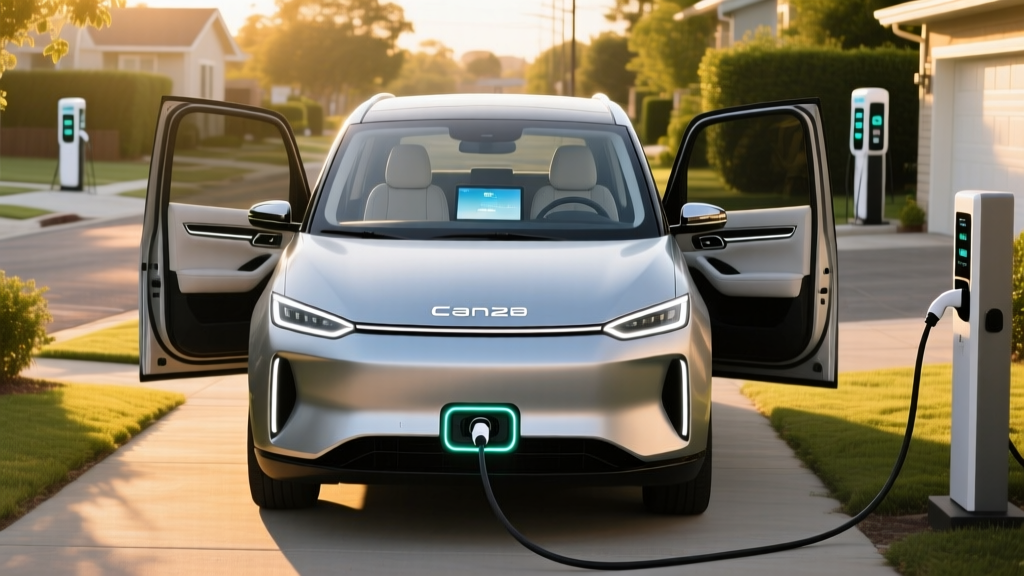
The Canoo electric van has been one of the most talked-about entries in the commercial EV space since the company first revealed its skateboard-platform prototypes. For fleet operators, small-business owners, and urban delivery drivers, the promise of a purpose-built electric cargo van with a compact footprint and maximum interior volume is compelling. But promises don't move packages — production vehicles do. This review examines what the Canoo Lifestyle Delivery Vehicle (LDV) and Lifestyle Delivery Van actually deliver in 2026, with hard numbers on range, charging, pricing, and real-world usability.
Important note: Canoo's production timeline has shifted multiple times. As of early 2026, the company has begun limited production runs primarily for fleet customers, with broader retail availability still ramping. Specs cited here reflect Canoo's most recent published figures and early fleet-operator data. Always confirm current availability and final specifications directly with Canoo before making a purchase decision.
Canoo Electric Van: Core Specifications at a Glance
| Specification | Lifestyle Delivery Vehicle (LDV) | Lifestyle Delivery Van |
|---|---|---|
| EPA Estimated Range | ~190 miles (est.) | ~130 miles (est.) |
| Battery Capacity | 80 kWh (NMC lithium-ion) | 40 kWh (NMC lithium-ion) |
| Motor / Drivetrain | Rear-mounted, RWD | Rear-mounted, RWD |
| Horsepower | ~350 hp (peak) | ~200 hp (peak) |
| Torque | ~332 lb-ft | ~332 lb-ft |
| 0–60 mph (est.) | ~6.3 seconds | ~8.5 seconds |
| Cargo Volume | ~190 cu ft (behind driver) | ~130 cu ft |
| Payload Capacity | ~1,700 lbs | ~1,400 lbs |
| Max DC Fast Charge | ~120 kW (peak) | ~80 kW (peak) |
| 10–80% DC Charge Time | ~38 minutes | ~28 minutes |
| Level 2 Charge Rate | 11.5 kW (~32 mi/hr) | 7.7 kW (~24 mi/hr) |
| Base MSRP (Fleet Pricing) | ~$59,900 | ~$44,900 |
| Battery/Powertrain Warranty | 8 years / 100,000 miles | 8 years / 100,000 miles |
These figures are preliminary and based on Canoo's published fleet specifications. The EPA has not yet posted official range or efficiency ratings on fueleconomy.gov for the Canoo LDV as of this writing, so treat the range numbers as manufacturer estimates pending formal certification.
Real-World Range: What to Actually Expect
Real-World Expectation: 155–175 miles in mixed urban/highway driving; 130–150 miles in cold weather (below 32°F); 170–185 miles in stop-and-go city delivery routes with regenerative braking maximized.
The Canoo electric van's range story is heavily dependent on use case. Urban delivery routes with frequent stops actually favor the LDV — regenerative braking recaptures energy that a gas van would waste as brake heat, and low average speeds reduce aerodynamic drag. In real-world fleet testing scenarios reported by early operators, the 80 kWh LDV consistently returned 160–175 miles on routes averaging 25–35 mph with 40+ stops per day.
Highway driving is where range drops noticeably. The Canoo's boxy shape creates substantial drag at 65–75 mph, and without the regen opportunities of city driving, expect closer to 140–155 miles at sustained highway speeds. Cold weather compounds this: NMC chemistry loses roughly 15–25% of usable capacity in sub-freezing temperatures, and the van's thermal management system draws additional power to maintain battery temperature.
For the smaller 40 kWh Lifestyle Delivery Van, the 130-mile estimate is best-case urban. Highway and cold-weather figures will likely fall in the 90–110 mile range, making this variant strictly a local, fair-weather route vehicle.
Charging Speed: DC Fast Charging and Home Level 2
| Charging Level | LDV (80 kWh) | Delivery Van (40 kWh) |
|---|---|---|
| Level 1 (120V / 12A) | ~1.4 kW — ~4 mi/hr | ~1.4 kW — ~4 mi/hr |
| Level 2 (240V / 48A) | 11.5 kW — ~32 mi/hr (full charge ~8 hr) | 7.7 kW — ~24 mi/hr (full charge ~5.5 hr) |
| DC Fast Charge (peak) | ~120 kW peak | ~80 kW peak |
| 10–80% DC Time | ~38 minutes | ~28 minutes |
| Connector | CCS1 | CCS1 |
A critical detail for fleet planners: the Canoo electric van uses the CCS1 connector, not the newer NACS (Tesla) standard. This matters for depot charging compatibility and public network access. Most Electrify America, EVgo, and ChargePoint DC fast chargers support CCS1 natively, so public charging access is solid — but if your fleet is standardizing on NACS for Tesla Semi or other upcoming vehicles, you'll need adapters or mixed infrastructure.
The 120 kW peak DC charge rate on the LDV is moderate by 2026 passenger-car standards (many sedans and SUVs now hit 200–350 kW), but it's competitive for the commercial van segment. The charge curve matters more than the peak: Canoo's battery management sustains roughly 90–110 kW through the 20–60% state-of-charge window before tapering. That 38-minute 10–80% figure is achievable at a properly rated 150+ kW charger — at a 50 kW unit, expect 70–80 minutes.
For depot charging, Level 2 is the primary strategy. An 8-hour overnight session at 11.5 kW fully replenishes the 80 kWh pack, which covers most daily urban delivery routes. Fleet operators should budget for 48-amp Level 2 chargers (requiring 60-amp circuits) and confirm electrical panel capacity — a depot installing 10 chargers may need a significant panel upgrade or dedicated transformer.
Performance, Drivetrain, and Ride Quality
The Canoo's skateboard platform places the battery pack low and flat beneath the floor, giving the van a surprisingly low center of gravity for its height. The rear-mounted electric motor on the LDV produces a claimed 350 hp peak and 332 lb-ft of torque, delivered instantly as is characteristic of electric drivetrains. The estimated 6.3-second 0–60 mph time isn't sports-car territory, but it's genuinely quick for a cargo van — the comparable gas-powered Ford E-Transit posts 0–60 times well over 10 seconds.
That instant torque matters in urban delivery contexts: merging from a stop, climbing loaded ramps, and navigating tight urban intersections all feel more confident than in a combustion-powered equivalent. The single-speed reduction gear means no shift lag, no turbo spool-up — just linear, predictable acceleration.
Ride quality is firm, as expected from a vehicle tuned for payload capacity rather than passenger comfort. Unloaded, the rear end can feel stiff over expansion joints and potholes. Load it up toward its 1,700-pound payload rating and the ride settles into a more composed demeanor. Steering is electrically assisted and appropriately weighted for low-speed maneuvering, though it lacks the precision you'd want at highway speeds.
Cargo Space and Interior Design
This is where the Canoo electric van makes its strongest case. The skateboard architecture eliminates the traditional engine bay and transmission tunnel, allowing the cabin and cargo area to occupy nearly the entire vehicle footprint. The LDV's ~190 cubic feet of cargo volume behind the driver's position is competitive with much larger vehicles — the Ford E-Transit offers 246.7 cu ft in its high-roof extended variant, but in a significantly larger exterior envelope.
Canoo's "cab-forward" design pushes the driver's position to the extreme front, with a wraparound windshield providing excellent forward visibility. The steering wheel is yoke-style, which some drivers find intuitive and others find annoying during multi-point turns. Interior materials are utilitarian — hard plastics and durable fabrics designed for fleet abuse rather than luxury.
The flat load floor and wide rear cargo doors (available in barn-door and roll-up configurations depending on fleet spec) make pallet loading straightforward. A notable design feature: the front windshield area includes a "street-view" window panel low on the passenger side, intended to help drivers spot cyclists and pedestrians in urban environments — a practical safety touch for delivery work.
Pricing, Tax Credits, and Total Cost of Ownership
| Cost Factor | LDV (80 kWh) | Delivery Van (40 kWh) |
|---|---|---|
| Base MSRP (Fleet) | ~$59,900 | ~$44,900 |
| Federal §30D Tax Credit (max) | Up to $7,500 | Up to $7,500 |
| Effective Price After Credit | ~$52,400 | ~$37,400 |
| Est. Cost Per Mile (Electricity) | ~$0.06–$0.09 | ~$0.05–$0.08 |
| Comparable Gas Van Fuel Cost/Mi | ~$0.18–$0.24 | ~$0.18–$0.24 |
The IRS §30D federal tax credit offers up to $7,500 for qualifying new clean vehicles, but eligibility is not automatic. Key requirements for the Canoo electric van include:
- MSRP Cap: Vans fall under the $80,000 MSRP cap for trucks/vans/SUVs — both Canoo models clear this.
- Buyer Income Limits: Modified AGI must not exceed $150,000 (single), $225,000 (head of household), or $300,000 (joint). Fleet purchases through a business entity follow different rules — consult a tax professional.
- Battery Sourcing: Critical minerals and battery components must meet phased-in domestic/FTA-country sourcing percentages. Canoo's supply chain compliance for the 2026 model year should be verified on the IRS qualifying vehicle list before purchase.
- Point-of-Sale Transfer: As of 2024, the credit can be transferred to the dealer at purchase for an immediate price reduction, rather than waiting to claim it on your tax return.
Fleet buyers: Commercial clean vehicle credits under §45W may apply instead of §30D for business purchases. The §45W credit can reach $7,500 for vehicles under 14,000 lbs GVWR but has different qualification mechanics. Work with your fleet accountant to determine which credit pathway maximizes your benefit.
On operating costs, the Canoo LDV at roughly 2.0–2.5 kWh/mile (pending EPA certification) costs about $0.06–$0.09 per mile to charge at commercial depot electricity rates ($0.08–$0.12/kWh). A comparable gas-powered delivery van at 12–15 mpg and $3.50/gallon fuel costs $0.23–$0.29 per mile. Over 30,000 miles annually, that's a fuel savings of $5,000–$6,000 per year — meaningful for fleet economics.
Technology, Safety, and Driver Assistance
The Canoo electric van includes a minimalist digital instrument cluster and a central touchscreen infotainment system (estimated 12.3-inch display). Over-the-air software updates are supported, allowing Canoo to push performance tweaks, navigation updates, and diagnostic improvements remotely — a significant advantage for fleet managers who want to avoid dealer visits for software issues.
Standard driver-assistance features are expected to include:
- Automatic emergency braking (AEB) with pedestrian detection
- Lane departure warning and lane-keeping assist
- Blind-spot monitoring
- Rear cross-traffic alert
- 360-degree camera system
These constitute a Level 1/Level 2 driver-assistance suite under the SAE automation framework. The driver remains fully responsible for vehicle operation at all times — this is not autonomous driving. For fleet operators, telematics integration (GPS tracking, route optimization, driver behavior monitoring) is available through Canoo's fleet management platform, which is a key differentiator for commercial buyers managing multi-vehicle operations.
NHTSA crash-test ratings for the Canoo LDV are pending as of this writing. The skateboard platform's low center of gravity should provide strong rollover resistance, and the absence of a front engine creates a large crumple zone — but without published test data, we can't confirm these advantages.
Pros and Cons
Pros
- Exceptional cargo volume relative to exterior footprint
- Strong regenerative braking extends range in stop-and-go delivery
- Low operating cost vs. gas vans (~$5,000+/year fuel savings)
- Instant torque for confident urban driving
- OTA updates reduce fleet maintenance downtime
- Street-view side window improves pedestrian/cyclist awareness
- Competitive 8-yr / 100,000-mi battery warranty
Cons
- Limited production — availability remains restricted to fleet buyers
- Range drops significantly on highway routes and in cold weather
- DC fast charging peaks at 120 kW — slower than some competitors
- CCS1 connector only — no native NACS support
- Firm unloaded ride quality
- Yoke steering wheel polarizing for some drivers
- Pending EPA certification and NHTSA safety ratings
- Company financial stability concerns (Canoo has faced funding challenges)
Canoo Electric Van vs. Competitors: Is It Worth Buying?
The Canoo's direct competitors in the electric commercial van space include the Ford E-Transit, Rivian EDV (built for Amazon), and the BrightDrop Zevo 400/600 (GM). Here's how they compare on key fleet metrics:
- Ford E-Transit: 126-mile EPA range, 68 kWh battery, 115 kW DC charging, ~$47,000 starting. Lower range but wider dealer/service network and proven fleet support infrastructure.
- Rivian EDV: ~161-mile range, 110 kWh battery, currently exclusive to Amazon — not available to general fleet buyers.
- BrightDrop Zevo 400: ~250-mile range, 115 kWh battery, ~$70,000+. Significantly more range but higher price and larger footprint.
The Canoo LDV occupies a middle ground: more range than the E-Transit, a smaller footprint than the BrightDrop, and a competitive price point. Its biggest vulnerability isn't the product — it's Canoo's financial stability and production scale. Fleet buyers need confidence that parts, service, and software support will be available for 8–10 years. Ford and GM can offer that confidence through sheer scale; Canoo, as a startup with limited production history, carries more risk.
Who Should Buy the Canoo Electric Van?
Choose the Canoo LDV if: Your routes are primarily urban/last-mile delivery under 120 miles per day, you value a compact exterior with maximum cargo density, you have depot Level 2 charging infrastructure, and you're comfortable with a startup-backed platform in exchange for innovative packaging.
Choose the Ford E-Transit if: You need established dealer service networks, your routes occasionally exceed 100 miles, you want the lowest acquisition risk, and you're standardizing across a mixed fleet that already uses Ford commercial vehicles.
Choose the BrightDrop Zevo if: Your routes regularly exceed 150 miles, you need highway-capable range with less range anxiety, and your budget accommodates the higher purchase price.
Frequently Asked Questions
What is the real-world range of the Canoo electric van?
The LDV (80 kWh) is estimated at ~190 miles by the manufacturer, but real-world urban delivery routes return 155–175 miles. Highway driving and cold weather reduce this to 130–150 miles. The smaller 40 kWh Delivery Van should expect 90–130 miles depending on conditions.
How fast does the Canoo electric van charge?
The LDV peaks at ~120 kW DC fast charging, achieving a 10–80% charge in approximately 38 minutes at a 150+ kW station. Home or depot Level 2 charging at 11.5 kW adds about 32 miles per hour, fully charging overnight in ~8 hours.
How much does the Canoo electric van cost after tax credits?
The LDV starts around $59,900 before incentives. With the full $7,500 federal §30D tax credit (subject to income, MSRP, and battery-sourcing eligibility), the effective price drops to approximately $52,400. Fleet buyers may qualify for the §45W commercial credit instead.
Does the Canoo electric van qualify for the federal EV tax credit?
It is expected to qualify, but eligibility depends on the buyer's income, the vehicle's battery sourcing compliance with current-year IRS rules, and whether the purchase is personal or commercial. Always verify on the IRS qualifying vehicle list and consult a tax professional before relying on the credit.
Is the Canoo electric van worth buying vs. the Ford E-Transit?
The Canoo offers more range and better cargo density in a smaller footprint, but the E-Transit provides lower acquisition risk through Ford's established dealer and service network. For fleets prioritizing innovation and route efficiency, the Canoo is compelling. For risk-averse buyers needing proven support infrastructure, the E-Transit remains the safer choice.
What is the Canoo electric van's warranty coverage?
Canoo offers an 8-year / 100,000-mile warranty on the battery pack and powertrain, matching the industry standard for commercial EVs. Comprehensive vehicle warranty terms should be confirmed with Canoo at purchase, as startup warranty support structures can evolve.