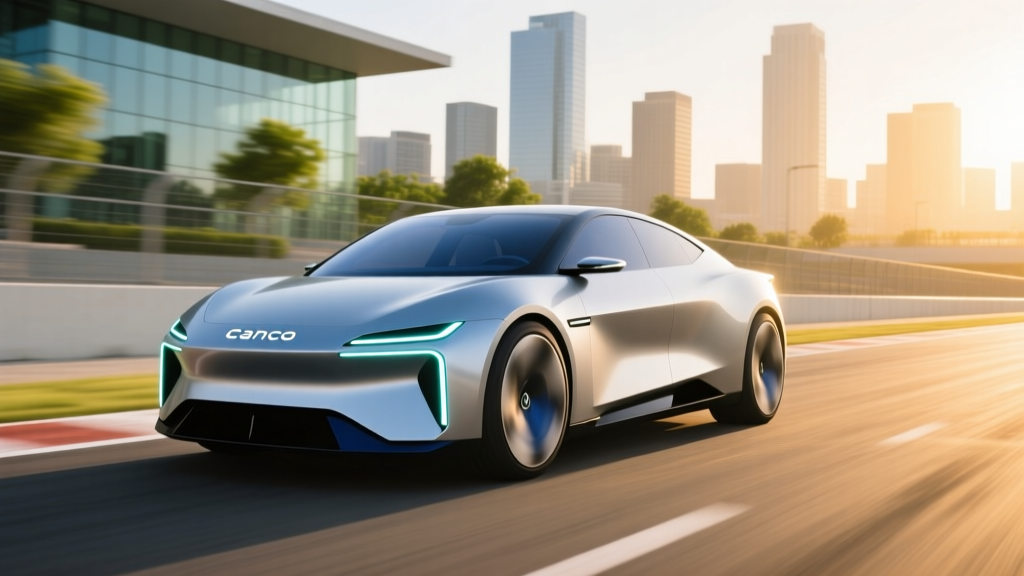
If you have been following the EV startup space, the Canoo electric car — specifically the Canoo Lifestyle Vehicle (LV) — has been one of the most talked-about and most delayed vehicles in the industry. With its unconventional skateboard platform, cab-forward design, and promises of class-leading interior space, Canoo generated significant hype. But as of early 2026, the question remains: can you actually buy one?
The short answer is complicated. Canoo faced severe financial distress through 2024 and 2025, including multiple rounds of layoffs, missed production deadlines, and a SEC filing trail that painted a picture of a company struggling to reach meaningful scale. This article gives you the most current, honest assessment of where the Canoo electric car stands in 2026 — what was promised, what may still come, and what you should consider instead if you need an EV today.
Canoo Lifestyle Vehicle: The Vision and Current Status
Canoo designed the Lifestyle Vehicle around a proprietary skateboard chassis that houses the battery pack, motors, and suspension in a flat platform beneath the cabin. The idea was to maximize interior volume while keeping the exterior footprint compact — essentially a pod-like people-mover with a panoramic windshield and a lounge-style interior.
Canoo originally announced multiple configurations: a base passenger model, a premium "Lifestyle" trim, and a commercial delivery variant. The company also pursued contracts with NASA (for crew transport around the Artemis launch sites), the U.S. Army, and various fleet buyers. However, converting announcements into production vehicles proved far more difficult than anticipated.
⚠️ Availability Warning: As of early 2026, the Canoo Lifestyle Vehicle is not available for consumer purchase at any dealership or direct-to-consumer channel. Canoo has not delivered meaningful volumes of production vehicles to retail buyers. All specifications discussed below are based on Canoo's previously published estimates and are subject to change or cancellation. If you need an EV now, see our competitor alternatives at the end of this article.
Canoo Electric Car Specs: What Was Announced
Because Canoo never reached full production or EPA certification for retail vehicles, there are no official fueleconomy.gov listings for the Lifestyle Vehicle. The figures below reflect Canoo's last-published targets and engineering estimates. Treat them as preliminary — not guaranteed.
| Specification | Canoo Lifestyle Vehicle (Announced/Estimated) |
|---|---|
| Battery Capacity | ~80 kWh (estimated usable) |
| Battery Chemistry | NMC (nickel manganese cobalt) — announced |
| EPA Range (Target) | ~250 miles (estimated, not EPA-certified) |
| Drivetrain | Rear-wheel drive (single motor); AWD variant planned |
| Horsepower | ~300 hp (single-motor RWD target) |
| 0-60 mph | ~6.3 seconds (estimated) |
| Max DC Fast Charge Rate | ~150 kW (announced peak) |
| 10-80% DC Charge Time | ~30 minutes (estimated at peak rate) |
| Level 2 Home Charging | ~11.5 kW onboard charger (announced) |
| Seating Capacity | Up to 7 passengers (lounge configuration) |
| Cargo Volume | ~130 cu ft (with seats folded — claimed) |
| Base MSRP (Announced Target) | ~$34,750 (base); ~$49,950 (premium) |
| Battery/Powertrain Warranty | Not formally published |
Real-World Range Expectations: Reading Between the Lines
📊 Range Reality Check: Canoo's announced target of ~250 miles was never EPA-certified. Even if the LV had reached production with that figure, real-world highway driving at 70+ mph typically reduces EV range by 15-20% compared to the EPA combined cycle. Cold-weather operation (below freezing) can further reduce range by 20-30% due to battery heating demands and cabin climate load. A realistic highway range estimate for the Canoo LV, had it shipped as specified, would likely fall between 190 and 215 miles in temperate conditions, and potentially 160-180 miles in winter.
The boxy, upright shape of the Lifestyle Vehicle works against highway efficiency. Aerodynamic drag is the dominant energy consumer above 60 mph, and the LV's van-like profile generates significantly more drag than a sleek sedan or crossover. Expect an efficiency rating in the neighborhood of 2.8-3.2 kWh/mile (roughly 105-115 MPGe equivalent) if the vehicle had been produced to spec — respectable for its shape, but not class-leading.
Charging Speed and Infrastructure Compatibility
Canoo announced a peak DC fast-charge rate of approximately 150 kW using a CCS1 connector. In practice, a 150 kW peak does not mean sustained 150 kW charging throughout the session. Most EVs with NMC chemistry and an ~80 kWh pack sustain peak rate only between roughly 10-40% state of charge before tapering. The announced 10-80% time of ~30 minutes would have placed the LV in the middle of the pack — slower than Hyundai/Kia's E-GMP platform (which peaks at 240+ kW and does 10-80% in ~18 minutes) but comparable to vehicles like the base Tesla Model Y on V2 Superchargers.
| Charging Level | Power | Estimated Speed |
|---|---|---|
| Level 1 (120V household) | ~1.4 kW | ~3-4 miles per hour |
| Level 2 (240V home/public) | ~11.5 kW | ~35-40 miles per hour |
| DC Fast Charge (CCS1) | Up to ~150 kW peak | ~10-80% in ~30 min (estimated) |
For home charging on a Level 2 circuit, a full overnight charge (from 10% to 100%) would take approximately 7-8 hours — standard for the segment. Canoo did not announce NACS (Tesla connector) compatibility, which by 2026 has become the dominant standard across the industry. Any Canoo vehicle produced going forward would likely need a NACS port or adapter to access Tesla Superchargers, a significant consideration given the Supercharger network's reliability advantage.
Pricing, Tax Credits, and the Value Proposition
Canoo originally targeted a base MSRP around $34,750 for the entry-level passenger model, with a fully loaded premium version approaching $49,950. These prices were announced in 2021-2022 and were never updated to reflect inflation, supply-chain cost increases, or the company's financial realities.
| Trim (Announced) | Target MSRP | Potential §30D Credit | Effective Price (If Eligible) |
|---|---|---|---|
| Base | ~$34,750 | Up to $7,500* | ~$27,250 |
| Premium | ~$49,950 | Up to $7,500* | ~$42,450 |
*Federal §30D tax credit eligibility depends on multiple factors per current IRS rules: buyer income caps ($150K single / $300K joint), vehicle MSRP caps ($55K for sedans, $80K for SUVs/vans), battery component and critical mineral sourcing requirements, and North American final assembly. Because Canoo never achieved production scale, the LV's battery sourcing and assembly location were never confirmed for §30D qualification. Even if the vehicle had launched, credit eligibility would have been uncertain.
Point-of-sale transfer of the credit (available since January 2024) would have allowed buyers to apply the credit as an immediate price reduction at purchase — but only if the vehicle was on the IRS's qualified vehicles list, which it never appeared on.
Interior, Tech, and the Canoo Difference
The Canoo LV's strongest selling point was always its interior concept. The cab-forward design pushed the windshield far forward and eliminated a traditional hood, creating a cabin that felt far larger than the vehicle's compact exterior suggested. Key design features included:
- Lounge-style seating: Front seats that swivel to face rear passengers when parked
- Panoramic glass front: A massive windshield providing an almost unobstructed forward view
- Flat floor: The skateboard platform enabled a completely flat interior floor with no transmission tunnel
- Modular interior: Configurable seating for up to 7, or fold-flat for cargo
- Minimalist dashboard: A single central display with no traditional instrument cluster
On the driver-assistance front, Canoo announced plans for a Level 2 ADAS suite (comparable to Tesla Autopilot or Ford BlueCruise) with adaptive cruise control, lane-centering, and automated parking. However, the company never demonstrated a production-ready system, and achieving reliable Level 2 performance requires extensive real-world validation that Canoo's limited test fleet could not provide.
🤖 SAE Automation Level: Canoo's announced driver-assist system would have been classified as SAE Level 2 — meaning the driver must remain fully engaged, with hands on or near the wheel and eyes on the road at all times. This is not self-driving. No consumer vehicle sold in the U.S. offers Level 3 or above autonomy as of 2026, outside of limited Level 4 robotaxi services like Waymo in specific geofenced areas.
Canoo's Financial Reality: Why You Can't Buy One
Canoo went public via SPAC merger in late 2020, riding the wave of EV startup enthusiasm. But the company burned through capital at an alarming rate without achieving meaningful production. Key milestones in Canoo's troubled history:
- 2021: Co-founder and CEO Stefan Krause departed; multiple executive exits followed
- 2022: Received a NASA contract for Artemis crew vehicles (small production run, not consumer models)
- 2023: Announced production facility plans in Oklahoma; laid off significant staff
- 2024: Received delisting warnings from Nasdaq; multiple rounds of layoffs; production delays continued
- 2025: Financial restructuring efforts; no meaningful retail vehicle deliveries
- 2026: Company status remains precarious; no retail purchasing channel exists
The pattern is familiar to anyone who followed Lordstown Motors, Fisker Inc., or Nikola — ambitious prototypes, SPAC-funded hype, and an inability to bridge the gap between concept and scaled manufacturing. Building cars at volume is brutally capital-intensive, and Canoo never secured the funding or partnerships needed to cross that threshold.
Competitor Alternatives: What to Buy Instead
If the Canoo electric car's value proposition — spacious interior, family-friendly layout, competitive range and price — appeals to you, here are production EVs available in 2026 that actually deliver:
| Vehicle | EPA Range | Battery | DC Fast Charge | Base MSRP | §30D Credit |
|---|---|---|---|---|---|
| Kia EV9 (2026) | ~304 mi | 100 kWh, NMC | 240 kW, 10-80% ~18 min | ~$54,900 | Eligibility varies by sourcing |
| Hyundai Ioniq 9 (2026) | ~300+ mi (est.) | 110.3 kWh, NMC | ~240 kW, 10-80% ~20 min | ~$52,000 | Eligibility varies by sourcing |
| Volkswagen ID.4 (2026) | ~275 mi | 82 kWh, NMC | ~175 kW, 10-80% ~28 min | ~$39,735 | Eligible (U.S. assembly) |
| Tesla Model Y (2026) | ~320 mi | ~75 kWh, LFP/NMC | ~250 kW, 10-80% ~15 min | ~$44,990 | Eligibility varies by trim |
Choose the Kia EV9 if: You need three-row seating, fast 800V charging, and a proven warranty — and you're willing to pay a premium.
Choose the VW ID.4 if: You want the closest thing to Canoo's target price point with real EPA-certified range, U.S. production, and likely §30D eligibility.
Choose the Tesla Model Y if: Supercharger access and charging speed are your top priorities, and you prefer the most established charging ecosystem.
Pros and Cons: The Canoo Electric Car
Pros (Concept)
- Innovative skateboard platform maximizes interior volume
- Cab-forward design with panoramic visibility
- Lounge-style configurable seating for up to 7
- Targeted competitive pricing (~$34,750 base)
- Flat floor and modular interior concept
Cons (Reality)
- Not available for purchase — no production vehicles delivered to consumers
- No EPA-certified range, efficiency, or safety ratings
- Company financial instability raises serious long-term support concerns
- No confirmed §30D tax credit eligibility
- 150 kW peak charging would have been below segment leaders
- No NACS connector — limited Supercharger access
- Unproven ADAS and no crash-test data
Frequently Asked Questions
What is the real-world range of the Canoo electric car?
Canoo announced a target range of approximately 250 miles, but this was never EPA-certified. In real-world highway and cold-weather conditions, the actual range would likely have been 190-215 miles in temperate weather and 160-180 miles in winter. However, since no production vehicles were delivered to consumers, these remain estimates only.
How fast does the Canoo Lifestyle Vehicle charge?
Canoo announced a peak DC fast-charge rate of ~150 kW with an estimated 10-80% time of ~30 minutes. Home Level 2 charging was targeted at ~11.5 kW, adding roughly 35-40 miles per hour. These figures were never independently verified through production testing.
How much does the Canoo electric car cost after tax credits?
Canoo targeted a base MSRP of ~$34,750, which could have dropped to ~$27,250 with the full $7,500 federal §30D tax credit. However, the vehicle never qualified for the credit because it never entered production, never appeared on the IRS qualified vehicles list, and its battery sourcing was never confirmed against §30D requirements.
Is the Canoo electric car worth buying vs. competitors?
You cannot buy a Canoo electric car in 2026. The company has not delivered production vehicles to retail consumers, and its financial outlook remains uncertain. Production alternatives like the Kia EV9, VW ID.4, and Tesla Model Y offer certified range, established service networks, real warranties, and confirmed (or likely) tax credit eligibility.
Does the Canoo electric car qualify for the federal EV tax credit?
No. As of 2026, the Canoo Lifestyle Vehicle does not appear on the IRS list of qualified clean vehicles. Federal §30D credit eligibility requires North American final assembly, battery component and critical mineral sourcing compliance, MSRP caps, and buyer income limits — none of which were confirmed for any Canoo production vehicle.
What happened to Canoo?
Canoo experienced severe financial difficulties from 2023 onward, including mass layoffs, Nasdaq delisting warnings, and repeated production delays. While the company secured some niche government and fleet contracts, it never achieved the scale needed for consumer vehicle production. As of 2026, the company's future remains uncertain.