Quick Answer: What Is Can-Am Electric?
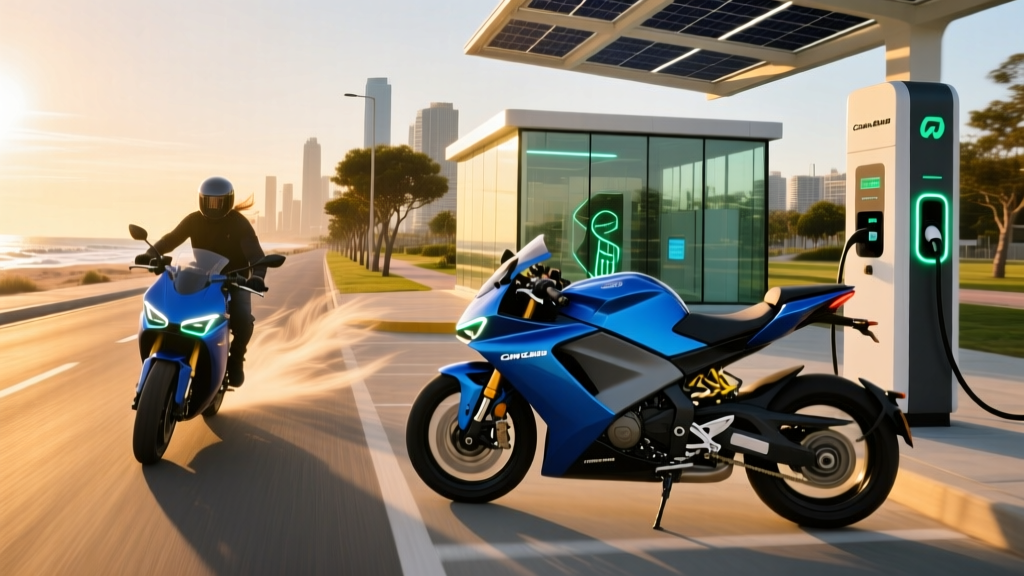
Can-Am Electric refers to BRP's (Bombardier Recreational Products) new line of electric motorcycles, unveiled under the revived Can-Am brand. The two initial models are the Can-Am Pulse (a street/naked bike) and the Can-Am Origin (a dual-sport/adventure bike). As of early 2026, both models are in the final pre-production and early delivery phase, with BRP targeting broader retail availability through the 2026 model year. The Pulse is expected to start around $13,999 and the Origin around $14,499, each powered by a roughly 8.9 kWh battery pack with an estimated city range of ~100 miles. These are electric motorcycles, not electric cars — they occupy a niche in urban commuting and light adventure riding, not highway touring.
Can-Am Pulse and Origin: What We Know for 2026
BRP announced its return to the Can-Am motorcycle brand — a name dormant since the 1980s — with two fully electric models. The company has deep powersports roots (Ski-Doo, Sea-Doo, side-by-sides), and these motorcycles represent its first foray into electric two-wheelers. Both bikes share the same core powertrain architecture but diverge in chassis, suspension, and intended use.
The Pulse is a street-focused naked motorcycle aimed at urban commuters. The Origin adds longer suspension travel, a 21-inch front wheel, and dual-sport ergonomics for riders who split time between pavement and dirt roads. Neither is designed for interstate touring — these are lightweight, agile machines optimized for sub-80 mph riding and stop-and-go urban environments.
| Specification | Can-Am Pulse (Street) | Can-Am Origin (Dual-Sport) |
|---|---|---|
| Base MSRP (est.) | $13,999 | $14,499 |
| Battery Capacity (usable) | ~8.9 kWh (NMC) | ~8.9 kWh (NMC) |
| Motor Output | ~47 hp (35 kW peak) | ~47 hp (35 kW peak) |
| Torque | ~53 lb-ft (72 Nm) | ~53 lb-ft (72 Nm) |
| City Range (est.) | ~100 mi (160 km) | ~85 mi (137 km) |
| Highway Range (est. @ 65 mph) | ~60 mi (97 km) | ~50 mi (80 km) |
| Top Speed | ~75 mph (120 km/h) | ~75 mph (120 km/h) |
| 0–60 mph (est.) | ~3.8 seconds | ~4.2 seconds |
| Level 2 AC Charge (0–80%) | ~1.5 hours (7.2 kW onboard) | ~1.5 hours (7.2 kW onboard) |
| DC Fast Charge | Not supported | Not supported |
| Wet Weight (est.) | ~390 lbs (177 kg) | ~410 lbs (186 kg) |
| Riding Modes | Rain, Road, Sport + Regen | Rain, Road, Sport, Off-Road + Regen |
| Warranty (projected) | 2-year limited; 5-year battery | 2-year limited; 5-year battery |
Note: Specs above are based on BRP's announced figures and pre-production disclosures as of early 2026. Final EPA-equivalent certifications and retail pricing may differ. Source: BRP / Can-Am Motorcycles.
Range Reality: City Commuting vs. Highway Riding
The headline range figure for both bikes hovers around 100 miles in city riding, but that number requires context. Electric motorcycles, like electric cars, consume significantly more energy at sustained highway speeds due to aerodynamic drag. The Pulse's small frontal area helps, but the ~8.9 kWh battery simply doesn't store enough energy for long-distance highway work.
- City/stop-and-go (25–45 mph): ~85–100 miles (Pulse); ~70–85 miles (Origin)
- Mixed suburban (45–55 mph): ~70–85 miles (Pulse); ~60–70 miles (Origin)
- Sustained highway (65+ mph): ~50–60 miles (Pulse); ~40–50 miles (Origin)
- Cold weather (below 40°F): Expect 15–25% range reduction due to battery chemistry and rider heating needs
Regenerative braking recovers meaningful energy in urban traffic — riders report 10–15% range extension in heavy stop-and-go conditions versus steady-speed riding.
For context, a typical urban motorcycle commuter rides 20–40 miles round trip. The Pulse handles that easily with charge to spare. But if your commute involves 30+ miles of freeway at 70 mph, you'll be watching the state-of-charge gauge closely — and these bikes are not designed for road trips between cities.
Charging: Level 2 Only, No DC Fast Charging
This is one of the most important ownership realities for prospective Can-Am electric buyers: neither the Pulse nor the Origin supports DC fast charging. The onboard charger tops out at approximately 7.2 kW on Level 2 AC power, meaning a 0–80% charge takes roughly 90 minutes, and a full 0–100% charge takes about 2 hours.
| Charge Level | Power (kW) | 0–80% Time | Full Charge Time | Where |
|---|---|---|---|---|
| Level 1 (120V household) | ~1.2 kW | ~7 hours | ~9 hours | Standard outlet |
| Level 2 (240V) | ~7.2 kW | ~1.5 hours | ~2 hours | Home wallbox / public L2 |
| DC Fast Charge | N/A | N/A | N/A | Not supported |
For daily commuting, this is workable: plug in at home overnight on Level 1, and you'll wake up fully charged every morning. A home Level 2 charger (240V, like a dryer outlet) cuts that to under 2 hours — useful if you ride both morning and evening with a midday top-up.
The absence of DC fast charging means these bikes are not viable for highway touring or long-distance riding. There's no pulling into an Electrify America or Tesla Supercharger station for a 20-minute top-up. Riders who need intercity capability should consider these bikes as part of a multi-vehicle household or stick to gasoline motorcycles for longer routes.
Cost of Ownership: Can-Am Electric vs. Gas Motorcycle
The upfront price of the Can-Am Pulse (~$13,999) and Origin (~$14,499) places them in the premium commuter category. For comparison, a new Honda CB500F starts around $6,899, and a KTM 390 Duke starts around $5,899. The electric premium is substantial — roughly $7,000–$8,500 more than a comparable gas commuter bike.
Where the electric bikes claw back cost is in fuel and maintenance:
| Cost Category | Can-Am Pulse (Electric) | Honda CB500F (Gas Equivalent) |
|---|---|---|
| Purchase Price | $13,999 | $6,899 |
| Fuel/Energy (5 years) | ~$900 (electricity @ $0.14/kWh) | ~$3,750 (gas @ $3.75/gal, 55 MPG avg) |
| Maintenance (5 years) | ~$400 (tires, brake pads, fluid) | ~$2,200 (oil, chain, filters, valves, plugs) |
| Insurance (5 years, avg) | ~$4,500 | ~$3,500 |
| Federal Tax Credit (§30D) | $0 (motorcycles excluded) | $0 |
| Total 5-Year Cost | ~$19,799 | ~$16,349 |
| Cost Per Mile | ~$0.33 | ~$0.27 |
Assumptions: 12,000 miles/year; electricity at $0.14/kWh national average; gas at $3.75/gallon; insurance estimates vary significantly by rider profile, location, and insurer. Source for fuel economy baselines: fueleconomy.gov.
Key Takeaway on Cost
Over five years, the Can-Am Pulse saves approximately $2,850 in fuel and $1,800 in maintenance compared to a gas equivalent — but the higher purchase price and slightly higher insurance premiums mean the total cost of ownership still favors the gas bike by roughly $3,450 over five years. The break-even point, assuming current energy and fuel prices, lands around year 8–9 — longer than most riders keep a commuter motorcycle.
Important tax credit note: The federal §30D Clean Vehicle Credit applies to four-wheeled vehicles — cars, trucks, SUVs, and vans. Electric motorcycles do not qualify for the $7,500 federal credit under current IRS rules. Some states or utilities offer separate incentives for electric motorcycles — check your state energy office and local electric utility for rebate programs, which can sometimes offset $500–$1,500 of the purchase price.
Home Charging Setup: What First-Time Buyers Need
Because these bikes charge on AC power only, your home charging setup is straightforward but worth planning:
- Level 1 (included): The bike will ship with a standard 120V charging cord. Plug into any grounded household outlet. Expect ~9 hours for a full charge — fine for overnight charging if you ride under 80 miles daily.
- Level 2 (recommended): A 240V outlet (NEMA 14-50, like an electric dryer) or a hardwired Level 2 EV charger will cut charge time to ~2 hours. Installation by a licensed electrician typically costs $500–$1,500 if your electrical panel has capacity, or $2,000–$4,000 if a panel upgrade (100A to 200A) is needed.
- Garage vs. outdoor: Most riders will charge in a garage. If you park outdoors, you'll need a weatherproof (NEMA 4-rated) outlet cover or outdoor-rated charging station.
| Component | Cost Range | Notes |
|---|---|---|
| Level 2 EV charger (hardware) | $300–$700 | 16A–32A units; J1772 connector |
| Electrical permit | $50–$200 | Varies by municipality |
| Electrician labor (240V run) | $400–$1,200 | Depends on panel distance and conduit |
| Panel upgrade (if needed) | $1,500–$3,000 | 100A → 200A service upgrade |
| Total (no panel upgrade) | $750–$2,100 | |
| Total (with panel upgrade) | $2,250–$5,100 |
Always get a quote from a licensed electrician before committing. Panel capacity, local code, and wire-run distance all affect final cost.
Common Misconceptions About Can-Am Electric Motorcycles
| Myth | Fact |
|---|---|
| "They qualify for the $7,500 federal EV tax credit." | No. §30D applies to 4-wheeled vehicles only. Motorcycles are excluded under current IRS rules. |
| "100 miles of range means I can ride 100 miles on the highway." | That range is for city riding. At 65+ mph, expect 50–60 miles (Pulse) or 40–50 miles (Origin). |
| "I can use DC fast chargers on road trips." | Neither bike supports DC fast charging. Level 2 AC at ~7.2 kW is the maximum charge rate. |
| "Electric motorcycles have no maintenance." | They still need tires (which wear faster due to instant torque), brake fluid, coolant checks, and suspension service. But no oil changes, chain maintenance, or spark plugs. |
| "The battery will need replacing in a few years." | Modern NMC motorcycle batteries are designed for 1,000+ full charge cycles before significant degradation. With normal use, that's 80,000–100,000+ miles. BRP projects a 5-year battery warranty. |
| "Can-Am is a new, unproven brand." | Can-Am was a successful motorcycle brand in the 1970s–80s. BRP (parent company) is a publicly traded powersports giant with decades of engineering experience. |
Decision Framework: Is a Can-Am Electric Motorcycle Right for You?
Choose the Can-Am Pulse if:
- Your daily commute is under 40 miles round trip, mostly on city/suburban roads
- You have access to home charging (garage or covered parking with an outlet)
- You value near-silent operation, zero tailpipe emissions, and minimal maintenance
- You already own a car or larger motorcycle for longer trips
- You're willing to pay a premium ($7,000–$8,500 over gas) for electric convenience and novelty
Choose the Can-Am Origin if:
- You want dual-sport capability for fire roads and light trails near your home
- Your rides are under 50 miles from home and you can charge at your destination
- You want electric torque delivery for off-road technical sections (instant, controllable power)
Stick with a gas motorcycle if:
- You regularly ride more than 60 miles one-way or take multi-day touring trips
- You live in an apartment or lack reliable home charging access
- You ride in extreme cold (below 20°F) frequently, where battery range drops 25%+
- Budget is the primary concern — a gas commuter bike costs roughly half as much upfront
- You need DC fast charging infrastructure for flexibility
Frequently Asked Questions
When will the Can-Am Pulse and Origin be available to buy?
BRP began limited deliveries and dealer allocations in late 2025, with broader retail availability expected throughout 2026. Check with authorized Can-Am motorcycle dealers for current inventory, as early production volumes are limited.
How long will the Can-Am electric motorcycle battery last?
BRP projects a 5-year battery warranty. The NMC battery pack is designed for 1,000+ full charge cycles before dropping below 80% state of health (SoH). With typical commuter use (one partial charge per day), that translates to roughly 8–10 years of service before meaningful capacity loss. Replacement cost is not yet published — expect it to be a significant expense ($3,000–$5,000+ based on current battery pricing trends).
Can I charge a Can-Am electric motorcycle at a public EV charging station?
Only at Level 2 (AC) public chargers that use a J1772 connector — and only if you have the appropriate adapter for the motorcycle's charge port. You cannot use DC fast chargers (CCS, NACS, CHAdeMO). Many public Level 2 chargers at workplaces, shopping centers, and parking garages will work, but charging will take 1.5–2 hours for a meaningful top-up.
Do Can-Am electric motorcycles have regenerative braking?
Yes. Both the Pulse and Origin feature adjustable regenerative braking with multiple levels. At the highest regen setting, the bikes approach one-handed riding in city traffic — lifting off the throttle slows the bike significantly and recovers energy back to the battery. This is especially valuable in stop-and-go urban riding for both range extension and brake-pad longevity.
How does the Can-Am Pulse compare to other electric motorcycles?
The primary competitors include the Zero SR/S (~$22,000, ~150 miles city range, 14.4 kWh battery) and the LiveWire One (~$21,999, ~146 miles city range, 15.4 kWh battery). The Can-Am Pulse undercuts both on price by roughly $7,000–$8,000, but with a smaller battery and shorter range. It's positioned as a more accessible entry point into electric motorcycling rather than a premium performance machine. The Energica Ego and Damon HyperSport occupy the high-performance end at $25,000+.
What about insurance costs for Can-Am electric motorcycles?
Electric motorcycle insurance tends to run 10–25% higher than equivalent gas bikes, primarily due to higher replacement values and limited repair-network familiarity. Expect annual premiums in the $700–$1,200 range depending on your age, riding history, location, and coverage level. Get quotes from motorcycle-specialist insurers (Progressive, Dairyland, Markel) before purchasing.
Are there any state incentives for electric motorcycles?
Some states and utilities offer rebates or incentives for electric motorcycles, separate from the federal §30D credit (which excludes two-wheelers). For example, California's Clean Fuel Reward program and various utility-company rebate programs have historically included electric motorcycles. Availability and amounts vary by jurisdiction and change frequently — check your state energy office and local electric utility for current programs.
Bottom Line
The Can-Am Pulse and Origin represent a credible entry from an established powersports company into the electric motorcycle space. They're priced aggressively compared to existing electric bikes from Zero and LiveWire, and they're well-suited for urban commuters with home charging and sub-50-mile daily rides. But the small battery, lack of DC fast charging, and absence of federal tax-credit eligibility mean these bikes serve a specific use case — not a replacement for a gas motorcycle if you need range flexibility. If your riding pattern fits the profile, the Can-Am electric lineup is worth a serious test ride when dealer inventory arrives.