The Short Answer: Chinese EVs in Canada
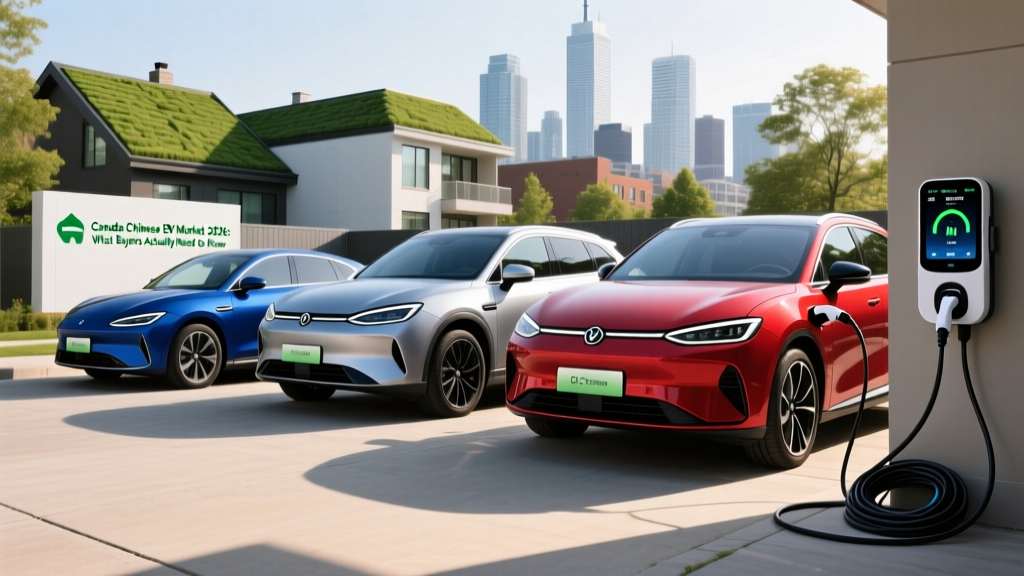
As of 2026, Canada imposes a 100% surtax on Chinese-made electric vehicles, effectively doubling their import price and making direct imports from brands like BYD, NIO, and Xpeng economically unviable. However, several Chinese-owned or Chinese-manufactured EVs are available in Canada through workarounds: Volvo's EX30 (owned by China's Geely) is assembled in Belgium, and Polestar (also Geely-backed) manufactures in China but benefits from pre-tariff import structures. The result is a limited but real selection of Chinese-connected EVs on Canadian lots — at prices significantly higher than their home-market stickers.
Why the 100% Tariff Changes Everything
In October 2024, Canada aligned with the United States in imposing a 100% surtax on all Chinese-manufactured EVs, layered on top of the standard 6.1% auto import duty. This policy was designed to protect North American auto manufacturing and counter what both governments identified as market-distorting subsidies from Beijing.
The practical impact is stark: a BYD Dolphin that retails for roughly C$30,000 in China would face approximately C$30,000 in additional tariffs before reaching a Canadian showroom, pushing its effective price above C$60,000 — well into Tesla Model Y and Hyundai Ioniq 5 territory, but without the established dealer network or federal iZEV rebate compatibility that mainstream brands offer.
This tariff applies based on country of manufacture, not brand nationality. A Volvo EX30 designed by a Chinese parent company but built in Ghent, Belgium, enters Canada at normal duty rates. A Tesla Model 3 built in Shanghai for export, however, would face the full surtax — which is why Tesla shifted Canadian-bound production to Gigafactory Texas and Berlin.
Which Chinese-Connected EVs Can You Actually Buy in Canada?
Despite the tariff wall, several vehicles with Chinese ownership or partial Chinese manufacturing are available to Canadian buyers in 2026:
| Model | Parent Company | Assembly Location | EPA-est. Range | Starting MSRP (CAD) | Tariff Status |
|---|---|---|---|---|---|
| Volvo EX30 | Geely (China) | Ghent, Belgium | 275 mi (Single Motor) | ~$44,900 | Not subject to China tariff |
| Volvo EX90 | Geely (China) | Ridgeville, SC, USA | 300 mi (Twin Motor) | ~$82,000 | Not subject to China tariff |
| Polestar 2 | Geely/Volvo | Taizhou, China (2024+ shifted) | 276 mi (LRSM) | ~$54,300 | Subject to 100% surtax on China-built units |
| Polestar 3 | Geely/Volvo | Chengdu, China / Ridgeville, SC | 315 mi (LRDM) | ~$79,900 | SC-built units exempt |
| Lotus Eletre | Geely (China) | Wuhan, China | ~304 mi (WLTP) | ~$110,000+ | Subject to 100% surtax |
Key takeaway: The Polestar situation is the most complex. Polestar 2 units manufactured in China are subject to the surtax, which pushed Polestar to accelerate production shifts to South Korea and the United States. Canadian buyers should verify the VIN's country of origin (WMI code) before purchasing — a "L" prefix indicates Chinese manufacture.
Cost Comparison: Chinese-Connected EVs vs. Mainstream Alternatives
Let's compare what a Canadian buyer actually pays for a Chinese-connected EV versus its direct competitors in the C$45,000–$60,000 range, factoring in the federal iZEV program (up to C$5,000 for eligible vehicles) and provincial incentives where applicable.
| Cost Factor | Volvo EX30 (Belgium-built) | Tesla Model Y LR (USA) | Hyundai Ioniq 5 (Korea/USA) |
|---|---|---|---|
| Base MSRP (CAD) | $44,900 | $59,990 | $54,499 |
| Federal iZEV Rebate | -$5,000 | -$5,000 | -$5,000 |
| BC Provincial Rebate (if eligible) | -$4,000 | -$4,000 | -$4,000 |
| Effective Price (BC buyer) | $35,900 | $50,990 | $45,499 |
| Battery (kWh / Chemistry) | 69 kWh / NMC | 75 kWh / NMC | 77.4 kWh / NMC |
| EPA Range | 275 mi | 320 mi | 303 mi |
| Peak DC Charge Rate | 153 kW | 250 kW | 238 kW |
| 10-80% DC Charge Time | ~26 min | ~15 min | ~18 min |
| 0-60 mph | 5.1 sec (SM) | 4.8 sec | 5.0 sec (RWD) |
| Battery Warranty | 8 yr / 100,000 mi | 8 yr / 120,000 mi | 10 yr / 100,000 mi |
The Volvo EX30 emerges as the most affordable entry point among these three, largely because its Belgium assembly avoids the China tariff while still qualifying for Canadian EV rebates. However, its smaller battery and slower DC charging rate mean longer road-trip stops — a meaningful tradeoff in a country where distances between fast chargers in rural areas can exceed 150 km.
Real-World Ownership: What Canadian Buyers Must Consider
Beyond the spec sheet, owning a Chinese-connected EV in Canada involves several practical realities that spec-shopping alone won't reveal:
Cold-Weather Range Loss
All lithium-ion batteries lose efficiency in cold temperatures, but Canadian winters are punishing. Expect 25-40% range reduction at -20°C compared to the EPA sticker. The EX30's 275-mile EPA range realistically drops to 165-205 miles in a Prairie January. Models with a heat pump (standard on the EX30 and Ioniq 5, optional on some Tesla trims) recover some of this loss by heating the cabin more efficiently than resistive elements.
Charging Infrastructure Gaps
Canada's public DC fast-charging network is concentrated in the Quebec City–Windsor corridor and the Lower Mainland. Outside these zones, Natural Resources Canada's EV infrastructure map shows vast stretches of highway with chargers spaced 200+ km apart. If you live in rural Saskatchewan or northern BC, home Level 2 charging is essential — and a Chinese-branded EV with limited Supercharger or Electrify America network access could be a liability on road trips.
Dealer Network and Service
Volvo and Polestar have established Canadian dealer networks, though service capacity for EV-specific issues (battery diagnostics, thermal management faults) varies by location. BYD, NIO, and Xpeng have no Canadian retail presence as of 2026, meaning zero local service infrastructure. Buying a grey-market import would leave you without warranty support — a risk most buyers should avoid.
Insurance Costs
EV insurance premiums in Canada run 15-30% higher than comparable gas vehicles due to higher repair costs and battery replacement values. The EX30, being newer and lower-volume, may carry higher premiums than a Tesla Model Y, for which Canadian insurers have more claims data. Get a quote before committing.
What If the Tariff Were Lifted? The BYD Question
BYD — the world's largest EV manufacturer by volume — has been circling the Canadian market for years. If trade policy shifted (unlikely before 2028 given current geopolitical trajectories), models like these could theoretically enter Canada:
| BYD Model | China MSRP (approx. CAD) | Battery / Range (CLTC) | Estimated Canada Price (with 100% tariff) | Estimated Canada Price (no tariff) |
|---|---|---|---|---|
| Dolphin | ~$22,000 | 60.5 kWh LFP / 420 km | ~$48,000+ | ~$27,000 |
| Atto 3 (Yuan Plus) | ~$26,000 | 60.5 kWh LFP / 430 km | ~$56,000+ | ~$31,000 |
| Seal | ~$32,000 | 82.5 kWh LFP / 570 km | ~$68,000+ | ~$38,000 |
| Seagull | ~$14,000 | 38.9 kWh LFP / 305 km | ~$32,000+ | ~$18,000 |
The numbers reveal the tariff's intent: without it, a BYD Seagull at C$18,000 would undercut every EV in Canada by a massive margin. With it, even the Dolphin lands near Ioniq 5 pricing — eliminating the cost advantage that makes Chinese EVs disruptive in Europe and Southeast Asia.
Note that CLTC range figures (China's testing standard) are roughly 15-20% more optimistic than EPA estimates. A BYD Seal rated at 570 km CLTC would likely achieve an EPA rating closer to 280-300 miles — comparable to, not better than, established competitors.
Decision Framework: Should You Buy a Chinese-Connected EV in Canada?
Choose a Chinese-connected EV (like the Volvo EX30) if:
- You want the most affordable premium EV entry point under C$45,000 (after rebates)
- Your daily commute is under 100 km round-trip and you have home Level 2 charging
- You value Scandinavian design and Volvo's safety reputation over maximum range
- You primarily drive in urban/suburban areas with reliable public charging backup
- You're comfortable with a smaller dealer network for service
Choose a mainstream alternative (Tesla, Hyundai, Ford) if:
- You regularly drive long distances in winter (300+ km highway trips in cold weather)
- You need access to the widest possible fast-charging network (Tesla Superchargers)
- You want the longest proven battery warranty and lowest insurance premiums
- You live in a rural area with limited public charging infrastructure
- You prefer a large service network with EV-trained technicians nearby
Common Misconceptions About Chinese EVs in Canada
| Myth | Fact |
|---|---|
| "You can't buy any Chinese EVs in Canada" | Volvo (Geely-owned) sells the Belgium-built EX30 and US-built EX90. Polestar sells US-built models. The tariff targets manufacturing origin, not brand ownership. |
| "Chinese EVs are cheap and low quality" | BYD's Seal and NIO's ET7 compete on technology and build quality with BMW and Mercedes. The price advantage comes from subsidized supply chains and lower labor costs, not inferior engineering. |
| "The 100% tariff means Chinese EVs are banned" | It's a surtax, not a ban. Importers can legally bring in Chinese-made EVs — the price simply doubles, making them commercially unviable. |
| "Chinese EV batteries are less safe" | CATL and BYD (both Chinese) are the world's largest battery suppliers, providing cells to Tesla, BMW, and others. LFP chemistry, pioneered at scale by BYD, is among the safest lithium-ion chemistries available. |
| "The tariff will be repealed soon" | Both major Canadian political parties support the tariff as of 2026. Repeal would require a significant shift in Canada-China trade relations and North American auto policy. |
Frequently Asked Questions
Can I import a BYD or NIO from the US to avoid the Canadian tariff?
No. The 100% surtax applies to Chinese-manufactured EVs imported into Canada regardless of the intermediary country. If the vehicle's VIN indicates Chinese manufacture (WMI starting with "L"), Canada Border Services Agency will assess the surtax at the border. Additionally, US-spec vehicles may not meet Canadian Motor Vehicle Safety Standards (CMVSS), requiring costly modifications.
Does the Volvo EX30 qualify for Canada's federal iZEV rebate?
Yes, as of 2026 the Volvo EX30 qualifies for the full C$5,000 federal iZEV incentive because it is manufactured in Belgium (not China) and its base MSRP falls under the C$55,000 cap for passenger cars. It may also qualify for provincial rebates in BC (up to C$4,000) and Quebec (up to C$7,000), depending on income eligibility. Always verify current eligibility on the Transport Canada iZEV page before purchasing.
Will BYD ever sell cars in Canada?
BYD has expressed interest in the Canadian market and has explored building a manufacturing plant in Mexico or South America to serve North America tariff-free. However, any Mexican-built BYD would face scrutiny under CUSMA (USMCA) rules of origin, and Canada has signaled it would extend the 100% surtax to Chinese-brand vehicles assembled in third countries if deemed to be circumvention. No BYD retail presence is expected before 2028 at the earliest.
Are Chinese-owned EV brands like Volvo safe to buy given geopolitical tensions?
From a product standpoint, yes — Volvo's engineering, safety testing, and manufacturing quality remain headquartered in Gothenburg, Sweden, and are subject to EU and Canadian regulatory standards. Geely's ownership provides capital and EV platform technology (the SEA architecture underpinning the EX30), but does not alter Volvo's safety or quality processes. The geopolitical risk is primarily around data privacy (connected-car telemetry) and long-term parts supply if sanctions escalate — both low-probability scenarios for Canadian-market Volvos.
How does LFP battery chemistry in Chinese EVs compare to NMC?
LFP (lithium iron phosphate) batteries, widely used by BYD and in some Tesla models, offer longer cycle life (3,000+ cycles vs. ~1,500 for NMC), better thermal stability (lower fire risk), and lower cost. The tradeoff is lower energy density — meaning heavier, bulkier packs for the same range. In Canadian winters, LFP batteries experience similar cold-weather range loss to NMC (25-40%), but their longer lifespan makes them well-suited for buyers who plan to keep their EV 10+ years. NMC remains preferable when maximum range in a lighter package is the priority.