Tesla owners often ask a question that would have been unthinkable a decade ago: can you tune a Tesla the way enthusiasts have always tuned internal-combustion cars? The short answer is yes — but the playbook is completely different. There's no ECU flash for more boost pressure, no intake to swap, no exhaust to open up. Instead, Tesla tuning lives in the world of software unlocks, suspension geometry, wheel-and-tire packages, and thermal management tricks. Some of it works brilliantly. Some of it will void your warranty in a heartbeat.
This guide dissects every realistic avenue for extracting more performance from a Tesla vehicle in 2026, with real numbers, real costs, and real consequences. We'll use the current Tesla Model 3 Performance (2026) as our baseline reference platform, since it's the most commonly tuned Tesla and the one where gains are most measurable.
The Baseline: 2026 Tesla Model 3 Performance Specs
Before changing anything, you need to know exactly what you're starting with. The 2026 Model 3 Performance (sometimes called the "Highland" Performance refresh) is a substantially different car from the pre-2024 versions, with a new front motor, revised suspension, and Track Mode V3.
| Spec | Value |
|---|---|
| EPA Range | 315 miles |
| Battery (usable) | ~79 kWh (NMC chemistry) |
| Drivetrain | Dual Motor AWD |
| Horsepower | 510 hp (combined) |
| Torque | 546 lb-ft |
| 0-60 mph | 2.9 seconds |
| Top Speed | 163 mph |
| Efficiency | 113 MPGe / 25 kWh/100 mi |
| Max DC Fast Charge | 250 kW (peak) |
| 10-80% DCFC Time | ~25 minutes |
| Level 2 Home Charge | 11.5 kW (~44 mi/hr) |
| Cargo Volume | 23 cu ft (rear trunk) + 3.1 cu ft (frunk) |
| Base MSRP | $52,990 (before incentives) |
| Battery Warranty | 8 years / 120,000 miles |
Software Tuning: Unlocking What Tesla Already Built
The most consequential "tune" you can apply to a Tesla isn't aftermarket at all — it's software Tesla already wrote but locked behind a paywall. This is the closest EV equivalent to an ECU flash.
Acceleration Boost
For Model 3 Long Range AWD owners (not Performance trim), Tesla offers an Acceleration Boost over-the-air purchase — typically $1,500 to $2,000 — that drops the 0-60 time from approximately 4.2 seconds to roughly 3.9 seconds. This is a legitimate software unlock that re-maps torque delivery. It does not increase peak horsepower; it changes the torque curve to deliver peak torque more aggressively at lower speeds.
Important: Acceleration Boost is only available for specific dual-motor Long Range configurations. Tesla controls availability, and it can disappear from the upgrade menu at any time. If you're buying a used Model 3 LR AWD, check whether the previous owner already purchased it — it transfers with the VIN.
Track Mode (Performance Trims Only)
Track Mode is Tesla's factory performance-tuning interface, available on Model 3 Performance and Model Y Performance. It doesn't add power, but it fundamentally changes how the car behaves at the limit:
- Torque vectoring: Shifts torque front-to-rear and side-to-side for cornering agility
- Regen tuning: Adjusts regenerative braking intensity for track use
- Cooling management: Preconditions the battery and drive units for sustained high-output driving
- Stability control: Allows adjustable slip angles before intervening
Track Mode V3 on the refreshed Model 3 Performance also includes a customizable "driver confidence" slider, letting you dial in exactly how much electronic nannying you want. This is genuine performance tuning — just not the horsepower-additive kind.
Third-Party Software Tunes: The Gray Market
Companies like Unplugged Performance and a handful of European tuners have explored Tesla software modifications, but the landscape is fraught. Tesla's firmware is cryptographically signed and tightly controlled. Unlike a Bosch or Siemens ECU in an ICE car, you can't simply plug in an OBD-II flash tool.
Some third-party "tunes" work by intercepting signals between the vehicle's controller and drive unit — essentially a man-in-the-middle approach. These can marginally increase torque output (claims of 5-10% are common), but they carry severe consequences:
- Warranty void: Tesla's service centers can detect tampered firmware. Your 8-year/120,000-mile battery and drive unit warranty will be flagged.
- OTA update risk: A Tesla over-the-air update can overwrite or brick the third-party tune, potentially leaving the car inoperable until reverted.
- Safety systems: Modifying torque delivery can interact unpredictably with traction control and stability systems.
Our recommendation: software tuning via third-party interception is not worth the risk for a daily-driven Tesla. The gains are marginal, and the warranty exposure is massive.
Hardware Upgrades That Actually Work
Where Tesla tuning gets genuinely effective — and where enthusiast dollars are best spent — is in hardware that doesn't touch the powertrain firmware.
Suspension and Handling
The 2026 Model 3 Performance already has a significantly improved suspension over earlier Highland models, with frequency-selective dampers and a stiffer front subframe. But for track use or aggressive canyon driving, aftermarket options exist:
- Coilover kits (Unplugged Performance, Mountain Pass Performance, KW): $2,500-$4,500 installed. These lower the car 15-25mm, increase spring rates, and dramatically reduce body roll. Expect 0.5-1.0 second improvement on a typical autocross course.
- Sway bars: Aftermarket front and rear anti-roll bars ($600-$1,200) reduce understeer and sharpen turn-in. The Model 3's factory setup is tuned for understeer at the limit (a safety choice); stiffer rear bars can neutralize this.
- Bushings: Polyurethane control-arm bushings reduce compliance and improve steering feel, though they transmit more road noise.
Wheels and Tires: The Biggest Bang-for-Buck
This is the single most impactful modification you can make to a Tesla's performance. The factory 20" wheels with Michelin Pilot Sport 4S tires are competent, but switching to a dedicated setup transforms the car:
- Lighter forged wheels (19" or 20"): Reduce unsprung mass by 5-8 lbs per corner, improving acceleration, braking, and suspension response. Cost: $2,000-$4,000 per set.
- Sticky summer tires (Michelin Pilot Sport Cup 2, Pirelli P Zero Trofeo R): Increase lateral grip from roughly 0.95g to 1.05-1.10g. This directly translates to faster cornering and shorter braking distances.
- Range trade-off: Stickier, wider tires increase rolling resistance. Expect a 5-12% reduction in real-world range — roughly 15-35 fewer miles per charge on highway driving.
Brake Upgrades
The Model 3 Performance's factory brakes are adequate for street use but will fade during repeated track hot laps. Upgraded options include:
- Unplugged Performance big brake kit: 6-piston front calipers with 380mm rotors. ~$4,500 installed. Dramatically improves fade resistance and pedal feel.
- High-temp brake fluid and track pads: A $300-$500 upgrade that makes a noticeable difference for occasional track days without the cost of a full big-brake kit.
Charging Speed and Efficiency After Modifications
A common question: does tuning affect charging speed? The answer depends on what you've changed.
| Scenario | Max DCFC kW | 10-80% Time | Notes |
|---|---|---|---|
| Stock (factory) | 250 kW peak | ~25 min | Sustained rate drops above 55% SoC |
| With sticky tires / suspension | 250 kW peak | ~25 min | No change — charging is battery-limited, not drivetrain-limited |
| With third-party powertrain tune | 250 kW peak | ~25 min (if no thermal interference) | Some tunes alter thermal management, potentially slowing charge speeds |
| Cold battery (no preconditioning) | 50-100 kW peak | 45-60+ min | Always precondition before DC fast charging |
The critical insight: Tesla's charging speed is governed by the battery management system (BMS) and thermal conditions, not by the drive unit. Suspension and wheel modifications have zero effect on charging. However, any modification that interferes with the thermal management loop (some aggressive third-party powertrain tunes alter coolant flow parameters) could theoretically reduce sustained charge rates.
Preconditioning matters enormously. Navigate to a Supercharger using the car's built-in navigation, and the Model 3 will automatically warm the battery to optimal charging temperature. Without preconditioning, a cold battery at 32°F might accept only 50 kW — turning a 25-minute charge into a 55-minute ordeal.
Cost, Tax Credits, and the Tuning Budget
Let's put the full financial picture together — the car itself, potential incentives, and a realistic tuning budget.
| Item | Amount |
|---|---|
| Base MSRP (Performance AWD) | $52,990 |
| Destination fee | $1,390 |
| Federal §30D Tax Credit | Up to $7,500 (see eligibility below) |
| Effective price after max credit | ~$46,880 |
§30D Tax Credit Eligibility — Critical Rules for 2026:
- MSRP cap: Sedans must be under $55,000 MSRP. The Model 3 Performance at $52,990 qualifies; add options carefully to stay under the cap.
- Buyer income cap: Adjusted gross income must not exceed $150,000 (single), $225,000 (head of household), or $300,000 (joint filers).
- Battery sourcing: A percentage of critical minerals and battery components must be sourced from the US or free-trade-agreement countries. Tesla's supply chain has increasingly met these requirements, but eligibility can change — verify at IRS.gov's qualified vehicle list before purchasing.
- Point-of-sale transfer: As of 2024, you can transfer the credit to the dealer at purchase, reducing your out-of-pocket cost immediately rather than waiting for tax filing.
Realistic Tuning Budget
| Modification | Cost Range | Performance Impact | Warranty Risk |
|---|---|---|---|
| Acceleration Boost (LR only) | $1,500-$2,000 | 0-60 drops ~0.3 sec | None (factory) |
| Aftermarket coilovers | $2,500-$4,500 | Significant handling improvement | Low (suspension only) |
| Forged wheels + summer tires | $3,500-$6,000 | 0.05-0.10g more lateral grip | None |
| Big brake kit | $3,500-$5,500 | Better fade resistance, shorter stops | Low |
| Sway bars | $600-$1,200 | Reduced body roll, less understeer | None |
| Third-party powertrain tune | $1,500-$3,000 | 5-10% torque increase (claimed) | HIGH — voids drivetrain warranty |
Does Tuning Void the Tesla Warranty?
This is the question that separates responsible Tesla modifiers from regretful ones. Here's the precise breakdown:
What DOESN'T void your warranty:
- Wheels and tires (as long as you stay within reasonable size specs — Tesla has been known to flag TPMS-related issues with non-standard wheels)
- Suspension components (coilovers, sway bars, bushings) — Tesla's warranty covers the battery and drive unit; suspension is a separate system
- Brake upgrades (pads, fluid, even big-brake kits)
- Cosmetic modifications (wraps, tint, interior trim)
What WILL void your warranty:
- Any modification to the powertrain firmware or hardware
- Intercepting or altering CAN bus signals between vehicle controllers
- Modifications to the battery pack, BMS, or thermal management system
- Aftermarket "range extenders" or battery modifications (these are also potentially dangerous)
Tesla's service centers have sophisticated diagnostic tools that log firmware versions and detect anomalies. If a drive unit fails and the logs show unauthorized firmware, your 8-year/120,000-mile warranty claim will be denied — and a replacement drive unit costs $8,000-$15,000.
Pros and Cons of Tesla Tuning
Pros
- Suspension and wheel upgrades transform handling without warranty risk
- Acceleration Boost (LR AWD) is a legitimate, factory-supported performance gain
- Track Mode offers genuine, adjustable performance tuning built into the car
- Brake upgrades address a real weakness for track driving
- EV "tuning" avoids the emissions-legal complexity of ICE modifications
Cons
- No affordable way to add significant horsepower — the motor is what it is
- Third-party powertrain tunes carry extreme warranty risk for minimal gains
- Sticky tires reduce range by 5-12% — a real daily-driving trade-off
- Tesla can remotely detect and potentially disable unauthorized modifications
- Resale value impact is uncertain — modified Teslas may be harder to sell
Who Should (and Shouldn't) Tune Their Tesla
Frequently Asked Questions
Can you chip or remap a Tesla for more power?
Not in the traditional sense. Tesla's drive unit firmware is cryptographically signed and cannot be reflashed with aftermarket software. Third-party "tunes" that intercept CAN bus signals exist but carry severe warranty and reliability risks. The only legitimate software power increase is Tesla's own Acceleration Boost, available on select Long Range AWD models for $1,500-$2,000.
Does tuning a Tesla void the warranty?
It depends on what you modify. Wheels, tires, suspension, and brakes generally do not affect the battery or powertrain warranty. Any modification to the firmware, drive unit, battery, or thermal management system will void the 8-year/120,000-mile drivetrain warranty. Tesla's diagnostics can detect unauthorized firmware changes.
What's the fastest Tesla you can buy without tuning?
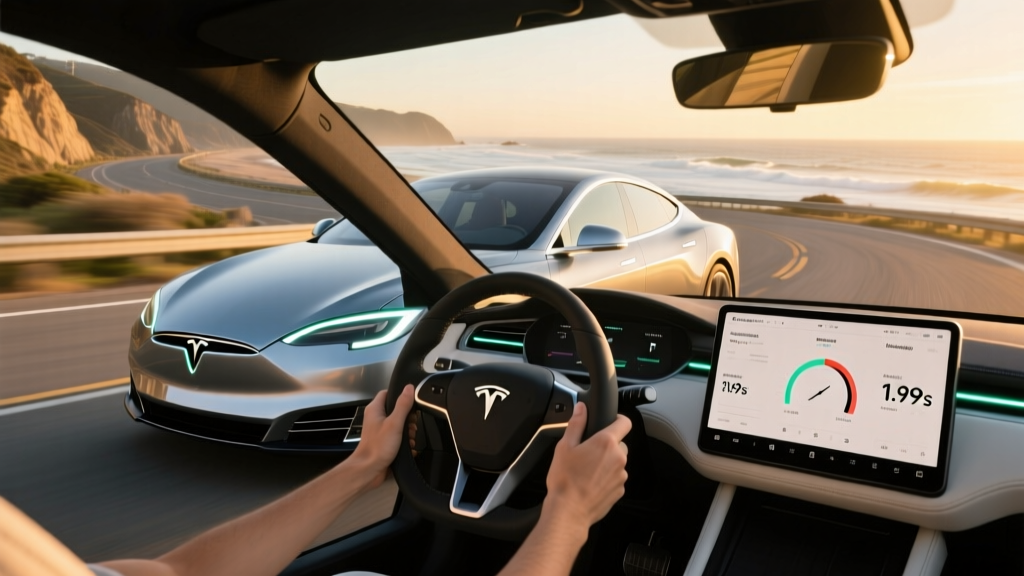
The Tesla Model S Plaid does 0-60 mph in 1.99 seconds (with rollout subtracted) and produces 1,020 hp. It's one of the fastest production cars ever made, and no tuning is needed or advisable. For the Model 3 lineup, the Performance trim's 2.9-second 0-60 is supercar territory from just a few years ago.
Will aftermarket wheels affect my Tesla's range?
Yes. Lighter, narrower wheels with low-rolling-resistance tires can slightly improve range. Heavier or wider wheels with sticky compound tires will reduce range by 5-15%. The effect is proportional to the change in rolling resistance and aerodynamic drag. Expect to lose 15-35 highway miles of range with a dedicated summer tire setup.
Is it worth tuning a Tesla for daily driving?
For daily driving, the highest-value modifications are a quality set of all-season or summer tires on lighter wheels (better ride, better grip, better steering feel) and, if available, Acceleration Boost. Coilovers improve ride quality only if you choose adjustable units with proper damping. Big brake kits and track-focused modifications are wasted money on a car that never sees a track.
Does the 2026 Model 3 Performance qualify for the federal EV tax credit?
The 2026 Model 3 Performance at $52,990 MSRP is under the $55,000 sedan cap for §30D. Eligibility depends on your income (under $150K single / $300K joint), battery sourcing compliance, and purchasing new from Tesla directly. The credit can be transferred at point of sale to reduce your purchase price immediately. Always verify current eligibility at IRS.gov before committing to a purchase.
Sources: EPA fuel economy data via fueleconomy.gov; IRS §30D qualified vehicle list at irs.gov; Tesla Model 3 specifications from tesla.com.