Quick Verdict: The VW ID.4 Lease Question, Answered
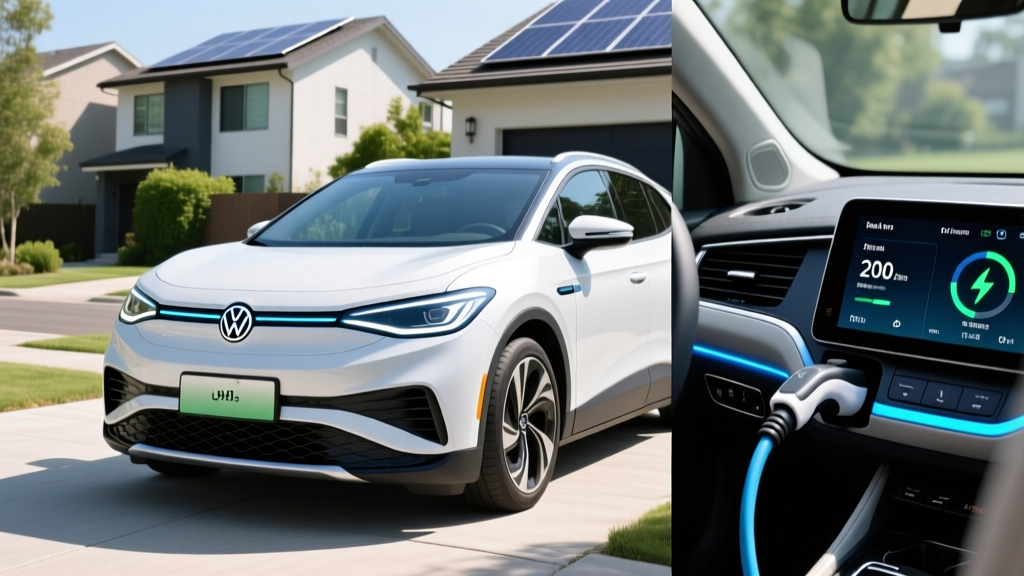
Yes, you can lease a Volkswagen ID.4 in 2026 — and for many buyers, leasing is the smarter financial path. Volkswagen Credit (the brand's captive finance arm) routinely offers ID.4 lease deals through franchised VW dealerships nationwide, often with competitive money factors and residual values that keep monthly payments well below what a purchase loan would require. But before you sign, you need to understand how the federal EV tax credit interacts with a lease, what the ID.4 actually delivers in range and charging speed, and whether this compact electric SUV fits your daily driving reality.
The 2026 VW ID.4 remains one of the most practical entry points into the electric SUV segment. With an EPA-estimated range up to 275 miles, a usable 77 kWh NMC battery, DC fast charging that peaks at 170 kW, and a starting MSRP around $39,735, it competes directly with the Hyundai Ioniq 5, Ford Mustang Mach-E, and Kia EV6. This review covers everything you need to evaluate a lease versus purchase — with exact numbers, not marketing fluff.
2026 VW ID.4 Specifications at a Glance
| Spec | ID.4 Standard (RWD) | ID.4 AWD Pro S |
|---|---|---|
| EPA Range | 275 miles | 263 miles |
| Battery (usable) | 77 kWh, NMC | 77 kWh, NMC |
| Horsepower | 282 hp | 335 hp (dual-motor) |
| 0-60 mph | 7.3 seconds | 5.4 seconds |
| Max DC Fast Charge | 170 kW | 170 kW |
| 10-80% DCFC Time | ~28 minutes | ~28 minutes |
| Level 2 Home Charge | 11 kW (~37 mi/hr) | 11 kW (~37 mi/hr) |
| MPGe (combined) | 104 MPGe | 98 MPGe |
| Base MSRP | $39,735 | $48,735 |
| Battery Warranty | 8 yr / 100,000 mi | 8 yr / 100,000 mi |
Real-World Range: What the EPA Sticker Doesn't Tell You
Real-World Expectation: ~230-250 miles in mixed highway driving at 70+ mph; ~190-210 miles in sustained sub-30°F cold weather; ~260-275 miles in city/stop-and-go commuting with regen braking.
The ID.4's 77 kWh usable battery pack (82 kWh gross, with a protective buffer) uses NMC (nickel manganese cobalt) chemistry, which offers strong energy density but is more sensitive to extreme temperatures than LFP. On fueleconomy.gov, the RWD Standard model earns a combined 104 MPGe, translating to roughly 2.8-3.0 kWh per mile in mild conditions.
During sustained highway driving at 70-80 mph — the most demanding scenario for any EV — expect to consume closer to 3.3-3.5 kWh per mile, which drops effective range to around 230 miles. In winter testing with temperatures below freezing and cabin heat running, range loss of 25-35% is typical for NMC packs without aggressive preconditioning. The ID.4's standard heat pump (included on Pro S trims and above) mitigates some of this loss, but you should plan road trips around 200-mile segments in cold weather to maintain a comfortable buffer.
For daily commuting under 60 miles round-trip, the ID.4 has range to spare, and most owners will charge at home every 3-4 days without ever visiting a public charger.
Charging Speed: DC Fast Charge and Home Level 2 Breakdown
| Charging Level | Power (kW) | Miles Added per Hour | Typical Use Case |
|---|---|---|---|
| Level 1 (120V outlet) | ~1.4 kW | ~4-5 mi/hr | Emergency/top-off only |
| Level 2 (240V home) | 11 kW | ~37 mi/hr | Daily overnight charging (~8 hrs for full charge) |
| DC Fast Charge (peak) | 170 kW | ~650+ mi/hr (at peak) | Road trips, 10-80% in ~28 min |
The ID.4's 170 kW peak DC fast-charging rate is its most debated spec. Competitors like the Hyundai Ioniq 5 (peak 240 kW on 800V architecture) and Kia EV6 charge noticeably faster from 10-80%. Here's what VW's charge curve actually looks like in practice:
From a low state of charge (10-15%), the ID.4 ramps quickly to its 170 kW peak, sustaining near-maximum power through roughly 40-50% SoC. After that, the curve tapers progressively — dropping to ~120 kW around 60%, ~80 kW around 70%, and below 50 kW above 80%. The result is a 10-80% session of approximately 28 minutes at a capable 350 kW charger. That's about 10 minutes slower than the Ioniq 5 in ideal conditions, but still practical for most road-trip stops.
A critical note on public charging: the ID.4 uses the NACS connector on 2025+ models (following VW's adoption of Tesla's standard), giving it access to the Supercharger network with native compatibility. Earlier model years use CCS1 and require a NACS adapter for Supercharger access. Confirm connector type on any specific lease vehicle before signing.
For home Level 2 charging, the onboard 11 kW charger is generous. A full charge from empty takes roughly 8 hours on a 48-amp Level 2 circuit (hardwired, requiring a 60-amp breaker). Most owners arriving home at 30-40% SoC will be back to 80-90% by morning. Installation of a Level 2 home charger typically costs $800-$2,000 depending on electrical panel proximity and local permit requirements — always get a quote from a licensed electrician before committing.
Lease vs. Buy: Pricing, Tax Credits, and the §30D Lease Loophole
| Trim | Base MSRP | Federal §30D Credit (Purchase) | Commercial Credit (Lease Path) | Est. Monthly Lease* |
|---|---|---|---|---|
| Standard (RWD) | $39,735 | Up to $7,500 (if eligible) | $7,500 applied as cap reduction | ~$299-$399/mo |
| Pro (RWD) | $43,735 | Up to $7,500 | $7,500 applied as cap reduction | ~$379-$459/mo |
| Pro S (RWD) | $46,735 | Up to $7,500 | $7,500 applied as cap reduction | ~$419-$499/mo |
| Pro S Plus (AWD) | $52,235 | Up to $7,500 | $7,500 applied as cap reduction | ~$479-$579/mo |
*Estimates based on 36-month lease, 10,000 mi/yr, typical money factor and residual. Actual offers vary by dealer and region.
Here's where the lease question gets interesting — and where the IRS §30D rules create a distinct advantage for leasing.
Purchase path: If you buy the ID.4 outright, you must personally meet all §30D requirements to claim the federal tax credit: adjusted gross income below $150,000 (single) or $300,000 (joint), vehicle MSRP under the $80,000 SUV cap, and the battery must meet critical-mineral and battery-component sourcing thresholds that tighten each year. The credit can now be transferred to the dealer at point of sale as an immediate price reduction, which is a significant improvement over waiting for a tax refund.
Lease path (the commercial credit loophole): When you lease, the leasing company (Volkswagen Credit) technically purchases the vehicle and can claim the $7,500 commercial clean vehicle credit under IRC §45W. This credit has no MSRP cap, no buyer income cap, and no battery-sourcing restrictions. Many manufacturers, including VW, pass this savings to the lessee as a capitalized-cost reduction — effectively lowering the vehicle price before calculating your monthly payment. This means high-income earners who wouldn't qualify for §30D on a purchase can still benefit from the full $7,500 through a lease.
However, not every VW dealer structures leases this way, and the lease credit application varies by promotional period. Always ask the finance manager to show you the lease worksheet with the $7,500 applied as a cap-cost reduction before signing. If the dealer claims the credit isn't available on leases, shop another VW franchise.
Interior, Tech, and Daily Livability
The ID.4's cabin prioritizes function over flash. Passenger space is generous for the compact SUV class: 41.1 inches of front legroom and 37.6 inches in the rear, enough for two adults on longer trips without complaint. Cargo volume measures 30.3 cubic feet behind the second row and 64.2 cubic feet with the rear seats folded — competitive with the RAV4 and CR-V in gas form.
The 12.9-inch infotainment touchscreen (standard on Pro trims and above) runs VW's ID. Software 4.0, which represents a meaningful improvement over the laggy, bug-prone ID. Software 2.x that plagued early 2021-2022 models. Wireless Apple CarPlay and Android Auto are standard. The digital instrument cluster is a compact 5.3-inch display mounted behind the steering wheel, which some buyers find too small compared to the expansive screens in the Ioniq 5 or EV6.
Driver assistance comes via VW's IQ.DRIVE suite, which includes Travel Assist (adaptive cruise + lane centering), Front Assist (automatic emergency braking), and Side Assist (blind-spot monitoring). Travel Assist is a competent Level 2 driver-assist system — it is not self-driving, and you must keep your hands on the wheel and eyes on the road at all times. It works well for highway commuting but lacks the hands-free capability of GM's Super Cruise or Ford's BlueCruise on mapped highways.
Notable drawbacks: The ID.4's capacitive-touch steering wheel controls and slider-style volume/climate controls continue to draw owner complaints for being less intuitive than physical buttons. Rear drum brakes (standard across the lineup) are unusual at this price point, though they're engineered for EV regen-braking duty cycles and don't impact stopping performance in normal use.
Pros
- Practical 275-mile EPA range covers most daily needs with margin
- NACS connector (2025+) provides native Supercharger access
- $7,500 lease credit available without income or MSRP restrictions
- Spacious rear seat and cargo area for the segment
- Standard heat pump on Pro S trims improves cold-weather efficiency
- 8-year/100,000-mile battery warranty provides long-term peace of mind
Cons
- 170 kW peak DC charging is slower than Ioniq 5/EV6 (240 kW)
- Capacitive-touch controls are less intuitive than physical buttons
- 10-80% charge time of ~28 min trails 800V competitors by ~10 min
- Small 5.3-inch instrument cluster feels dated vs. competitors
- AWD availability limited to higher trims, raising entry cost
- No frunk (front trunk) — underhood space is occupied by drive electronics
Who Should Lease the VW ID.4?
Choose the ID.4 lease if: You want a practical, no-drama electric compact SUV for daily commuting and weekend errands, you value Supercharger network access, you want the $7,500 tax credit without worrying about income caps, and you prefer lower monthly payments with the flexibility to upgrade in 36 months.
Look elsewhere if: You take frequent 400+ mile road trips and need the fastest possible DC charging (consider the Ioniq 5 or EV6), you want hands-free highway driving (BlueCruise on the Mach-E), or you need maximum towing capacity (the ID.4 is rated for just 2,200 lbs with the factory tow package).
The ID.4 lease makes the most sense for suburban commuters and small families who can charge at home, drive under 100 miles daily, and want the lowest-risk entry into EV ownership. The 36-month lease term also lets you test the EV lifestyle without committing to long-term battery degradation concerns — though VW's 8-year/100,000-mile battery warranty (covering capacity loss below 70% of original) should reassure most buyers.
For towing, the ID.4's 2,200-lb rating handles a small utility trailer or a pair of dirt bikes but rules out most campers and boats. If you need 3,500+ lbs of tow capacity, the Ford Mustang Mach-E (up to 3,500 lbs with the California Route 1 package) or the Rivian R1S are better fits.
How the ID.4 Stacks Up Against Key Competitors
In the $40,000-$50,000 electric compact SUV segment, the ID.4 faces stiff competition. The Hyundai Ioniq 5 charges significantly faster (10-80% in ~18 minutes on 800V architecture) and offers a more distinctive design, though its rear cargo space is tighter. The Ford Mustang Mach-E delivers sharper driving dynamics and available BlueCruise hands-free driving, but its ride quality is firmer and some buyers find the interior materials less premium. The Kia EV6 shares the Ioniq 5's fast-charging platform and adds a sportier driving position, but its sloping roofline cuts into rear headroom and cargo height.
The ID.4's advantage is its balanced, inoffensive competence. It doesn't lead in any single category, but it doesn't fall far behind either — and the combination of Supercharger access, a spacious cabin, and strong lease incentives makes it one of the easiest EVs to recommend to first-time electric car buyers who simply want something that works without drama.
Frequently Asked Questions
Can you lease a VW ID.4 and still get the $7,500 federal tax credit?
Yes, but through a different mechanism than a purchase. When you lease, the leasing company claims the commercial clean vehicle credit (§45W) and typically passes the $7,500 to you as a capitalized-cost reduction, lowering your monthly payment. This path has no buyer income limits and no MSRP cap, making it accessible to high-income earners who wouldn't qualify under the standard §30D purchase credit.
What is the real-world range of the VW ID.4?
The EPA rates the RWD Standard model at 275 miles, but expect 230-250 miles in real-world highway driving at 70+ mph, and as low as 190-210 miles in sustained cold weather below 30°F. For city commuting with regenerative braking, you'll approach or slightly exceed the EPA figure.
How fast does the VW ID.4 charge at home and on the road?
On a Level 2 home charger (240V, 48-amp), the ID.4 charges at 11 kW, adding roughly 37 miles of range per hour and completing a full charge in about 8 hours. On a DC fast charger, it peaks at 170 kW and charges from 10-80% in approximately 28 minutes — adequate for road trips but slower than 800V competitors.
Does the 2026 VW ID.4 qualify for the federal EV tax credit?
On a purchase, yes — subject to IRS §30D rules including buyer income caps ($150K single / $300K joint), MSRP under $80,000, and battery critical-mineral and component sourcing requirements that tighten annually. On a lease, the $7,500 credit is typically available through the commercial credit path with no income or MSRP restrictions. Always confirm with your dealer's finance department and consult a tax professional for personal eligibility.
Is it better to lease or buy the VW ID.4?
Leasing is generally the lower-risk option in 2026. You get access to the $7,500 credit regardless of income, monthly payments are lower, you're covered under warranty for the entire lease term, and you avoid long-term battery degradation risk. Buying makes more sense if you drive very high annual mileage (leases typically cap at 10,000-15,000 mi/yr), plan to keep the vehicle 6+ years, or want to build equity.
What happens at the end of a VW ID.4 lease?
At lease-end, you can return the vehicle (subject to excess mileage and wear charges), purchase it at the predetermined residual value, or lease a new vehicle. VW sometimes offers lease loyalty incentives to returning customers. Note that if you purchase at lease-end, you generally cannot claim the §30D tax credit — it was already claimed by the leasing company at origination.