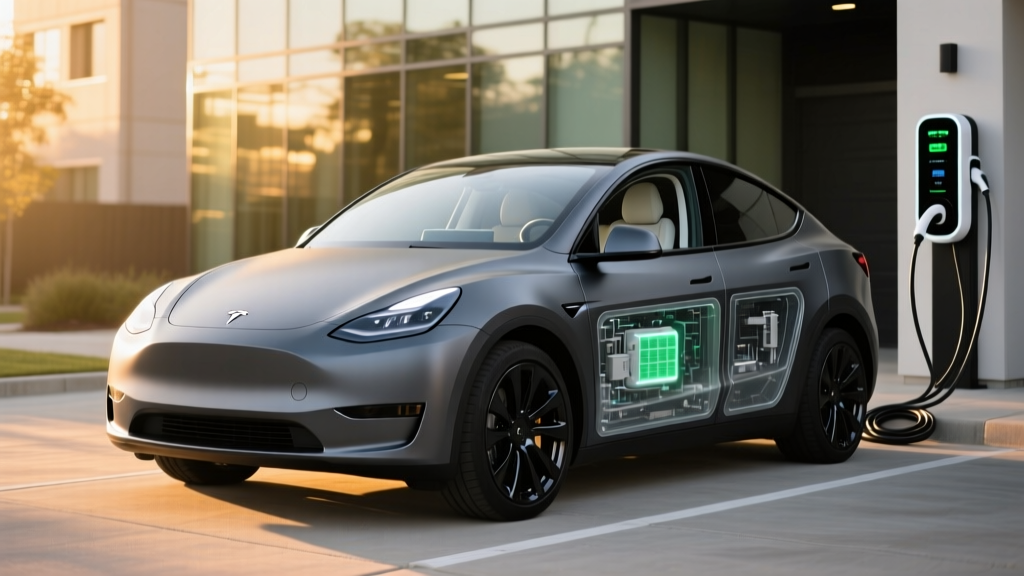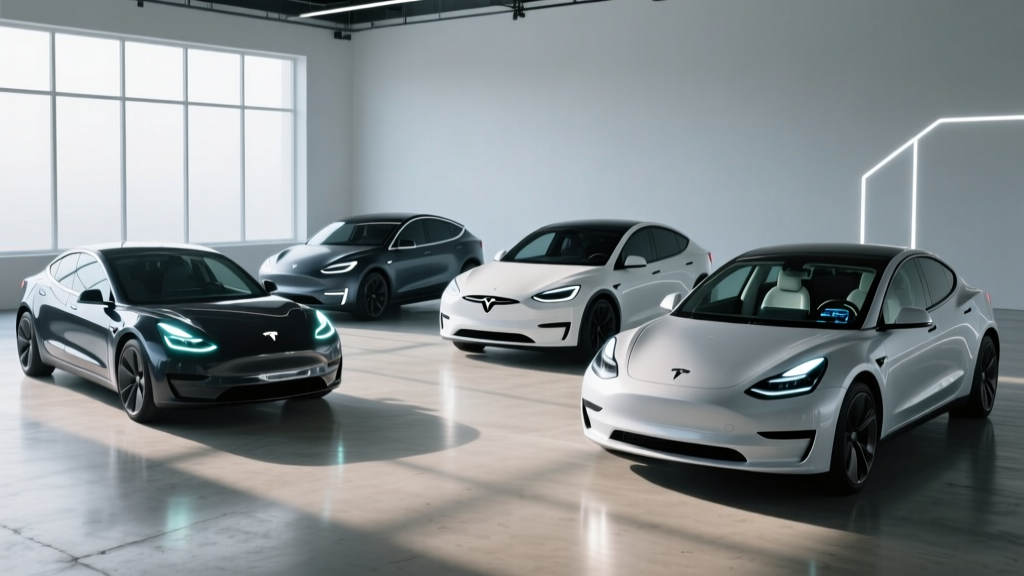
Tesla's leasing program has become a major entry point for drivers who want to experience electric ownership without committing to a full purchase — or who want to sidestep the complexities of the federal EV tax credit. But the answer to "can you lease a Tesla?" comes with nuances around monthly costs, mileage limits, lease-end options, and whether you actually benefit from the §30D credit on a lease. This guide breaks down the 2026 Tesla lease landscape across the Model 3 and Model Y, with exact specs, pricing, and the math behind leasing versus buying.
Tesla Lease Availability: Which Models Can You Lease?
As of early 2026, Tesla offers leasing on the Model 3 and Model Y in most U.S. states. The Model S and Model X are purchase-only, and the Cybertruck currently does not have a lease option. Tesla's lease terms typically run 24 or 36 months with annual mileage allowances of 10,000, 12,000, or 15,000 miles. Unlike traditional automaker leases routed through dealerships, Tesla leases are handled directly through Tesla Financial Services, and pricing adjusts dynamically based on your configuration, down payment, and region.
One critical advantage: under current IRS §30D rules, the $7,500 federal EV tax credit can be structured as a lease incentive (technically a commercial clean vehicle credit under §45W passed to the lessee). This means even buyers who exceed the income caps for the purchase credit — $150,000 single / $300,000 joint — can potentially benefit when leasing, since the lessor (Tesla) claims the credit and applies it as a capitalized-cost reduction. Always confirm current eligibility with a tax professional.
Model 3 Lease Profile: Specs, Range & Real-World Efficiency
| Spec | Long Range RWD | Long Range AWD | Performance |
|---|---|---|---|
| EPA Range | 363 mi | 346 mi | 315 mi |
| Battery (usable) | ~75 kWh (LFP variant: ~60 kWh) | ~75 kWh NMC | ~75 kWh NMC |
| MPGe (combined) | 132 MPGe | 125 MPGe | 118 MPGe |
| Efficiency | 25 kWh/100 mi | 27 kWh/100 mi | 29 kWh/100 mi |
| 0–60 mph | 5.8 sec | 4.2 sec | 2.9 sec |
| Horsepower | 271 hp | 346 hp | 510 hp |
| Drivetrain | RWD | Dual-Motor AWD | Dual-Motor AWD |
| Cargo Volume | 23 cu ft (rear trunk + frunk) | ||
| Legroom (front/rear) | 42.7 in / 35.2 in | ||
Model 3 Charging Speeds
| Level | Power | Speed | Notes |
|---|---|---|---|
| Level 1 (120V) | ~1.4 kW | ~3–4 mi/hr | Emergency/trickle only |
| Level 2 (240V, 48A) | 11.5 kW | ~33 mi/hr | Full charge in ~11 hours |
| DC Fast (Supercharger V4) | Peak 250 kW | 10–80% in ~22 min | Curve tapers sharply above 80% |
The Model 3's charge curve peaks near 250 kW at low state-of-charge but sustains above 150 kW only through roughly 50% SoC. Above 80%, speeds drop below 50 kW to protect the battery. For road trips, plan Supercharger stops at 15–20 minute intervals to stay in the fast-charging sweet spot.
Model Y Lease Profile: The Family-Friendly Option
| Spec | Long Range RWD | Long Range AWD | Performance |
|---|---|---|---|
| EPA Range | 320 mi | 308 mi | 277 mi |
| Battery (usable) | ~75 kWh (LFP option: ~60 kWh) | ~75 kWh NMC | ~75 kWh NMC |
| MPGe (combined) | 123 MPGe | 117 MPGe | 110 MPGe |
| 0–60 mph | 6.5 sec | 4.8 sec | 3.5 sec |
| Horsepower | 295 hp | 384 hp | 510 hp |
| Drivetrain | RWD | Dual-Motor AWD | Dual-Motor AWD |
| Cargo Volume | 76 cu ft (rear seats folded), 30 cu ft behind rear seats | ||
| Legroom (front/rear) | 41.8 in / 39.2 in | ||
The Model Y remains Tesla's best-selling vehicle for good reason: crossover utility with sedan-like efficiency. Its 308-mile EPA range (AWD Long Range) translates to roughly 250–270 highway miles and 220–240 in cold weather. Charging mirrors the Model 3 — peak 250 kW DC, 10–80% in approximately 23 minutes, and 11.5 kW on Level 2 at home.
Lease Pricing Breakdown: What You'll Actually Pay
| Model / Trim | MSRP | Est. Monthly (with $4,500 down) | Lease Incentive (§45W pass-through) | Effective Down |
|---|---|---|---|---|
| Model 3 Long Range RWD | $44,130 | ~$449/mo | Up to $7,500 | As low as negative equity at signing |
| Model 3 Long Range AWD | $47,130 | ~$499/mo | Up to $7,500 | Reduces cap cost significantly |
| Model Y Long Range AWD | $48,130 | ~$519/mo | Up to $7,500 | Applied at signing |
| Model Y Performance | $53,130 | ~$599/mo | Up to $7,500 | Applied at signing |
Important tax credit nuance: When you purchase a Tesla, the §30D credit has strict income caps ($150K single / $225K head of household / $300K joint) and MSRP caps ($55K sedans / $80K SUVs). The Model 3 and Model Y both fall under MSRP caps. But when you lease, the credit is claimed by the lessor under §45W (commercial clean vehicle credit), which has no buyer income cap. Tesla typically passes this through as a capitalized-cost reduction, effectively lowering your monthly payment. Confirm with Tesla Financial at signing whether the full $7,500 is being applied — this can vary by model and battery sourcing compliance.
Tesla Lease vs. Purchase: The Decision Math
- Your household income exceeds §30D purchase caps but you still want the $7,500 lease incentive benefit
- You plan to drive fewer than 15,000 miles/year
- You want to upgrade to newer battery/tech every 3 years
- You don't want to worry about long-term battery degradation or resale value
- You drive more than 15,000 miles/year (lease overage fees are typically $0.20–$0.25/mile)
- You want to build equity and eventually own the asset
- You qualify for the §30D purchase credit and your state offers additional purchase-only rebates
- You plan to keep the vehicle 5+ years (total cost of ownership favors purchasing past year 4)
Over a 36-month lease, a Model Y Long Range AWD might cost roughly $23,184 total ($4,500 down + $519 × 36). Purchasing the same vehicle at ~6.5% APR over 60 months with $7,500 down would run approximately $789/month, but you own a ~$25,000–$30,000 asset at the end. The break-even point where buying becomes cheaper is typically around month 48–54, assuming stable resale values.
Pros and Cons of Leasing a Tesla
Pros
- Tax credit workaround: Lease incentive has no buyer income cap under §45W
- Lower monthly cost: $400–$600/mo vs. $700–$900+ for purchase financing
- Always under warranty: 4-year/50,000-mi basic + 8-year/120,000-mi battery warranty covers any 36-month lease entirely
- Supercharger network access: Tesla's 60,000+ global Superchargers remain the most reliable DC fast-charging network
- OTA updates: Continuous software improvements throughout the lease term
- No depreciation risk: Walk away at lease-end regardless of used-EV market conditions
Cons
- No equity: Monthly payments build no ownership value
- Mileage restrictions: 10K–15K mi/yr limits; overages at $0.20–$0.25/mile add up fast
- No lease-end purchase option (sometimes): Tesla has historically restricted buyouts at lease-end — confirm current policy
- Disposition fee: Typically $395–$595 at lease-end if you don't lease another Tesla
- Customization limits: You can't modify the vehicle (wraps, wheels, tint beyond factory) without risking penalties
- Autopilot/FSD not included: Enhanced Autopilot ($6,000) and FSD Supervised ($8,000) add cost but you don't retain the software after the lease
Warranty, Tech & What's Included
Every Tesla lease is fully covered by Tesla's factory warranty:
- Basic Vehicle: 4 years / 50,000 miles
- Battery & Drive Unit: 8 years / 120,000 miles (Long Range/Performance) with a guaranteed minimum 70% capacity retention
Standard technology includes a 15.4-inch touchscreen (Model 3) or 15-inch (Model Y), Tesla's Basic Autopilot (SAE Level 2 driver-assist — not self-driving; you must keep hands on the wheel and eyes on the road), over-the-air updates, native navigation with real-time Supercharger routing, Sentry Mode dashcam, and the Tesla mobile app for preconditioning and charge monitoring.
Notable drawbacks: The Model 3's minimalist interior lacks physical buttons (climate, mirrors, and glovebox are screen-controlled), rear visibility is limited in the Model Y without the optional camera mirror, and Tesla's build-quality consistency, while improved, still shows occasional panel-gap variation that a 3-year lessee will notice but not want to fight over.
Frequently Asked Questions
Can you lease a Tesla directly from Tesla?
Yes. Tesla offers direct leasing through Tesla Financial Services for the Model 3 and Model Y in most U.S. states. You configure your vehicle on Tesla's website, select "Lease" as the payment method, choose your term (24 or 36 months) and mileage allowance, and complete the credit application online. No dealership visit is required.
Does a Tesla lease qualify for the $7,500 federal tax credit?
Technically, the lessee does not claim the §30D credit. Instead, Tesla (as the lessor) claims the commercial clean vehicle credit under IRS §45W and typically passes the benefit to you as a capitalized-cost reduction — effectively lowering your monthly payment. This route has no buyer income cap, making it attractive for higher-income households. Confirm the exact pass-through amount with Tesla Financial at signing.
What happens at the end of a Tesla lease?
You return the vehicle to Tesla, pay any disposition fee (typically $395–$595) and excess mileage or wear charges. Tesla's lease-end purchase option availability has varied — some lease agreements allow you to buy the car at a predetermined residual value, while others do not. Read your contract carefully before signing.
Can I charge a leased Tesla at home?
Absolutely. Home Level 2 charging (240V, 48A) adds roughly 33 miles of range per hour for the Model 3 and about 30 mi/hr for the Model Y. A full overnight charge (8–10 hours) easily replenishes a day's driving. Installation costs for a home Level 2 charger typically run $500–$2,000 depending on your electrical panel's capacity and the run length from panel to garage.
Is leasing a Tesla worth it compared to a Hyundai Ioniq 5 or BMW i4?
It depends on your priorities. The Tesla lease advantage is the Supercharger network, software ecosystem, and the §45W credit pass-through. The Hyundai Ioniq 5 offers comparable range (305 mi EPA) and faster peak charging (up to 350 kW on 800V architecture) but a less mature charging network. The BMW i4 delivers premium interior quality but at a higher lease price point. If Supercharger reliability and Tesla's software matter most, the Tesla lease is compelling. If charging speed or interior luxury are higher priorities, cross-shop aggressively.
What is the real-world range of a leased Tesla Model 3?
The 2026 Model 3 Long Range RWD carries an EPA-estimated 363 miles. In real-world mixed highway driving at 70–75 mph, expect 290–310 miles. In cold weather (sub-32°F), plan for 250–270 miles. These figures assume you're using the heat pump (standard on all current Model 3 variants) and have preconditioned the battery.
Who Should Lease a Tesla?
A Tesla lease makes the most sense for urban and suburban commuters driving 10,000–15,000 miles annually who have reliable home charging access and want the lowest monthly cost to get into a long-range EV. The Model 3 lease suits individual professionals and couples prioritizing efficiency and range. The Model Y lease targets families of 3–5 needing cargo space, all-wheel-drive capability, and road-trip readiness via the Supercharger network.
If you drive more than 15,000 miles per year, want to build equity, or plan to keep your next car beyond 4 years, purchasing (and claiming the §30D credit if you qualify) will yield a lower total cost of ownership. But for the growing number of EV-curious drivers who want a risk-free 3-year trial with the industry's best charging infrastructure, leasing a Tesla in 2026 remains one of the most accessible paths into electric driving.