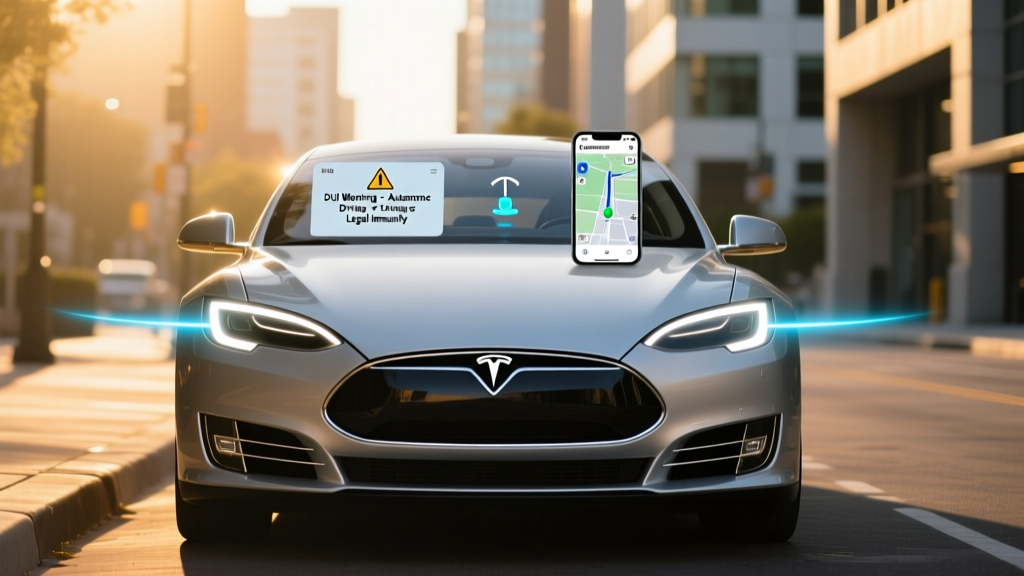
If you have ever watched a viral video of someone claiming they "let their Tesla drive them home" after a few drinks, you have probably wondered: can you get a DUI in a Tesla? The short answer is an unequivocal yes. No Tesla sold today is a self-driving car, and using Autopilot or Full Self-Driving (Supervised) while impaired is treated the same as drunk driving in every U.S. state. In fact, prosecutors and law enforcement agencies have increasingly pursued enhanced penalties for drivers who combine impairment with driver-assist technology.
But this question opens up a much larger conversation about what Tesla's driver-assistance systems actually do, what they don't do, and how the 2026 Tesla lineup stacks up on the metrics that matter to buyers: range, charging speed, pricing, and real-world ownership. Let's break down the legal reality first, then dive into the specs of the vehicles at the center of the debate.
The Legal Reality: Yes, You Can Get a DUI in a Tesla
Every Tesla vehicle sold in 2026 — the Model 3, Model Y, Model S, and Model X — operates at SAE Level 2 automation. This means the driver must remain fully engaged, attentive, and capable of taking over at any moment. The National Highway Traffic Safety Administration (NHTSA) is explicit: Level 2 systems are driver-assistance features, not autonomous driving systems.
Tesla's Autopilot and FSD (Supervised) are SAE Level 2 driver-assist systems. The driver must keep hands on or near the wheel, monitor the road, and be ready to intervene instantly. Only fully driverless services like Waymo operate at Level 4. No consumer Tesla is self-driving.
Here is what the law says across all 50 states:
- You are the driver. Even when Autopilot or FSD is engaged, you are legally the operator of the vehicle. Your blood alcohol content (BAC) is subject to the same 0.08% limit (0.04% for commercial drivers, lower for minors in zero-tolerance states).
- "The car was driving itself" is not a defense. Courts have consistently rejected this argument. In multiple high-profile cases in California, Texas, and Florida, drivers using Autopilot while impaired were convicted of DUI.
- Enhanced penalties are emerging. Some jurisdictions are treating the combination of impairment and driver-assist engagement as reckless driving or an aggravating factor, leading to stiffer fines and longer license suspensions.
- You can be charged even while parked. In several states, sitting in the driver's seat of a running Tesla while impaired — even in a parking lot — constitutes "physical control" of the vehicle and can result in a DUI charge.
The Insurance Institute for Highway Safety (IIHS) has repeatedly found that drivers over-trust partial automation systems, leading to delayed reaction times. Combining that over-trust with alcohol or drugs creates a compounding danger.
What Autopilot and FSD Actually Do (and Don't Do)
Understanding the technology helps explain why the law treats you as the driver at all times.
Tesla Autopilot (Standard)
Included on every 2026 Tesla, Autopilot provides:
- Traffic-Aware Cruise Control: Maintains set speed and following distance
- Autosteer: Lane-centering on clearly marked highways
- Limits: Does not stop at red lights, navigate intersections, or handle construction zones without driver input
Full Self-Driving — Supervised ($8,000 add-on)
Despite the name, FSD (Supervised) is still Level 2. It adds:
- Street navigation: Can follow a navigation route through city streets
- Traffic light/stop sign recognition: Will attempt to stop and proceed, but requires driver confirmation
- Auto lane change: Suggests and executes lane changes with driver approval
- Autopark and Summon: Low-speed parking lot maneuvers
FSD (Supervised) cannot handle all weather conditions, unmapped roads, complex construction zones, or emergency situations without driver intervention. It does not make the car autonomous. You are legally and practically the driver at all times.
2026 Tesla Lineup: Range, Charging, and Performance Specs
Since the DUI question applies to every Tesla on the road, here is a comprehensive look at the 2026 lineup's core specifications.
| Spec | Model 3 Long Range | Model Y Long Range | Model S | Model X |
|---|---|---|---|---|
| EPA Range | 363 mi | 330 mi | 402 mi | 335 mi |
| Battery (usable) | ~75 kWh, NMC | ~75 kWh, NMC | ~95 kWh, NMC | ~95 kWh, NMC |
| Max DC Fast Charge | 250 kW | 250 kW | 250 kW | 250 kW |
| 10–80% DC Time | ~25 min | ~27 min | ~30 min | ~32 min |
| Level 2 (Home) | 11.5 kW / ~44 mi/hr | 11.5 kW / ~40 mi/hr | 11.5 kW / ~34 mi/hr | 11.5 kW / ~30 mi/hr |
| 0–60 mph | 4.2 sec | 4.8 sec | 3.1 sec | 3.8 sec |
| Horsepower | 346 hp | 384 hp | 670 hp | 670 hp |
| Drivetrain | Dual-Motor AWD | Dual-Motor AWD | Dual-Motor AWD | Dual-Motor AWD |
| MPGe (combined) | 132 MPGe | 122 MPGe | 120 MPGe | 109 MPGe |
| Cargo Volume | 23 cu ft (trunk+frunk) | 76 cu ft (max) | 28 cu ft (trunk+frunk) | 88 cu ft (max) |
| Base MSRP | $47,740 | $48,990 | $79,990 | $84,990 |
Sources: fueleconomy.gov, Tesla.com specifications. EPA estimates; your actual results will vary.
Real-World Range: What the EPA Sticker Doesn't Tell You
The EPA range figures above assume a mix of city and highway driving at moderate temperatures. In real-world conditions:
• Highway driving at 75+ mph: Expect 10–15% less than EPA (e.g., Model 3 LR ≈ 310–325 mi)
• Cold weather (below 32°F): Range drops 20–30% due to battery chemistry limitations and cabin heating demands
• Mountain driving: Significant elevation gains reduce range; regenerative braking on descents partially recovers it
• Preconditioning helps: Using the Tesla app to warm the battery while plugged in before departure recovers 5–10% of cold-weather range
The Model 3 Long Range remains the efficiency champion of the lineup, with its 132 MPGe combined rating translating to roughly 25 kWh per 100 miles. That means a full charge costs approximately $4.50–$7.50 at home (depending on your electricity rate of $0.12–$0.20 per kWh), compared to $45–$60 for a comparable gas sedan at $3.50/gallon.
Charging Speed: DC Fast Charging and Home Setup
Tesla's Supercharger network remains the gold standard for public charging reliability, and all 2026 Teslas use the NACS (North American Charging Standard) connector natively. Here is what charging looks like in practice:
| Level | Power | Miles Added Per Hour | Use Case |
|---|---|---|---|
| Level 1 (120V) | ~1.4 kW | 3–5 mi/hr | Emergency / overnight trickle |
| Level 2 (240V Home) | 11.5 kW | 30–44 mi/hr | Daily home charging |
| DC Fast (Supercharger V3) | Up to 250 kW | ~1,000 mi/hr (peak) | Road trips |
Charging curve reality check: The 250 kW peak rate only holds between roughly 10–30% State of Charge (SoC). Above 50%, the rate tapers significantly — by 80%, you are typically at 50–70 kW. This is why Tesla quotes 10–80% times rather than 0–100%. Charging from 80–100% on a DC fast charger can take nearly as long as the 10–80% session. For battery longevity, Tesla recommends daily charging to 80% and only charging to 100% before long trips.
Home Level 2 installation typically costs $500–$2,000 for the Tesla Wall Connector plus electrician labor, depending on whether your electrical panel needs an upgrade to support a 60-amp circuit. If your panel is already at capacity (common in older homes with 100-amp service), a panel upgrade can add $1,500–$3,000.
Pricing, Trims, and Federal Tax Credit Eligibility
| Model / Trim | Base MSRP | §30D Credit Eligible? | Effective Price* |
|---|---|---|---|
| Model 3 RWD | $38,990 | Yes — up to $7,500 | ~$31,490 |
| Model 3 Long Range AWD | $47,740 | Yes — up to $7,500 | ~$40,240 |
| Model 3 Performance | $54,990 | Yes — up to $7,500 | ~$47,490 |
| Model Y Long Range | $48,990 | Yes — up to $7,500 | ~$41,490 |
| Model S | $79,990 | No — exceeds $55,000 sedan cap | $79,990 |
| Model X | $84,990 | No — exceeds $80,000 SUV cap | $84,990 |
*Effective price assumes full §30D credit eligibility. Not all buyers qualify.
The IRS §30D federal tax credit has strict eligibility requirements that change frequently. To qualify for the full $7,500 credit on a Model 3 or Model Y, you must meet all of the following:
- Income caps: Modified AGI ≤ $150,000 (single), $225,000 (head of household), $300,000 (joint)
- MSRP caps: ≤ $55,000 for sedans (Model 3), ≤ $80,000 for SUVs/trucks (Model Y)
- Battery sourcing: Critical minerals and battery components must meet phased-in domestic/free-trade sourcing thresholds — Tesla has largely met these requirements for U.S.-built vehicles, but verify at point of sale
- Point-of-sale transfer: As of 2024+, you can transfer the credit to the dealer at purchase for an immediate price reduction rather than waiting to claim it on your tax return
Always confirm eligibility with your tax professional and check the latest IRS guidance before purchasing. Rules can change between model years.
Who Should Buy a Tesla in 2026?
Choose Tesla if:
• You want access to the Supercharger network (the most reliable DC fast-charging network in the U.S.)
• You value over-the-air software updates that add features post-purchase
• You want class-leading efficiency (kWh/mile) that reduces charging costs
• You want a tech-forward interior with minimal physical controls
Look elsewhere if:
• You prefer traditional dealership service and in-person support
• You want physical buttons and knobs for climate/audio controls
• You need a luxury interior on par with BMW, Mercedes, or Genesis at the Model S/X price point
• You tow frequently — the Model Y can tow 3,500 lbs, but efficiency drops dramatically under load
Best For: Commuters and Tech-Forward Families
The Model 3 and Model Y are the volume sellers for good reason. They offer the best efficiency, the most accessible pricing after tax credits, and the Supercharger network makes road trips genuinely practical. The Model 3 is the driver's car — lighter, quicker to respond, and more efficient. The Model Y is the family hauler — significantly more cargo space, available third row (though it's best for small children only), and easier loading with the hatchback design.
Not Ideal For: Luxury Buyers Seeking Traditional Refinement
The Model S and Model X face stiff competition from the BMW i5, Mercedes EQE, Rivian R1S, and Hyundai Ioniq 9. At $80,000+, Tesla's interior quality, ride refinement, and noise isolation lag behind legacy luxury automakers, and the loss of the federal tax credit at this price point stings.
Warranty and Long-Term Ownership
Tesla's warranty coverage is competitive but not class-leading:
- Basic vehicle: 4 years / 50,000 miles
- Battery and drive unit: 8 years / 100,000 miles (Model 3 RWD); 8 years / 120,000 miles (Long Range, Performance, Model S, Model X)
- Battery capacity retention threshold: Tesla warrants that the battery will retain at least 70% of its original capacity during the warranty period
Real-world battery degradation data from Tesla's fleet shows that most NMC batteries lose approximately 10–12% capacity in the first 50,000 miles, then the degradation curve flattens significantly. Many high-mileage Teslas have reached 200,000+ miles with 80%+ battery health. The LFP (lithium iron phosphate) batteries used in the Model 3 RWD are even more durable, with slower degradation and the ability to charge to 100% daily without long-term harm — a significant advantage for high-mileage commuters.
Pros and Cons of the 2026 Tesla Lineup
- Best-in-class charging network (Supercharger)
- Outstanding energy efficiency (kWh/mile)
- Over-the-air updates continuously add features
- Strong resale value relative to most EVs
- Model 3/Y qualify for $7,500 federal credit
- Expanding service center and mobile service network
- LFP battery option (Model 3 RWD) for maximum longevity
- No physical buttons — all controls via touchscreen
- Model S/X lose federal tax credit due to price caps
- Panel gap and paint quality inconsistencies persist
- Service wait times can be long in some metro areas
- FSD ($8,000) remains Level 2 — not self-driving
- Ride quality on Model 3/Y is firm; road noise noticeable
- Insurance premiums run 15–25% higher than comparable gas cars
Frequently Asked Questions
Can you get a DUI in a Tesla if Autopilot is driving?
Yes. Autopilot is a Level 2 driver-assist system. You are legally the driver at all times, and your BAC is subject to the same limits as in any other vehicle. Multiple convictions have set clear precedent across U.S. courts.
Can Tesla's FSD drive you home if you are drunk?
No. FSD (Supervised) requires continuous driver attention and intervention capability. Using it while impaired is a DUI. The only legal way to get home drunk in a Tesla is to use a rideshare, taxi, or designated driver — or let the car sit while you take a ride.
Does Tesla report impaired driving data to police?
Tesla vehicles record extensive telemetry, and this data has been subpoenaed in accident investigations. While Tesla does not proactively report impaired driving to law enforcement, vehicle data (speed, Autopilot engagement, steering inputs, braking) has been used as evidence in DUI and accident cases.
What is the real-world range of the 2026 Tesla Model 3?
The EPA rates the Model 3 Long Range at 363 miles. In real-world highway driving at 75 mph, expect approximately 310–325 miles. In cold weather (below freezing), expect 250–290 miles depending on conditions and preconditioning habits.
Does the Tesla Model Y qualify for the $7,500 federal tax credit?
Yes, the Model Y qualifies for the full $7,500 §30D credit, provided you meet income limits (≤ $150K single / $300K joint), and the vehicle meets battery-sourcing requirements (which Tesla's U.S.-built Model Y largely satisfies). Verify at point of sale, as rules can change.
How much does it cost to charge a Tesla at home?
At the U.S. average electricity rate of ~$0.16/kWh, fully charging a Model 3 Long Range (75 kWh) costs approximately $12. That translates to roughly $0.04–$0.05 per mile — about one-third the per-mile fuel cost of a 30 MPG gas car at $3.50/gallon.
Is a Tesla worth buying over competitors in 2026?
For efficiency, charging infrastructure access, and software, Tesla still leads. The Model 3 and Model Y are excellent values after the federal tax credit. However, competitors like the Hyundai Ioniq 5, Kia EV6, and BMW i4 now match or exceed Tesla in build quality, ride comfort, and interior design. Test-drive both before deciding.