Quick Answer: Can You Charge a EV Car at Home?
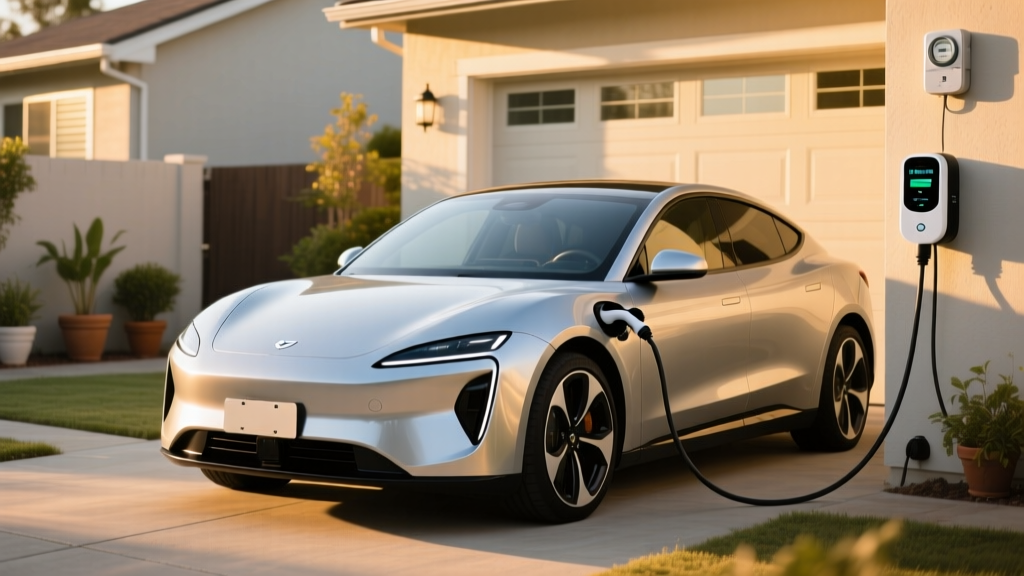
Yes. Most EV owners charge at home using either a standard 120V wall outlet (Level 1) or a professionally installed 240V circuit (Level 2). Level 1 adds roughly 3–5 miles of range per hour and is free to start if you have a garage outlet. Level 2 adds 20–44 miles per hour, typically costs $800–$2,500 installed, and fully recharges most EVs overnight. According to the U.S. Department of Energy, over 80% of EV charging happens at home — making it the single most important factor in EV ownership satisfaction.
Level 1 vs Level 2 Home Charging: What's the Real Difference?
Before you buy an EV, understand the two home-charging options. The distinction comes down to power (measured in kilowatts, or kW) and how many miles of range you recover per hour plugged in.
| Level | Outlet / Circuit | Power (kW) | Miles of Range per Hour | Full Charge Time (80 kWh Battery) | Equipment Cost |
|---|---|---|---|---|---|
| Level 1 | Standard 120V / 15A | 1.4–1.8 kW | 3–5 mi/hr | ~45–55 hours | $0 (included cable) |
| Level 2 | 240V / 40–60A | 7.7–11.5 kW | 20–44 mi/hr | ~7–10 hours | $300–$700 (charger) + install |
kW vs kWh — the critical distinction: kW (kilowatts) measures the rate of power delivery — how fast you're charging. kWh (kilowatt-hours) measures total energy stored in the battery. Think of kW as water flow rate and kWh as the size of the tank.
Who Can Get Away With Level 1 (and Who Needs Level 2)?
Level 1 sounds slow, but it's viable for a surprising number of drivers. Consider the math: if you drive 30–40 miles per day and plug in for 10–12 hours overnight, Level 1 recovers 30–50 miles — enough to replenish a typical commute with margin.
Level 1 works if:
- Your daily driving is under 40 miles round-trip
- You have a dedicated 120V outlet in a garage or carport (sharing with other appliances risks tripping the breaker)
- Your EV has a smaller battery (under 70 kWh usable)
- You can tolerate a "weekend top-up" strategy — a full recharge takes roughly 40+ hours
You need Level 2 if:
- You drive 50+ miles daily or take regular road trips
- Your EV has a large battery (80–100+ kWh) — Level 1 simply can't refill it in one night
- You live in a cold climate (preconditioning the battery for fast charging requires Level 2 power)
- You want to leverage off-peak utility rates with scheduled overnight charging
How Much Does Home EV Charger Installation Actually Cost?
The hardware (the wall-mounted EVSE — Electric Vehicle Supply Equipment) is only part of the equation. Installation costs vary dramatically based on your home's electrical panel capacity and the distance from panel to parking spot.
| Cost Component | Typical Range | Notes |
|---|---|---|
| Level 2 Charger (EVSE hardware) | $300–$700 | Brands: ChargePoint Home Flex, Emporia Vue, Tesla Wall Connector |
| Electrician labor | $400–$1,500 | Varies by region and complexity |
| Electrical permit | $50–$200 | Required in most jurisdictions |
| Panel upgrade (if needed) | $1,500–$4,000 | Older homes with 100A service may need 200A upgrade |
| Conduit & wiring run | $200–$800 | Longer runs from panel to garage cost more |
| Total (no panel upgrade) | $800–$2,500 | Most common scenario for newer homes |
| Total (with panel upgrade) | $2,500–$5,500 | Common in pre-1990 homes |
The panel-upgrade gotcha: Many buyers are blindsided by this. If your home has a 100-amp electrical panel and you're already running central AC, an electric dryer, and an electric oven, adding a 40-amp EV circuit may exceed capacity. A licensed electrician will perform a load calculation before pulling a permit. Always get a detailed quote that specifies whether a panel upgrade is included.
Some utilities and states offer rebates covering $250–$1,000 of installation costs. The federal Residential Clean Energy Credit (IRC §25C) covers 30% of charger hardware and installation costs, up to $1,000, through 2032 — but eligibility depends on your tax situation. Consult a tax professional for your specific case.
Home Charging Cost vs Gas: The Real Numbers
This is where EV ownership economics shine — or disappoint, depending on your local electricity rate. Let's compare real costs using national averages.
| Metric | EV (Home Charging) | Gas Vehicle (28 MPG Combined) |
|---|---|---|
| Energy cost per unit | $0.16/kWh (U.S. avg residential) | $3.40/gallon (2026 U.S. avg) |
| Energy consumed per 100 miles | ~30 kWh (typical midsize EV) | ~3.6 gallons |
| Cost per 100 miles | $4.80 | $12.24 |
| Annual fuel/energy cost (12,000 mi/yr) | $576 | $1,469 |
| Annual savings (EV vs gas) | ~$893/year | |
But your mileage — literally — will vary. Electricity rates range from ~$0.10/kWh in parts of the Pacific Northwest to $0.30+/kWh in California and the Northeast. If you're paying $0.30/kWh, your cost per 100 miles jumps to $9.00 — still cheaper than gas, but the savings narrow significantly. Check your utility's rate schedule. Many offer time-of-use (TOU) plans where overnight charging drops to $0.08–$0.12/kWh, dramatically improving economics.
According to fueleconomy.gov, a 2026 Hyundai Ioniq 6 SE (84 kWh battery, 361 mi EPA range) achieves 140 MPGe combined — translating to roughly $0.04–$0.05 per mile on average residential electricity rates.
What First-Time EV Buyers Must Know Before Plugging In
Home charging isn't just about hardware. These real-world ownership factors separate prepared buyers from frustrated ones.
1. Cold Weather Slows Everything Down
In freezing temperatures, EV batteries resist accepting charge. A Level 2 session that takes 8 hours in July might take 10–11 hours in January. More importantly, cold weather reduces usable range by 20–40%. An EPA-rated 300-mile EV may deliver only 200–240 miles in sustained sub-30°F driving with cabin heat running. If you live in the northern U.S., budget for this.
2. Battery Preconditioning Matters
Most modern EVs can "precondition" the battery — warming it to optimal temperature before a DC fast-charging session. This feature typically activates when you navigate to a charger in the car's system. At home, preconditioning while still plugged in (using grid power rather than battery power) means you leave with a warm battery and full range, even in winter.
3. Don't Charge to 100% Daily
For NMC (nickel manganese cobalt) batteries — found in most long-range EVs — daily charging to 100% accelerates degradation. Set your charge limit to 80% for daily use and only charge to 100% before road trips. LFP (lithium iron phosphate) batteries, used in standard-range Tesla Model 3/Y and some other models, tolerate 100% daily charges without degradation concerns. Know your battery chemistry.
4. Apartment and Condo Charging Is Getting Easier
If you don't have a garage, you're not out of options. Right-to-charge laws in California, Colorado, Florida, and several other states require HOAs and landlords to allow reasonable EV charger installations. Shared charging solutions like ChargePoint's multifamily programs and utility-sponsored curbside chargers are expanding. However, if your only option is public DC fast charging at $0.35–$0.55/kWh, your cost advantage over gas shrinks to near zero — or disappears entirely.
5. Electrical Safety Is Non-Negotiable
Never use extension cords for Level 1 charging (fire risk). Never daisy-chain power strips. For Level 2, always hire a licensed electrician — unpermitted, DIY electrical work can void your homeowner's insurance and create serious hazards. Your EVSE should be UL-listed or ETL-certified.
Common Home Charging Myths — Fact-Checked
| Myth | Fact |
|---|---|
| "You need a special outlet — regular outlets can't handle EVs." | Every standard 120V outlet works for Level 1. You just need a dedicated circuit (not shared with a freezer or sump pump). |
| "Home charging will destroy my electrical panel." | A properly installed Level 2 charger on a correctly sized breaker is no different from running an electric dryer. Load calculations ensure safety. |
| "Charging at home is always cheaper than gas." | Usually yes — but at $0.30+/kWh rates, some EVs cost nearly as much per mile as a 35+ MPG hybrid. Always calculate with YOUR rate. |
| "I need a Tesla Wall Connector for a Tesla." | Any J1772 or NACS-compatible Level 2 EVSE works. Third-party options like ChargePoint and Emporia work with Teslas using the included adapter (or native NACS on 2025+ models). |
| "Leaving my EV plugged in damages the battery." | Modern EVs have sophisticated battery management systems. Once the charge limit is reached, the car stops drawing current. Plugged-in EVs can also run thermal management on grid power. |
EV vs Gas vs Hybrid: Which Makes Sense for Your Home Setup?
| Factor | Battery EV (BEV) | Plug-in Hybrid (PHEV) | Gas / Standard Hybrid (HEV) |
|---|---|---|---|
| Home charging needed? | Strongly recommended | Recommended (to use electric range) | No |
| Home charging benefit | Massive — 80%+ of all fueling | Moderate — covers 25–50 mi daily electric range | N/A |
| Works without home charging? | Possible but expensive (public DCFC at $0.35–$0.55/kWh) | Yes — operates as a standard hybrid | Yes — gas stations everywhere |
| Best for | Homeowners/renters with reliable home charging | Single-vehicle households wanting EV commute + gas road trips | No charging access, high-mileage drivers |
| Annual "fuel" cost (12K mi) | ~$576 (home) / ~$1,400 (public) | ~$700–$1,100 (mix) | ~$1,469 |
| Federal tax credit (2026) | Up to $7,500 (§30D, with income/MSRP/sourcing rules) | Up to $7,500 (§30D, same rules) | $0 |
Federal tax credit caveat: The IRS §30D credit has strict requirements for 2026: buyer income caps ($150K single / $300K joint modified AGI), vehicle MSRP caps ($55K sedans / $80K SUVs and trucks), and battery critical-mineral and component sourcing requirements that eliminate many models. The credit can now be transferred to the dealer as a point-of-sale discount. Always verify current eligibility on IRS.gov's qualifying vehicle list before purchasing.
Your Home Charging Decision Framework
Step 1: Do you have access to a parking spot with electrical access?
- Yes, garage or carport with an outlet → Go to Step 2
- No (street parking only) → Consider a PHEV instead, or research workplace/public charging options. A BEV is possible but expect higher fueling costs and inconvenience.
Step 2: How many miles do you drive daily?
- Under 40 miles → Level 1 (120V) may be sufficient. Try it before investing in Level 2.
- 40–80 miles → Level 2 strongly recommended. You'll wake up fully charged every morning.
- Over 80 miles → Level 2 is essential. Also consider an EV with 300+ miles of EPA range.
Step 3: What's your electrical panel capacity?
- 200A service with available breaker slots → Standard Level 2 install, expect $800–$2,500 total.
- 100A service or full panel → Budget $2,500–$5,500 including panel upgrade. Get 3 electrician quotes.
- Unsure → Have an electrician perform a load calculation ($100–$200, often credited toward installation).
Step 4: What's your local electricity rate?
- Under $0.15/kWh → Excellent EV economics. Savings over gas will be substantial.
- $0.15–$0.25/kWh → Good economics. Look into time-of-use plans for cheaper overnight rates.
- Over $0.25/kWh → Savings narrow. A PHEV or high-MPG hybrid may make more financial sense unless you value the driving experience and environmental benefits.
Frequently Asked Questions
Can I charge my EV from a regular household outlet?
Yes. Every EV sold in the U.S. comes with a Level 1 charging cable that plugs into a standard 120V (NEMA 5-15) outlet. It will add 3–5 miles of range per hour — enough for light commuters but too slow for large-battery EVs or high-mileage drivers. Ensure the outlet is on a dedicated 15-amp or 20-amp circuit and shows no signs of wear or discoloration.
Do I need a permit to install a Level 2 home charger?
In most U.S. jurisdictions, yes. Any new 240V circuit requires an electrical permit and inspection. This protects you — unpermitted work can cause insurance claim denials and code violations. Your electrician typically handles the permit process. Expect $50–$200 in permit fees.
Will charging an EV at home significantly increase my electric bill?
For an average driver covering 12,000 miles per year in an EV consuming 30 kWh/100 mi at $0.16/kWh, expect roughly $576 annually — or about $48/month — added to your electric bill. This replaces approximately $1,469 in annual gasoline spending, yielding net savings of ~$893/year. Your actual figures depend on driving habits, vehicle efficiency, and local rates.
Can I use a dryer outlet to charge my EV?
Technically, a NEMA 14-50 (the common 50A dryer/RV outlet) can power a Level 2 charger. However, you should not share the circuit with an active dryer — both running simultaneously will trip the breaker. Some EV owners install a smart splitter (like the NeoCharge) that automatically switches between dryer and EV. A dedicated circuit is always the safer, code-compliant choice.
How long does a home EV charger last?
Quality Level 2 EVSE units from reputable manufacturers (ChargePoint, Emporia, Tesla, Wallbox) typically last 10–15 years with minimal maintenance. Most carry 2–3 year warranties. The main wear point is the connector and cable — keep them protected from UV exposure and physical damage. The EVSE itself has no moving parts.
Is it safe to charge an EV in the rain or in a garage?
Yes. EVSE connectors and vehicle charge ports are designed to be weatherproof (rated IP55 or higher). Charging in rain, snow, or a garage is safe. The connector only energizes after a secure connection and handshake protocol are confirmed. Never charge with a damaged cable or a connector that shows corrosion or burn marks.
Bottom Line: Home Charging Makes or Breaks the EV Experience
Charging at home is the single biggest advantage of EV ownership — and the one factor you should confirm before buying. If you can install Level 2 (or even reliably use Level 1), a battery electric vehicle will likely save you $700–$1,200 per year in fuel costs, eliminate gas station visits, and deliver the convenience of a "full tank" every morning. If home charging isn't feasible, a plug-in hybrid gives you a taste of electric commuting without the range and infrastructure dependency. Run the numbers with your actual electricity rate, your actual daily miles, and your actual installation quote — not national averages — before making the leap.