Short Answer: Not Through Official Channels in 2026
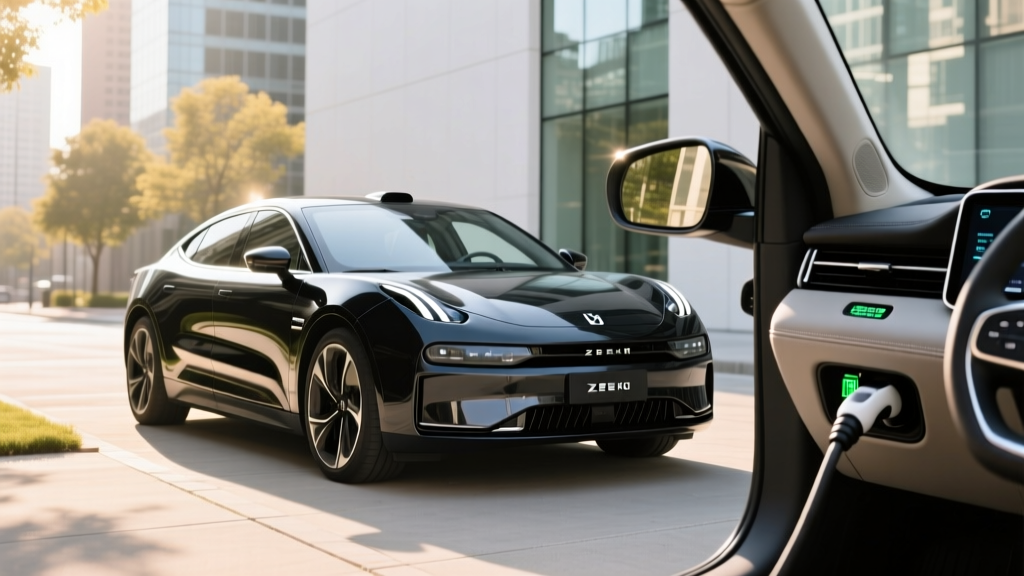
If you've seen the sleek Zeekr 001 shooting brake or the compact Zeekr X crossover on social media and wondered whether you can buy a Zeekr in the USA, the direct answer is no — at least not through any manufacturer-sanctioned dealership or direct-to-consumer channel. As of early 2026, Zeekr (a premium EV brand under China's Geely Holding Group) does not sell vehicles in the United States, has no announced US launch date, and faces a wall of tariffs and regulatory barriers that make a near-term entry unlikely.
But the question deserves a deeper answer. Zeekr vehicles are technically among the most capable EVs on the global market, with competitive range, blistering charge speeds, and premium build quality. So what would it take to own one? What are the specs that make enthusiasts curious? And which US-available alternatives actually compete? Let's break down everything a US-based EV shopper needs to know.
Why Zeekr Isn't Sold in the United States
Three primary barriers prevent Zeekr from entering the US market:
- Section 301 tariffs on Chinese-made EVs: In 2024, the US raised tariffs on Chinese-manufactured electric vehicles to 100% under Section 301 of the Trade Act. This effectively doubles the price of any Chinese-built EV imported into the country, eliminating any cost advantage. Zeekr's entire current production footprint is in China.
- FMVSS compliance and homologation: Every vehicle sold in the US must comply with Federal Motor Vehicle Safety Standards, which differ significantly from Chinese GB standards and European ECE regulations. Zeekr would need to redesign lighting, crash structures, airbag systems, and software for US-spec models — a multi-year, multi-hundred-million-dollar undertaking.
- Geopolitical and data-security scrutiny: Chinese-connected vehicles face increasing scrutiny from US regulators over data collection, telematics, and potential remote-access vulnerabilities. The Commerce Department has proposed restrictions on connected-vehicle hardware and software from China, adding another layer of uncertainty.
Zeekr has publicly stated its intention to expand into Europe, the Middle East, and Southeast Asia, but the US has not been named as a target market. Geely's US-adjacent brands — Volvo and Polestar — operate from Swedish and European production, which sidesteps some (but not all) of these barriers.
Zeekr 001 and Zeekr X: What US Buyers Are Missing
Even though you can't buy them stateside, understanding Zeekr's lineup explains why the brand generates search interest. Below are the specs for Zeekr's two most globally recognized models, based on their latest international-market configurations.
Zeekr 001 (2025/2026 International Spec)
| Attribute | Zeekr 001 (Long Range AWD) |
|---|---|
| Body Style | 5-door shooting brake / liftback |
| Battery Capacity | 100 kWh (NMC, CATL Qilin cell) |
| WLTP Range | ~384 miles (620 km) |
| EPA Range (estimated if US-spec) | ~310–330 miles (unofficial) |
| Drivetrain | Dual-motor AWD |
| Horsepower | 536 hp (400 kW) |
| 0–60 mph | ~3.8 seconds |
| Max DC Fast Charge | 200 kW (800V architecture) |
| 10–80% DC Charge Time | ~27 minutes (est.) |
| Level 2 AC Charge | 22 kW (3-phase, where available) |
| Length / Wheelbase | 195.3 in / 118.1 in |
| Cargo Volume | ~28.4 cu ft (rear seats up) |
| Starting Price (Europe, excl. VAT) | ~€50,000–€58,000 (~$54,000–$63,000) |
Zeekr X (2025/2026 International Spec)
| Attribute | Zeekr X (Long Range RWD) |
|---|---|
| Body Style | Subcompact crossover SUV |
| Battery Capacity | 66 kWh (NMC) |
| WLTP Range | ~273 miles (440 km) |
| EPA Range (estimated if US-spec) | ~220–240 miles (unofficial) |
| Drivetrain | Single-motor RWD (AWD optional) |
| Horsepower | 268 hp (RWD) / 421 hp (AWD) |
| 0–60 mph | ~5.4 sec (RWD) / ~3.7 sec (AWD) |
| Max DC Fast Charge | 150 kW |
| 10–80% DC Charge Time | ~29 minutes |
| Level 2 AC Charge | 22 kW (3-phase) |
| Length / Wheelbase | 174.8 in / 108.3 in |
| Cargo Volume | ~15.6 cu ft (rear seats up) |
| Starting Price (Europe, excl. VAT) | ~€35,000–€42,000 (~$38,000–$45,000) |
Charging Speed and Infrastructure Compatibility
Zeekr's 800V electrical architecture (on the 001) enables genuinely fast DC charging — competitive with the Hyundai Ioniq 5 and Porsche Taycan. However, even if you imported a Zeekr to the US, charging compatibility would present challenges:
| Charging Level | Zeekr 001 | Zeekr X | US Infrastructure Note |
|---|---|---|---|
| Level 1 (120V, 1.4 kW) | ~4 mi/hr | ~4 mi/hr | Works with any standard outlet |
| Level 2 (240V, 11.5 kW) | ~32 mi/hr | ~32 mi/hr | Standard US home charging; Zeekr supports up to 22 kW on 3-phase (uncommon in US homes) |
| DC Fast (peak) | 200 kW | 150 kW | Zeekr uses CCS2 in Europe; US uses CCS1 or NACS — adapter needed |
| 10–80% DC time | ~27 min | ~29 min | Actual time depends on charger output and battery temp |
Connector issue: European-market Zeekrs use the CCS2 connector, which is physically incompatible with US CCS1 chargers and Tesla NACS stations. You would need a CCS2-to-CCS1 adapter (available but not widely tested for reliability at high power) or a permanent connector swap by a specialist — adding cost and potential warranty concerns.
Charging curve reality: Like all EVs, the Zeekr 001's 200 kW peak rate is only sustained between roughly 10–40% state of charge. Above 60%, the curve tapers significantly, and charging from 80–100% can take as long as the 10–80% session. Plan road-trip stops around 10–80% top-ups for maximum efficiency.
Could You Import a Zeekr as a Grey-Market Vehicle?
Technically, US import law allows vehicles that are at least 25 years old to be imported without FMVSS compliance (the "Show or Display" and 25-year rules). For a brand-new Zeekr, this path is effectively closed:
- FMVSS non-compliance: A new Zeekr cannot be registered for road use in any US state without meeting all applicable safety standards. Converting a vehicle to FMVSS compliance is possible through a Registered Importer (RI), but the process typically costs $30,000–$80,000+ and requires crash-testing or engineering documentation that Zeekr does not provide.
- No EPA emissions certification: While EVs have no tailpipe emissions, they still require EPA certification for import purposes. Without manufacturer support, this is an expensive independent process.
- Tariff impact: Even after conversion, the 100% Section 301 tariff applies. A $55,000 Zeekr 001 becomes $110,000 at the border — before conversion, shipping, registration, and insurance costs.
- Insurance and service: No US insurer will easily underwrite a grey-market Chinese EV. Parts availability, service training, and software updates would all be unsupported.
Bottom line: importing a Zeekr to the US is technically possible through extreme effort and expense, but it is financially irrational and practically untenable for any buyer who needs reliable daily transportation.
Federal Tax Credit: Would a Zeekr Qualify If Sold Here?
Even in a hypothetical scenario where Zeekr established US sales, the IRS §30D clean vehicle credit would be almost certainly out of reach:
- MSRP cap: SUVs must be under $80,000; sedans/wagons under $55,000. The Zeekr 001 would likely exceed the sedan/wagon cap depending on trim.
- Battery component sourcing: By 2026, 100% of battery components must be manufactured or assembled in North America to qualify for the full $3,750 battery-component half of the credit. Zeekr's CATL batteries are made in China — automatic disqualification.
- Critical minerals: A percentage of critical minerals must be sourced from the US or FTA partners. Chinese-sourced minerals (lithium, cobalt, graphite) dominate Zeekr's supply chain — likely disqualifying the remaining $3,750.
- Foreign Entity of Concern (FEOC) exclusion: Vehicles with battery components from a FEOC (which includes major Chinese battery manufacturers like CATL and BYD) are entirely excluded from the credit, regardless of other criteria.
- Buyer income cap: Even if the vehicle qualified, buyers must earn under $150,000 (single) or $300,000 (joint) adjusted gross income.
Translation: a US-spec Zeekr would almost certainly receive $0 in federal tax credits, making it even less competitive against US-built EVs that do qualify.
What to Buy Instead: US-Available Alternatives
If the Zeekr 001 or X appeals to you, here are the closest US-market equivalents with confirmed availability, full warranty support, and potential tax-credit eligibility:
| Spec | Zeekr 001 (Intl) | Porsche Taycan 4S | Hyundai Ioniq 5 N | Tesla Model Y LR AWD | Zeekr X (Intl) | Volvo EX30 |
|---|---|---|---|---|---|---|
| EPA Range | ~310–330 (est.) | 277 mi | 221 mi | 320 mi | ~220–240 (est.) | 264 mi |
| Battery | 100 kWh NMC | 83.7 kWh NMC | 84 kWh NMC | 75 kWh (NMC/LFP) | 66 kWh NMC | 69 kWh NMC |
| Peak DC Charge | 200 kW | 270 kW | 240 kW | 250 kW | 150 kW | 153 kW |
| 10–80% Time | ~27 min | ~18 min | ~18 min | ~25 min | ~29 min | ~26 min |
| 0–60 mph | 3.8 sec | 3.8 sec | 3.25 sec | 4.8 sec | 3.7 sec (AWD) | 3.4 sec (Twin Motor) |
| Base MSRP | ~$54,000 (intl) | $105,300 | $67,500 | $47,990 | ~$38,000 (intl) | $44,900 |
| Federal Credit | $0 (FEOC) | $0 (MSRP cap) | Up to $7,500 | Up to $7,500 | $0 (FEOC) | $0 (built in China) |
| Warranty | Unknown (US) | 4 yr/50k mi | 5 yr/60k mi, 10 yr/100k mi battery | 4 yr/50k mi, 8 yr/120k mi battery | Unknown (US) | 4 yr/50k mi, 8 yr/100k mi battery |
Choose the Tesla Model Y Long Range if range and charging infrastructure are your top priorities. At 320 miles EPA and access to 20,000+ Superchargers, it's the pragmatic Zeekr alternative.
Choose the Volvo EX30 if you want the Zeekr X's compact-premium crossover feel. Volvo is Geely-owned, so the EX30 shares corporate DNA with Zeekr — but with US availability (though note: the EX30 is built in China and does not qualify for the federal credit as of 2026; Volvo is working to shift production to its Ghent, Belgium plant for future US-bound units).
Choose the Porsche Taycan 4S if budget is flexible and you want the Zeekr 001's shooting-brake grand-tourer character with 270 kW DC charging and established US service infrastructure.
The Bottom Line: Wait, Import at Extreme Cost, or Buy Available?
If you're asking "can you buy Zeekr in the USA," the honest answer in 2026 is that you cannot through any practical, legal, or financially sound pathway. The 100% tariff, FEOC battery exclusions, FMVSS non-compliance, and lack of any announced US launch make Zeekr ownership a theoretical exercise, not a purchase decision.
The good news: the US EV market in 2026 offers compelling alternatives at every Zeekr price point, many with superior charging infrastructure access, full warranty coverage, and federal tax-credit eligibility. If Zeekr ever does enter the US — perhaps through a Geely-owned brand like Volvo or Polestar acting as a proxy — we'll update this guide with full pricing, EPA testing, and real-world driving impressions.
- Competitive range (310+ mi est. for 001)
- 800V architecture enables 200 kW DC charging
- Premium interior materials and build quality
- Strong performance (sub-4-sec 0–60 on AWD models)
- Distinctive shooting-brake design (001)
- Not sold in the US — no dealerships, no support
- 100% tariff makes import financially irrational
- $0 federal tax credit due to FEOC battery sourcing
- CCS2 connector incompatible with US chargers
- No US-spec FMVSS compliance or EPA certification
- Grey-market insurance and service essentially unavailable
Frequently Asked Questions
Can you buy Zeekr in the USA through any dealer?
No. Zeekr has no US dealership network, no direct-to-consumer US sales channel, and no announced plans to enter the US market as of 2026. The brand currently sells in China, Europe, and select Middle Eastern and Southeast Asian markets.
What is the real-world range of the Zeekr 001?
Zeekr claims ~384 miles WLTP for the 100 kWh Long Range AWD model. If EPA-rated, this would translate to roughly 310–330 miles. In real-world highway driving at 70+ mph, expect 260–280 miles. In freezing temperatures, range can drop to 220–250 miles.
How fast does the Zeekr 001 charge?
On an 800V DC fast charger, the Zeekr 001 peaks at 200 kW, with a 10–80% charge time of approximately 27 minutes. On Level 2 AC, it supports up to 22 kW (3-phase), adding roughly 55 miles per hour — though most US homes have single-phase power limited to 11.5 kW (~32 mi/hr).
Does Zeekr qualify for the $7,500 federal EV tax credit?
No. Even if Zeekr sold vehicles in the US, its CATL-sourced batteries would trigger the Foreign Entity of Concern (FEOC) exclusion under IRS §30D rules, making the vehicle ineligible for any portion of the $7,500 credit. Additionally, the 100% Section 301 tariff would apply to the purchase price.
Is it worth importing a Zeekr as a grey-market vehicle?
For virtually all buyers, no. Between the 100% tariff ($54,000+ on a Zeekr 001), FMVSS conversion costs ($30,000–$80,000+), connector incompatibility, lack of insurance options, and zero manufacturer support, the total cost would exceed $150,000 for a vehicle with no warranty and no service network.
Will Zeekr ever come to the US?
There is no confirmed timeline. Geely's corporate strategy has focused on European expansion for Zeekr and has used Volvo and Polestar as its US-facing electrified brands. If trade tensions ease or Zeekr establishes non-Chinese production (e.g., in Europe or Southeast Asia), a US entry becomes more plausible — but this remains speculative.
What US-available EV is closest to the Zeekr 001?
The Porsche Taycan 4 Cross Turismo offers a similar shooting-brake/wagon profile with 277 miles EPA range, 270 kW DC charging, and AWD — but at roughly double the price. The Hyundai Ioniq 5 N provides comparable performance (3.25 sec 0–60) and faster charging at a much lower price point.