The Short Answer: Tesla Does Not Use Dealerships
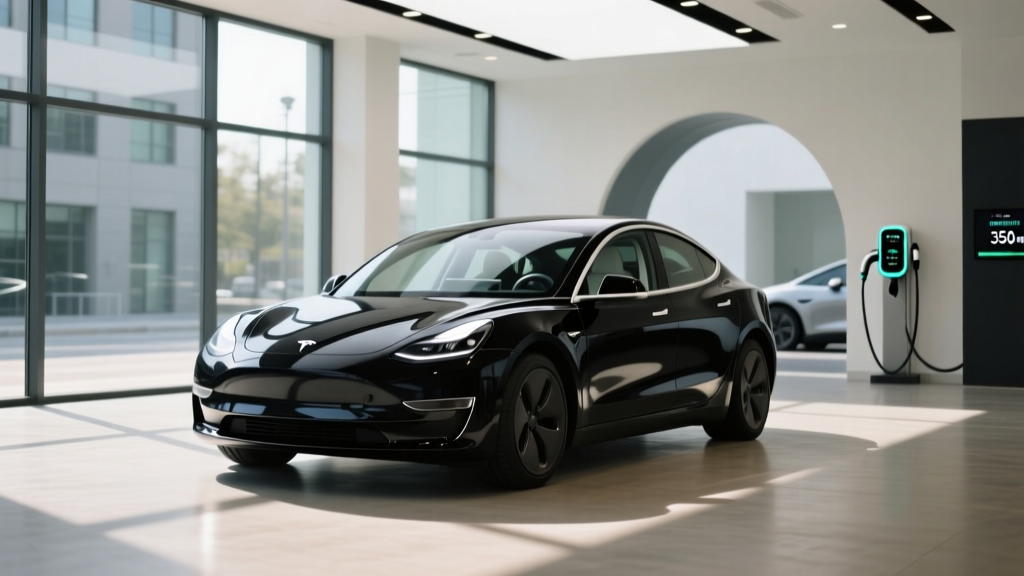
If you've been searching for a Tesla dealer near you, here's the definitive answer: Tesla does not sell vehicles through franchised dealerships. Unlike Ford, Hyundai, or BMW, Tesla operates a direct-to-consumer sales model. You configure, order, and take delivery of your Tesla either online or at a company-owned store or gallery — no haggling with a salesperson, no dealer markups (in theory), and no trade-in negotiations in the traditional sense.
Tesla's direct-sales approach is legally permitted in many U.S. states, though some states with strong dealer-protection laws restrict or ban manufacturer-direct sales. In those states, Tesla may operate "galleries" where you can view and learn about vehicles but cannot complete a purchase on-site. You'd still order online and take delivery through an out-of-state fulfillment process or a nearby service center.
This guide pairs the buying-process explainer with a full review of the 2026 Tesla Model 3 — the sedan that remains Tesla's highest-volume, most accessible vehicle and the entry point for most new EV buyers considering the brand.
2026 Tesla Model 3: Spec Table at a Glance
| Specification | Model 3 RWD | Model 3 Long Range AWD | Model 3 Performance |
|---|---|---|---|
| EPA Range | 272 mi | 341 mi | 315 mi |
| Battery (usable) | ~57.5 kWh (LFP) | ~75 kWh (NMC) | ~75 kWh (NMC) |
| Drivetrain | Rear-Wheel Drive | Dual-Motor AWD | Dual-Motor AWD |
| Horsepower | 271 hp | 346 hp | 510 hp |
| 0–60 mph | 5.8 sec | 4.2 sec | 2.9 sec |
| Max DC Fast Charge | 170 kW | 250 kW | 250 kW |
| 10–80% DC Time | ~25 min | ~25 min | ~25 min |
| Level 2 Home Charge | ~30 mi/hr (11.5 kW) | ~44 mi/hr (11.5 kW) | ~44 mi/hr (11.5 kW) |
| MPGe (combined) | 132 MPGe | 132 MPGe | 121 MPGe |
| Efficiency | 25 kWh/100 mi | 25 kWh/100 mi | 28 kWh/100 mi |
| Base MSRP | $38,990 | $44,990 | $52,990 |
| Battery Warranty | 8 yr / 100,000 mi | 8 yr / 120,000 mi | 8 yr / 120,000 mi |
Sources: EPA Fuel Economy, Tesla Model 3 Design Studio.
Real-World Range: What to Actually Expect
EPA sticker: 341 miles. Real-world expectation: ~270–300 miles on sustained highway driving at 70–75 mph. In cold weather (below 32°F), expect a further 15–25% reduction, bringing usable range down to ~210–250 miles on a full charge.
The EPA range figure is a laboratory-derived composite, and Tesla's efficiency engineering is among the best in the industry. However, the Model 3 Long Range's 341-mile EPA rating assumes a mix of city and highway driving at moderate temperatures. In practice, highway speeds above 70 mph increase aerodynamic drag substantially — EVs are far more sensitive to this than gas cars because they lack a multi-speed transmission to optimize efficiency at speed.
The base RWD model uses a lithium iron phosphate (LFP) battery, which offers excellent longevity and allows Tesla to recommend regular 100% charging — effectively giving you the full 272 EPA miles whenever you need it. The trade-off is slightly lower energy density and reduced cold-weather performance compared to the NMC packs in the Long Range and Performance trims. If you live in a northern climate and park outdoors, the LFP pack may lose more range overnight in winter than the NMC alternative.
For daily commuting under 80 miles round-trip, even the RWD model provides ample buffer. For road trips, the Long Range AWD's 341-mile rating translates to comfortable 220–250 mile legs between Supercharger stops — which aligns well with typical 15–20 minute DC fast-charge breaks.
Charging Speed: Home and DC Fast Charging
| Charging Level | Power | Miles Added per Hour | Typical Use Case |
|---|---|---|---|
| Level 1 (120V outlet) | ~1.4 kW | ~5 mi/hr | Emergency / overnight trickle |
| Level 2 (240V, 48A) | 11.5 kW | 30–44 mi/hr | Daily home charging |
| DC Fast Charge | 170–250 kW peak | Up to ~1,000 mi/hr (peak) | Road trips, Supercharger network |
DC Fast Charging Reality: Tesla's quoted 10–80% time of approximately 25 minutes applies when you arrive at a V3 or V4 Supercharger with a preconditioned battery (the car's navigation routes you through a warmup). Peak charge rate on the Long Range and Performance models hits 250 kW, but this is a peak — not a sustained rate. The charge curve tapers noticeably above 50% state of charge and drops sharply above 80%. Charging from 80–100% on DC can take as long as the 10–80% session. For road-trip efficiency, plan stops to arrive at ~10–15% and depart at ~80%.
Home Charging: With a Tesla Wall Connector on a 60A circuit (48A continuous), you'll add roughly 44 miles of range per hour on the Long Range AWD — enough to fully replenish overnight from any daily commute. Installation typically runs $500–$1,500 depending on your electrical panel's capacity and proximity to the garage. If your panel is older or near its load limit, a 200A service upgrade may add $1,500–$3,000.
The Model 3 ships with a NACS (North American Charging Standard) connector natively. This is now the de facto U.S. charging standard, with Ford, GM, Rivian, Hyundai, and most major automakers adopting it for 2025+ models. You get seamless access to the entire Supercharger network — currently over 6,000 U.S. stations and 60,000+ connectors — without adapters.
How the Tesla Buying Process Actually Works
Since you can't walk into a franchised dealership and drive off a Tesla lot, here's how the purchase flow works in practice:
- Configure online: Visit Tesla.com, select your model, trim, paint, wheels, and interior. The price shown is the price you pay — no dealer negotiation, though Tesla does adjust MSRPs periodically based on market conditions.
- Place your order: A non-refundable order fee (typically $250) secures your build slot. Estimated delivery dates are provided but can shift based on production scheduling.
- Trade-in and financing: Tesla offers in-house trade-in valuations (generally competitive but worth cross-checking against Carvana or CarMax). Financing is available through Tesla or your own bank/credit union.
- Tax credit application: If eligible, you can transfer the federal §30D tax credit to Tesla at point of sale, reducing your purchase price directly rather than waiting for a tax refund. This is a significant cash-flow advantage.
- Delivery: You pick up at a Tesla service center or delivery hub. In some markets, Tesla offers doorstep delivery. The process is streamlined — expect 30–60 minutes for paperwork and vehicle walkthrough.
What about test drives? Tesla stores and galleries in major metro areas offer demo drives, though availability varies. Some markets now allow you to schedule a test drive through the app. If you're in a state that restricts direct sales, your options for hands-on experience before ordering may be limited.
Federal Tax Credit Eligibility: §30D Rules for 2026
- Maximum credit: Up to $7,500 (split into $3,750 for critical minerals + $3,750 for battery component sourcing)
- MSRP cap (sedans): Vehicle base price must not exceed $55,000
- Buyer income cap: AGI ≤ $150,000 (single) / $300,000 (joint) / $225,000 (head of household)
- Battery sourcing: Increasing percentages of critical minerals and battery components must be sourced from the U.S. or FTA partners — thresholds tighten annually
- Point-of-sale transfer: You can transfer the credit to the dealer (Tesla) to reduce purchase price at delivery
- FEOC restriction: Vehicles with battery components from a "foreign entity of concern" (China, Russia, etc.) may be disqualified
Source: IRS Clean Vehicle Credits. Rules are subject to change — consult a tax professional for your specific situation.
The Model 3 RWD at $38,990 and the Long Range AWD at $44,990 both fall under the $55,000 sedan MSRP cap, making them potentially eligible for the full $7,500 credit — provided your income qualifies and the specific battery pack in your vehicle meets the current-year critical mineral and component sourcing thresholds. The Performance trim at $52,990 also qualifies under the sedan cap, but optioning it above $55,000 with packages could push it over.
Tesla publishes a real-time eligibility indicator on its website for each configuration. Because battery sourcing requirements tighten each year under the Inflation Reduction Act, eligibility can shift between model years. Always verify before ordering.
Performance, Interior, and Technology
Performance: The Model 3 lineup covers a wide envelope. The RWD's 5.8-second 0–60 time is brisk for a commuter sedan, while the Performance trim's 2.9-second sprint rivals supercars. All trims benefit from a low center of gravity (battery pack under the floor), giving the Model 3 composed handling that belies its weight. The 2026 "Highland" refresh brought a noticeably improved suspension tune — firmer but better-damped than earlier models, with reduced road noise from acoustic glass and redesigned bushings.
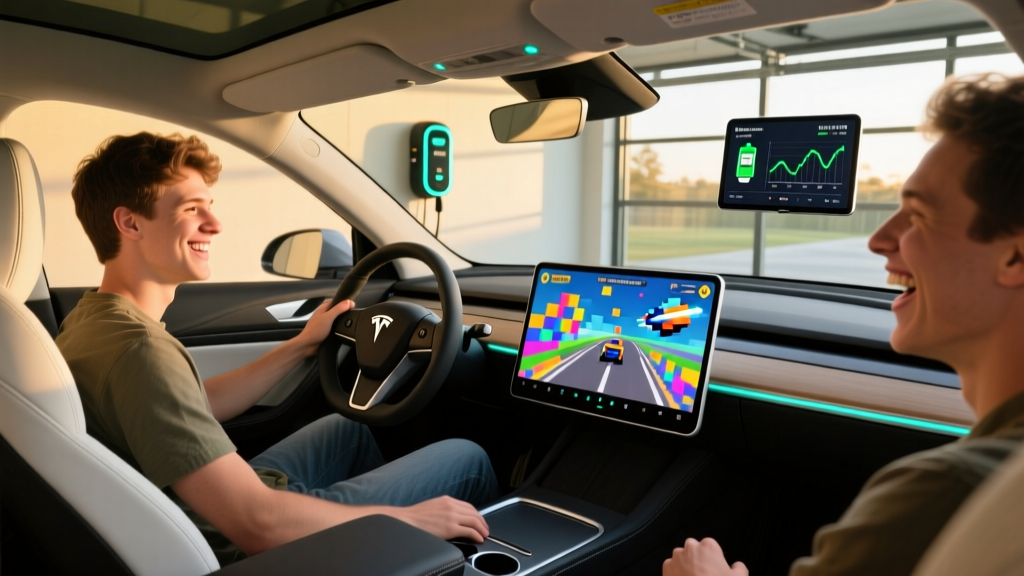
Interior and Space: The minimalist cabin centers on a 15.4-inch touchscreen that controls virtually everything — climate, mirrors, glovebox, and driving settings. The rear touchscreen added in the Highland refresh gives back-seat passengers control over climate and entertainment. Cargo volume is 23 cubic feet (trunk) plus a modest front trunk (frunk) for charging cables or a small bag. Rear legroom measures 35.3 inches — adequate for adults on shorter trips but tight for taller passengers on long hauls compared to a Hyundai Ioniq 6 or BMW i4.
Tech and Driver Assistance:
- Autopilot (standard): Lane-centering, adaptive cruise, and automatic emergency braking. This is an SAE Level 2 driver-assist system — you must keep hands on the wheel and eyes on the road at all times.
- FSD (Supervised): Available as a $8,000 add-on or $99/month subscription. Adds automated lane changes, intersection handling, and parking. Despite the name, FSD remains an SAE Level 2 system requiring full driver engagement. It is not autonomous driving.
- Ventilated front seats, ambient lighting, and power-folding mirrors are now standard on all trims post-Highland.
- No Apple CarPlay or Android Auto. Tesla's proprietary infotainment is the only interface. If you depend on phone projection, this is a dealbreaker worth knowing upfront.
Tesla Autopilot and FSD (Supervised) are classified as SAE Level 2 driver-assistance systems. The driver must continuously monitor the driving environment and be prepared to take over immediately. Only fully driverless services like Waymo (operating in geofenced areas) qualify as SAE Level 4. Marketing language around "full self-driving" does not change the engineering classification.
Pros and Cons
- Class-leading efficiency (~25 kWh/100 mi)
- Unmatched Supercharger network access (NACS native)
- Over-the-air updates continuously add features
- Strong resale value relative to most EVs
- LFP battery on RWD allows daily 100% charging
- Point-of-sale tax credit transfer simplifies purchase
- No Apple CarPlay / Android Auto
- Rear seat space is tight for taller adults
- Everything routed through touchscreen can distract
- No dealership network for in-person sales support
- FSD (Supervised) costs extra and isn't truly autonomous
- Service center wait times can be long in some markets
Model 3 vs. Key Competitors
| Attribute | 2026 Tesla Model 3 LR AWD | 2026 Hyundai Ioniq 6 SE LR | 2026 BMW i4 eDrive40 |
|---|---|---|---|
| EPA Range | 341 mi | 361 mi | 307 mi |
| Base MSRP | $44,990 | $42,750 | $57,900 |
| Max DC Charge | 250 kW | 235 kW (800V) | 205 kW |
| Charging Standard | NACS (native) | NACS (2025+) | CCS1 (NACS adapter avail.) |
| Apple CarPlay | No | Yes (wireless) | Yes (wireless) |
| 0–60 mph | 4.2 sec | 5.1 sec | 5.5 sec |
| Federal Credit Eligible | Yes (up to $7,500) | Yes (up to $7,500) | Limited (sourcing rules) |
The Ioniq 6 edges the Model 3 on EPA range and undercuts it on price, with faster 800V charging architecture and standard CarPlay. The BMW i4 offers premium materials and driving dynamics but at a significant price premium. The Model 3's advantages remain its Supercharger network integration, software ecosystem, and proven efficiency. Your priority weighting — range per dollar, charging convenience, interior luxury, or tech ecosystem — determines the right choice.
Who Should Buy the Tesla Model 3?
- Choose the Model 3 RWD if: You commute under 80 miles daily, charge at home, want the lowest entry price, and prefer LFP longevity for 100% daily charging.
- Choose the Model 3 Long Range AWD if: You take regular road trips, live in a cold climate (AWD + NMC cold performance), or need 300+ mile range confidence.
- Choose the Model 3 Performance if: You want sports-car acceleration in a daily driver and accept the range and price trade-offs.
- Look elsewhere if: You need Apple CarPlay, regularly carry tall rear-seat passengers, or want a traditional dealership experience with in-person negotiation.
Frequently Asked Questions
Can you buy a Tesla at a dealership?
No. Tesla sells exclusively through its own website and company-owned stores. There are no franchised Tesla dealerships. You configure and order online, then take delivery at a Tesla service center or delivery hub.
What is the real-world range of the 2026 Tesla Model 3?
The Long Range AWD is EPA-rated at 341 miles. Expect 270–300 miles in real-world highway driving at 70–75 mph, and 210–250 miles in freezing temperatures. The RWD's 272 EPA miles translates to roughly 220–240 highway miles in moderate conditions.
How fast does the Model 3 charge?
On a V3/V4 Supercharger, the Long Range and Performance peak at 250 kW and charge from 10–80% in approximately 25 minutes with a preconditioned battery. At home on a Level 2 Wall Connector (11.5 kW), you add 30–44 miles per hour, fully replenishing overnight.
How much does the Model 3 cost after tax credits?
The RWD starts at $38,990 and the Long Range at $44,990. If you qualify for the full $7,500 federal credit and transfer it at point of sale, effective prices drop to approximately $31,490 (RWD) and $37,490 (Long Range). Eligibility depends on income, battery sourcing, and MSRP caps under current IRS §30D rules.
Does the Tesla Model 3 qualify for the federal EV tax credit?
Yes — all Model 3 trims currently fall under the $55,000 sedan MSRP cap. Full $7,500 eligibility depends on your adjusted gross income, the battery sourcing in your specific build, and annual threshold changes. Check Tesla's website and the IRS clean vehicle credit page for the latest status before ordering.
Is the Model 3 worth buying vs. competitors?
The Model 3 Long Range remains the efficiency and charging-network benchmark in its segment. If Supercharger access and software integration matter most, it's hard to beat. If you prioritize CarPlay, rear-seat space, or a traditional buying experience, the Hyundai Ioniq 6 or BMW i4 may serve you better. Cross-test drive at minimum two options before committing.