The Short Answer: No, You Cannot Buy a Cybercab Yet
If you've been searching for whether can you buy a Cybercab is finally a yes in 2026, the honest answer remains no. The Tesla Cybercab — the two-seat, steering-wheel-free robotaxi unveiled in October 2024 — is not available for consumer purchase, pre-order, or lease as of mid-2026. Tesla CEO Elon Musk has stated the company aims to begin production in late 2026, with a target consumer price under $30,000, but these figures remain announced and preliminary. No EPA certification, no final spec sheet, and no firm delivery date exist yet.
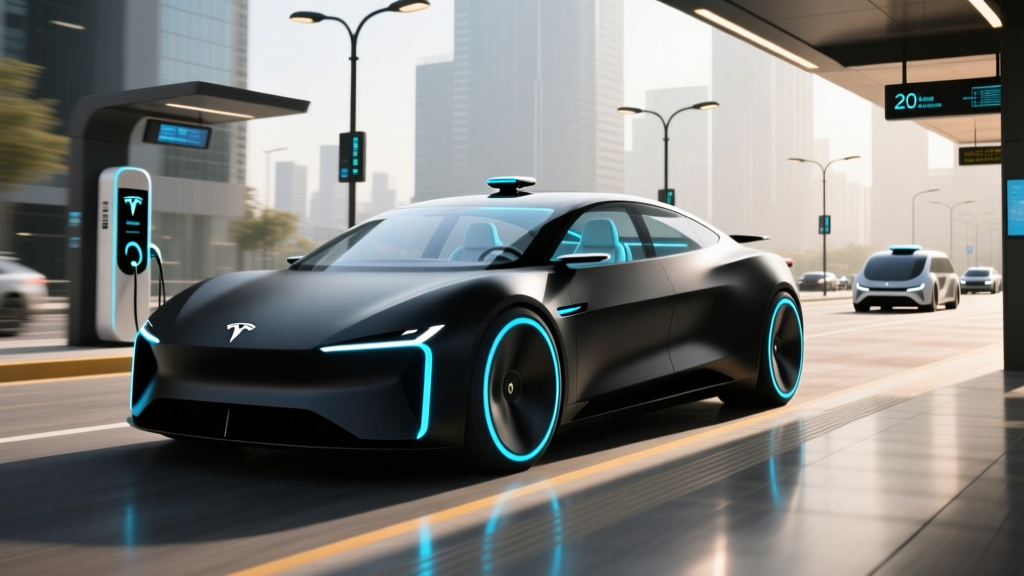
What Tesla has shown is a prototype: a compact, butterfly-door coupe with no steering wheel, no pedals, and an explicit design mandate to operate exclusively as a Level 4 autonomous vehicle. That distinction matters enormously — this is not a car you'll drive. It's a car that drives you (or earns money for you in a Tesla-operated fleet).
| Spec | Announced / Estimated | Status |
|---|---|---|
| EPA Range | Not yet certified (target >200 mi) | Preliminary |
| Battery Capacity | ~50 kWh usable (estimated) | Unconfirmed |
| Battery Chemistry | LFP (lithium iron phosphate) likely | Speculative |
| DC Fast Charge (peak) | ~150–170 kW (estimated) | Unconfirmed |
| 10–80% Charge Time | ~25–30 min (estimated) | Unconfirmed |
| Level 2 Home Charging | ~7.7 kW / ~25 mi/hr (est.) | Unconfirmed |
| 0–60 mph | Not disclosed | Unknown |
| Horsepower | ~200 hp (single motor est.) | Unconfirmed |
| Drivetrain | RWD (single motor) | Likely |
| Seating | 2 passengers | Confirmed (prototype) |
| Steering Wheel / Pedals | None | Confirmed (prototype) |
| Base MSRP (target) | Under $30,000 | Announced goal |
| Federal Tax Credit | Uncertain — see §30D analysis below | Pending |
| Production Start | Late 2026 (target) | Announced |
| Availability | Not available for purchase or pre-order | Current status |
Sources: Tesla Q3 2024 earnings call, Cybercab unveil event (October 2024). All figures above are preliminary estimates and subject to change before production.
What Is the Tesla Cybercab, Exactly?
The Cybercab is Tesla's purpose-built robotaxi — a vehicle designed from the ground up for autonomous ride-hailing, not for human-driven transportation. The prototype shown at the Warner Bros. studio lot event in October 2024 featured:
- No steering wheel, no pedals — the interior is a bench seat facing a single large touchscreen
- Butterfly doors that open upward for curb-side passenger entry
- Two-passenger seating — optimized for the majority of ride-hail trips (1–2 riders)
- Inductive (wireless) charging — no plug; the vehicle parks over a charging pad
- Camera-only Tesla Vision sensor suite — no lidar, no radar
This is a fundamentally different product from a Tesla Model 3 or Model Y. It's closer in concept to a Waymo Jaguar I-PACE or a Zoox vehicle — except Tesla intends to sell them to individual owners who would then deploy them into a Tesla-managed ride-hail network.
The Cybercab is designed for Level 4 autonomy — meaning it can handle all driving tasks within a defined operational domain (geofenced areas, specific weather conditions) with no human driver intervention required. This is fundamentally different from Tesla's current FSD (Supervised), which is a Level 2 system requiring active driver supervision. The Cybercab's Level 4 capability has not been demonstrated, certified, or approved by NHTSA as of 2026.
Estimated Range, Battery, and Efficiency
Tesla has not published official EPA range figures for the Cybercab — the vehicle hasn't been submitted for EPA testing because it isn't in production. However, based on the vehicle's compact size, estimated weight (~2,800–3,200 lbs), and likely battery capacity, industry analysts project a range in the 200–250 mile ballpark.
EPA estimate: Not yet certified. Tesla's target appears to be 200+ miles.
Real-world expectation: For a robotaxi, range matters differently. The Cybercab would likely operate in urban geofenced zones with frequent opportunity charging via inductive pads. Highway range is largely irrelevant — this vehicle won't be doing road trips. In stop-and-go city driving, regenerative braking maximizes efficiency, potentially yielding better real-world range than the EPA sticker (the opposite of most EVs on highway duty). Cold-weather losses of 20–30% still apply to LFP chemistry if used in northern climates.
Battery Chemistry: Why LFP Makes Sense Here
Though unconfirmed, LFP (lithium iron phosphate) is the logical chemistry choice for the Cybercab for several reasons:
- Cost: LFP cells are 15–25% cheaper than NMC, critical for hitting the sub-$30,000 target
- Cycle life: LFP sustains 3,000–5,000+ full charge cycles before significant degradation — essential for a vehicle that may charge 3–5 times daily in fleet service
- Safety: LFP is more thermally stable, reducing fire risk in a vehicle with no driver to respond to warnings
- Trade-off: Lower energy density means a heavier or smaller battery for a given range. In a compact, city-only vehicle, this is acceptable.
The estimated ~50 kWh usable battery would be smaller than a Model 3 RWD's ~57.5 kWh pack, reflecting the Cybercab's lighter weight and lower range requirement for urban duty cycles.
Charging: Inductive Pads, Not Plugs
The Cybercab's most notable charging departure: it has no charge port. Tesla plans to use inductive (wireless) charging pads embedded in parking spots and fleet depots. The vehicle autonomously positions itself over the pad and charges without any physical connection.
| Charging Method | Power (kW) | Rate | Notes |
|---|---|---|---|
| Inductive Pad (primary) | ~50–100 kW (est.) | ~20–40 mi/hr added | No plug; autonomous positioning |
| DC Fast Charge | Not applicable (no port shown) | N/A | Prototype has no charge port |
| Level 2 Home (J1772/NACS) | Not applicable | N/A | No plug on prototype |
This creates a significant infrastructure question: who installs and maintains the inductive pads? For fleet operators, depot-based inductive charging is straightforward. For individual owners who buy a Cybercab to deploy in Tesla's network, they'd need access to Tesla-installed pads — adding complexity and cost that hasn't been detailed yet.
Inductive charging is typically 85–92% efficient (vs. ~95–98% for conductive/plugged charging), meaning slightly more energy is drawn from the grid per mile of range added. For fleet economics, this adds up.
Pricing, Tax Credits, and the Economics Question
Tesla's announced target price for the Cybercab is under $30,000. This would make it one of the least expensive new EVs on the US market if achieved. But several caveats apply:
| Item | Figure | Status |
|---|---|---|
| Target Base MSRP | Under $30,000 | Announced goal, unconfirmed |
| Federal §30D Tax Credit | Up to $7,500 (if eligible) | Uncertain — see rules below |
| Effective Price (best case) | ~$22,500 | Speculative |
| Point-of-Sale Transfer | Potentially available | Depends on 2026 IRS rules |
Federal Tax Credit Eligibility (§30D) — Key Hurdles
Whether the Cybercab qualifies for the IRS §30D Clean Vehicle Credit depends on several factors that won't be resolved until the vehicle enters production:
- MSRP cap: The Cybercab's sub-$30,000 target easily clears the $55,000 sedan cap
- Buyer income cap: AGI limits ($150K single / $300K joint) apply to the buyer, not the vehicle
- Battery sourcing: Critical minerals and battery components must meet escalating domestic-content thresholds. In 2026, 80% of critical minerals and 100% of battery components must be sourced from the US or FTA partners — a threshold that has disqualified many EVs
- Final assembly: Must occur in North America (likely at Giga Texas)
- Vehicle classification: The Cybercab's classification (passenger car? autonomous vehicle?) could affect eligibility rules
The battery-sourcing requirement is the biggest wildcard. Tesla's use of LFP cells — historically sourced from CATL in China — could disqualify the Cybercab unless Tesla secures compliant LFP supply from US or FTA-partner sources by production time. Consult a tax professional before assuming credit eligibility.
Who Is the Cybercab Actually For?
The Cybercab's use case is narrow and specific. This is not a daily driver, a family car, or a road-trip vehicle. It's an income-generating asset or a fleet-deployed robotaxi.
- Fleet operators: Companies running ride-hail or delivery services in geofenced urban areas where Level 4 autonomy is approved
- Individual fleet investors: Buyers who want to purchase a Cybercab and deploy it in Tesla's planned ride-hail network, earning per-trip revenue (similar to an Airbnb-for-cars model)
- Urban residents in robotaxi-approved zones: If Tesla opens consumer sales, city dwellers who never drive themselves and want a personal autonomous pod
- Anyone who needs a car now — production is late 2026 at the earliest, with deliveries likely 2027
- Suburban or rural drivers — Level 4 geofencing means the Cybercab won't operate outside approved urban zones
- Families needing 4+ seats — the Cybercab seats two
- Anyone wanting to drive — there's no steering wheel
- Road-trippers — no DC fast-charge port and limited range make intercity travel impractical
Cybercab vs. Competitors: What Else Is Out There?
The Cybercab isn't entering an empty market — but its competitors are mostly ride-hail services, not consumer-purchasable vehicles:
| Platform | Vehicle | SAE Level | Consumer Purchase? | Availability |
|---|---|---|---|---|
| Waymo (Alphabet) | Jaguar I-PACE / Hyundai Ioniq 5 | Level 4 | No (service only) | Live in Phoenix, SF, LA, Austin |
| Zoox (Amazon) | Zoox purpose-built | Level 4 | No (service only) | Limited operations, Las Vegas |
| Cruise (GM) | Cruise Origin | Level 4 | No (service only) | Suspended / limited relaunch |
| Tesla Cybercab | Cybercab (purpose-built) | Level 4 (target) | Planned (individual owners) | Not yet in production |
Tesla's differentiator — selling Cybercabs to individuals who then earn revenue through Tesla's network — is unique. But it depends on three unproven assumptions: (1) Tesla achieves reliable Level 4 autonomy with camera-only vision, (2) regulators approve driverless operations in enough cities to make the economics work, and (3) the revenue-per-trip exceeds the cost of ownership, insurance, and maintenance.
Pros and Cons of the Cybercab (Based on Announced Specs)
- Target price under $30,000 — cheapest Tesla ever if achieved
- Purpose-built for autonomy — no wasted cost on steering/pedals
- LFP battery ideal for high-cycle fleet duty
- Inductive charging = zero driver interaction needed
- Revenue potential via Tesla ride-hail network
- Ultra-low operating cost (no driver wages in fleet model)
- Not available — no purchase, no pre-order, no delivery date
- Level 4 autonomy unproven with Tesla Vision (camera-only)
- No steering wheel = useless outside geofenced zones
- Two seats only — no family or cargo utility
- Inductive charging requires pad infrastructure (who pays?)
- No DC fast-charge port limits flexibility
- Regulatory approval needed city-by-city
- Federal tax credit eligibility uncertain
- Tesla's production timelines have historically slipped
The Regulatory Hurdle: Why Level 4 Is Hard
Even if Tesla builds the Cybercab on schedule, deploying it as a driverless robotaxi requires regulatory approval at the federal and state levels. As of 2026:
- NHTSA has not issued blanket approval for any Level 4 consumer vehicle without a steering wheel. Waymo and Zoox operate under specific state permits and limited-domain exemptions.
- States like California, Arizona, and Texas have frameworks for robotaxi permits, but each requires separate applications, safety demonstrations, and ongoing reporting.
- Tesla's camera-only approach faces skepticism from safety researchers who note that lidar provides redundant depth perception that cameras can struggle with in low-light, glare, or occlusion scenarios.
- Tesla's FSD (Supervised) safety record — a Level 2 system — is still under NHTSA scrutiny for crash incidents, which could complicate the case for approving a Level 4 vehicle with no human backup.
The gap between "Tesla builds a Cybercab" and "Cybercabs are earning money in 50 US cities" is enormous and should not be underestimated.
Frequently Asked Questions
Can you buy a Cybercab right now in 2026?
No. The Tesla Cybercab is not available for purchase, pre-order, or lease. Tesla has announced a target production start of late 2026, but this is not confirmed and Tesla's timelines have historically shifted. The earliest realistic consumer deliveries would be 2027.
How much will the Cybercab cost?
Tesla's announced target is under $30,000 before incentives. Whether the federal §30D tax credit of up to $7,500 applies depends on battery sourcing, final assembly location, and the buyer's income — all unresolved as of 2026.
Can I drive a Cybercab manually if I want to?
No. The Cybercab prototype has no steering wheel and no pedals. It is designed exclusively for autonomous operation. If the autonomous system cannot handle a situation, the vehicle would pull over and stop — not hand control to a human.
What is the Cybercab's estimated range?
The EPA has not certified the Cybercab. Based on its size and likely ~50 kWh LFP battery, industry estimates suggest 200–250 miles of range. For a city-only robotaxi, this is sufficient for a full shift with opportunity charging between rides.
Will the Cybercab have a charge port for home charging?
The prototype shown in October 2024 had no visible charge port. Tesla plans inductive (wireless) charging via ground-mounted pads. Whether a production version might include a backup charge port is unknown.
Is the Cybercab self-driving?
The Cybercab targets SAE Level 4 autonomy — meaning it can drive itself without human intervention within defined geofenced areas. This is fundamentally different from Tesla's current FSD (Supervised), which is a Level 2 system requiring the driver to remain alert and engaged. The Cybercab's Level 4 capability has not been demonstrated or approved by regulators.
Can I use a Cybercab for road trips?
No. The Cybercab is designed for urban ride-hail duty in geofenced zones. With no DC fast-charge port, two seats, and Level 4 autonomy limited to approved areas, intercity travel is not a viable use case.
Should I wait for the Cybercab or buy a different EV now?
If you need a vehicle in 2026, do not wait. The Cybercab is at least 12–18 months from potential production, with regulatory approval adding further uncertainty. If your goal is personal transportation, a Tesla Model 3, Hyundai Ioniq 6, or Chevrolet Equinox EV are available now with confirmed specs, EPA range, and known tax-credit eligibility.
Disclaimer: This article is based on Tesla's public announcements and industry analysis as of 2026. The Cybercab is an unreleased, announced product. All specifications, pricing, and availability are preliminary and subject to change. Verify all information with Tesla directly and consult IRS.gov for current tax-credit rules before making purchasing decisions.