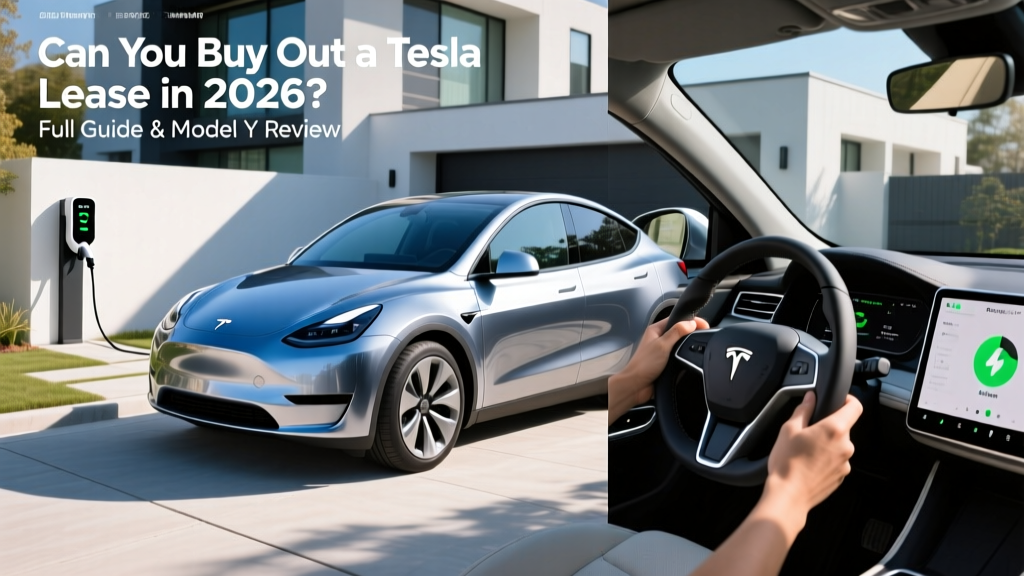
If you're nearing the end of a Tesla lease — or considering signing one — you've probably asked: can you buy out a Tesla lease? The short answer is yes, but with important caveats that vary by model, lease year, and Tesla's evolving policy. This guide covers exactly how Tesla lease buyouts work in 2026, what it costs, and whether keeping your leased Tesla (we'll use the popular Model Y Long Range as our benchmark) makes financial sense versus returning it and walking away.
Tesla Lease Buyout Policy: What Changed and What Applies Now
For years, Tesla's leasing contracts included a hard no-buyout clause — particularly on Model 3 and Model Y leases signed between 2021 and 2023. Tesla's reasoning was to retain vehicles for its used-inventory pipeline and to control battery lifecycle data. That policy has since softened.
As of 2026, Tesla generally allows lease buyouts on most current agreements, though the terms depend on when you signed:
- Leases signed before mid-2022: Many of these contracts explicitly prohibited buyouts. Some lessees successfully negotiated exceptions, but contractually, Tesla was not obligated to offer one.
- Leases signed late 2022–2025: Tesla began including buyout options with a predetermined residual value stated in the contract. You can purchase at that residual plus a purchase-option fee (typically $350–$500).
- Leases signed in 2025–2026: Buyout eligibility is standard on most new Tesla leases, with the residual value disclosed upfront. Tesla Finance handles the transaction directly or through partner lenders like US Bank or Wells Fargo.
To confirm your specific eligibility, log into your Tesla Account and check your lease agreement documents, or call Tesla Lease Support directly. The residual value is locked at signing — it does not fluctuate with used-market prices, which can work for or against you depending on depreciation trends.
Model Y Long Range: The Numbers That Matter for a Buyout Decision
If you're weighing whether to buy out your leased Model Y, you need to know exactly what you'd be keeping. Here are the 2026 Model Y Long Range (Dual Motor AWD) specifications:
| Spec | Value |
|---|---|
| EPA Range | 320 miles |
| Battery Capacity | ~78.1 kWh usable (NMC chemistry) |
| Drivetrain | Dual Motor AWD |
| Horsepower | 384 hp combined |
| 0–60 mph | 4.8 seconds |
| Max DC Fast Charge | 250 kW peak (V3 Supercharger) |
| 10–80% DC Charge | ~25 minutes |
| Level 2 Home Charge Rate | 11.5 kW (~44 mi/hr) |
| MPGe (combined) | 122 MPGe |
| Efficiency | 27 kWh/100 mi |
| Cargo Volume | 30.2 cu ft (rear seats up), 72.0 cu ft (folded) |
| Rear Legroom | 36.5 in |
| Base MSRP | $44,990 |
| Battery Warranty | 8 years / 120,000 miles |
| Basic Warranty | 4 years / 50,000 miles |
The 2026 Model Y Long Range continues to use NMC (nickel manganese cobalt) battery chemistry, which offers higher energy density than LFP but is more sensitive to sustained high states of charge. Tesla recommends daily charging to 80–90% for NMC packs, reserving 100% for trips.
Real-World Range: What the EPA Sticker Doesn't Tell You
EPA Estimate: 320 miles
Real-World Highway (70 mph, moderate temps): ~270–290 miles
Cold Weather (below 32°F, mixed driving): ~220–250 miles
City/Commuter with Regen: ~300–330 miles
The Model Y's heat pump (standard since 2021) mitigates cold-weather loss compared to older EVs, but expect a 20–30% range reduction in sub-freezing temperatures. Highway driving at 75+ mph also cuts range significantly due to aerodynamic drag.
For lease-buyout decisions, range matters because it determines whether this car still fits your lifestyle two or three years from now. If your daily commute is under 60 miles round-trip and you have home charging, 320 EPA miles is more than adequate. If you regularly drive 300+ miles in winter or tow (the Model Y is rated for 3,500 lbs towing), plan your charging stops carefully.
Charging Speed Breakdown: Home and DC Fast Charging
| Charging Level | Power (kW) | Miles Added per Hour | Notes |
|---|---|---|---|
| Level 1 (120V outlet) | ~1.4 kW | ~4–5 mi/hr | Emergency/trickle only |
| Level 2 (240V, 48A) | 11.5 kW | ~44 mi/hr | Full overnight charge in ~7–8 hrs |
| DC Fast (V3 Supercharger) | 250 kW peak | ~162 mi in 15 min | 10–80% in ~25 min; tapers sharply above 80% |
| DC Fast (CCS adapter, Electrify America) | Up to 250 kW | Varies by station | Requires CCS adapter (sold separately or included with newer models) |
Tesla's Supercharger network remains the most reliable DC fast-charging ecosystem in the US, with over 6,000 V3 (250 kW) and growing V4 stalls. The Model Y Long Range peaks at 250 kW but only sustains that rate briefly between roughly 10–30% SoC. From 50–80%, expect speeds to drop to 60–90 kW. This charge-curve taper is normal for NMC packs and is managed by Tesla's thermal preconditioning system.
For home charging, a Wall Connector on a 60A circuit delivers the full 11.5 kW / 48A, adding roughly 44 miles of range per hour. Most owners charging overnight from 20–80% wake up to a full daily buffer. Installation costs vary from $500–$2,000 depending on panel capacity and run distance — consult a licensed electrician for a site-specific quote.
Lease Buyout Cost: What Will You Actually Pay?
The buyout price is determined by the residual value set at lease signing, plus any applicable fees and taxes. Here's a realistic example based on a 2023 Model Y Long Range lease:
| Item | Estimated Cost |
|---|---|
| Original MSRP at signing | $52,990 |
| Residual percentage (typical) | 55–58% |
| Residual / buyout value | $29,145–$30,734 |
| Purchase option fee | $350–$500 |
| State sales tax (varies; est. 7%) | $2,040–$2,151 |
| Total estimated buyout cost | $31,535–$33,385 |
That $31,500–$33,400 figure is what you'd finance or pay outright. Compare this against the current used Model Y market — as of early 2026, a 2023 Model Y Long Range with 30,000–40,000 miles typically lists for $29,000–$35,000 depending on condition and region. If your buyout price is near or below market value, buying out the lease can be a solid deal. If Tesla set a high residual, you may be better off returning the car and shopping the used market.
Does the Buyout Qualify for the Federal EV Tax Credit?
This is a critical question. Under IRS §30D rules, the federal clean vehicle credit applies to new vehicle purchases and, since 2024, to qualifying used EVs under §25E (up to $4,000). A lease buyout is treated as a used-vehicle purchase, which means:
- You may qualify for the used EV credit (§25E) of up to $4,000 — not the full $7,500 new-vehicle credit.
- The used-EV credit has an income cap: $75,000 single / $112,500 head of household / $150,000 joint filers.
- The sale price must be $25,000 or less to qualify for §25E — and most Model Y buyouts exceed this threshold.
- The vehicle must be at least 2 model years old (a 2023 buyout in 2026 qualifies on this point).
In practice, most Model Y lease buyouts will not qualify for any federal tax credit because the buyout price exceeds the $25,000 §25E cap. Consult a tax professional to confirm your specific situation. Some states offer separate used-EV rebates that may apply — check your state energy office for current programs.
Pros and Cons: Should You Buy Out Your Tesla Lease?
Pros of Buying Out
- Known history: You've maintained the car, know its charging habits, and avoided lease-return wear charges.
- Supercharger access: Tesla's network remains the most seamless charging ecosystem; keeping the car preserves this.
- OTA updates: Tesla continues pushing software improvements to older vehicles — your 2023 Model Y still receives new features in 2026.
- Avoid re-leasing cost: New 2026 Model Y leases may carry higher monthly payments due to residual adjustments.
- Battery warranty transfers: The 8-year/120,000-mile battery warranty stays with the vehicle regardless of ownership change.
Cons of Buying Out
- High buyout vs. market: If residual exceeds used-market price, you overpay versus buying an equivalent used Model Y.
- No federal tax credit: The $25,000 §25E cap disqualifies most Model Y buyouts from the used-EV credit.
- Depreciation continues: EV depreciation has been steep; a 3-year-old Model Y may lose another 30–40% over the next 3 years.
- Insurance costs: Tesla insurance premiums remain above the EV average — typically $1,800–$2,800/year depending on state and driving record.
- Missing new tech: The refreshed Model Y (Project Juniper, launched 2025) offers a ventilated-seat interior, rear touchscreen, and improved suspension that older leases lack.
Model Y vs. Competitors: Is It Still the Best Electric SUV?
If you're considering returning your Model Y lease and shopping alternatives, here's how the Model Y Long Range stacks up against key 2026 competitors:
| Model | EPA Range | Base Price | 10–80% DC | Cargo (cu ft) |
|---|---|---|---|---|
| Tesla Model Y LR AWD | 320 mi | $44,990 | ~25 min | 30.2 / 72.0 |
| Hyundai Ioniq 5 SEL AWD | 290 mi | $47,400 | ~18 min | 27.2 / 59.3 |
| Ford Mustang Mach-E Premium AWD | 305 mi | $45,995 | ~28 min | 29.7 / 59.7 |
| Kia EV6 GT-Line AWD | 282 mi | $48,900 | ~18 min | 24.4 / 50.2 |
The Model Y still leads in cargo space and Supercharger network access. The Ioniq 5 and EV6 charge faster (800V architecture supports 10–80% in ~18 minutes on 350 kW chargers). The Mach-E offers a more traditional SUV driving feel. If you value maximum range and cargo utility, the Model Y holds its ground. If you prioritize faster DC charging or a more refined interior, the Hyundai/Kia twins are strong alternatives.
Tech, Driver Assists, and Ownership Experience
The Model Y's tech suite remains a strong ownership differentiator:
- Infotainment: 15-inch center touchscreen, Netflix/YouTube/arcade streaming while parked, integrated navigation with real-time Supercharger routing.
- Autopilot (standard): SAE Level 2 driver assist — adaptive cruise, lane centering, automatic emergency braking. Driver must remain engaged at all times.
- FSD Supervised (optional, $8,000 or $99/month): Adds automatic lane changes, traffic-light recognition, and parking-lot navigation. Still Level 2 — not self-driving. NHTSA continues to monitor Tesla's FSD safety record.
- Over-the-air updates: Tesla pushes 10–20 major software updates per year, adding features, efficiency improvements, and UI changes.
- Sentry Mode / Dashcam: Built-in security camera system records surroundings when parked.
Autopilot and FSD (Supervised) are SAE Level 2 driver-assistance systems. They do not make the vehicle autonomous. You must keep your hands on the wheel, eyes on the road, and remain prepared to take over instantly. Misuse has resulted in NHTSA investigations and recalls. Only Level 4 robotaxi services (Waymo, Zoox) operate without a human driver.
Decision Framework: Buy Out or Return?
Buy out your Tesla lease if:
- Your residual value is at or below current used-market pricing for the same model/year/mileage.
- You have reliable home charging and your daily driving fits within ~250 real-world miles.
- You value keeping a car with a known service and charging history.
- You plan to keep the vehicle 3+ more years (amortizing the buyout cost over time).
Return the lease and move on if:
- The residual significantly exceeds comparable used Model Y listings in your area.
- You want the refreshed Juniper interior, improved suspension, and latest hardware (HW4 cameras).
- You'd rather lock in a new-vehicle warranty and potentially qualify for the $7,500 §30D credit on a new purchase (subject to MSRP and income caps).
- You're ready to try a competitor with faster DC charging (Ioniq 5, EV6) or a different form factor.
Frequently Asked Questions
Can I negotiate the Tesla lease buyout price?
No. The buyout price is the residual value stated in your original lease contract plus any purchase-option fee and applicable taxes. Tesla and its leasing partners do not negotiate residuals — they're set at signing based on projected depreciation.
Can I buy out my Tesla lease early?
In most cases, Tesla requires you to wait until the lease maturity date or the final few months of the term. Early buyouts are rarely permitted and may incur substantial early-termination penalties. Contact Tesla Lease Support to confirm your options.
Does the battery warranty transfer if I buy out the lease?
Yes. Tesla's 8-year/120,000-mile battery and drive unit warranty is tied to the vehicle VIN, not the owner. It transfers automatically whether you buy out the lease, purchase used, or receive the car as a gift. The warranty guarantees the battery will retain at least 70% of its original capacity.
What happens if my Model Y has excess wear when I return the lease instead?
Tesla's lease-return inspection covers tire tread depth (must be above 4/32"), body damage, windshield condition, and interior wear. Minor scuffs on wheels or small door dings are generally within tolerance. Significant damage, aftermarket modifications, or severely worn tires will result in charges. Buying out the lease eliminates wear-and-tear fees entirely.
Is it better to finance the buyout or pay cash?
This depends on your cash position and available interest rates. Used-EV loan rates in 2026 range from 6–9% APR through credit unions and banks. If you can secure a rate below your investment return, financing preserves liquidity. Tesla does not directly finance lease buyouts — you'll work with a third-party lender or pay outright.
How do I start the buyout process?
Log into your Tesla Account, navigate to your lease details, and look for the purchase option. If available, you'll see the buyout amount and can initiate the process online. You can also call Tesla Financial Services at 1-877-798-3752. Allow 2–4 weeks for title processing and registration transfer.