Quick Verdict: Leasing the 2026 VW ID.4 Makes Sense for Most Buyers
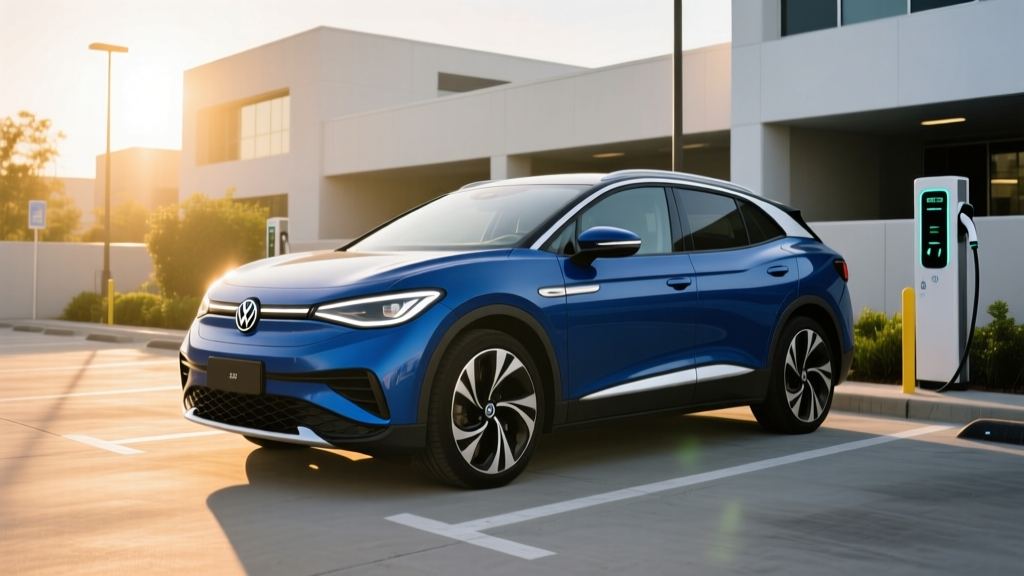
The Volkswagen ID.4 occupies a specific niche in the compact electric SUV segment: practical, comfortable, and priced to undercut premium rivals like the Tesla Model Y and Ford Mustang Mach-E. For 2026, VW continues to refine the ID.4 with its upgraded 82 kWh usable battery pack (NMC chemistry), faster infotainment, and competitive DC fast-charging speeds that make road-trip stops manageable.
But the headline question many shoppers ask is: can I lease a VW ID.4, and does leasing unlock advantages that buying outright cannot? The short answer is yes — VW Financial Services offers ID.4 leases through participating dealerships, and leasing can be a strategic way to sidestep the federal §30D tax credit's battery-sourcing and income requirements while still capturing savings via the commercial clean vehicle credit that lessors may pass through.
This review covers everything you need to know about the 2026 ID.4's real-world range, charging behavior, ownership costs, and whether a lease or purchase is the smarter financial move.
Range, Efficiency, and What to Expect in the Real World
Real-World Expectation: ~230–250 miles highway at 70 mph; ~195–220 miles in sub-30°F cold weather with cabin heat
Efficiency: 104 MPGe combined (RWD) | 2.9–3.1 kWh/mile
The 2026 ID.4 Pro with rear-wheel drive carries an EPA rating of 275 miles on its 82 kWh usable battery (91 kWh gross, NMC lithium-ion chemistry with nickel-manganese-cobalt cathode). That puts it in the middle of the compact EV SUV pack — behind the Hyundai Ioniq 5's 303-mile Long Range variant but ahead of the Subaru Solterra's 227-mile estimate.
In real-world highway testing at sustained 70–75 mph speeds in moderate temperatures (55–75°F), expect roughly 230–250 miles before the battery buffer warning appears. The ID.4's aerodynamic profile and standard heat pump help, but any EV loses efficiency at highway speed due to drag. In cold weather (below 30°F), range drops to approximately 195–220 miles depending on cabin heat usage and whether you precondition the battery while plugged in.
Efficiency lands around 2.9–3.1 kWh per mile (104 MPGe combined for RWD per fueleconomy.gov). For comparison, the Model Y Long Range achieves roughly 3.5 kWh/mile — the ID.4 is slightly less efficient, largely due to its heavier curb weight (around 4,682 lbs for the Pro RWD).
| Spec | Pro RWD | Pro S AWD |
|---|---|---|
| EPA Range | 275 mi | 263 mi |
| Battery (usable / gross) | 82 kWh / 91 kWh | 82 kWh / 91 kWh |
| Chemistry | NMC | NMC |
| Horsepower | 282 hp | 335 hp |
| 0–60 mph | 7.3 sec | 5.4 sec |
| Drivetrain | RWD (single motor) | AWD (dual motor) |
| Max DC Fast Charge | 170 kW | 170 kW |
| 10–80% DCFC Time | ~30 min | ~30 min |
| Level 2 Home Charge Rate | 11 kW (~37 mi/hr) | 11 kW (~37 mi/hr) |
| MPGe (combined) | 104 | 97 |
| Base MSRP | $40,790 | $49,190 |
Charging Speed: DC Fast Charging and Home Level 2
The 2026 ID.4 peaks at 170 kW on DC fast chargers using the CCS1 connector (VW has not yet adopted NACS on the ID.4 for 2026, though an adapter for Tesla Superchargers is available). The charge curve is progressive: the ID.4 sustains near-peak rates from roughly 10% to 40% State of Charge, then tapers through a stepped curve. A 10–80% session takes approximately 30 minutes at a 350 kW Electrify America or comparable station.
That 170 kW peak is competitive but not class-leading. The Hyundai Ioniq 5 and Kia EV6 peak at 240 kW on 800V architecture (10–80% in ~18 minutes), and the Tesla Model Y peaks around 250 kW. If you road-trip frequently, the ID.4's slightly slower charging adds 10–12 minutes per stop compared to those rivals — meaningful on a 600-mile drive with two stops.
At home on a Level 2 (240V) charger, the ID.4 accepts up to 11 kW, adding roughly 37 miles of range per hour of charging. A full 0–100% charge takes about 8.5 hours, which fits comfortably within an overnight window. You'll need a 48-amp hardwired Level 2 station (or a 40-amp unit on a 50-amp circuit) to maximize this rate. VW includes three years of complimentary Electrify America charging (30-minute sessions) with new ID.4 purchases and leases.
| Level | Power | Miles Added Per Hour | 0–100% Time |
|---|---|---|---|
| Level 1 (120V) | ~1.4 kW | ~4 mi/hr | ~58 hours |
| Level 2 (240V, 48A) | 11 kW | ~37 mi/hr | ~8.5 hours |
| DC Fast (peak) | 170 kW | ~220 mi/hr (peak) | 10–80% in ~30 min |
Pricing, Trim Levels, and Federal Tax Credit Eligibility
The 2026 VW ID.4 lineup starts at $40,790 for the Pro RWD (including destination) and tops out around $53,790 for the Pro S Plus AWD. Here's how the trims break down:
- Standard Range S ($38,990): 62 kWh battery, 206-mile EPA range — fleet and budget-oriented
- Pro RWD ($40,790): 82 kWh, 275 mi, heated seats, 12" infotainment
- Pro S RWD ($45,790): Adds panoramic roof, power liftgate, premium interior
- Pro S AWD ($49,190): Dual-motor, 335 hp, 263 mi range
- Pro S Plus AWD ($53,790): Ventilated seats, head-up display, premium audio
Does the 2026 ID.4 Qualify for the §30D Federal Tax Credit?
This is where leasing gains its strategic advantage. Under current IRS §30D rules, the federal clean vehicle credit of up to $7,500 requires that the vehicle meet critical-mineral and battery-component sourcing thresholds, MSRP caps ($80,000 for SUVs), and buyer income limits ($150K single / $300K joint). The ID.4's Chattanooga, Tennessee assembly and evolving battery supply chain mean eligibility fluctuates — VW's official credit status should be confirmed at the point of sale or via the IRS's qualifying vehicle list.
When you lease an ID.4, the credit technically flows to the lessor (VW Financial Services) under the commercial clean vehicle credit (§45W). Many lessors pass this savings through as a "lease cash" reduction — VW has historically offered $7,500 in lease cash on the ID.4, effectively giving lessees the credit's benefit without worrying about personal income caps or battery-sourcing disqualifications. Always confirm the current lease cash amount with your dealer, as it changes monthly.
| Trim | MSRP | Est. Lease Cash | Effective Cost |
|---|---|---|---|
| Pro RWD | $40,790 | Up to $7,500 | ~$33,290 |
| Pro S RWD | $45,790 | Up to $7,500 | ~$38,290 |
| Pro S AWD | $49,190 | Up to $7,500 | ~$41,690 |
Note: Lease cash amounts vary by month and region. Confirm with your VW dealer. Income and sourcing requirements may not apply to lease cash passed through §45W. Consult a tax professional for personal eligibility.
Interior, Cargo Space, and Daily Livability
The ID.4's cabin prioritizes space and simplicity. Rear-seat legroom measures 37.6 inches, which accommodates adults comfortably on longer drives — a clear advantage over the tighter rear quarters of the Hyundai Kona Electric. Headroom is generous thanks to the flat floor and tall roofline.
Cargo volume sits at 30.3 cubic feet behind the second row and 64.2 cubic feet with the rear seats folded. There is no front trunk (frunk) on AWD models; RWD models have a small storage area under the hood suitable for a charging cable bag. The cargo area is boxy and practical, with a low load floor that makes loading groceries or dog crates easy.
The 12.9-inch infotainment screen (upgraded for 2025–2026 models) runs VW's latest ID. Software 4.0, which is markedly faster and more responsive than earlier versions. Wireless Apple CarPlay and Android Auto are standard. However, VW's reliance on capacitive touch sliders for volume and climate remains a frustration — they're not backlit at night and lack tactile feedback. The physical steering wheel buttons (replacing the haptic touch controls of 2023–2024 models) are a welcome improvement.
Driver Assistance, Safety, and Technology
The ID.4 comes standard with VW's IQ.DRIVE suite, which includes:
- Adaptive cruise control with stop-and-go
- Lane-keeping assist (Lane Assist)
- Front Assist with automatic emergency braking
- Blind-spot monitor with rear traffic alert
- Travel Assist (combines ACC + lane centering for highway driving)
The ID.4 earned the IIHS Top Safety Pick+ designation in prior model years, with Good ratings across all crashworthiness categories. NHTSA gives it a 5-star overall safety rating. The standard six-airbag system and rigid MEB platform contribute to strong crash performance.
One tech gap: the ID.4 does not offer hands-free driving like GM's Super Cruise or Ford's BlueCruise. If highway automation is a priority, those competitors lead.
Warranty Coverage and Battery Longevity
VW backs the 2026 ID.4 with:
- Limited vehicle warranty: 4 years / 50,000 miles
- Battery & powertrain warranty: 8 years / 100,000 miles
- Battery capacity retention guarantee: At least 70% of original capacity through the 8-year/100,000-mile warranty period
The NMC battery chemistry in the ID.4 has demonstrated moderate degradation in real-world fleet data. Most ID.4 owners report 3–5% capacity loss after 50,000 miles, which is within the normal range for liquid-cooled NMC packs. If you lease for 36 months (typical VW lease term), battery degradation will not be your concern — you'll return the vehicle well within the warranty window.
For buyers planning long-term ownership, VW's 70% retention threshold is standard but not generous. Hyundai and Kia guarantee 70% for 10 years/100,000 miles. If you expect to keep the ID.4 past 8 years, factor in potential battery replacement costs of $12,000–$18,000 (based on current MEB platform pack pricing).
Who Should Lease (or Buy) the 2026 VW ID.4?
Choose the VW ID.4 if:
- You want a comfortable, quiet compact EV SUV without the Tesla ecosystem
- Leasing appeals to you and you want to capture lease-cash savings without income/sourcing hurdles
- Your daily commute is under 80 miles round-trip and you can charge at home
- You value rear-seat space for car seats or adult passengers
- You prefer conventional dealership service over mobile-only support
Look elsewhere if:
- You road-trip frequently and want the fastest DC charging (consider Ioniq 5 or Model Y)
- You need hands-free highway driving (consider Mach-E with BlueCruise or Cadillac Lyriq with Super Cruise)
- You want LFP battery chemistry for maximum cycle life (consider Tesla Model Y RWD)
- You need a frunk for front cargo storage (AWD ID.4 lacks one)
- Competitive pricing from ~$40,790 before incentives
- Comfortable ride quality and quiet cabin at highway speed
- Generous rear-seat legroom (37.6")
- Lease cash can bypass §30D sourcing/income rules
- 3 years free Electrify America charging included
- Strong IIHS/NHTSA safety ratings
- DC charging peaks at 170 kW — slower than Ioniq 5, Model Y
- Capacitive touch sliders for volume/climate are frustrating
- No frunk on AWD trims
- Range drops significantly in cold weather (~200 mi in sub-30°F)
- Infotainment still lags Tesla and Hyundai in responsiveness
- 8-yr battery warranty shorter than Hyundai/Kia's 10-yr coverage
Frequently Asked Questions
Can I lease a VW ID.4 directly from Volkswagen?
Yes. VW Financial Services offers lease programs through authorized VW dealerships nationwide. Lease terms typically run 36 months with 10,000–15,000 miles per year. Monthly payments vary by trim, region, and current incentives — expect roughly $299–$449/month for a Pro RWD with lease cash applied, depending on your credit and down payment.
What is the real-world range of the 2026 VW ID.4?
The EPA rates the Pro RWD at 275 miles. In real-world highway driving at 70 mph, expect 230–250 miles. In cold weather below 30°F with cabin heat active, plan for 195–220 miles. Preconditioning the battery while plugged in helps recover some cold-weather range.
How fast does the ID.4 charge at home and on DC fast chargers?
On DC fast chargers, the ID.4 peaks at 170 kW and charges from 10–80% in approximately 30 minutes. At home on a Level 2 (240V, 48A) charger, it accepts 11 kW and adds about 37 miles per hour — a full charge takes roughly 8.5 hours overnight.
Does the VW ID.4 qualify for the $7,500 federal tax credit?
Eligibility depends on current IRS §30D rules, including battery-sourcing requirements, MSRP caps ($80,000 for SUVs), and buyer income limits ($150K single / $300K joint). The ID.4's credit status has fluctuated — check the IRS qualifying vehicle list before purchasing. When leasing, you may benefit from up to $7,500 in lease cash passed through the lessor's commercial credit, regardless of personal income limits.
Is the VW ID.4 worth it vs. the Tesla Model Y or Hyundai Ioniq 5?
The ID.4 wins on ride comfort, rear-seat space, and traditional dealership service. The Model Y leads in charging speed (250 kW), efficiency, and software. The Ioniq 5 dominates DC charging (240 kW, 10–80% in ~18 min) and has a more distinctive design. If you prioritize comfort and leasing value, the ID.4 is compelling. If charging speed and tech matter most, test the Ioniq 5 and Model Y.
What are the biggest drawbacks of the ID.4?
The main complaints are slower DC charging than key rivals (170 kW vs. 240–250 kW), frustrating capacitive touch controls for volume and climate, no frunk on AWD trims, and an infotainment system that, while improved, still trails Tesla and Hyundai in responsiveness. Cold-weather range loss is also notable at around 25–30%.
Does the ID.4 have self-driving capability?
No. The ID.4's Travel Assist is an SAE Level 2 system — it assists with steering, acceleration, and braking on highways but requires constant driver supervision. It does not offer hands-free or eyes-off driving.