The Short Answer: Leasing a Used Tesla in 2026
If you've typed "can I lease a used Tesla" into a search bar, you're not alone — it's one of the most common questions from EV-curious buyers looking for a lower-commitment entry into the Tesla ecosystem. The honest answer is nuanced: Tesla itself does not offer certified pre-owned leases, and traditional lease-through-dealership programs for used vehicles are rare in the Tesla ecosystem. However, third-party leasing companies, specialty EV lessors, and lease-transfer marketplaces have filled the gap, making used Tesla leasing possible — if you know where to look and what to watch for.
This guide covers the practical realities of leasing a pre-owned Tesla in 2026, then dives deep into the specs, range, charging, and ownership economics of the most commonly available used models: the Model 3 and Model Y. Whether you're eyeing a 2023 Model 3 Long Range or a 2024 Model Y, you'll find the exact numbers you need to decide.
How Used Tesla Leasing Actually Works
Tesla's direct-to-consumer model means there are no franchised dealers arranging traditional used-vehicle leases. Here's what's actually available:
- Third-party EV lessors: Companies like LeaseEV, FlexShopper, and regional credit unions offer lease-like financing on used Teslas, typically structured as closed-end leases or balloon-note contracts with terms of 24–48 months.
- Lease transfers (swapalease):strong> Platforms like Swapalease and LeaseTrader let you assume the remainder of someone's existing Tesla lease. These are almost always on newer models (1–2 years old) and require credit approval from Tesla's original leasing bank.
- Tesla's own CPO program: Tesla sells certified pre-owned vehicles directly, but these are purchase-only — no lease option. You can finance through Tesla or a third-party lender, but the transaction is a sale, not a lease.
- Subscription services: In select metro areas, services like Autonomy and FINN offer month-to-month Tesla subscriptions that function similarly to short-term leases, with insurance and maintenance bundled.
Before committing, verify the vehicle's State of Health (SoH) — the battery's remaining capacity relative to new. A used Tesla with 90%+ SoH is a strong lease candidate; below 85% warrants caution. Tesla's in-car software displays this under Settings > Software > Battery Health (on 2022+ models), or you can request a battery health report from Tesla Service.
Used Tesla Model 3: The Spec Sheet That Matters
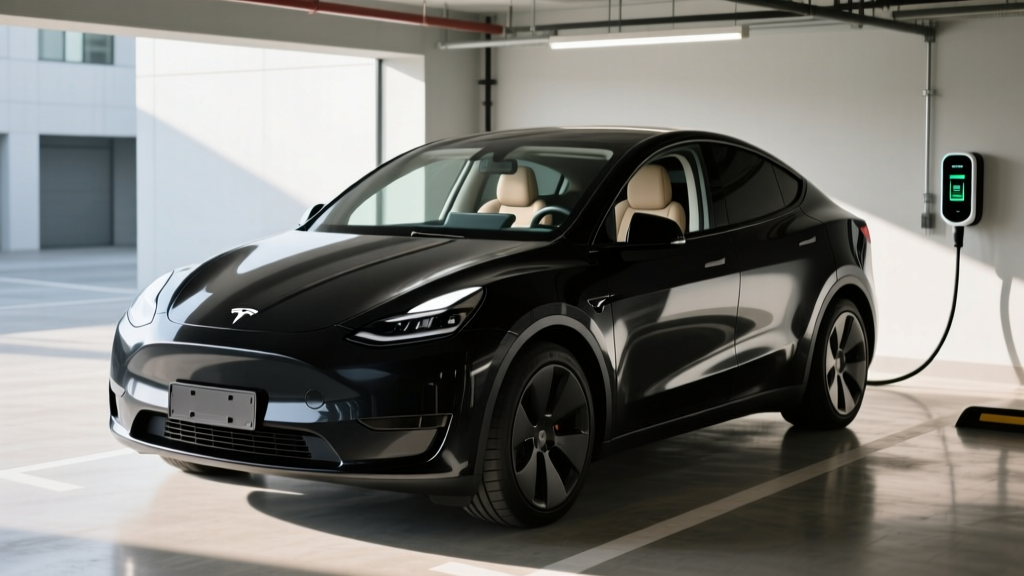
The Model 3 dominates the used Tesla market, with 2021–2024 examples widely available. Here are the specs for the most common trims you'll encounter when shopping for a used lease:
| Attribute | Specification |
|---|---|
| EPA Range | 341 miles |
| Battery Capacity | 79 kWh usable (NMC chemistry) |
| Max DC Fast Charge | 250 kW peak |
| 10–80% DC Charge Time | ~25 minutes |
| Level 2 Home Charge Rate | 11.5 kW (~44 miles/hr) |
| 0–60 mph | 4.2 seconds |
| Horsepower | 346 hp (dual motor) |
| Drivetrain | AWD (dual motor) |
| Efficiency | 132 MPGe combined / 25 kWh/100mi |
| Cargo Volume | 23 cu ft (rear trunk + frunk) |
| Rear Legroom | 35.2 inches |
| Battery Warranty | 8 years / 120,000 miles (70% retention) |
| Base MSRP (2024) | $47,740 |
LFP vs. NMC: Which Battery Is in That Used Model 3?
This is critical for used Tesla shoppers. Starting in 2021, Tesla began equipping the Model 3 RWD (Standard Range) with LFP (lithium iron phosphate) batteries, while Long Range and Performance trims use NMC (nickel manganese cobalt). The trade-offs matter:
| Factor | LFP (Model 3 RWD) | NMC (Model 3 LR/Perf) |
|---|---|---|
| Energy Density | Lower (~160 Wh/kg) | Higher (~250 Wh/kg) |
| Cycle Life | 3,000+ cycles | 1,500–2,000 cycles |
| Cold-Weather Performance | Weaker (more range loss) | Better thermal resilience |
| Daily Charging | Tesla recommends 100% daily | 80% daily recommended |
| Long-Term Degradation | Slower degradation curve | Moderate degradation, plateaus ~90% |
| Range | 272 mi EPA | 341 mi EPA (Long Range) |
Bottom line: If you're leasing a used Model 3 for commuting and can charge daily to 100%, the LFP-equipped RWD is a longevity play. For road trips and cold climates, the NMC Long Range is the stronger pick.
Used Tesla Model Y: The Family Crossover Contender
The Model Y is the most-leaved Tesla in America and dominates the used market. Here's what you need to know about the 2024 model year, which represents the most common used inventory in 2026:
| Attribute | Specification |
|---|---|
| EPA Range | 308 miles |
| Battery Capacity | 75 kWh usable (NMC chemistry) |
| Max DC Fast Charge | 250 kW peak |
| 10–80% DC Charge Time | ~27 minutes |
| Level 2 Home Charge Rate | 11.5 kW (~39 miles/hr) |
| 0–60 mph | 4.8 seconds |
| Horsepower | 384 hp (dual motor) |
| Drivetrain | AWD (dual motor) |
| Efficiency | 117 MPGe combined / 29 kWh/100mi |
| Cargo Volume | 76 cu ft (rear seats folded) |
| Rear Legroom | 40.5 inches |
| Battery Warranty | 8 years / 120,000 miles (70% retention) |
| Base MSRP (2024) | $48,990 |
The Model Y's 76 cu ft of cargo space with seats folded makes it a genuine family hauler, and its 40.5 inches of rear legroom comfortably fits adult passengers. On a DC fast charger, the Model Y peaks at 250 kW but tapers significantly above 60% SoC — a typical 10–80% session takes about 27 minutes, but 10–90% pushes closer to 45 minutes due to the charge curve taper. Plan your road-trip stops accordingly.
Charging Infrastructure: What Used Tesla Owners Need to Know
One of the strongest arguments for leasing a used Tesla is access to the Tesla Supercharger network, which as of 2026 includes over 6,500 V3/V4 stalls across North America. All used Model 3 and Model Y vehicles come with native NACS (North American Charging Standard) ports — no adapter needed.
| Charging Level | Power | Speed (Approx.) | Best For |
|---|---|---|---|
| Level 1 (120V outlet) | 1.4 kW | ~5 miles/hr | Emergency/overnight trickle |
| Level 2 (240V home) | 11.5 kW | ~39–44 miles/hr | Daily home charging |
| DC Fast (V3 Supercharger) | 250 kW peak | ~1,000 miles/hr at peak | Road trips, quick top-ups |
| DC Fast (V4 Supercharger) | Up to 350 kW | Model-dependent | Newer Supercharger stations |
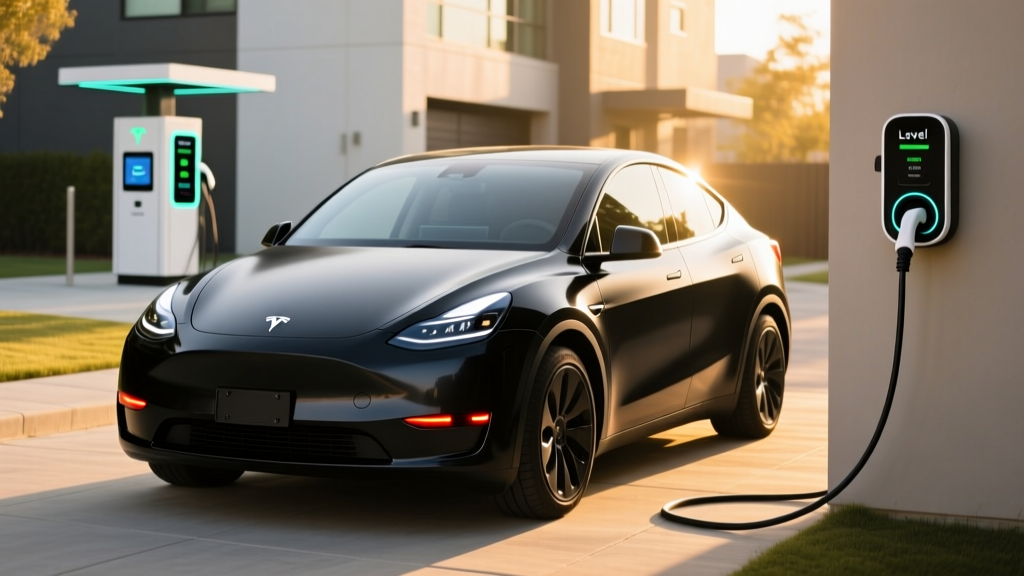
Home charging setup: Most used Tesla lessees install a Tesla Wall Connector ($420 for hardware) on a 60-amp circuit, delivering the full 11.5 kW / 48 amps. Expect $500–$2,000 for electrician installation depending on panel proximity and local permit costs. If your home has a 100-amp electrical panel, you may need a panel upgrade ($1,500–$3,000) — factor this into your lease decision.
With the 2024+ adoption of NACS as the industry standard, used Teslas now also have growing access to third-party DC fast chargers from Electrify America, EVgo, and others that have added NACS cables — reducing the Supercharger-dependency concern that once defined Tesla ownership.
Federal Tax Credits and Used Tesla Pricing in 2026
Here's where used Tesla leasing gets complicated. The IRS §30D federal tax credit applies only to new clean vehicles — you cannot claim the $7,500 new-vehicle credit on a used Tesla lease or purchase. However, a separate provision, §25E, offers a used clean vehicle credit of up to $4,000 (30% of sale price, capped at $4,000) if you purchase a qualifying used EV from a licensed dealer.
The catch: leases are not purchases. If you lease a used Tesla through a third-party lessor, you generally cannot claim the §25E credit — the leasing entity owns the vehicle. Some lessors factor an equivalent discount into the lease terms, but this is not guaranteed. Always confirm with your tax professional and review current IRS guidance on the used clean vehicle credit.
| Scenario | Typical Price | Federal Credit | Net Cost |
|---|---|---|---|
| Used 2023 Model 3 RWD (purchase, dealer) | $28,000–$32,000 | Up to $4,000 (§25E) | $24,000–$28,000 |
| Used 2023 Model 3 RWD (lease, 36 mo) | $350–$425/mo | None (lessor retains) | $350–$425/mo |
| Used 2023 Model Y LR (purchase, dealer) | $33,000–$38,000 | Up to $4,000 (§25E) | $29,000–$34,000 |
| Used 2023 Model Y LR (lease, 36 mo) | $425–$525/mo | None (lessor retains) | $425–$525/mo |
§25E used-EV credit requirements:
- Sale price must be $25,000 or less
- Buyer AGI caps: $75,000 (single), $112,500 (head of household), $150,000 (joint)
- Vehicle must be at least 2 model years old
- Must purchase from a licensed dealer (private sales don't qualify)
- Vehicle must have a battery capacity of at least 7 kWh
- Credit is 30% of sale price, maximum $4,000
These rules mean a used Model 3 RWD purchased for $28,000 from a dealer would not qualify (price exceeds the $25,000 cap), but one priced at $24,500 would yield a $4,000 credit. Always verify current rules at irs.gov before purchasing.
Driver Assistance: Autopilot and FSD on Used Teslas
Every used Tesla comes with Basic Autopilot (Traffic-Aware Cruise Control and Autosteer) as standard equipment. This is a SAE Level 2 driver-assistance system — it does not make the car self-driving. You must keep your hands on the wheel and eyes on the road at all times.
Full Self-Driving (FSD) Supervised is an optional upgrade that was a $8,000 one-time purchase or $99/month subscription in 2024. On a used Tesla, FSD may or may not transfer with the vehicle — Tesla has changed its FSD transfer policy multiple times. Before leasing, confirm with the seller or lessor whether FSD is included and whether it will remain active through the lease term. A used Tesla without FSD is functionally identical to one with it for daily commuting; Basic Autopilot handles highway driving well.
Who Should Lease a Used Tesla — And Who Shouldn't
Pros of Leasing a Used Tesla
- Lower monthly payments than new Tesla financing
- Access to Supercharger network (17,000+ stalls globally)
- OTA software updates continue on used vehicles
- Strong build quality on 2022+ Model 3/Y (post-Fremont improvements)
- Minimal maintenance: no oil changes, brake wear reduced by regen
- LFP battery models offer exceptional cycle life for daily charging
Cons and Risks
- No federal tax credit on most used leases (§25E requires purchase)
- Battery degradation uncertainty on higher-mileage examples
- Insurance costs 15–30% higher than comparable gas sedans
- Limited third-party service options (Tesla-centric repair ecosystem)
- FSD transfer is unreliable — don't pay extra for it on used
- Cold-weather range loss of 20–30% is real and significant
- Lease-end disposition: Tesla does not offer a lease buyout option on most third-party leases
This EV suits best: A used Tesla Model 3 or Model Y is ideal for a tech-savvy commuter with home charging access who wants low running costs, strong range, and Supercharger road-trip capability without the depreciation hit of buying new. It's less ideal for buyers in extreme-cold climates without garage parking, those who lack home charging access, or anyone expecting true self-driving capability.
Frequently Asked Questions
Can I lease a used Tesla directly from Tesla?
No. Tesla sells certified pre-owned vehicles but does not offer leasing on used inventory. Used Tesla leases are arranged through third-party lessors, subscription services, or lease-transfer platforms. Tesla's new-vehicle leasing program applies only to brand-new models ordered through their website.
What is the real-world range of a used Tesla Model 3?
The 2024 Model 3 Long Range AWD is EPA-rated at 341 miles. Real-world highway driving at 70–75 mph typically yields 280–300 miles. In sub-freezing temperatures, expect 240–270 miles. The RWD (LFP) model rates at 272 miles EPA, with real-world highway range around 220–240 miles and cold-weather range dropping to roughly 190 miles. Data from fueleconomy.gov confirms the EPA figures; real-world numbers come from aggregated owner reports and independent testing.
How fast does a used Tesla charge at home and on the road?
At home on a Level 2 (240V/48A) Tesla Wall Connector, both Model 3 and Model Y charge at 11.5 kW — adding roughly 39–44 miles of range per hour, enough for a full overnight charge. On a V3 Supercharger (250 kW DC), a 10–80% session takes approximately 25–27 minutes. However, the charge curve tapers significantly above 60% SoC, so a 10–90% session stretches to 40–45 minutes. Peak charge rate is not sustained rate — a critical distinction for road-trip planning.
Does a used Tesla qualify for any federal tax credit?
The §30D new-vehicle credit ($7,500) does not apply to used Teslas. The §25E used clean vehicle credit offers up to $4,000, but only if you purchase (not lease) from a licensed dealer, the sale price is $25,000 or less, and your income falls within IRS caps ($75K single / $150K joint). Most used Tesla leases will not qualify. Consult a tax professional and review IRS §25E rules before committing.
Is leasing a used Tesla worth it vs. buying a new Hyundai Ioniq 6 or Chevy Equinox EV?
It depends on priorities. A used Model 3 lease at $375–$450/month competes favorably with a new Ioniq 6 SE ($400–$500/month after incentives) and offers superior Supercharger access and software. However, a new Equinox EV (starting ~$33,000, eligible for the full $7,500 §30D credit) can be purchased for under $26,000 net — potentially cheaper over 5 years than a used Tesla lease with no equity at the end. If charging access and tech are top priorities, the used Tesla wins. If total cost of ownership and warranty peace of mind matter more, a new, credit-eligible competitor may be the smarter play.
What should I check before leasing a used Tesla?
Request a battery health report (State of Health percentage) from Tesla Service. Verify the vehicle's service history in the Tesla app. Confirm whether Autopilot/FSD features are active and will transfer. Check the remaining battery warranty (8 years / 120,000 miles from original in-service date). Inspect for suspension wear (common on 2021–2022 Model Y) and verify the 12V auxiliary battery has been replaced with the newer lithium unit (Tesla switched in late 2021). Finally, confirm your home electrical panel can support a Level 2 charger installation.
What are the biggest risks of leasing a used Tesla?
The primary risks are battery degradation on higher-mileage vehicles (check SoH before signing), the inability to claim federal tax credits on a lease, higher-than-expected insurance premiums, and limited recourse if the vehicle needs major service in an area without a nearby Tesla Service Center. Lease-mileage limits (typically 10,000–15,000 miles/year) can also be restrictive for heavy commuters. Weigh these against the lower monthly cost and Tesla's OTA update longevity.