If you've been watching Rivian's electric SUV and truck lineup and wondering whether leasing makes more financial sense than buying, you're not alone. With MSRPs pushing past $90,000 on upper trims and evolving federal incentive rules, the question "can I lease a Rivian" is one of the most practical entry points into the brand. The short answer: yes, Rivian offers leasing directly through its own financing arm, and in 2026, leasing can unlock a $7,500 federal incentive that bypasses some of the buyer-income and battery-sourcing restrictions that complicate outright purchases. But the math isn't automatic — it depends on your trim, your state, and how you plan to use the vehicle.
This guide covers the full picture: current R1S (three-row SUV) and R1T (pickup truck) specs, real-world range expectations, charging performance, lease structures, and whether leasing or buying is the smarter move for your situation.
Rivian R1S and R1T: 2026 Lineup at a Glance
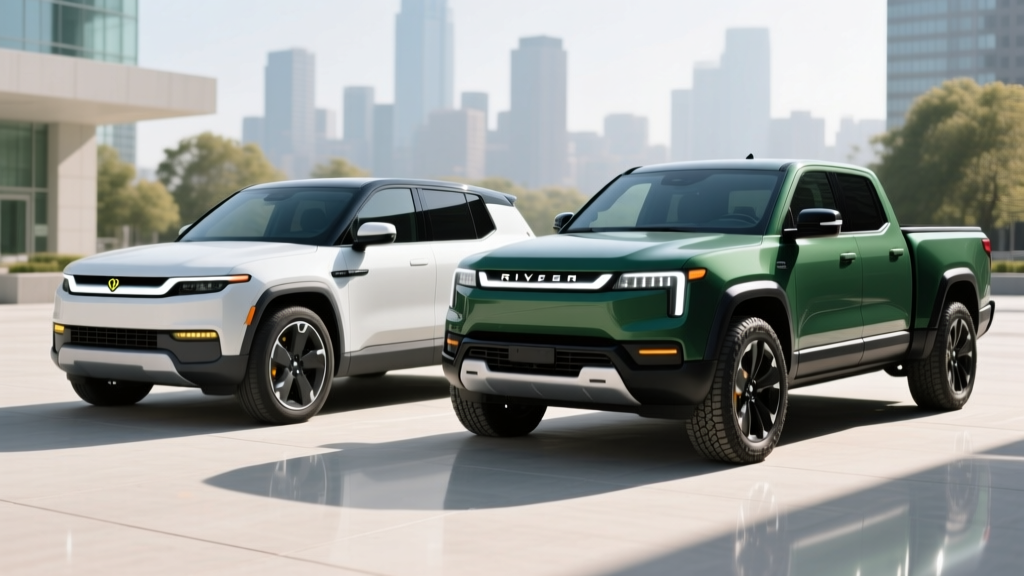
For 2026, Rivian continues to offer the R1S and R1T across three battery configurations — Standard, Large, and Max — with dual-motor and tri-motor drivetrains. The R1S seats up to seven; the R1T seats five with a 4.5-foot bed (expandable with the gear tunnel). Both share the same skateboard platform, battery options, and powertrain architecture, so range and charging figures are nearly identical between the two body styles.
| Spec | Dual-Motor (Standard Pack) | Dual-Motor (Large Pack) | Tri-Motor (Max Pack) |
|---|---|---|---|
| Battery Capacity (usable) | ~92 kWh (LFP) | ~109 kWh (NMC) | ~141 kWh (NMC) |
| EPA Est. Range | 270 mi | 352 mi | 420 mi |
| Horsepower | 533 hp | 533 hp | 850 hp |
| 0-60 mph | 4.5 sec | 4.5 sec | 2.9 sec |
| Drivetrain | AWD (dual-motor) | AWD (dual-motor) | AWD (tri-motor) |
| Max DC Fast Charge | 200 kW | 220 kW | 220 kW |
| 10-80% DC Charge Time | ~28 min | ~27 min | ~36 min |
| Level 2 Home Charging | 11.5 kW (~25 mi/hr) | 11.5 kW (~25 mi/hr) | 11.5 kW (~25 mi/hr) |
| Efficiency (MPGe) | 73 MPGe combined | 70 MPGe combined | 65 MPGe combined |
| Towing Capacity | 7,700 lbs | 7,700 lbs | 7,700 lbs |
Charging Performance: Home and DC Fast Charging
Charging speed is where Rivian's 2026 models show both strengths and a notable gap versus competitors like the Hyundai Ioniq 5 or Lucid Air. The Rivian platform tops out at 220 kW on DC fast charging (Large and Max packs), which is adequate but not class-leading. The charge curve is relatively flat through 60% State of Charge (SoC), then tapers significantly past 80% — as is typical for NMC chemistry to protect long-term battery health.
| Charging Level | Power / Voltage | Miles of Range Added per Hour | Notes |
|---|---|---|---|
| Level 1 (120V household) | ~1.4 kW | ~3-4 mi/hr | Emergency/top-up only; full charge takes 3+ days |
| Level 2 (240V home/workplace) | 11.5 kW (48A) | ~25 mi/hr | Full charge overnight (~10-14 hrs depending on pack) |
| DC Fast Charging | Up to 220 kW (CCS/NACS) | ~150-180 mi in 15 min (peak) | 10-80% in ~27-36 min; tapers sharply above 80% |
For home charging, Rivian recommends a 60-amp circuit with a 48-amp Level 2 wall connector. If your electrical panel supports it, this is the most practical daily charging method — plug in overnight and wake up with a full battery. Installation costs typically run $800-$2,500 depending on panel proximity and whether a service upgrade is needed (source: HomeAdvisor EV charger install data).
On the public network front, Rivian vehicles now come equipped with the NACS (Tesla-style) charge port as standard for 2026, with CCS compatibility via adapter for legacy stations. Rivian also has access to the Tesla Supercharger network, significantly expanding fast-charging route options for road trips.
Can I Lease a Rivian? Lease Terms and Structure
Yes — Rivian offers direct leasing through Rivian Financial Services. Unlike many legacy automakers that route leases through franchised dealers, Rivian handles the entire process online or through its service centers and mobile showrooms. Here's what 2026 lease structures typically look like:
- Lease terms: 24, 36, or 48 months
- Annual mileage allowances: 10,000, 12,000, or 15,000 miles/year (excess mileage charged at ~$0.25-$0.30/mi)
- Money factor: Varies by credit tier; competitive lessees (740+ FICO) typically see the most favorable rates
- Residual values: Set by Rivian Financial; generally 50-58% at 36 months depending on trim and mileage allowance
- Due at signing: First month's payment + acquisition fee (~$795) + title/registration + any down payment (capitalized cost reduction)
- Lease-end options: Return the vehicle, purchase at residual price, or start a new lease
One important nuance: because Rivian sells direct-to-consumer with no dealer network, there's no dealer markup or negotiation on lease money factors the way you'd encounter at a traditional franchise. The terms you see on Rivian's configurator are the terms you get — which is either refreshing or limiting depending on your negotiation style.
Pricing, Trims, and the Federal Tax Credit on Leases
Understanding the interplay between Rivian's MSRP, leasing, and the federal EV tax credit is essential. Here's the current pricing landscape:
| Model / Trim | Base MSRP | As-Tested (typical config) | §30D Purchase Credit | §30D Lease Credit (Commercial Clean Vehicle) |
|---|---|---|---|---|
| R1T Dual-Motor Standard | $69,900 | $73,500 | Eligible (up to $7,500)* | $7,500 passed through by lessor |
| R1T Dual-Motor Large | $77,400 | $82,000 | Eligible (up to $7,500)* | $7,500 passed through by lessor |
| R1T Tri-Motor Max | $92,500 | $99,000+ | Not eligible (exceeds $80K truck cap) | $7,500 passed through by lessor |
| R1S Dual-Motor Standard | $74,900 | $79,000 | Eligible (up to $7,500)* | $7,500 passed through by lessor |
| R1S Dual-Motor Large | $82,400 | $87,500 | Not eligible (exceeds $80K SUV cap) | $7,500 passed through by lessor |
| R1S Tri-Motor Max | $97,500 | $105,000+ | Not eligible (exceeds $80K SUV cap) | $7,500 passed through by lessor |
*Purchase credit eligibility requires meeting IRS §30D rules: buyer income caps ($150K single / $300K joint AGI), MSRP caps ($80K for trucks, vans, SUVs), and critical-mineral/battery-component sourcing thresholds. See IRS §30D guidance for current-year details. Consult a tax professional for your specific situation.
The lease loophole: Under the Commercial Clean Vehicle Credit (§45W), when a vehicle is leased, the $7,500 credit goes to the lessor (Rivian Financial Services), not the lessee. However, most lessors — Rivian included — pass this savings through as a capitalized cost reduction, effectively lowering your monthly payment. Crucially, this lease credit has no MSRP cap, no buyer income cap, and no battery-sourcing requirement. This means a high-income buyer leasing a $99,000 R1T Tri-Motor still benefits from the $7,500 incentive — something impossible on a purchase.
- MSRP at or below $80,000 for SUVs/trucks/vans
- Buyer modified AGI ≤ $150,000 (single) or ≤ $300,000 (married filing jointly)
- Battery meets critical-mineral and component-sourcing thresholds (phasing in annually)
- Vehicle assembled in North America (Rivian qualifies — built in Normal, Illinois)
- Credit is non-refundable (you must have sufficient tax liability to claim it)
- Point-of-sale transfer available at time of purchase for immediate price reduction
Real-World Ownership: What It's Actually Like
Specs only tell part of the story. After spending significant time with both the R1S and R1T across multiple model years, here's what matters in daily use:
Interior Space and Practicality
The R1S offers 104.7 cubic feet of total cargo volume with the second and third rows folded — competitive with the BMW X7 and Mercedes GLS. Third-row legroom is 30.4 inches, which is tight for adults on long trips but fine for kids. The R1T's 4.5-foot bed (extending to ~6 feet with the gear tunnel pass-through) handles lumber, bikes, and camping gear with ease, and the lockable gear tunnel is a genuinely innovative storage solution that no competitor matches.
Driver Assistance and Tech
Rivian's driver-assistance suite, branded as Rivian Driver+, includes adaptive cruise control, lane-centering, and automatic emergency braking. It functions as an SAE Level 2 system — meaning you must keep your hands on the wheel and eyes on the road at all times. It's competent for highway cruising but does not offer hands-free driving like GM's Super Cruise or Ford's BlueCruise on mapped highways. Rivian's 15.6-inch center touchscreen runs a responsive, Tesla-like interface with over-the-air updates that have meaningfully improved the platform over time — navigation, ride-mode customization, and camp-mode climate control are standouts.
Warranty Coverage
Rivian provides an 8-year/175,000-mile battery and drive-unit warranty, which is among the most generous in the industry. The bumper-to-bumper warranty covers 5 years/60,000 miles. The battery warranty guarantees retention above a specified capacity threshold (typically 70% State of Health) — if degradation drops below that, Rivian will repair or replace the pack. This is a meaningful protection for lease terms of 24-48 months, as you'll be well within coverage for the entire lease period.
Rivian vs. Competitors: Is It Worth It?
The Rivian R1S and R1T don't exist in a vacuum. Here's how they stack up against the most relevant alternatives in 2026:
| Attribute | Rivian R1S (Large Pack) | Tesla Model X (Long Range) | BMW iX xDrive50 | Ford F-150 Lightning (Ext. Range) |
|---|---|---|---|---|
| EPA Range | 352 mi | 335 mi | 324 mi | 320 mi |
| Starting MSRP | $77,400 | $79,990 | $87,250 | $62,995 |
| 0-60 mph | 4.5 sec | 3.8 sec | 4.4 sec | 3.8 sec |
| Max DC Charge | 220 kW | 250 kW | 150 kW | 150 kW |
| Third Row | Yes (7 seats) | Yes (7 seats) | No (5 seats) | No (5 seats) |
| Off-Road Capability | Excellent | Moderate | Moderate | Good |
| Towing | 7,700 lbs | 5,000 lbs | 3,500 lbs | 10,000 lbs |
- You need genuine off-road capability with 14+ inches of ground clearance
- You want a three-row electric SUV that can also tow a boat or camper
- You value OTA software updates and a direct-to-consumer ownership experience
- The gear tunnel and camp-mode features align with your outdoor lifestyle
- You need maximum towing capacity (F-150 Lightning tows 10,000 lbs)
- You want hands-free highway driving (GM Super Cruise or Ford BlueCruise)
- You're on a tighter budget (Lightning Pro starts ~$55K)
- You need the fastest DC charging available (Lucid Air or Ioniq 5 charge faster)
Lease vs. Buy: Which Makes More Sense for a Rivian?
The lease-vs-buy decision for a Rivian hinges on three factors: your income level, your desired trim, and how long you plan to keep the vehicle.
Leasing is likely smarter if:
- You want a trim that exceeds the $80,000 MSRP cap (e.g., R1S Large, any Tri-Motor) — the lease credit still gives you $7,500
- Your household AGI exceeds the §30D income caps ($150K single / $300K joint) — the lease credit has no income limit
- You prefer driving a new vehicle every 3-4 years and don't want to worry about long-term battery degradation or resale value
- You want lower monthly payments compared to financing the full purchase price
Buying is likely smarter if:
- You qualify for the full $7,500 §30D credit on purchase (income + MSRP + sourcing all check out)
- You plan to keep the vehicle 6+ years, driving past the point where lease payments would have ended
- You drive more than 15,000 miles/year (excess-mileage penalties on leases add up fast)
- You want to build equity and avoid perpetual car payments
A rough cost comparison for a 36-month horizon on an R1T Dual-Motor Large (MSRP $77,400): leasing with the $7,500 lease credit applied as a cap-cost reduction might yield payments around $850-$950/month with $2,000 due at signing (depending on money factor and residual). Financing a purchase at 6.5% APR with the $7,500 point-of-sale credit would yield payments around $1,150-$1,250/month — but you own the asset at the end. Over 36 months, total outlay is comparable; the difference is equity vs. flexibility.
Frequently Asked Questions
Can I lease a Rivian directly from the company?
Yes. Rivian offers leasing through Rivian Financial Services. The entire process — configuration, credit application, signing — can be completed online or at a Rivian service center. There are no franchised dealers involved, so pricing and lease terms are non-negotiable but also free from dealer markups.
Does a Rivian lease qualify for the $7,500 federal tax credit?
Technically, the credit goes to the lessor (Rivian Financial Services) under the Commercial Clean Vehicle Credit (§45W), not to you directly. However, Rivian passes this $7,500 through as a capitalized cost reduction, lowering your monthly payment. This lease incentive has no MSRP cap, no income cap, and no battery-sourcing requirement — making it more broadly accessible than the purchase credit.
What is the real-world range of the Rivian R1S and R1T?
The EPA rates the Large Pack dual-motor at 352 miles. In real-world highway driving at 70-75 mph, expect roughly 300-315 miles. In cold weather (below 30°F), plan for 250-280 miles between charges. The Max Pack's 420-mile EPA rating provides more buffer, but highway and cold-weather reductions still apply proportionally.
How fast does a Rivian charge at home and on the road?
On a 48-amp Level 2 home charger (11.5 kW), you'll add about 25 miles of range per hour — enough for a full overnight charge. On DC fast charging, the Large and Max packs peak at 220 kW, reaching 10-80% in approximately 27-36 minutes. Charging slows significantly above 80% SoC to protect battery health.
Is Rivian's battery warranty good enough for a lease?
Rivian covers the battery and drive unit for 8 years or 175,000 miles, whichever comes first, with a capacity-retention guarantee. Since most leases run 24-48 months, you'll be well within the warranty period for the entire lease. If any battery issue arises, it's covered regardless of whether you lease or buy.
Can I tow with a Rivian, and how does it affect range?
Both the R1S and R1T are rated to tow 7,700 pounds. However, towing a heavy trailer (5,000+ lbs) can cut range by 40-50% depending on trailer aerodynamics and terrain. If you tow frequently, the Max Pack's larger battery provides critical range buffer, but plan charging stops carefully — towing at highway speeds with a large trailer is the most energy-intensive scenario any EV faces.
What are the biggest drawbacks of the Rivian R1S/R1T?
The main limitations are: (1) DC charging speed tops out at 220 kW, which is slower than rivals like the Hyundai Ioniq 5 (240 kW) or Lucid Air (300+ kW); (2) no hands-free driving feature comparable to GM Super Cruise; (3) third-row space in the R1S is tight for adults; (4) service center availability is still expanding, so rural owners may face longer wait times for repairs. These are real trade-offs, not deal-breakers for most buyers, but worth weighing honestly.