The Short Answer: Yes, You Can Charge an EV in the Rain
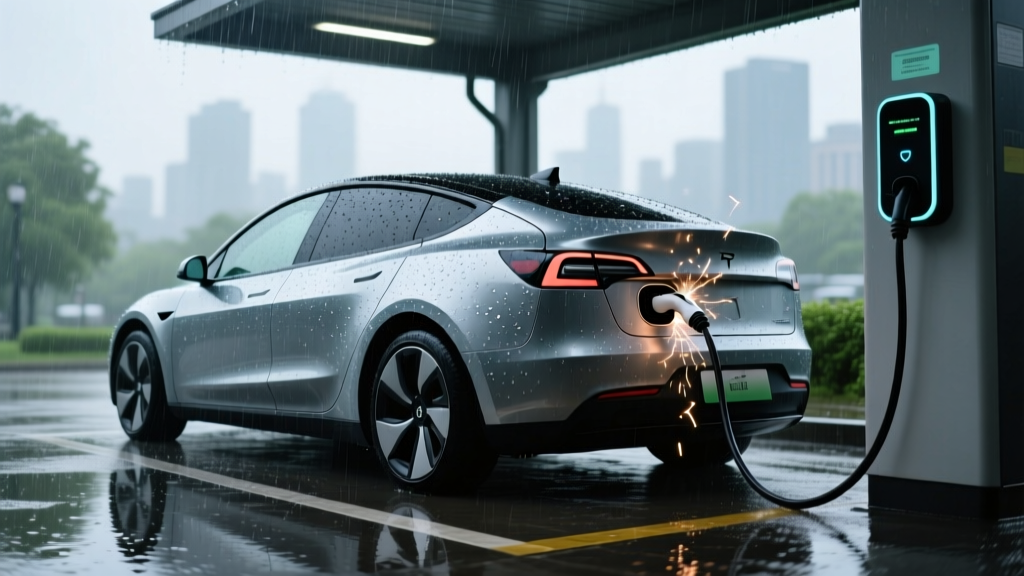
Yes — charging an electric vehicle in the rain is completely safe. Every EV charging connector, cable, and vehicle inlet sold in the U.S. is engineered and certified to withstand rain, snow, and splashing water. The J1772 AC connector (used for Level 1 and Level 2 charging) and the CCS1/NACS DC fast-charging connectors carry IP54 or higher ingress-protection ratings, meaning they resist water spray from any direction. The vehicle's onboard charging system will not allow current to flow until a sealed, verified connection is established between the plug and the car. You can plug in during a thunderstorm, a blizzard, or a downpour without risk of electric shock.
That said, wet-weather charging does introduce practical considerations that affect charging speed, connector care, and long-term ownership costs. This guide covers the engineering behind weatherproof EV charging, real-world ownership data, and how the economics of charging an EV compare to fueling a gas car — with exact numbers for 2026 buyers.
How EV Charging Connectors Handle Water
The fear of mixing electricity and rain is deeply ingrained, and it's valid for household outlets and extension cords. But EV charging hardware operates under fundamentally different safety standards than a consumer power strip left on a patio.
Every charging connector in the North American market — whether it's the J1772 plug for AC charging, the CCS1 combo connector, or Tesla's NACS (North American Charging Standard) — uses a multi-pin design with a proximity pilot circuit. Here's how it works:
- Physical insertion: You insert the connector into the vehicle's charge port. The pins make contact, but no electricity flows yet.
- Handshake protocol: The vehicle and charger communicate via the control pilot pin, confirming a proper seal, verifying ground integrity, and negotiating the maximum safe current (measured in kW for DC, or amps for AC).
- Current activation: Only after both systems confirm a safe, sealed connection does the contactor close and current begin flowing.
- Continuous monitoring: If a ground fault is detected at any point — even a few milliamps of leakage — the system cuts power in under 100 milliseconds.
This handshake is why you can't accidentally electrocute yourself by touching the pins of an unplugged, energized charger. The pins are only "hot" when mated to a vehicle that has authorized the session.
Ingress Protection (IP) Ratings Explained
EV charging equipment is rated under the IEC 60529 standard for ingress protection. Here's what the ratings mean in practice:
| Component | Typical IP Rating | What It Means |
|---|---|---|
| J1772 / NACS connector (mated) | IP55–IP67 | Protected against water jets; some rated for temporary submersion |
| J1772 / NACS connector (unplugged) | IP54 | Protected against splashing water from any direction |
| Vehicle charge port inlet | IP55–IP67 | Sealed against rain and pressure washing |
| Level 2 wall-mounted charger (outdoor-rated) | IP55–IP65 | Weatherproof enclosure; safe for exterior installation |
| DC fast-charger cabinet | IP54–IP55 | Protected against dust and water spray |
For context, IP55 means the connector can handle sustained low-pressure water jets — far more intense than rainfall. An IP67 rating means the component can survive temporary immersion in up to 1 meter of water. You're not going to submerge your charge port, but the engineering margin is substantial.
Common Misconceptions About Wet-Weather Charging
Despite the engineering, several persistent myths discourage new EV owners from charging in wet conditions. Let's address each with data.
| Myth | Fact |
|---|---|
| "Rain will short-circuit the charger or electrocute me." | Connectors require a sealed, verified mating before current flows. Ground-fault protection trips in <100 ms if leakage is detected. No documented cases of electrocution from rain-exposed EV charging in the U.S. |
| "I should wait for the rain to stop before plugging in." | Unnecessary delay. Plug in immediately — the handshake and seal happen in under 2 seconds. Waiting only wastes time. |
| "Water in the charge port will damage the battery." | The charge port inlet is sealed separately from the traction battery pack. Water cannot reach the high-voltage battery through the charge port. Battery packs themselves carry IP67 or IP6K9K ratings. |
| "Charging in the rain is slower." | Charging speed is unaffected by rain. Temperature affects speed (cold batteries charge slower), but moisture on the connector does not. |
| "I need a special cover or canopy to charge outdoors." | A cover is optional and purely for user comfort (staying dry while plugging in). The hardware itself is fully weatherproof. |
| "Lightning makes outdoor charging dangerous." | EV chargers include surge protection. The risk is comparable to being near any grounded outdoor electrical equipment. If lightning is actively striking nearby, seek shelter — but this applies to all outdoor activity, not charging specifically. |
Real-World Charging in Different Climates
While rain itself poses no electrical risk, wet-weather charging intersects with other ownership variables — climate, home charging access, and driving patterns — that do affect your experience and wallet.
Home Charging: The Ideal Scenario
According to the U.S. Department of Energy, over 80% of EV charging happens at home. A Level 2 home charger (240V, typically 32–48 amps, delivering 7.7–11.5 kW) adds roughly 25–44 miles of range per hour of charging, depending on the vehicle's efficiency.
For a 2026 Hyundai Ioniq 5 (84 kWh usable battery, NMC chemistry, EPA-estimated 318-mile range on the SEL trim), a 48-amp Level 2 charger like the ChargePoint Home Flex can replenish a 10–80% charge in approximately 6.5 hours — easily overnight. If your charger is mounted in a garage, weather is irrelevant. If it's mounted outdoors on an exterior wall, the unit's NEMA 4 or IP55-rated enclosure handles rain, snow, and UV exposure without issue.
Home installation costs (2026 averages):
| Item | Cost Range |
|---|---|
| Level 2 charger hardware (e.g., ChargePoint Home Flex, Emporia Vue, Grizzl-E) | $300–$700 |
| Electrician labor (240V/50A circuit, 40–60 ft run) | $600–$1,800 |
| Permit and inspection | $50–$300 |
| Electrical panel upgrade (if needed, 100A → 200A) | $1,500–$3,500 |
| Total typical install (no panel upgrade) | $950–$2,800 |
The federal 30C Alternative Fuel Vehicle Refueling Property Credit covers 30% of home charger hardware and installation costs, up to $1,000, for equipment placed in service in eligible census tracts. Check IRS.gov for current eligibility — census tract requirements changed in 2023 and continue to apply through 2026.
Public Charging in the Rain
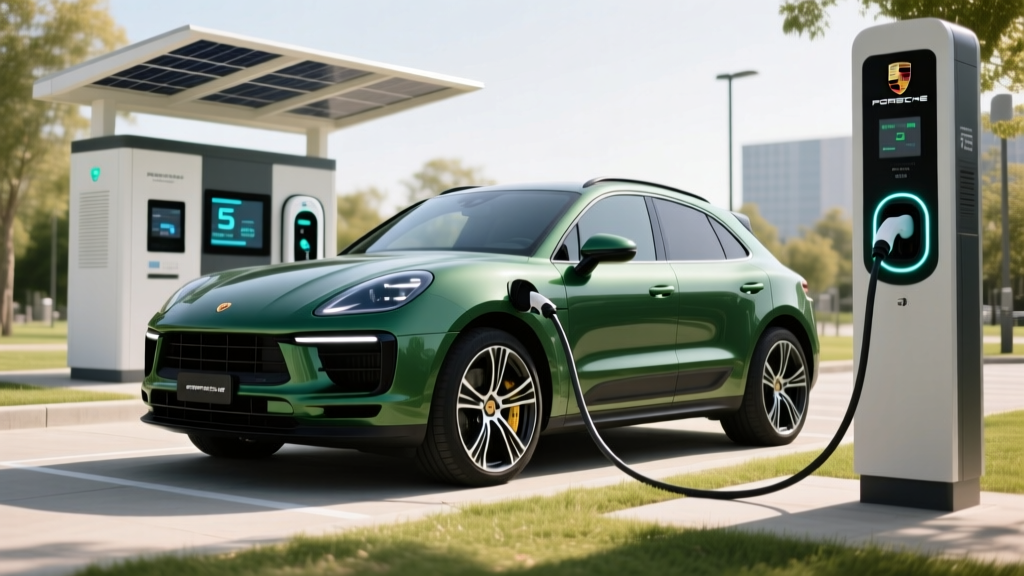
DC fast charging (Level 3) at public stations like Electrify America, EVgo, or Tesla Superchargers operates at 50–350 kW. The CCS1 and NACS connectors used at these stations are rated IP55 or higher when mated. You'll get wet pulling the cable from its holster and plugging in, but the electrical connection is fully sealed.
One practical note: the charging cable and connector are heavy — a 350 kW liquid-cooled cable can weigh 8–12 pounds. In rain and wind, managing the cable one-handed while holding an umbrella is awkward. Many frequent public chargers keep a rain jacket in the car for this reason alone.
Real-world DC fast-charging speeds for popular 2026 models:
| Vehicle | Battery (kWh) | Peak DC Rate (kW) | 10–80% Time | Sustained Avg (kW) |
|---|---|---|---|---|
| 2026 Hyundai Ioniq 5 SEL (RWD) | 84 (NMC) | 240 | ~18 min | ~160 |
| 2026 Tesla Model Y Long Range | 78 (NMC) | 250 | ~15 min | ~175 |
| 2026 Ford F-150 Lightning (Extended Range) | 131 (NMC) | 150 | ~41 min | ~110 |
| 2026 Chevrolet Equinox EV 3RS | 85 (NMC) | 150 | ~30 min | ~115 |
Note that "peak" kW is not sustained — charging curves taper significantly above 80% State of Charge (SoC) to protect battery health. This taper is the same in rain or shine; temperature, not moisture, is the variable that affects charge speed.
Cost Breakdown: Charging an EV vs. Fueling a Gas Car
Whether you charge in the rain or the sun, the economics of EV ownership hinge on electricity costs vs. gasoline. Here's a 5-year comparison using 2026 national averages.
| Category | 2026 EV (Hyundai Ioniq 5 SEL) | 2026 Gas Car (Toyota RAV4 LE AWD) |
|---|---|---|
| Base MSRP | $43,975 | $30,575 |
| Federal tax credit (§30D, if eligible) | Up to $7,500 (subject to income, MSRP cap, and battery-sourcing rules — see IRS.gov) | $0 |
| Effective purchase price (with max credit) | ~$36,475 | $30,575 |
| Energy cost per mile (home charging @ $0.17/kWh national avg) | $0.051 (at 3.0 mi/kWh) | $0.135 (gas @ $3.40/gal, 28 MPG combined) |
| Annual energy cost (12,000 mi/yr) | $612 | $1,620 |
| 5-year energy cost | $3,060 | $8,100 |
| Maintenance (5-year est.) | ~$1,800 (no oil changes, fewer brake replacements due to regen) | ~$3,400 (oil, filters, brake pads, spark plugs) |
| Insurance (5-year est., national avg) | ~$10,500 (EV premiums run ~15–25% higher) | ~$8,400 |
| 5-year total operating cost (energy + maintenance + insurance) | $15,360 | $20,500 |
| 5-year net savings (EV vs. gas) | $5,140 saved with EV (before factoring higher purchase price) | |
Key takeaways: The EV saves roughly $1,000–$1,200 per year in fuel and maintenance, but insurance premiums partially offset that gain. The breakeven point on the higher purchase price depends heavily on whether you qualify for the §30D tax credit (up to $7,500) and your local electricity rates. In states with cheap utility power (e.g., Washington at ~$0.11/kWh), savings widen. In states with expensive electricity (e.g., California at ~$0.30/kWh on some plans) or if you rely entirely on DC fast charging ($0.35–$0.55/kWh at public stations), the gap narrows considerably.
EV vs. Gas vs. Hybrid: Which Fits Your Situation?
Charging in the rain is safe, but the bigger question for many shoppers is whether an EV, a plug-in hybrid (PHEV), or a conventional hybrid (HEV) makes the most financial and practical sense. The answer depends on your charging access, driving patterns, and climate.
Choose a Battery EV (BEV) if:
- You have reliable home Level 2 charging (garage or outdoor 240V outlet)
- Your daily commute is under 200 miles round-trip
- You want the lowest per-mile energy cost (~$0.04–$0.06/mi with home charging)
- You qualify for the §30D federal tax credit (income under $150K single / $300K joint, vehicle MSRP under $55K sedans / $80K SUVs and trucks)
- You're comfortable planning longer road trips around DC fast-charging stops
Choose a Plug-In Hybrid (PHEV) if:
- You have home charging but also take frequent long road trips (>300 miles)
- You want 25–45 miles of electric-only range for daily commuting, plus a gas engine for longer drives
- Examples: 2026 Toyota RAV4 Prime (42 mi EV range, 38 MPG combined after battery depletion, ~$45,000 MSRP)
- You want to avoid any range anxiety in cold climates (below 20°F) where BEV range drops 20–35%
Choose a Conventional Hybrid (HEV) if:
- You cannot install home charging (apartment, street parking, no 240V access)
- You want better fuel economy without changing your fueling habits
- Examples: 2026 Toyota Camry Hybrid (51 MPG combined, ~$30,000 MSRP)
- Your priority is lower upfront cost and zero lifestyle change
What First-Time EV Buyers Should Know About Weatherproof Charging
If you're transitioning from a gas car to an EV, here are the practical realities that no spec sheet will tell you:
Cold Weather Affects Range More Than Rain Ever Will
Rain has negligible impact on EV range or charging speed. Cold air, however, is a different story. At 20°F, an EV without a heat pump can lose 25–35% of its EPA-rated range due to battery chemistry limitations and cabin heating demands. Vehicles equipped with a heat pump (standard on the 2026 Ioniq 5, Tesla Model Y, and most newer EVs) limit that loss to roughly 15–20%.
A 2026 Ioniq 5 SEL rated at 318 miles EPA may deliver only 220–250 miles of real-world range in sustained 20°F weather with highway driving. Plan accordingly — this is a physics limitation, not a defect.
Preconditioning Matters for Fast Charging
When you navigate to a DC fast charger using your EV's built-in navigation (e.g., Tesla's Supercharger routing or Hyundai's route-based preconditioning), the vehicle warms the battery to its optimal charging temperature (typically 30–40°C / 86–104°F). This can shave 5–10 minutes off a 10–80% session in cold weather. Without preconditioning, a cold battery may accept only 50–80 kW initially, ramping up slowly as it warms — even if the charger is rated for 240 kW.
Public Charger Reliability Is the Real Pain Point
The rain won't stop your EV from charging. A broken public charger will. As of early 2026, non-Tesla DC fast-charging networks (Electrify America, EVgo, ChargePoint) report uptime rates between 85–92%, according to J.D. Power's EV Experience Index. Tesla's Supercharger network consistently exceeds 97% uptime. If you're buying a non-Tesla EV with a NACS port (increasingly standard for 2025–2026 models), you'll gain access to Tesla Superchargers, which dramatically improves the public charging experience in wet and remote conditions alike.
Connector Care in Wet and Dirty Conditions
While connectors are waterproof, they're not immune to debris. In rainy or slushy conditions:
- Shake off excess water from the connector before insertion — not for safety, but to keep your charge port area cleaner.
- Check for debris (leaves, mud, ice) in the connector pins before plugging in. A blocked pin can prevent the handshake and delay charging.
- In freezing rain, the connector may freeze to the charge port. Most EVs have a charge-port heater or a release command in the app. Never yank a frozen connector — use the vehicle's defrost or preconditioning function first.
Frequently Asked Questions
Can I charge my EV in a thunderstorm?
Yes. EV chargers include built-in surge protection, and the vehicle's high-voltage system is isolated from the chassis. The risk of a lightning strike affecting your charge session is comparable to the risk to any properly grounded outdoor electrical system. If you're uncomfortable being outside during active lightning, wait it out — but the charging hardware itself is not a lightning attractor.
Will water in my charge port damage my car?
No. The charge port inlet is designed with drainage channels and is sealed independently from the high-voltage battery pack. Rain, car washes, and pressure washers will not introduce water into the battery. Battery packs carry IP67 or IP6K9K ratings, meaning they're sealed against immersion and high-pressure, high-temperature spray.
Does charging speed change in the rain?
No. Charging speed is determined by battery temperature, state of charge, and the charger's power output — not by ambient moisture. A 240 kW DC fast charge session will proceed at the same rate whether it's raining or dry, assuming identical battery temperatures.
Do I need a covered charging station at home?
A cover or carport is not required for safety. Outdoor-rated Level 2 chargers (IP55 or NEMA 4 rated) are designed for fully exposed installation. A cover is a comfort upgrade — it keeps you and the connector dry during the 10 seconds it takes to plug in.
Is it safe to use an extension cord for outdoor EV charging?
No. Level 1 charging (120V) should only use the OEM-provided cord directly into a grounded, GFCI-protected outlet. Extension cords introduce resistance, voltage drop, and overheating risk — especially in wet conditions. For Level 2 (240V), a hardwired installation by a licensed electrician is the only safe approach. Never use an extension cord with a Level 2 charger.
What about flooding? Can I charge if water is pooling around the charger?
If standing water reaches the charger's electrical connections or the vehicle's charge port, do not attempt to charge. While connectors are sealed against rain and spray, submersion of the charger cabinet or wall unit is outside its design parameters. Wait for water to recede and have the unit inspected by an electrician before resuming use.