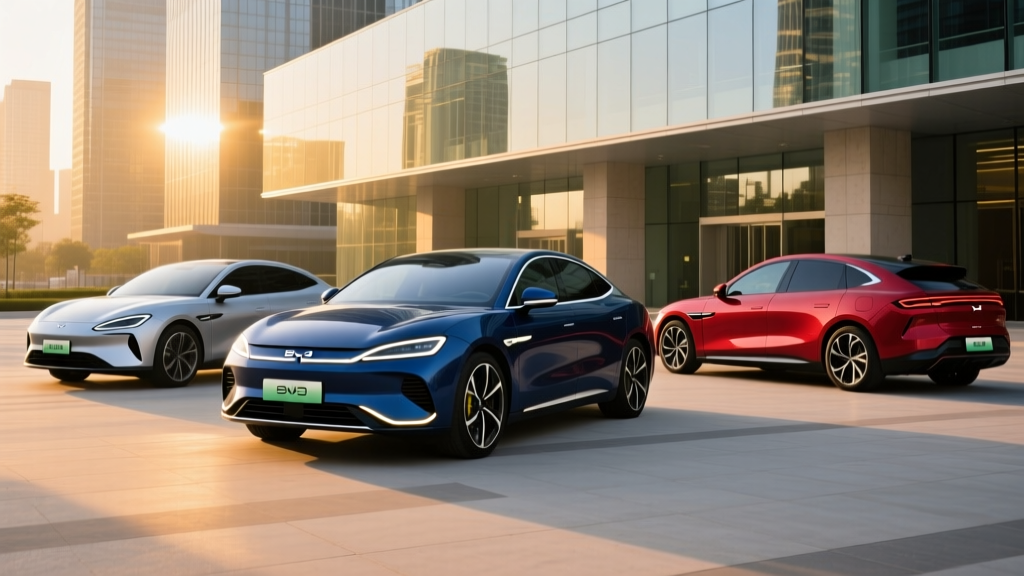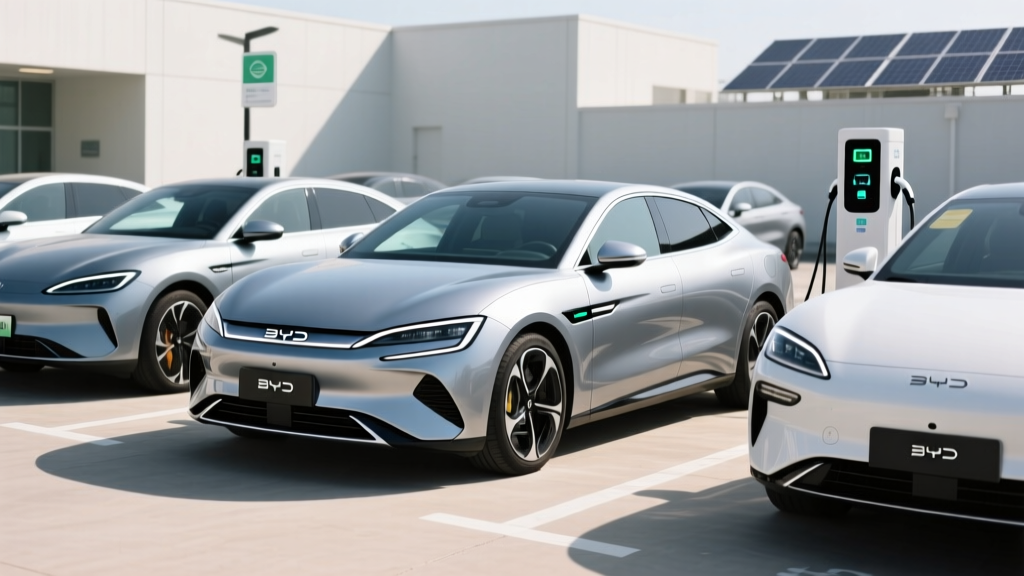
If you have been following global EV sales, you already know BYD (Build Your Dreams) is the world's largest manufacturer of plug-in electric vehicles. The Chinese automaker sells millions of EVs and PHEVs annually across Europe, Southeast Asia, Australia, and Latin America — often at prices that undercut established competitors by thousands of dollars. But for American shoppers, one question keeps coming up: can I buy a BYD in the USA?
The short answer in 2026 is no — not directly. BYD does not sell passenger vehicles in the United States, and a combination of steep tariffs, federal policy, and geopolitical friction keeps them off American roads. But the longer answer is more nuanced, and understanding it helps you make a smarter decision about which EV to actually buy. Below, we break down exactly why BYD is absent from the US market, what it would take for that to change, and which currently available EVs deliver similar value.
Why BYD Does Not Sell Passenger Cars in the US (2026 Update)
BYD's absence from the US passenger-vehicle market is not a matter of corporate disinterest. The company has explored a US launch multiple times, and its vehicles are technically capable of competing head-to-head with models from Tesla, Hyundai, and Chevrolet. The barriers are political and economic:
- Section 301 tariffs: As of 2026, Chinese-made EVs face a 100% tariff under Section 301 trade provisions, effectively doubling the import price of any BYD vehicle before it reaches a dealer lot. A $25,000 BYD Seal would cost $50,000+ before shipping, compliance, and dealer markup — destroying its price advantage entirely.
- IRA battery-sourcing rules: The Inflation Reduction Act's §30D tax credit explicitly disqualifies vehicles with battery components or critical minerals sourced from "foreign entities of concern" (FEOC), which includes Chinese manufacturers. Even if BYD sold here, buyers would be ineligible for the up-to-$7,500 federal credit.
- National security concerns: Connected-vehicle data rules from the US Department of Commerce restrict Chinese-made vehicles with advanced software and sensor suites, citing data-security risks.
- No dealer or service network: BYD has no US franchised dealer infrastructure, no certified parts supply chain, and no NHTSA crash-test submissions for passenger models.
The net result: even if you could physically import a BYD, the total landed cost would exceed that of well-established, tax-credit-eligible competitors, and you would have no warranty support or service network.
What BYD Models US Buyers Are Searching For
American interest in BYD centers on a handful of globally popular models that offer compelling specs at low prices abroad. Here is what each offers in markets where they are actually sold:
| Model | Type | Battery (kWh) | WLTP Range | Approx. Price (Europe/Australia) | Chemistry |
|---|---|---|---|---|---|
| BYD Dolphin | Hatchback | 60.4 kWh | ~265 mi (WLTP) | ~€30,000 / A$44,000 | LFP (Blade) |
| BYD Atto 3 | Compact SUV | 60.4 kWh | ~260 mi (WLTP) | ~€38,000 / A$48,000 | LFP (Blade) |
| BYD Seal | Sedan | 82.5 kWh | ~355 mi (WLTP) | ~€48,000 | LFP (Blade) |
| BYD Seal U | Midsize SUV | 71.8 kWh | ~310 mi (WLTP) | ~€42,000 | LFP (Blade) |
BYD's Blade Battery: LFP Chemistry Explained
One reason BYD generates so much enthusiasm is its proprietary Blade Battery, which uses lithium iron phosphate (LFP) chemistry arranged in a unique cell-to-pack structural design. Here is how LFP compares to the nickel-manganese-cobalt (NMC) chemistry used in most long-range US EVs:
| Attribute | LFP (BYD Blade) | NMC (Most US EVs) |
|---|---|---|
| Energy density | Lower (~160 Wh/kg) | Higher (~250 Wh/kg) |
| Cycle life | 3,000–5,000+ cycles | 1,000–2,000 cycles |
| Thermal stability | Excellent (very low fire risk) | Good (requires active management) |
| Cold-weather performance | Weaker (more range loss) | Better maintained in cold |
| Cost per kWh | Lower | Higher |
| Recommended daily SoC | Can charge to 100% regularly | Better at 80% daily, 100% for trips |
| Cobalt/nickel content | None | Contains both |
BYD's Blade Battery has demonstrated impressive durability in international testing, with minimal degradation over hundreds of cycles. The LFP chemistry's tolerance for regular 100% charging is a genuine ownership advantage — you get full range every day without the long-term health anxiety that comes with NMC batteries. The trade-off is lower energy density (meaning heavier packs for the same range) and more pronounced range loss in freezing temperatures.
Best US-Market EV Alternatives to BYD in 2026
Since you cannot buy a BYD in the US, here are the closest alternatives that deliver similar value propositions — affordable pricing, competitive range, and modern tech — while qualifying for federal incentives and full dealer support.
Chevrolet Equinox EV (2026)
Starting around $33,000 before incentives, the Equinox EV 3LT offers an EPA-estimated 319 miles of range, DC fast charging up to 150 kW (10–80% in approximately 30 minutes), and a spacious crossover interior with 26.4 cu ft of cargo space behind the rear seats. It qualifies for the full $7,500 §30D federal tax credit (subject to income caps: $150K single / $300K joint) and is assembled in North America with compliant battery sourcing. The Ultium-platform NMC battery carries an 8-year/100,000-mile warranty.
Hyundai Kona Electric (2026)
Base MSRP approximately $32,975. The Kona Electric delivers an EPA-estimated 261 miles of range, 100 kW DC fast charging (10–80% in ~43 minutes), and 10.5 kW Level 2 home charging. The NMC battery is warranted for 10 years/100,000 miles — one of the best in the segment. Rear cargo space is 25.5 cu ft. The Kona Electric does not currently qualify for the §30D credit (assembled in South Korea), but its low base price keeps total cost competitive.
Tesla Model 3 RWD (2026)
Starting at approximately $38,990 before incentives. The Model 3 Rear-Wheel Drive provides an EPA-estimated 272 miles of range, peak DC charging at 170 kW (10–80% in ~25 minutes), and access to the Tesla Supercharger network — the most reliable public charging infrastructure in the US. The LFP battery (sourced from CATL) can be charged to 100% daily. Cargo volume is 23 cu ft (trunk + frunk). Currently eligible for the $7,500 federal credit at point of sale.
Nissan LEAF (2026 Final Year)
Starting around $28,140, the LEAF remains the cheapest new EV available in the US. The 60 kWh version delivers 212 miles EPA range, but uses the aging CHAdeMO DC charging standard (max 100 kW) and lacks a heat pump. With the model expected to be discontinued or redesigned, it represents a value play for budget-focused commuters with home charging access.
Side-by-Side: BYD (Global Specs) vs. US Alternatives
| Spec | BYD Seal (Global) | Tesla Model 3 RWD | Chevy Equinox EV 3LT |
|---|---|---|---|
| Battery | 82.5 kWh LFP | ~57.5 kWh LFP | 85 kWh NMC (Ultium) |
| Range (EPA est. / WLTP) | ~290 mi EPA est. / 355 WLTP | 272 mi EPA | 319 mi EPA |
| DC Fast Charge (peak kW) | 150 kW | 170 kW | 150 kW |
| 10–80% DC Time | ~26 min | ~25 min | ~30 min |
| 0–60 mph | 7.5 sec (RWD) | 5.8 sec | ~7.9 sec |
| Price (US / Abroad) | Not sold in US (~€48K EU) | ~$38,990 | ~$33,000 |
| Federal Tax Credit | N/A | $7,500 | $7,500 |
| Effective Price After Credit | N/A | ~$31,490 | ~$25,500 |
| Battery Warranty | 8 yr / 100K mi (global) | 8 yr / 120K mi | 8 yr / 100K mi |
The comparison makes the picture clear: after the federal tax credit, the Chevy Equinox EV undercuts the BYD Seal's European price by a massive margin while offering more EPA-rated range, a full US service network, and Super Cruise-capable ADAS. The Tesla Model 3 RWD delivers comparable performance and LFP battery benefits with unmatched charging infrastructure access.
Could BYD Enter the US Market in the Future?
BYD executives have publicly stated they are "studying" the US market, but several scenarios would need to align for a realistic entry:
- Tariff reduction or exemption: The 100% Section 301 tariff would need to be substantially reduced through trade negotiation — politically unlikely in the near term.
- Mexico or US factory: BYD has discussed building a factory in Mexico, but vehicles assembled there with Chinese battery components would still face FEOC sourcing restrictions for tax-credit purposes and potential USMCA tariff complications.
- Non-passenger segments: BYD does sell electric buses and commercial trucks in the US through its Lancaster, California facility, and has a presence in electric forklifts. A commercial-vehicle-first strategy is more plausible than a consumer launch.
- Political climate shift: Any change in US-China trade policy would need bipartisan support and overcome significant lobbying from domestic automakers.
Realistically, do not expect to walk into a BYD dealership in the US before 2028 at the earliest, and even then, only under very specific trade-policy conditions.
Pros and Cons of Waiting for BYD vs. Buying Now
✓ Reasons to Buy a US EV Now
- §30D tax credit worth up to $7,500 at point of sale — rules may change after 2026
- Full warranty, service, and parts support from day one
- Access to established charging networks (Tesla Supercharger, Electrify America)
- Strong 2026 model lineup with 300+ mile range at $30K–$40K price points
- LFP options already available (Tesla Model 3 RWD) without needing BYD
✗ Risks of Waiting for BYD
- No confirmed US launch timeline — likely 2028+ at earliest
- 100% tariff eliminates BYD's price advantage entirely
- No §30D tax credit eligibility due to Chinese battery sourcing
- No service network, parts supply, or NHTSA crash-test data
- Current US EVs already offer competitive specs and incentives
Frequently Asked Questions
Can I privately import a BYD to the United States?
Technically, you could attempt a personal import under the "show or display" exemption, but it requires NHTSA approval, the vehicle must be less than 25 years old (BYD has no 25-year-old models), and you would need to prove it meets all Federal Motor Vehicle Safety Standards — which BYD models have not been certified for. The 100% tariff would still apply. In practice, private import is not a viable path.
Does BYD sell any vehicles in the US at all?
Yes, but not passenger cars. BYD manufactures electric buses at its facility in Lancaster, California, and sells electric forklifts and some commercial truck components in the US market. These are fleet/commercial products, not consumer vehicles.
What is the cheapest EV I can buy in the US in 2026?
The Nissan LEAF S starts at approximately $28,140 before incentives, making it the lowest-MSRP new EV available. However, its 149-mile base range and CHAdeMO charging connector limit its practicality. The Chevrolet Equinox EV at ~$33,000 (or ~$25,500 after the federal tax credit) offers far better range and charging infrastructure compatibility.
Are there any Chinese EV brands sold in the US?
Polestar (owned by Geely, headquartered in Sweden) sells the Polestar 2 and Polestar 4 in the US, though some models face tariff scrutiny. Volvo (also Geely-owned) manufactures the EX30 in China but has paused US sales of that model due to tariff impacts. No fully Chinese-headquartered brand sells passenger EVs at volume in the US market.
Will BYD's Blade Battery technology come to US EVs?
Indirectly, yes. LFP chemistry — the same fundamental technology in BYD's Blade Battery — is already used in the Tesla Model 3 RWD, Tesla Model Y RWD, and the Ford Mustang Mach-E Select (standard range). As more automakers adopt LFP for cost and durability reasons, the benefits BYD touts will be available through US-market vehicles without needing a BYD badge.