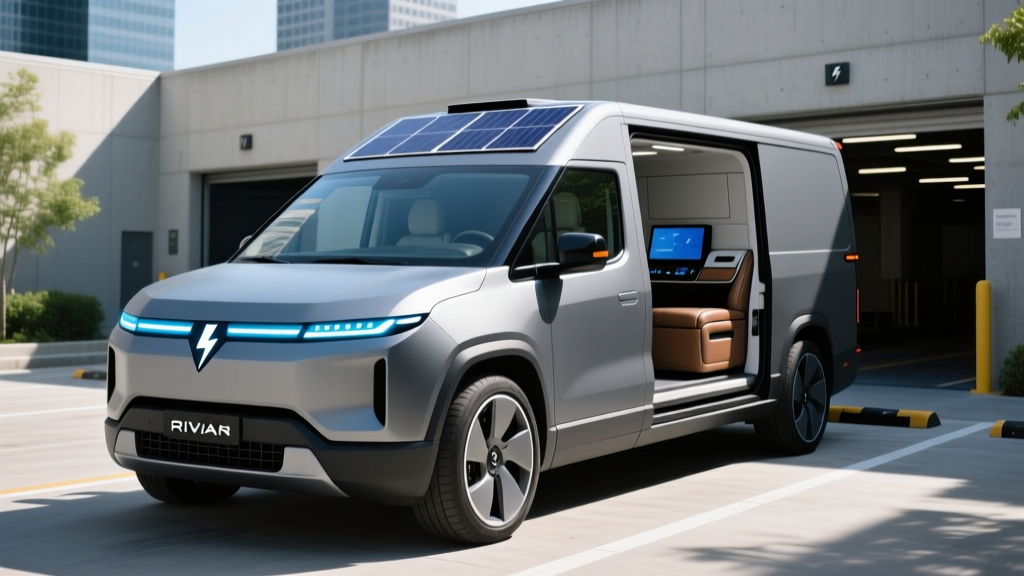
If you've seen a boxy, futuristic delivery van with a Rivian badge gliding through your neighborhood and wondered, "Can I buy a Rivian van?" — the short answer is: not as a private consumer, at least not yet. The Rivian EDV (Electric Delivery Van) is a commercial vehicle built exclusively for fleet operators, most notably Amazon, which holds a massive order for 100,000 units. But with Rivian expanding its commercial division and teasing a smaller van platform, the landscape is shifting. Here's everything you need to know about the Rivian van in 2026 — including whether a consumer version is on the horizon.
The Rivian EDV: What Exactly Is It?
The Rivian EDV is a purpose-built, all-electric commercial delivery van developed in partnership with Amazon. It comes in three body lengths — the EDV-500, EDV-700, and EDV-900 — corresponding to roughly 500, 700, and 900 cubic feet of cargo volume. Unlike the R1T pickup and R1S SUV that Rivian sells to consumers, the EDV is sold exclusively to fleet and commercial buyers. You cannot walk into a Rivian showroom and purchase one for personal use.
That said, Rivian has been steadily growing its commercial client base beyond Amazon, including partnerships with AT&T and other fleet operators. And industry reports have pointed to a smaller, potentially consumer-oriented van on Rivian's roadmap — sometimes referred to internally as the "R2 Van" or a compact commercial platform — though Rivian has not officially confirmed a retail van product as of early 2026.
| Spec | EDV-500 | EDV-700 | EDV-900 |
|---|---|---|---|
| EPA Est. Range | ~150 mi | ~150 mi | ~120-130 mi |
| Battery Capacity | ~110 kWh (NMC) | ~135 kWh (NMC) | ~150 kWh (NMC) |
| Max DC Fast Charge | 150 kW | 150 kW | 150 kW |
| 10-80% DC Time | ~45 min | ~50 min | ~55 min |
| Level 2 Charge Rate | 11.5 kW (~25 mi/hr) | 11.5 kW (~25 mi/hr) | 11.5 kW (~25 mi/hr) |
| Horsepower | ~275 hp | ~275 hp | ~275 hp |
| 0-60 mph | ~9.0 sec (est.) | ~10.0 sec (est.) | ~11.0 sec (est.) |
| Cargo Volume | ~500 cu ft | ~700 cu ft | ~900 cu ft |
| Drivetrain | RWD (single motor) | RWD (single motor) | RWD (single motor) |
Range, Efficiency, and Real-World Expectations
Real-World Expectation: Fleet operators report 110-130 miles in mixed urban delivery use with frequent stops and HVAC running. In cold weather (below 32°F), expect a 20-30% reduction, bringing effective range to 85-110 miles for the larger variants. Highway driving at 65+ mph also reduces range due to the van's large frontal area and boxy aerodynamics.
The EDV uses EPA-rated NMC (nickel manganese cobalt) lithium-ion battery packs. NMC chemistry offers higher energy density than LFP (lithium iron phosphate), which is important for a vehicle this size. However, NMC batteries are more sensitive to sustained 100% state of charge and extreme temperatures — fleet managers typically charge to 80-90% for daily use to preserve long-term health.
Efficiency is rated around 2.0-2.4 kWh per mile depending on variant and load, which translates to roughly 1.7-2.0 MPGe equivalent in stop-and-go delivery routes. For a commercial van making 50-100 stops per day at low average speeds, this is competitive with diesel alternatives when you factor in fuel and maintenance savings.
Charging Speed: DC Fast and Level 2 at the Depot
Fleet charging is the backbone of EDV operations, and Rivian designed the van around depot-based charging rather than public fast-charging networks.
| Charging Level | Power | Miles Added per Hour | Notes |
|---|---|---|---|
| Level 1 (120V) | 1.4 kW | ~3 mi/hr | Not practical for fleet use |
| Level 2 (240V) | 11.5 kW | ~25 mi/hr | Primary depot charging; full charge in ~10-13 hrs |
| DC Fast Charge | 150 kW peak | ~140 mi/hr (peak) | 10-80% in ~45-55 min; tapers significantly above 80% |
The 150 kW DC fast-charging peak is modest compared to Rivian's consumer vehicles (the R1S can peak at 220+ kW on the latest pack). The EDV's charge curve is relatively flat from 10-60% SoC, then tapers noticeably above 70%. For fleet operators doing mid-day top-ups, this means a 10-60% session takes roughly 30 minutes — enough to add ~75 miles of range during a lunch break.
Most Amazon delivery stations are equipped with Level 2 depot chargers that top up vans overnight. A full Level 2 charge from 10% to 100% takes 10-13 hours depending on variant — perfectly suited to overnight fleet cycles.
Performance, Tech, and the Driver Experience
The EDV is not built for speed — it's built for all-day comfort and efficiency. The single rear-mounted motor produces approximately 275 horsepower, which is adequate for a loaded van but won't win any drag races. The 0-60 mph time of roughly 9-11 seconds (depending on variant and payload) is on par with competing commercial vans like the Ford E-Transit.
Where the EDV shines is in driver-facing technology:
- 360-degree camera system with curb-view for tight urban maneuvering
- Automatic emergency braking with pedestrian detection
- Lane departure warning and lane-keeping assist
- Adaptive cruise control (available on newer model years)
- Large 15.6-inch touchscreen with integrated route optimization
- Integrated shelf and bulkhead system designed with driver input for ergonomic package access
All ADAS features on the EDV are SAE Level 1-2 driver assistance — the driver must remain fully engaged and in control at all times. This is not an autonomous vehicle.
Pricing, Tax Credits, and How Fleets Actually Buy It
Rivian does not publish consumer MSRPs for the EDV because it isn't sold at retail. Commercial pricing is negotiated directly through Rivian's fleet sales division and varies based on order volume, configuration, and service agreements. Industry estimates place the EDV-700 (the most common Amazon variant) at roughly $70,000-$80,000 per unit before incentives for large fleet orders.
| Variant | Est. Unit Price (Fleet) | Commercial Clean Vehicle Credit (§45W) | Est. Net Cost |
|---|---|---|---|
| EDV-500 | $65,000-$70,000 | Up to $7,500 | $57,500-$62,500 |
| EDV-700 | $70,000-$80,000 | Up to $7,500 | $62,500-$72,500 |
| EDV-900 | $80,000-$90,000 | Up to $7,500 | $72,500-$82,500 |
Important tax credit distinction: The EDV, as a commercial vehicle, falls under the IRS §45W Commercial Clean Vehicle Credit, not the §30D consumer credit. The §45W credit provides up to $7,500 for vehicles under 14,000 lbs GVWR, but eligibility depends on battery sourcing requirements and the purchasing entity's tax liability. Unlike the consumer §30D credit, there are no MSRP caps or buyer income limits — but the vehicle must be used for business purposes and the credit is claimed by the business, not an individual. Consult a tax professional for your specific situation.
Warranty and Long-Term Battery Health
Rivian provides a commercial warranty package for the EDV that reflects fleet duty cycles:
- Battery warranty: 8 years / 100,000 miles (retaining at least 70% of original capacity)
- Powertrain warranty: 8 years / 100,000 miles
- Bumper-to-bumper: 5 years / 60,000 miles
For fleet operators running vans 200-300 miles per week, the 100,000-mile battery warranty provides roughly 7-10 years of coverage. NMC battery degradation in commercial stop-and-go use tends to average 1.5-2.5% per year depending on charging habits and climate. Operators who avoid daily 100% charges and minimize DC fast-charging frequency see better long-term State of Health (SoH) retention.
Can a Consumer Actually Buy One? What About a Rivian Consumer Van?
As of 2026, the answer remains no — you cannot buy a Rivian EDV as a private consumer. Rivian sells the EDV exclusively through its commercial and fleet sales channel. Even if you operate a small business, you'd need to go through Rivian's fleet qualification process.
However, there are reasons for optimism:
- Rivian R2 platform: Rivian's upcoming, more affordable R2 SUV (expected 2026-2027) is built on a new platform. Industry analysts have speculated that a van or wagon variant could follow on this architecture, though Rivian has not confirmed this.
- Mercedes-Benz Sprinter analogy: The Sprinter van is sold commercially but has a massive aftermarket conversion community. Some EDVs may eventually enter the used market as fleets cycle vehicles, opening a secondary buyer channel.
- Competitive pressure: With Ford offering the E-Transit to both commercial and retail buyers, Rivian may eventually see value in a consumer van offering — particularly for the growing vanlife and adventure-conversion market.
How Does the EDV Compare to Competitors?
| Spec | Rivian EDV-700 | Ford E-Transit (LR) | BrightDrop Zevo 600 |
|---|---|---|---|
| EPA Range | ~150 mi | 126 mi | ~250 mi (est.) |
| Battery | ~135 kWh NMC | 68 kWh NMC | ~120 kWh (est.) |
| DC Fast Charge | 150 kW | 115 kW | ~120 kW |
| Cargo Volume | ~700 cu ft | 487 cu ft | ~600 cu ft |
| Consumer Available? | No (fleet only) | Yes | No (fleet only) |
| Est. Price | $70,000-$80,000 | ~$55,000-$65,000 | $70,000+ (est.) |
The Ford E-Transit is the only electric van on this list available to individual consumers, which makes it the default answer if you need an electric van for personal or small-business use today. The E-Transit's range is shorter (126 miles EPA), but its lower price and retail availability make it more accessible. The BrightDrop Zevo 600 (from GM's commercial division) offers more range but is also fleet-only and still ramping up production.
Pros
- Class-leading cargo volume up to 900 cu ft
- Purpose-built EV architecture (not a converted ICE van)
- Excellent driver ergonomics and visibility
- Integrated fleet management and route software
- Strong 8-year/100,000-mile battery warranty
- Low operating cost vs. diesel (~$0.12-$0.18/mi electricity vs. $0.40+/mi diesel)
Cons
- Not available to private consumers
- Modest 150 kW DC fast-charging speed
- Real-world cold-weather range drops to ~85-110 mi
- No AWD option (RWD only)
- Limited public charging network compatibility (fleet-depot focused)
- No consumer infotainment ecosystem (no Apple CarPlay/Android Auto)
Who Is the Rivian Van Actually For?
The EDV is ideal for mid-to-large fleet operators running predictable urban and suburban delivery routes of 80-130 miles per day with overnight depot charging. Amazon is the anchor customer, but any fleet with similar duty cycles — last-mile delivery, utility service, telecom — is a candidate. If you're an individual looking for an electric van for vanlife conversions, family hauling, or small-business deliveries, the Ford E-Transit remains your best (and essentially only) option from a major automaker in 2026.
Frequently Asked Questions
Can I buy a Rivian van for personal use in 2026?
No. The Rivian EDV is sold exclusively to commercial fleet operators through Rivian's business sales channel. There is no consumer trim or retail purchase option as of 2026.
What is the real-world range of the Rivian EDV?
While the EPA estimate is approximately 150 miles for the EDV-500 and EDV-700, real-world fleet data suggests 110-130 miles in mixed urban delivery use. Cold weather (below 32°F) can reduce this to 85-110 miles due to battery chemistry limitations and cabin heating demands.
How fast does the Rivian van charge?
The EDV peaks at 150 kW on a DC fast charger, reaching 10-80% in approximately 45-55 minutes depending on variant. Level 2 depot charging at 11.5 kW adds about 25 miles of range per hour, with a full charge taking 10-13 hours overnight.
Does the Rivian EDV qualify for the federal EV tax credit?
Yes, but under the IRS §45W Commercial Clean Vehicle Credit, not the consumer §30D credit. The credit provides up to $7,500 per vehicle, subject to battery-sourcing requirements. There are no MSRP or buyer income caps, but the vehicle must be used for business purposes. Always consult a tax professional for eligibility specifics.
Will Rivian ever sell a van to consumers?
Rivian has not officially announced a consumer van. However, the company's expanding R2 platform and competitive pressure from the Ford E-Transit (which is available at retail) make a future consumer van plausible. Any announcement would likely come after the R2 SUV launches in 2026-2027.
Is the Rivian van self-driving?
No. The EDV's driver-assistance features (automatic emergency braking, lane-keeping, adaptive cruise) are classified as SAE Level 1-2. The driver must remain fully engaged and in control at all times. This is not an autonomous vehicle.