Quick Answer: Can Electric Vehicles Use HOV Lanes?
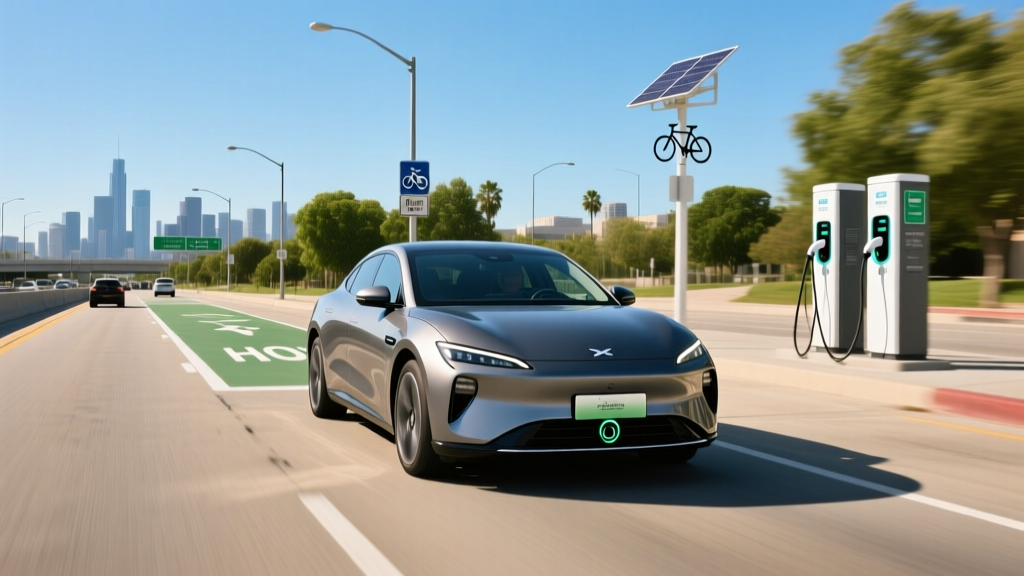
Yes — but only in certain states, and the rules are tightening. As of 2026, states including California, Colorado, Florida, Georgia, Hawaii, Maryland, New York, and Virginia allow qualifying electric vehicles (and some plug-in hybrids) to use High Occupancy Vehicle (HOV) lanes with a single occupant, provided the driver has obtained a state-issued clean-air vehicle decal or sticker. However, many of these programs have income caps, vehicle price limits, phase-out dates, or limited sticker quotas. The federal government does not mandate HOV lane access for EVs — it is entirely a state-level incentive. Before buying an EV specifically for carpool-lane access, verify your state's current program on your state DMV or DOT website, as rules change annually.
Which States Allow Solo EV Driving in HOV Lanes?
HOV lane exemptions for low-emission and zero-emission vehicles exist because the federal government permits states to relax HOV restrictions for alternatively fueled vehicles under specific conditions. But participation varies wildly. Here is a snapshot of major state programs as of early 2026:
| State | Program Name | Eligible Vehicles | Sticker/Decal Required | Key Limits (2026) |
|---|---|---|---|---|
| California | Clean Air Vehicle (CAV) Decal | BEVs, FCEVs, qualifying PHEVs | Yes (DMV decal) | Income cap for new decals; phase-out timeline set; decals expire after 4 years |
| Colorado | HOV Lane Exemption | BEVs, FCEVs | Yes (special plates/sticker) | Limited to specific highway corridors (I-25 Express Lanes) |
| Florida | HOV Lane Access | Qualified EVs | Yes (decal) | Decal program has expiration dates; limited to certain corridors |
| Georgia | HOV Lane Privilege | BEVs, qualifying AFVs | Yes | Previously ended for new applicants in 2018 — check current status |
| Hawaii | HOV Lane Exemption | BEVs, FCEVs | Yes (special plates) | Program ongoing; specific vehicle list |
| Maryland | HOV Permit Program | BEVs, qualifying PHEVs | Yes (permit) | Limited to specific highways; permit expiration dates apply |
| New York | Thruway/HOV Access | Qualified ZEVs | Varies by corridor | Limited to specific roadways |
| Virginia | Clean Special Fuel Plates | BEVs, some PHEVs | Yes (special plates) | Access to I-66 and I-95/395 Express Lanes; rules updated periodically |
Critical caveat: Several states that previously offered generous HOV access (Arizona, Georgia, Tennessee) have scaled back or eliminated new-sticker programs as EV adoption has risen. If your commute depends on HOV lane access, confirm your state's current rules directly through the Federal Highway Administration HOV overview or your state DMV before purchasing.
California's CAV Decal Program: The Most-Used EV HOV Perk
California has the nation's most prominent — and most complex — EV HOV lane program. The state's Clean Air Vehicle (CAV) decal lets solo drivers use carpool lanes on freeways where HOV restrictions would otherwise require two or three occupants.
2026 California CAV Decal Rules
- Eligible vehicles: Battery-electric vehicles (BEVs), fuel-cell electric vehicles (FCEVs), and plug-in hybrids that meet specific emissions standards and have an MSRP at or below the state's price cap.
- Income cap: New applicants must meet income thresholds set by the California Air Resources Board (CARB). Check the CARB Clean Cars 4 All page for current limits.
- Decal duration: Decals issued in 2024–2026 generally expire after 4 years from the date of issuance. Once expired, the vehicle loses solo HOV access.
- Used EV transfer: If you buy a used EV whose decal has already been issued, you may be able to transfer the remaining decal time — but only if the previous owner applied for and received the decal. You cannot apply for a new decal on a vehicle that has already been issued one.
Real-world value: For commuters on I-405, I-5, or US-101 in the Los Angeles or Bay Area metro, HOV lane access can save 20–45 minutes per day during peak hours. Over a year of 240 commuting days, that translates to roughly 80–180 hours of recovered time — a significant quality-of-life benefit that often factors heavily into the EV purchase decision.
EV vs Gas Commuter: HOV Lane Savings in Context
HOV lane access is a perk, not a reason in itself to buy an EV. The real question is whether the total commuting economics of an EV beat a comparable gas car when you factor in the lane access benefit alongside fuel, maintenance, and purchase costs.
| Factor | 2026 Tesla Model 3 RWD (EV) | 2026 Toyota Camry LE (Gas Baseline) | 2026 Toyota Camry Hybrid LE (Hybrid) |
|---|---|---|---|
| Base MSRP | $44,130 | $28,700 | $30,200 |
| EPA Range / Fuel Economy | 363 mi (EPA) / 132 MPGe combined | 28/39 MPG (city/hwy) | 53/50/51 MPG (city/hwy/combined) |
| Energy Cost per Mile (avg) | $0.04–$0.06 (home L2 at $0.14/kWh) | $0.11–$0.14 (at $3.40/gal) | $0.06–$0.08 (at $3.40/gal) |
| Annual Fuel/Energy (15,000 mi) | $600–$900 | $1,650–$2,100 | $900–$1,200 |
| Annual Maintenance (est.) | $300–$500 | $800–$1,200 | $700–$1,000 |
| Solo HOV Lane Access (CA) | Yes (with CAV decal) | No | Only if qualifying PHEV decal |
| Federal Tax Credit (§30D) | Up to $7,500 (eligibility varies) | $0 | $0 (HEV not eligible) |
The math: Over 5 years and 75,000 miles, the Model 3 saves roughly $5,000–$8,000 in fuel and maintenance compared to the gas Camry, and $2,000–$3,500 compared to the Camry Hybrid. Factor in the potential $7,500 federal tax credit (subject to IRS §30D income, MSRP, and battery-sourcing rules), and the EV's effective cost drops further. But the Tesla still starts at a $13,000–$16,000 premium over the gas Camry — the HOV lane perk and fuel savings narrow but don't always eliminate that gap.
HOV Lane Time Savings: What's It Actually Worth?
Time is money, and HOV lane access delivers measurable daily savings for heavy commuters. Here's a realistic breakdown for a 25-mile one-way commute on a congested metro freeway (e.g., LA's I-405 or DC's I-95):
| Metric | General Lanes (Solo Driver) | HOV Lane (EV with Decal) |
|---|---|---|
| Average One-Way Commute Time (peak) | 50–65 minutes | 25–35 minutes |
| Daily Time Saved (round trip) | — | 40–60 minutes |
| Annual Time Saved (240 workdays) | — | 160–240 hours |
| Value at $30/hr (median wage) | — | $4,800–$7,200/year |
| Reduced Brake Wear & Stress | Baseline | Significant (stop-and-go vs free-flow) |
At $30/hour of personal time value, HOV lane access can be worth $4,800 to $7,200 annually for heavy commuters. Over a 4-year decal period in California, that's $19,200–$28,800 in time value alone — enough to offset a substantial portion of the EV price premium. This is why many California commuters specifically cite HOV access as a top-three purchase motivator alongside fuel savings and environmental goals.
Real Costs of EV Ownership for HOV Commuters
HOV lane access is attractive, but first-time EV buyers need a clear-eyed picture of total costs. Here's a 5-year ownership breakdown for a typical EV commuter:
5-Year Total Cost of Ownership (75,000 Miles)
| Cost Category | EV (e.g., Model 3 RWD) | Gas Sedan (e.g., Camry LE) |
|---|---|---|
| Purchase Price (MSRP) | $44,130 | $28,700 |
| Federal Tax Credit (§30D) | –$7,500 (if eligible) | $0 |
| Effective Purchase Price | $36,630 | $28,700 |
| Home Charger Install (Level 2) | $800–$2,000 | $0 |
| Energy/Fuel (5 years) | $3,000–$4,500 | $8,250–$10,500 |
| Maintenance (5 years) | $1,500–$2,500 | $4,000–$6,000 |
| Insurance (5 years, avg) | $9,000–$12,000 | $7,000–$9,500 |
| Depreciation (est. 5yr) | $18,000–$22,000 | $12,000–$15,000 |
| Estimated 5-Year Total | $58,130–$77,630 | $60,950–$69,700 |
Key takeaways:
- Insurance is higher for EVs — expect 15–30% higher premiums due to repair costs and parts pricing. Get quotes before purchasing.
- Home charging access is critical. Without a Level 2 home charger ($800–$2,000 installed), you'll rely on public DC fast charging at $0.30–$0.50/kWh, which erases much of the fuel savings and adds time to your routine. If you live in an apartment without charging access, the economics shift significantly.
- Depreciation is steeper for EVs in the current market, though this is stabilizing as the used-EV market matures.
- Cold-weather range loss of 20–35% affects winter commuters in northern states. A 363-mile EPA-rated Model 3 may deliver only 240–290 miles in sub-freezing highway driving — still plenty for most commutes, but plan accordingly.
Common HOV Lane Misconceptions — Fact-Checked
| Myth | Fact |
|---|---|
| "All EVs get free HOV lane access everywhere." | HOV access is state-specific, requires a decal/sticker application, and is not available in most states. Even in participating states, it applies only to designated roadways. |
| "Once I get the decal, I have HOV access forever." | Most state decals expire. California's CAV decals issued in 2024–2026 expire after 4 years. You cannot simply renew — you must reapply if the program is still active and you still qualify. |
| "Hybrids get the same HOV access as full EVs." | Conventional hybrids (HEVs like the standard Camry Hybrid) do NOT qualify in most states. Only plug-in hybrids (PHEVs) meeting specific emissions criteria may qualify, and many states have eliminated PHEV eligibility for new decals. |
| "I can use the HOV lane without a decal if I just drive an EV." | Law enforcement checks for the physical decal or special plates. Driving solo in an HOV lane without the proper credential will result in a citation — typically $350–$500 in California. |
| "Used EVs come with transferable HOV decals." | In California, a CAV decal can transfer to a new owner, but only if one was previously issued. If the original owner never applied, the used buyer cannot apply for a new one. Always verify decal status before buying a used EV for HOV access. |
| "HOV access is worth the EV price premium alone." | For heavy commuters saving 40+ minutes daily, the time value can offset much of the premium over a 4-year decal period. For light commuters or those in states without programs, the perk is irrelevant to the purchase decision. |
What First-Time EV Buyers Should Know Before Chasing HOV Perks
If HOV lane access is a factor in your EV purchase, approach it strategically:
Before You Buy
- Verify your state's current program. Rules change annually. Check your state DMV, DOT, or air resources board website — not forum posts or outdated articles.
- Confirm your specific vehicle qualifies. Not every EV or PHEV is on the eligible list. California's CARB maintains a specific vehicle eligibility database. Price caps and income limits may exclude you or your desired model.
- Apply for the decal immediately after purchase. Some states have limited sticker quotas or application windows. Don't assume you can apply later.
- Check your home charging situation. HOV access is a commuting perk, but the EV ownership experience depends on reliable, affordable charging. A 240V Level 2 home charger (7.2–11.5 kW) adds 25–44 miles of range per hour of charging — enough to replenish any daily commute overnight.
- Get insurance quotes before committing. EV insurance premiums vary widely by model, driver profile, and state. A $200/month premium difference over 5 years adds $12,000 to your cost of ownership.
Charging Speed Reality Check
If your HOV-lane commute is long (50+ miles each way), charging speed matters. Here's what to expect from common 2026 EV platforms:
| EV Platform Example | Battery (kWh, usable) | Peak DC Fast Charge (kW) | 10–80% Time (min) | Level 2 Home Rate (kW) |
|---|---|---|---|---|
| Tesla Model 3 RWD | 60 kWh, LFP | 170 kW | ~25 min | 11.5 kW |
| Hyundai Ioniq 6 SE | 77.4 kWh, NMC | 240 kW (800V) | ~18 min | 10.9 kW |
| Chevrolet Equinox EV 3RS | 85 kWh, NMC | 150 kW | ~30 min | 11.5 kW |
| BMW i4 eDrive40 | 81.5 kWh, NMC | 200 kW | ~24 min | 11.0 kW |
Charging-curve reality: Peak kW is not sustained kW. A vehicle rated for 240 kW peak (like the Ioniq 6 on an 800V charger) will sustain that rate only between roughly 10–50% state of charge, then taper significantly. The 10–80% time is the most useful real-world metric, and it already accounts for this taper. Plan DC fast-charging stops around the 10–80% window for the best time efficiency.
Decision Framework: Should You Buy an EV for HOV Lane Access?
Choose an EV (with HOV decal) if:
- You commute 40+ miles daily on a congested freeway in a state with an active EV HOV program
- You have reliable home charging (garage, driveway, or workplace Level 2)
- You qualify for your state's decal program (income, vehicle price, and residency requirements)
- You plan to keep the vehicle through the full decal period (typically 4 years)
- You value the combined benefits: time savings + fuel savings + lower maintenance + tax credit potential
Stick with a gas car or hybrid if:
- Your state does not offer EV HOV lane access, or the program has been phased out for new applicants
- You lack home or workplace charging access and would rely entirely on public charging
- Your daily commute is under 20 miles, making HOV time savings negligible
- You're on a tight budget and the EV price premium (even after incentives) is prohibitive
- You frequently drive in extreme cold (below 10°F) where range loss and charging slowdowns are significant
Consider a PHEV as a middle ground if:
- Your state still offers HOV decals for qualifying plug-in hybrids (check current eligibility — many states have removed PHEVs from new-decal programs)
- You want electric-only commuting (25–40 miles) but need gas-engine range flexibility for road trips
- Home charging is available but you're not ready to commit to full electric
Frequently Asked Questions
Do I need a special sticker or decal to use the HOV lane in my EV?
Yes, in virtually every state that offers EV HOV access, you must apply for and display a state-issued clean-air vehicle decal, special license plate, or permit. Simply owning an EV does not grant automatic HOV lane access. Apply through your state DMV or air resources board as soon as possible after purchase — some states have processing delays of 4–8 weeks.
Can I use HOV lanes in a different state than where my EV is registered?
Generally, no. HOV lane exemptions are tied to the decal or plate issued by your home state. If you live in a state without an HOV program but commute through a state that has one, you typically cannot use that state's HOV lanes as a solo driver. Interstate reciprocity is rare — check specific corridor rules if you cross state lines.
Does a used EV come with HOV lane access?
It depends. In California, if the previous owner applied for and received a CAV decal, the remaining decal time can transfer to you when you register the vehicle. But if no decal was ever issued, you may not be able to apply for one — especially if the program has capped new applications or your income exceeds the threshold. Always verify decal status with the DMV before purchasing a used EV specifically for HOV access.
What happens to my HOV access when the decal expires?
Once your state-issued decal expires, you lose solo HOV lane access immediately. In most programs, you cannot simply renew — you must reapply, and eligibility requirements (income caps, vehicle eligibility, program availability) may have changed. Plan for this transition: when your decal expires, your commute time may increase significantly unless you start carpooling or switch routes.
Are plug-in hybrids (PHEVs) eligible for HOV lane access?
In some states, yes — but eligibility is narrowing. California previously allowed qualifying PHEVs to receive CAV decals, but the state has progressively restricted new decals to zero-emission vehicles (BEVs and FCEVs) and imposed income caps. Other states may still include PHEVs. Check your state's specific vehicle eligibility list, as it changes frequently.
How much can I realistically save by driving an EV in the HOV lane?
For a heavy commuter (50+ mile round trip on a congested freeway), the combination of HOV time savings (worth $4,800–$7,200/year in personal time), fuel savings ($1,000–$1,500/year vs gas), and lower maintenance ($400–$700/year) can total $6,200–$9,400 annually. Over a 4-year decal period, that's $24,800–$37,600 in combined value — enough to offset much or all of a typical EV price premium over a gas sedan. But these numbers assume you qualify for the decal, have home charging, and drive in a state with an active program.