Quick Answer: Can-Am Outlander Electric
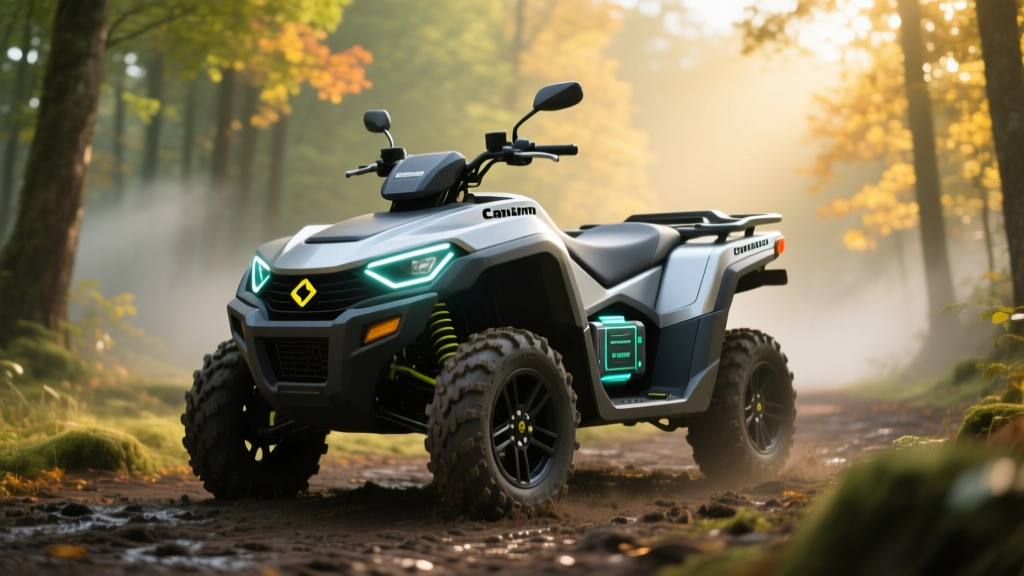
The Can-Am Outlander Electric is an announced but not yet on-sale all-electric ATV from BRP (Bombardier Recreational Products). As of early 2026, BRP has confirmed the platform is in development alongside electric versions of its Ski-Doo snowmobiles and Sea-Doo watercraft, but no final EPA-equivalent range, battery kWh, pricing, or delivery date has been published. BRP has stated that electric off-road vehicles are part of its long-term product roadmap, with initial electric models targeting the 2026–2027 timeframe. This guide covers what is confirmed, what is estimated, and what buyers should consider before committing to an electric ATV platform.
What We Know About the Can-Am Outlander Electric So Far
BRP, the parent company of Can-Am, has been vocal about its electrification strategy. In investor presentations and press releases, the company has committed to offering electric models in each of its product lines by the end of the decade. The Outlander — Can-Am's flagship utility and recreational ATV — is widely expected to be among the first off-road platforms to receive a battery-electric variant.
Here is what has been confirmed or strongly signaled by BRP as of early 2026:
- Platform: Electric variant of the Outlander ATV line (utility/recreation segment)
- Status: Announced / in development — not yet available for purchase
- Target window: BRP has referenced 2026–2027 for initial electric product launches across its portfolio
- Powertrain: Battery-electric, details on motor output (HP), battery chemistry, and capacity (kWh) remain unpublished
- Charging: No confirmed connector standard or charge rate (kW)
Because final specifications have not been released, every range, price, and performance figure discussed below is an estimate based on comparable electric utility vehicles and industry analysis. Treat all numbers as preliminary until BRP publishes official specs.
Estimated Specs: What an Electric Outlander Might Look Like
To build a realistic picture of what the Can-Am Outlander Electric could offer, we can look at existing electric off-road and utility vehicles — including the Polaris Ranger XP Kinetic (the first mainstream electric UTV), electric motocross bikes from KTM and Zero Motorcycles, and BRP's own engineering capabilities demonstrated in its Ski-Doo and Sea-Doo electric prototypes.
| Spec | Outlander Electric (Est.) | Polaris Ranger XP Kinetic | Can-Am Outlander 700 (Gas) |
|---|---|---|---|
| Battery Capacity | ~15–25 kWh (est.) | 29.8 kWh (Premium) / 14.9 kWh (Base) | N/A (gas tank: ~5.3 gal) |
| Range (est.) | ~40–70 mi (trail use) | Up to 110 mi (est., ideal conditions) | ~120–150 mi (varies by terrain) |
| Motor Output | ~60–90 HP (est.) | 110 HP / 140 lb-ft torque | ~50 HP (700cc twin) |
| Top Speed | ~55–65 mph (est.) | ~60 mph | ~65 mph |
| Towing Capacity | TBD | 2,500 lbs | ~1,830 lbs |
| Charging | Level 1/2 expected (TBD kW) | Level 1 (120V) ~9 hrs; Level 2 (240V) ~5 hrs | Refuel in ~2 min |
| Est. Base Price | $15,000–$22,000 (est.) | $24,999 (Base) / $29,999 (Premium) | $9,499–$12,499 |
Key takeaway: The Polaris Ranger XP Kinetic is the closest market comparison. It's a UTV (side-by-side), not an ATV (straddle-seat), but it demonstrates what current electric off-road technology delivers: instant torque, quiet operation, and range that works for trail rides and work tasks but requires planning for all-day use.
Range Reality: Trail Riding vs. EPA Sticker Expectations
ATVs and UTVs don't carry EPA range stickers the way highway vehicles do. Range in off-road electric vehicles depends heavily on:
- Terrain: Flat, packed trails consume far less energy than mud, sand, steep climbs, or rock crawling
- Speed and load: Aggressive throttle use and heavy cargo/towing dramatically reduce range
- Temperature: Lithium-ion batteries lose 15–30% capacity in cold weather (below 32°F / 0°C), which matters for riders in northern climates and winter trail seasons
- Regenerative braking: Trail riding with frequent deceleration can recover some energy, extending range modestly vs. sustained wide-open throttle
If BRP targets a 20 kWh battery pack, riders could realistically expect 40–50 miles of mixed trail use under moderate conditions, or as little as 25–30 miles under heavy load in challenging terrain. For comparison, most recreational ATV rides cover 20–50 miles in a half-day outing, so the range could be adequate for many users — but not for all-day rides or remote backcountry use without a charging strategy.
Common Misconceptions About Electric ATVs
| Myth | Fact |
|---|---|
| "Electric ATVs have no power" | Electric motors deliver instant peak torque from 0 RPM. The Polaris Ranger XP Kinetic produces 140 lb-ft — more than many gas UTVs — and an electric Outlander would likely match or exceed its gas counterpart in low-end pulling power. |
| "You'll get stuck with a dead battery on the trail" | Range planning matters, but most trail rides are out-and-back from a truck or camp. A Level 1 (120V) outlet at a cabin or garage can add ~8–12 miles of range per hour of charging — enough to recover for a short ride back. |
| "Electric ATVs are maintenance-free" | There's no oil change, spark plug, or air filter — but suspension, brakes, CV joints, tires, and battery thermal management still require service. Battery replacement (if needed out of warranty) could cost $3,000–$6,000+ depending on pack size. |
| "Federal EV tax credits apply" | The IRS §30D credit applies to on-road vehicles (cars, trucks, SUVs). Off-road vehicles like ATVs and UTVs do not qualify for the federal clean vehicle tax credit. Some state or local utility rebates may apply — check your jurisdiction. |
Electric ATV vs. Gas ATV: Cost and Ownership Comparison
The purchase price of an electric ATV will almost certainly be higher than a comparable gas model. The question is whether lower operating costs close the gap over time.
| Cost Category | Electric Outlander (Est.) | Gas Outlander 700 |
|---|---|---|
| Purchase Price | $18,000 (est. mid-trim) | $10,500 |
| Fuel / Electricity (5 yrs) | ~$300–$500 (home charging at $0.14/kWh) | ~$1,500–$2,000 (gas at ~$3.50/gal, ~25 mpg equiv.) |
| Maintenance (5 yrs) | ~$400–$600 (brakes, suspension, tires) | ~$1,200–$1,800 (oil, filters, plugs, belts + above) |
| Insurance (5 yrs) | ~$2,500–$3,500 | ~$2,000–$3,000 |
| Federal Tax Credit | $0 (off-road excluded) | $0 |
| Est. 5-Year Total | ~$21,200–$22,600 | ~$15,200–$17,300 |
The math is clear: at current estimated pricing, the electric Outlander would carry a significant upfront premium that operating savings alone are unlikely to fully offset within five years for a typical recreational rider covering 500 miles annually. The value proposition shifts if you ride more frequently, have strong preferences for quiet operation (wildlife areas, residential-adjacent trails), or benefit from state/local incentives.
Charging Considerations: Where and How You'll Plug In
Home charging access is the single biggest practical question for any electric off-road vehicle buyer. Unlike EVs that use public charging networks on highways, ATVs will almost exclusively charge at your home, cabin, or garage.
Charging Levels to Expect
| Level | Voltage | Est. Power (kW) | Est. Time (0–100%, 20 kWh pack) |
|---|---|---|---|
| Level 1 | 120V (standard outlet) | ~1.0–1.4 kW | ~14–20 hours |
| Level 2 | 240V (dryer/outlet or hardwired) | ~3.3–6.6 kW | ~3–6 hours |
| DC Fast Charge | Unlikely on ATV platform | N/A | N/A |
Most electric off-road vehicles, including the Polaris Ranger XP Kinetic, charge via Level 1 (standard 120V household outlet) or Level 2 (240V). DC fast charging is extremely unlikely on an ATV — the battery pack is too small to justify the cost and weight of DCFC hardware, and trail-side DC chargers essentially don't exist.
Practical implication: If you ride at a remote property with no electrical access, you'll need to plan rides around your battery capacity. A Level 1 charge overnight at home adds roughly 8–15 miles of range — sufficient for many riders who trailer their ATV to the trail, but a hard limit for multi-day backcountry trips.
Real-World Ownership: What First-Time Electric ATV Buyers Should Know
Should You Wait for the Can-Am Outlander Electric?
Choose electric if:
- You ride primarily on day trips from a home base with charging access
- Quiet operation matters (hunting, wildlife photography, noise-restricted areas)
- You want instant torque for technical trail sections and towing
- You're willing to pay a premium for newer technology and accept early-adopter risks (limited dealer service experience, unknown long-term battery degradation)
- You can plan rides within a ~40–60 mile range envelope
Stick with gas (for now) if:
- You ride multi-day backcountry routes far from power sources
- You need maximum range and quick refueling (2 minutes at a gas can vs. hours on a charger)
- Budget is a primary concern — gas Outlanders start under $10,000
- Your local Can-Am dealer has no confirmed EV service capability yet
- You tow heavy loads over long distances where range drops sharply
Cold Weather and Battery Care
If you ride in sub-freezing temperatures — common for fall and winter trail seasons in northern states — expect 15–30% range reduction from a lithium-ion pack. Store the ATV in a garage when possible, and avoid charging a cold battery at maximum rate (most BMS systems will throttle charge speed automatically to protect the cells). BRP's experience with cold-climate products (Ski-Doo) suggests they'll engineer robust thermal management, but physics still applies.
Dealer Network and Service
Before purchasing any electric off-road vehicle, confirm that your local Can-Am dealer has:
- Trained technicians certified for high-voltage EV systems
- Diagnostic tools for the specific electric platform
- Access to replacement battery modules and powertrain components
Early in a new EV product cycle, dealer readiness can lag behind product availability. Call ahead and ask specifically about electric ATV service capability.
Warranty, Battery Longevity, and Resale
BRP has not published warranty details for the Outlander Electric. For reference, the Polaris Ranger XP Kinetic carries a 3-year battery warranty. Industry-standard EV battery warranties for on-road vehicles are 8 years / 100,000 miles, but off-road use cases are different — lower mileage but harsher vibration, moisture, and temperature exposure.
Expect BRP to offer a battery warranty in the 2–5 year range with a capacity retention threshold (commonly 70% of original capacity). Battery degradation in off-road use depends on charge habits, storage conditions, and thermal stress. Most modern LFP or NMC packs retain 80%+ capacity after 1,000+ charge cycles, which for a recreational ATV rider could mean 10+ years of usable life.
Resale value is an open question. Electric off-road vehicles are too new for reliable depreciation data. Early adopters should expect higher depreciation risk compared to proven gas models — a factor worth budgeting for.
Frequently Asked Questions
Is the Can-Am Outlander Electric available to buy right now?
No. As of early 2026, the Can-Am Outlander Electric is announced and in development by BRP but is not yet available for purchase. BRP has indicated electric off-road products are coming within the 2026–2027 window, but no official launch date, pricing, or final specifications have been published.
Will the electric Outlander qualify for the $7,500 federal EV tax credit?
Almost certainly no. The IRS §30D clean vehicle credit applies to on-road vehicles — cars, trucks, SUVs, and vans. Off-road vehicles including ATVs, UTVs, and side-by-sides are excluded from this credit. Check with your state's environmental or energy agency for possible local rebates that may cover off-road electric vehicles.
How far can an electric ATV realistically go on a charge?
Based on comparable products like the Polaris Ranger XP Kinetic (up to ~110 miles in ideal conditions, ~45–70 miles in real-world mixed use), a Can-Am Outlander Electric with a ~20 kWh battery could deliver approximately 40–70 miles of trail riding under moderate conditions. Heavy load, steep terrain, high speed, and cold weather will reduce this significantly.
How long does it take to charge an electric ATV?
On a standard 120V household outlet (Level 1), expect 14–20 hours for a full charge of a ~20 kWh pack. On a 240V Level 2 outlet, this drops to roughly 3–6 hours. DC fast charging is not expected to be offered on ATV-class vehicles.
Is an electric ATV better than a gas ATV?
It depends on your use case. Electric ATVs offer instant torque, near-silent operation, zero tailpipe emissions, and lower routine maintenance. Gas ATVs offer longer range, faster refueling, lower purchase price, and established dealer service networks. For day-trip trail riders with home charging, electric is compelling. For remote backcountry use or budget-first buyers, gas remains the practical choice in 2026.
What battery chemistry will the Outlander Electric use?
BRP has not confirmed battery chemistry. The two most likely options are NMC (nickel manganese cobalt) for higher energy density and lighter weight, or LFP (lithium iron phosphate) for longer cycle life and greater thermal stability at the cost of slightly more weight. For off-road use where vibration and impact resistance matter, LFP has advantages — but BRP's final choice is unconfirmed.