The Short Answer
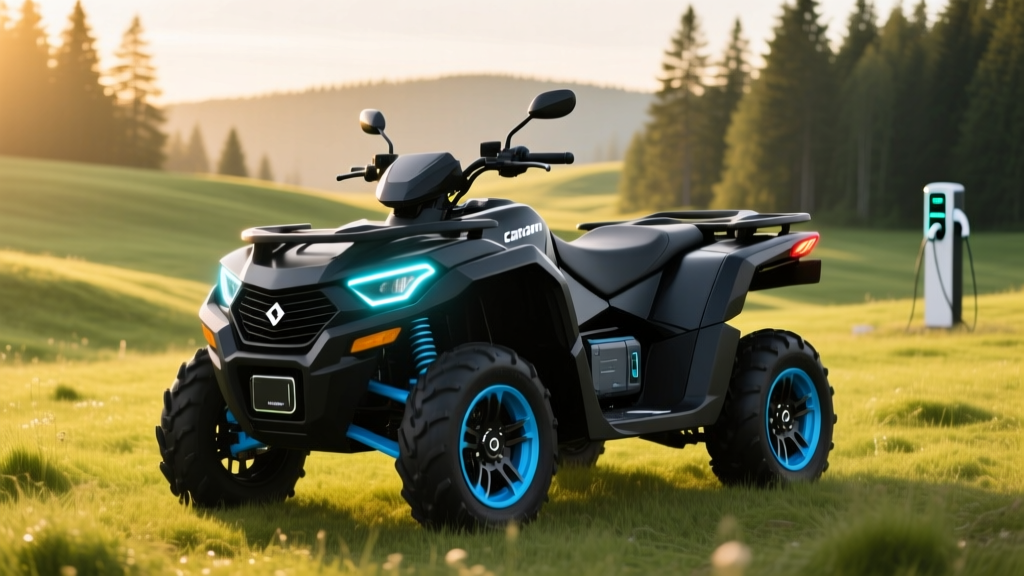
As of early 2026, BRP (the parent company of Can-Am) has not yet released a production electric ATV or side-by-side under the Can-Am brand. The company has confirmed it is developing electric off-road platforms, with initial models expected no earlier than the 2027 model year. If you're searching for a Can-Am electric four-wheeler today, no retail-ready model is currently available for purchase. What follows is a breakdown of what BRP has announced, what the specs are likely to look like based on industry signals, and how an electric ATV would stack up against a gas-powered Can-Am Outlander or Renegade when one does arrive.
What BRP Has Said About Electric Off-Road Vehicles
BRP, the Quebec-based manufacturer behind Can-Am ATVs, side-by-sides, Ski-Doo snowmobiles, and Sea-Doo watercraft, has been relatively cautious about electrifying its powersports lineup compared to its pivot on personal watercraft and the now-discontinued Can-Am Spyder three-wheel motorcycles. In investor presentations and press releases through 2024 and 2025, BRP leadership confirmed active R&D on electric platforms for its off-road segment but stopped short of committing to a firm launch date.
What we do know:
- BRP has invested in electric drivetrain partnerships and in-house motor development.
- The company's first electric products focused on the marine segment (the Sea-Doo Switch electric pontoon concept) and urban mobility (the Can-Am Pulse and Origin electric motorcycles, which entered production for the 2025 model year).
- Electric ATVs and side-by-sides are acknowledged as part of the long-term roadmap but remain in development.
This means any specs discussed below are preliminary and estimated based on BRP's existing EV architecture, competitor benchmarks, and industry supply-chain data — not confirmed production numbers.
Estimated Specs: What a Can-Am Electric Four-Wheeler Could Look Like
Drawing from BRP's electric motorcycle platform (which uses a liquid-cooled permanent-magnet motor and a modular battery architecture) and benchmarking against the few electric utility ATVs already on the market (such as the Polaris Ranger XP Kinetic and smaller models from Ecocharger and Hisun), we can sketch a reasonable spec envelope for a Can-Am electric ATV.
| Specification | Estimated (Can-Am Electric ATV) | Current Gas Baseline (Can-Am Outlander 700) |
|---|---|---|
| Battery Capacity (usable) | ~15–25 kWh (LFP likely) | N/A (18.5L fuel tank) |
| Motor Output | ~60–80 HP equivalent | ~50 HP |
| Instant Torque | ~120–160 lb-ft | ~48 lb-ft |
| Estimated Range (mixed terrain) | 40–70 miles | ~120–150 miles (fuel) |
| Top Speed | ~55–65 mph (governed) | ~60–70 mph |
| Towing Capacity | ~1,200–1,800 lbs (est.) | 1,830 lbs |
| Level 2 Charge Time (0–100%) | ~3–5 hours | ~5 min (refuel) |
| Estimated Base MSRP | $14,000–$18,000 | $9,499–$11,299 |
| Drivetrain Warranty (est.) | 3–5 years / unlimited hours | 6 months limited |
Important caveats: These numbers are projections, not manufacturer-confirmed specs. Actual range will vary enormously based on terrain, payload, ambient temperature, and throttle usage. Aggressive trail riding with heavy loads could cut range by 40% or more compared to gentle flat-terrain use.
Electric ATV vs. Gas ATV: The Real Trade-Offs
The ATV market is not the passenger-car market. The use cases, refueling infrastructure, and ownership patterns are fundamentally different. Here's an honest comparison of what an electric Can-Am four-wheeler would offer versus the gas models buyers know today.
| Factor | Electric ATV (Projected) | Gas ATV (Current Can-Am Outlander) |
|---|---|---|
| Upfront Cost | $14,000–$18,000 (est.) | $9,499–$11,299 |
| Fuel/Energy Cost per Hour (avg.) | $0.80–$1.50 (home charging) | $4.00–$7.00 (gasoline) |
| Maintenance Cost (Annual) | ~$100–$200 (fluids, filters minimal) | $300–$600 (oil, filters, spark plugs, belt) |
| Noise Level | Near-silent (huge for hunting/wildlife) | 75–85 dB at idle |
| Trail-Side Refueling | Not feasible without generator | Gas can in 5 minutes |
| Cold-Weather Performance | ~20–35% range loss below 20°F | Minimal impact (choke/start, then normal) |
| Torque Delivery | Instant, full from 0 RPM | Builds with RPM; requires clutch engagement |
| Range per "Tank" | 40–70 miles (est.) | 120–150 miles |
| Long-Distance Trail Rides | Challenging without planned charging stops | Easy — carry spare fuel |
Cost of Ownership: 5-Year Breakdown
One of the strongest arguments for an electric ATV is operating cost. If you primarily ride on your own property, a farm, or a ranch — where you return to the same barn or garage every evening to plug in — the economics shift significantly in favor of electric.
| Cost Category (5 Years / 500 hrs Use) | Electric ATV (Est.) | Gas ATV (Outlander 700) |
|---|---|---|
| Purchase Price | $16,000 | $10,500 |
| Fuel / Electricity | $600 | $2,750 |
| Maintenance (Oil, Filters, Belts, Plugs) | $500 | $2,250 |
| Insurance (Avg.) | $1,500 | $1,500 |
| Estimated Resale Value (Year 5) | -$7,000 | -$5,500 |
| Total Net 5-Year Cost | ~$11,600 | ~$11,500 |
The numbers are close. The electric ATV's higher purchase price is largely offset by dramatically lower fuel and maintenance costs over five years. The breakeven point typically arrives around year 4–5 for moderate-use owners (100 hours/year). For high-use ranch and farm applications (200+ hours/year), breakeven can come in year 2–3.
Note on incentives: The federal §30D Clean Vehicle Credit, which offers up to $7,500 for qualifying EVs, applies to on-road vehicles that meet specific MSRP caps, buyer income limits, and battery-sourcing requirements as defined by the IRS. Off-road ATVs and utility vehicles generally do not qualify for §30D because they are not classified as on-road motor vehicles for tax purposes. Always consult a tax professional to confirm eligibility for any powersports purchase.
Who Should Wait — And Who Should Buy Gas Now
Not every ATV buyer is a candidate for electric, even once a Can-Am electric four-wheeler reaches production. Your use case determines whether waiting makes sense.
Decision Framework: Electric ATV or Gas?
Choose GAS now if:
- You regularly ride multi-day trail systems far from power sources
- You need 100+ miles of range per outing without stopping
- You ride in extreme cold (sub-zero °F) for extended periods
- You tow heavy loads (1,500+ lbs) over long distances
- Your budget is firm at under $12,000
- You need a vehicle today for work or recreation
Wait for ELECTRIC if:
- You primarily ride on private property (farm, ranch, large estate) and can charge at a barn/garage
- Noise matters — hunting, wildlife management, or noise-ordinance areas
- You ride 2–4 hours at a time and return to base
- You want near-zero routine maintenance
- Instant torque for technical terrain appeals to you
- You're willing to spend $14,000+ for lower long-term operating costs
Charging Realities for Off-Road EVs
This is where an electric ATV diverges most sharply from an electric car. There are no DC fast-charging stations on ATV trails. Public charging infrastructure is designed for passenger vehicles in parking lots and highway corridors — not trailheads or backcountry access points.
For a Can-Am electric four-wheeler, home and property-based charging will be the primary refueling method:
- Level 1 (120V standard outlet): Adds roughly 3–5 miles of range per hour of charging. A full charge from empty on a 20 kWh battery would take 14–20 hours. Practical for overnight top-ups if you only used 20–30% of the battery that day.
- Level 2 (240V): Adds roughly 15–25 miles of range per hour. A full charge in 3–5 hours. This requires a 240V outlet (NEMA 14-50 or hardwired EVSE) in your garage or barn. Installation by a licensed electrician typically costs $500–$2,000 depending on panel capacity and run distance.
- DC Fast Charging: Unlikely to be included on a first-generation electric ATV. The added weight, cost, and connector complexity of DCFC hardware make it impractical for off-road vehicles where trail-side chargers don't exist.
Barn and garage charging tip: If your riding base is a rural property, confirm your electrical panel has capacity for a 240V/40A circuit. Many older farm buildings have 100A panels that may need an upgrade ($1,500–$3,500) to support Level 2 charging alongside existing loads.
Common Misconceptions About Electric ATVs
| Myth | Fact |
|---|---|
| "Electric ATVs have no power for real work." | Electric motors deliver peak torque from 0 RPM. The Polaris Ranger XP Kinetic (a side-by-side, not an ATV, but illustrative) produces 140 lb-ft of instant torque — more than most gas UTVs. A Can-Am electric ATV would likely match or exceed the Outlander 700's towing capacity. |
| "You'll get stuck on the trail with a dead battery." | This is a real risk for long-distance trail riding and is the strongest argument for gas in that use case. For property-based work and day rides within 30–40 miles of your charger, range is adequate with planning. |
| "The battery will need replacing every few years." | Modern LFP (lithium iron phosphate) battery packs are rated for 2,000–3,000+ charge cycles before degrading to 80% capacity. At 100 charge cycles per year, that's 20–30 years of use before significant degradation. BRP would likely warranty the pack for 5+ years. |
| "Electric ATVs qualify for the $7,500 federal tax credit." | Off-road vehicles are generally not eligible for the §30D Clean Vehicle Credit, which requires the vehicle to be manufactured primarily for use on public roads. Confirm with a tax professional before counting on any incentive. |
| "Electric means no maintenance at all." | You eliminate oil changes, spark plugs, air filters, and CVT belt replacements. You still have suspension components, brake pads, tires, coolant (for motor/battery thermal management), and gear-case fluid to maintain. |
What to Watch: Competitors and Timeline
BRP is not the only powersports company exploring electric off-road vehicles. The competitive landscape will shape what a Can-Am electric four-wheeler ultimately looks like:
- Polaris Ranger XP Kinetic: Already in production. A full-size electric side-by-side with a 29.8 kWh battery, ~45-mile range in Work mode, and a starting MSRP around $24,999. It's a utility UTV, not a sport ATV, but it's the closest production benchmark.
- Polaris Sportsman Electric: Polaris has hinted at an electric ATV in the Sportsman line but has not confirmed specs or a release date.
- Aftermarket conversions: Companies like Ecocharger offer small electric utility quads (10–20 HP, 20–30 mile range) for $8,000–$12,000. These are low-speed farm vehicles, not performance ATVs.
- Honda and Yamaha: Both have shown electric off-road concepts but have committed to no production timelines for full-size electric ATVs.
If BRP brings a Can-Am electric ATV to market, expect it to compete on motor performance, build quality, and the Can-Am dealer network — not on price. A realistic launch window is the 2027 or 2028 model year, with formal reveals likely 12–18 months before retail availability.
Frequently Asked Questions
Is there a Can-Am electric four-wheeler I can buy right now?
No. As of early 2026, BRP has not released a production electric ATV or side-by-side under the Can-Am brand. The company has confirmed electric off-road platforms are in development, but no model is available for retail purchase.
How much will a Can-Am electric ATV cost when it launches?
Based on the pricing of BRP's electric motorcycles (Can-Am Pulse starts at ~$13,999) and the Polaris Ranger XP Kinetic ($24,999), a Can-Am electric ATV would likely start between $14,000 and $18,000, with higher-spec trims reaching $20,000+. This compares to $9,499–$14,000 for current gas Outlander models.
Will an electric ATV have enough range for trail riding?
For day rides on private property or short trail loops within 30–40 miles of your charging point, yes — estimated 40–70 miles of mixed-terrain range would cover most single-day outings. For multi-day trail expeditions or rides exceeding 70 miles, gas remains the practical choice until trail-side charging infrastructure exists.
Can I charge an electric ATV from a standard outdoor outlet?
Yes, using Level 1 (120V) charging, but it's slow — expect 3–5 miles of range added per hour. For practical daily use, a 240V Level 2 charger installed in your garage or barn is strongly recommended, cutting full-charge time to 3–5 hours.
Do electric ATVs qualify for federal EV tax credits?
Generally no. The IRS §30D Clean Vehicle Credit applies to vehicles manufactured primarily for use on public streets and highways. Off-road ATVs and most side-by-sides do not meet this definition. Always verify with a qualified tax professional before assuming credit eligibility for any powersports purchase.
What battery chemistry would a Can-Am electric ATV use?
LFP (lithium iron phosphate) is the most likely choice for an off-road application. LFP offers superior thermal stability (important for dusty, high-vibration environments), longer cycle life (2,000–3,000+ cycles to 80% capacity), and lower cost per kWh compared to NMC. The trade-off is lower energy density, meaning a heavier battery pack for the same range — but weight is less of a penalty on an ATV than on a passenger car.
Sources: BRP investor presentations and press releases (brp.com), Polaris Ranger XP Kinetic specifications (polaris.com), IRS Clean Vehicle Credit guidelines (irs.gov).