Quick Answer: Is the Can-Am Electric Dirt Bike Worth It?
The 2026 Can-Am Pulse (street) and Can-Am Origin (dual-sport) are the first production electric motorcycles from BRP's revived Can-Am brand. The Pulse starts around $13,999 and delivers an estimated 100 miles of city range from its ~8.9 kWh lithium-ion battery pack, while the Origin starts near $14,499 with roughly 80 miles of mixed-use range. Both produce 47 horsepower and hit 0–60 mph in approximately 3.5 seconds. They are best suited for riders with home charging access who primarily ride in urban or suburban environments and want instant torque with zero tailpipe emissions. If you need 200+ mile highway range or ride in remote areas without charging infrastructure, a gas-powered enduro remains the more practical choice.
Can-Am's Electric Motorcycle Lineup Explained
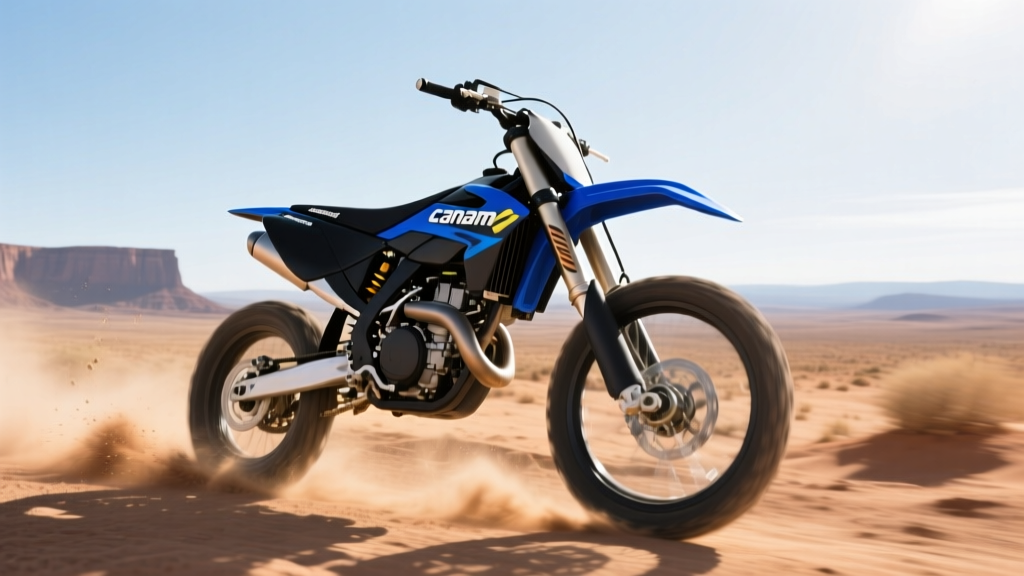
BRP (Bombardier Recreational Products) resurrected the Can-Am motorcycle name in 2024 with two fully electric models: the Can-Am Pulse, a street-legal naked bike aimed at urban commuters, and the Can-Am Origin, a dual-sport/adventure-style machine with longer suspension travel and knobby tire compatibility. Both share the same Rotax E-POWER electric powertrain platform but tune it for different riding styles.
For 2026, BRP has expanded availability across US dealerships and refined the onboard software, including improved regenerative braking profiles and better thermal management for sustained high-speed riding. These are not electric dirt bikes in the pure motocross sense — there is no dedicated closed-course MX model yet — but the Origin's dual-sport capability and the platform's lightweight chassis bring electric propulsion into the off-road-adjacent space that riders have been searching for when they type "can am electric dirt bike" into search engines.
Specs, Range, and Battery: The Numbers That Matter
Here is the full specification breakdown for both 2026 Can-Am electric models:
| Specification | Can-Am Pulse | Can-Am Origin |
|---|---|---|
| Base MSRP | $13,999 | $14,499 |
| Motor Type | Rotax E-POWER (liquid-cooled) | Rotax E-POWER (liquid-cooled) |
| Horsepower | 47 hp (35 kW) | 47 hp (35 kW) |
| Torque | ~53 lb-ft | ~53 lb-ft |
| 0–60 mph | ~3.5 seconds | ~3.8 seconds |
| Top Speed | ~87 mph | ~80 mph |
| Battery Capacity | 8.9 kWh (usable) | 8.9 kWh (usable) |
| Battery Chemistry | NMC lithium-ion | NMC lithium-ion |
| EPA-Est. Range (City) | ~100 miles | ~80 miles |
| Real-World Mixed Range | 60–75 miles | 50–65 miles |
| Level 1 Charging (120V) | ~1.5 kW / ~7 hrs (0–100%) | ~1.5 kW / ~7 hrs (0–100%) |
| Level 2 Charging (240V) | ~6.6 kW / ~1.5 hrs (0–100%) | ~6.6 kW / ~1.5 hrs (0–100%) |
| DC Fast Charging | Not available | Not available |
| Curb Weight | ~386 lbs | ~410 lbs |
| Riding Modes | Normal, Sport, Rain, Eco | Normal, Sport, Rain, Eco |
| Warranty | 2 years unlimited miles | 2 years unlimited miles |
Real-World Range Reality Check
The EPA-equivalent city range of 100 miles on the Pulse assumes low-speed urban riding with frequent regenerative braking. In real-world mixed riding — including highway segments at 65–75 mph, elevation changes, and aggressive acceleration — expect 60 to 75 miles on the Pulse and 50 to 65 miles on the Origin. Cold weather (below 40°F) can reduce range by an additional 15–25%, bringing the Origin down to as little as 40 miles in winter conditions. This is a fundamental limitation of the 8.9 kWh battery pack.
Electric vs. Gas Dirt Bike: Cost and Performance Comparison
How does the Can-Am Origin stack up against a comparable gas-powered dual-sport? Let's compare it against a popular benchmark: the KTM 350 EXC-F and the Honda CRF300L Rally.
| Factor | Can-Am Origin (Electric) | Honda CRF300L Rally (Gas) | KTM 350 EXC-F (Gas) |
|---|---|---|---|
| MSRP | $14,499 | ~$6,499 | ~$11,099 |
| Horsepower | 47 hp | 27 hp | ~40 hp |
| 0–60 mph | ~3.8 sec | ~8.5 sec | ~5.5 sec |
| Range | 50–65 miles | ~150–180 miles | ~80–100 miles |
| "Fuel" Cost per Full Charge/Tank | $1.07–$1.42 (at $0.16/kWh) | $6.50–$8.00 (2.1 gal at $3.50/gal) | $7.00–$8.50 |
| Annual Maintenance | ~$50 (tires, brake pads) | ~$400–$600 (oil, filters, chain, valves) | ~$500–$800 |
| Refuel/Recharge Time | 1.5 hours (Level 2) | 2 minutes | 2 minutes |
| Noise Level | Near-silent | 85–95 dB | 90–100 dB |
| Emissions | Zero tailpipe | EPA-compliant ICE | Off-road (not street-legal in all states) |
The Can-Am Origin wins on acceleration, noise (a major advantage on trails with noise restrictions), and per-mile operating cost. But the gas bikes dominate on range, refueling speed, and upfront price. For riders who do trail loops under 50 miles and charge at home, the electric advantage is real. For all-day adventure rides or remote backcountry exploration, gas remains the only viable option.
Real Ownership Costs: 5-Year Breakdown
Motorcycles don't qualify for the federal §30D clean vehicle tax credit — that credit applies only to four-wheeled vehicles. However, some states and utilities offer rebates for electric motorcycles. California's Clean Fuel Rebate, for example, has historically offered up to $1,500 for qualifying electric motorcycles, though program availability varies by year. Always check your state's current incentive programs.
| Cost Category (5 Years / 5,000 Miles) | Can-Am Origin | Honda CRF300L Rally |
|---|---|---|
| Purchase Price | $14,499 | $6,499 |
| State Rebate (CA example) | –$1,500 | $0 |
| Net Purchase | $12,999 | $6,499 |
| Fuel/Energy (5,000 mi) | $120 (at $0.16/kWh) | $875 (at $3.50/gal, 57 MPG) |
| Maintenance | $250 | $2,500 |
| Insurance (est.) | $1,800 | $1,200 |
| 5-Year Total Cost | $15,169 | $11,074 |
| Cost Per Mile | $3.03 | $2.21 |
Even with dramatically lower fuel and maintenance costs, the Can-Am's higher purchase price means it doesn't break even against a budget gas dual-sport over five years of typical riding. The value proposition shifts if you ride more miles annually, if gas prices rise significantly, or if you place high value on the silent operation and instant torque delivery.
Charging at Home: What You Actually Need
The Can-Am Pulse and Origin charge via a standard J1772-compatible connector with an onboard charger. Here's what home charging looks like:
- Level 1 (120V household outlet): Charges at roughly 1.5 kW. A full 0–100% charge takes approximately 7 hours. This works if you ride under 40 miles per day and charge overnight.
- Level 2 (240V): The onboard charger accepts up to 6.6 kW, cutting a full charge to about 1.5 hours. A dedicated 240V outlet (NEMA 14-50) or a wall-mounted Level 2 EV charger works. Installation by a licensed electrician typically costs $500–$1,500 depending on your panel capacity and run distance.
- DC Fast Charging: Neither model supports DC fast charging. This is a significant limitation for any rider hoping to top up quickly on longer rides.
Critical consideration: If you live in an apartment or lack access to a dedicated parking space with an electrical outlet, owning a Can-Am electric motorcycle becomes impractical. Public motorcycle charging infrastructure is extremely limited as of 2026. Unlike electric cars, which can use networks like Electrify America or Tesla Superchargers, electric motorcycles have almost no dedicated public fast-charging options.
Common Misconceptions: Myths vs. Facts
| Myth | Fact |
|---|---|
| "It's a true motocross dirt bike" | The Origin is a street-legal dual-sport, not a closed-course motocross machine. It lacks the suspension travel, ground clearance, and weight (386+ lbs) of a dedicated MX bike like a KTM 250 SX-F (~230 lbs). |
| "You can ride it all day on trails" | With 50–65 real-world miles, you'll need to return to a charger after 1–2 hours of aggressive trail riding. Gas bikes can refuel in 2 minutes from a spare fuel can. |
| "Electric motorcycles qualify for the $7,500 federal tax credit" | The IRS §30D credit applies to four-wheeled vehicles only. Electric motorcycles may qualify for state/local rebates and the Alternative Fuel Vehicle Refueling Property Credit for home charger installation (up to $1,000). |
| "The battery will need replacement in 2 years" | NMC lithium-ion packs in electric motorcycles are designed for 1,000+ full charge cycles before significant degradation. At 60 miles per charge and 3,000 miles per year, that's over a decade of typical use before capacity drops below 80%. BRP provides a 2-year unlimited-mileage warranty. |
| "It's silent, so it's not fun" | Instant torque delivery (peak torque from 0 RPM) and a 3.8-second 0–60 time make the Origin one of the quickest dual-sport motorcycles available. The silence is actually an advantage on noise-restricted trails. |
Decision Framework: Should You Buy the Can-Am Electric Dirt Bike?
Choose the Can-Am Pulse or Origin If:
- You have reliable home charging (garage or driveway with 120V or 240V access)
- Your typical rides are under 50 miles round-trip
- You ride primarily in urban/suburban areas or on noise-restricted trails
- You value near-zero maintenance (no oil changes, no chain lubing, no valve adjustments)
- You want instant torque and rapid acceleration from a standstill
- You're motivated by zero tailpipe emissions and lower per-mile energy costs
Stick with a Gas Dirt Bike or Dual-Sport If:
- You ride in remote areas far from any electrical outlet
- Your rides regularly exceed 60–70 miles
- You need 2-minute refueling for all-day adventure riding
- You ride in extreme cold (below 30°F) where battery range drops 20%+
- Upfront budget is a primary concern (gas dual-sports start under $5,000)
- You need a dedicated motocross bike for closed-course competition
What First-Time Electric Motorcycle Buyers Should Know
If the Can-Am Pulse or Origin is your first electric vehicle of any kind, here are the ownership realities that brochures don't emphasize:
- Range shrinks with speed. Electric motorcycles are extremely speed-sensitive. Riding at 75 mph on the highway can cut your range by 40% compared to 35 mph city riding. Plan routes accordingly.
- Cold weather is real. Lithium-ion batteries lose efficiency in cold temperatures. Below 40°F, expect 15–25% range loss. Below freezing, the battery management system may limit power output to protect the cells.
- Tires and brakes still wear. While you eliminate engine maintenance, tires (especially on the Origin if you ride off-road) and brake pads still need periodic replacement. Regenerative braking extends pad life significantly, but doesn't eliminate wear entirely.
- Insurance can be higher. Electric motorcycles often carry higher insurance premiums due to higher replacement part costs and limited repair network familiarity. Get quotes before purchasing.
- Resale value is uncertain. The electric motorcycle market is young. Long-term depreciation data for the Can-Am platform doesn't yet exist. Gas motorcycles have decades of established resale value patterns.
Frequently Asked Questions
Is the Can-Am Origin a real dirt bike?
Not in the traditional sense. It's a street-legal dual-sport motorcycle with off-road capability — think Honda CRF300L or KTM 390 Adventure, not a KTM 250 SX-F motocross bike. At 410 lbs, it's heavier than most dedicated dirt bikes but lighter than many adventure motorcycles.
How long does the Can-Am electric battery last?
BRP uses NMC lithium-ion cells rated for approximately 1,000+ full charge cycles before capacity drops below 80% of original. At typical riding volumes (2,000–4,000 miles per year), this translates to 10–15 years of service before noticeable range degradation. The battery warranty is 2 years unlimited mileage — shorter than what many EV car manufacturers offer.
Can I charge the Can-Am Pulse at a public EV charging station?
You can use Level 2 public chargers (J1772 connector) that support motorcycles, but you cannot use DC fast chargers (CCS or NACS) because the Can-Am motorcycles lack DC fast-charge capability. Many public Level 2 chargers are designed for cars and may not accommodate motorcycle parking safely.
Does the Can-Am electric dirt bike qualify for any tax credits?
Not the federal §30D clean vehicle credit, which is limited to four-wheeled vehicles. However, you may qualify for state rebates (California, Colorado, and others have offered $1,000–$1,500 for electric motorcycles) and the federal Alternative Fuel Vehicle Refueling Property Credit of up to $1,000 for home charger installation. Consult a tax professional and check irs.gov for current rules.
What's the top speed of the Can-Am electric motorcycle?
The Pulse reaches approximately 87 mph; the Origin is geared slightly lower at around 80 mph due to its dual-sport tire and suspension setup. Both are electronically limited to preserve battery range and motor longevity.
Is BRP planning a dedicated electric motocross bike?
As of 2026, BRP has not announced a closed-course electric motocross model. The company has signaled continued investment in electrification across its powersports portfolio, but a true electric MX competitor to the KTM MC-E or Yamaha TY-E remains in the concept/development stage. We'll update this article if an official announcement is made.
Sources: BRP/Can-Am official specifications, IRS Alternative Fuel Vehicle Refueling Property Credit, EPA emissions and efficiency standards.