The Camaro Lightning McQueen Question: What Buyers Actually Need to Know
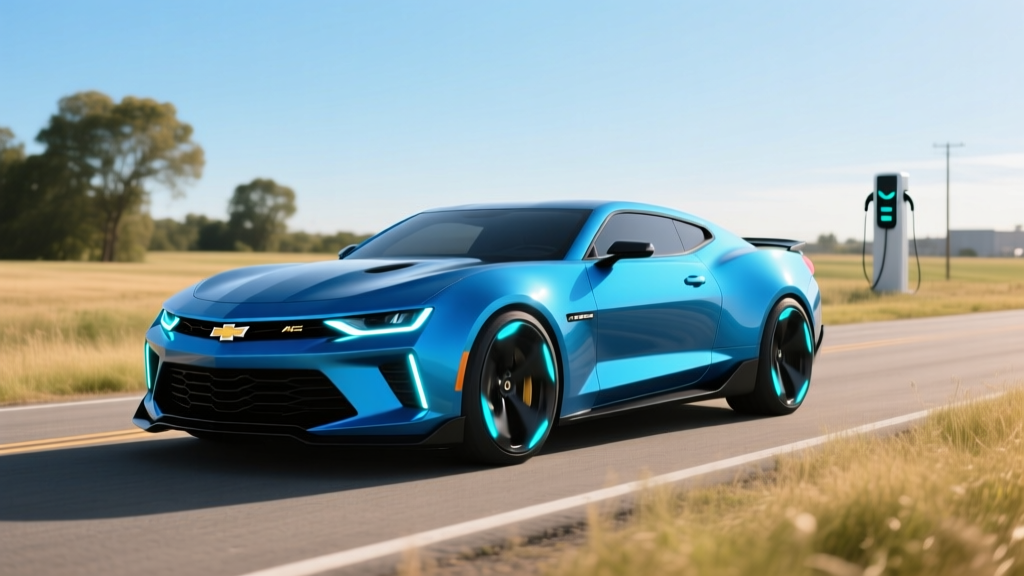
Search "camaro lightning mcqueen" and you'll find a swirl of fan renders, Disney crossover wishful thinking, and forum speculation about a Chevrolet electric muscle car. Let's cut through the noise with data and manufacturer sourcing: as of early 2026, there is no production vehicle officially named the "Camaro Lightning McQueen." However, the search reflects a genuine market question — will Chevrolet build an electric Camaro successor on the Ultium platform, and what would it look like?
Chevrolet discontinued the sixth-generation Camaro after the 2024 model year. GM has confirmed that an electric muscle car is in development on the Ultium (now branded BTX) architecture, and industry reporting points to a 2027-2028 reveal. This profile synthesizes what's confirmed about GM's Ultium performance platform, applies it to the expected electric Camaro successor, and clarifies what's speculation versus sourced fact.
Projected Platform Specs: Ultium Performance Architecture
GM's Ultium platform underpins the GMC Hummer EV, Cadillac Lyriq, Chevrolet Blazer EV, and Silverado EV. The performance variant — expected for a Camaro successor — uses a dual-motor AWD layout with a low-slung battery pack optimized for handling rather than truck-style payload. Here's what the platform delivers in its highest-output configuration, benchmarked against the Blazer EV SS and Hummer EV:
| Specification | Projected (Camaro EV) | Benchmark: Blazer EV SS |
|---|---|---|
| Battery Capacity | ~100 kWh usable (NMC) | 102 kWh (NMC) |
| Horsepower | 550-655 hp (dual-motor) | 557 hp |
| 0-60 mph | ~3.2-3.8 sec (est.) | 3.8 sec |
| Drivetrain | AWD (dual-motor) | AWD (dual-motor) |
| EPA Range (est.) | 280-320 mi | 284 mi |
| Max DC Fast Charge | ~190-200 kW | 190 kW |
| 10-80% DC Charge | ~30-34 min (est.) | ~34 min |
| Level 2 Home Charging | 11.5 kW / ~31 mi/hr | 11.5 kW / ~31 mi/hr |
Battery chemistry note: GM's Ultium platform uses NMC (nickel manganese cobalt) pouch cells supplied primarily by LG Energy Solution. NMC offers higher energy density than LFP, which matters in a low-roof coupe where packaging space is constrained. The trade-off is that NMC degrades slightly faster than LFP over thousands of cycles and requires more careful thermal management — GM addresses this with active liquid cooling and a buffer that limits usable capacity below the gross cell rating.
Range Reality: EPA Sticker vs. Real-World Expectations
- EPA Estimated: ~280-320 miles (projected, based on Blazer EV SS and aerodynamic coupe profile)
- Real-World Highway (70-80 mph): Expect ~230-265 miles — EVs lose 15-20% at sustained highway speeds due to aero drag, and a wide, aggressive coupe stance increases frontal area
- Cold Weather (below 32°F): Reduce EPA figure by 25-35% without preconditioning; ~20% loss with battery preconditioning active. A 300-mile EPA rating becomes ~195-225 miles in January in Chicago
- Track/Spirited Driving: Aggressive acceleration and regen-limited braking can cut effective range to 120-150 miles per charge
The Camaro's historic identity as a grand-touring and track coupe creates a real tension with EV range. A lower, wider body increases aerodynamic drag compared to a tall crossover like the Equinox EV (which achieves 319 miles on a similar battery). Buyers expecting 350+ miles should look to the Silverado EV or a future dedicated GT platform — this car will prioritize handling and acceleration over range records.
Charging Speed: What the Ultium Platform Actually Delivers
GM's Ultium vehicles currently peak at 190-200 kW on DC fast chargers, which is competitive with the Ford Mustang Mach-E (150 kW) but trails the Hyundai Ioniq 5 (240 kW) and Tesla Model 3 (250 kW). The critical metric is the 10-80% charge time, which determines real road-trip stops:
| Charging Level | Power / Rate | Miles Added per Hour | Use Case |
|---|---|---|---|
| Level 1 (120V household) | 1.4 kW | ~3-4 mi/hr | Emergency top-up only |
| Level 2 (240V, 48A) | 11.5 kW | ~31 mi/hr | Overnight home charging (full charge in ~9-10 hrs) |
| DC Fast Charge (peak) | 190-200 kW | ~500-600 mi/hr (at peak) | 10-80% in ~30-34 min; tapers sharply above 80% |
Charge curve reality check: Ultium vehicles sustain peak kW only between roughly 10-40% State of Charge. Above 60%, the rate drops to ~100 kW, and above 80% it falls to ~50 kW or lower. This is normal lithium-ion behavior to protect cell longevity, but it means a "10-90%" charge takes closer to 50 minutes, not 34. Plan road trips around 10-80% stops for efficiency.
GM uses the CCS1 connector on current Ultium vehicles, but the company has announced a transition to NACS (Tesla-style) beginning with 2025 model-year vehicles. A 2027-2028 Camaro EV would almost certainly ship with a native NACS port and have full access to Tesla Supercharger stations (17,000+ in North America) without an adapter — a major practical advantage over current CCS-only GM models.
Performance: Electric Muscle Car Credentials
The last Camaro ZL1 produced 650 hp from a supercharged 6.2L V8 and ran 0-60 in 3.5 seconds. An electric successor on the Ultium performance platform should match or exceed this, based on what GM has demonstrated:
- Blazer EV SS: 557 hp, 0-60 in 3.8 seconds — this is the current performance ceiling for Ultium crossovers
- GMC Hummer EV: 1,000 hp (tri-motor), 0-60 in ~3.0 seconds — proves the platform's upper output capability
- Cadillac Celestiq (hand-built): 600 hp, 0-60 in 3.8 seconds — demonstrates Ultium in a low-slung luxury application
A dual-motor Camaro EV with a lowered center of gravity, rear-biased torque distribution (GM's performance AWD system can send up to 100% of torque to the rear axle), and a curb weight likely around 4,800-5,200 lbs should deliver 0-60 in the 3.2-3.8 second range. The instant torque delivery of electric motors makes the 0-30 mph pull feel even more violent than the numbers suggest — something V8 Camaro owners will recognize as familiar.
Weight is the engineering challenge. The last Camaro SS weighed ~3,800 lbs. A 5,000-lb electric coupe will feel different in transitions and braking, even with a low center of gravity. Expect GM to emphasize straight-line acceleration and grand-touring composure over autocross agility — at least in the first generation.
Pricing, Trims, and Federal Tax Credit Eligibility
GM has not announced pricing for the electric Camaro successor. Based on current Ultium positioning and the last Camaro's price ladder, here's a projected structure:
| Projected Trim | Est. MSRP | §30D Credit Eligibility | Effective Price (if eligible) |
|---|---|---|---|
| 2LT (base EV) | $52,000-$56,000 | Likely eligible (under $55K sedan cap TBD by body style classification) | ~$44,500-$48,500 |
| SS (performance) | $62,000-$68,000 | Eligible if classified as SUV/truck (under $80K cap); at risk if sedan ($55K cap) | ~$54,500-$60,500 |
| ZL1 / high-perf variant | $75,000-$85,000 | Likely exceeds MSRP cap if classified as sedan | Full MSRP |
- Credit amount: Up to $7,500 ($3,750 for battery components + $3,750 for critical minerals sourcing)
- MSRP caps: $55,000 for sedans; $80,000 for SUVs, vans, and pickup trucks — body style classification of a coupe is not yet defined for this vehicle
- Buyer income caps: AGI ≤ $150,000 (single), $225,000 (head of household), $300,000 (joint)
- Battery sourcing: Must meet escalating domestic-content and critical-minerals thresholds per the Inflation Reduction Act — GM's Ultium cells are US-assembled (Lansing, MI), which helps component sourcing but critical minerals remain a variable
- Point-of-sale transfer: Eligible buyers can transfer the credit to the dealer at purchase, reducing the out-of-pocket price immediately
Verify current eligibility at irs.gov/credits-for-new-clean-vehicles. Rules change annually — consult a tax professional before purchase.
Interior, Cargo, and Daily Usability
The sixth-generation Camaro was notoriously impractical: 7.8 cu ft of trunk space, poor outward visibility, and a rear seat suited only for small children. An EV platform offers structural advantages here — no transmission tunnel, a flat floor, and the potential for a front trunk (frunk) where the engine bay used to be.
Projected interior dimensions (based on Ultium coupe packaging):
- Cargo (rear hatch/trunk): ~12-15 cu ft (improvement over ICE Camaro's 7.8 cu ft, enabled by hatchback or liftback design)
- Frunk: ~3-5 cu ft (enough for a charging cable kit and small bag)
- Rear legroom: ~30-32 inches (still tight — this is a 2+2 coupe, not a family sedan)
- Infotainment: Expected 17.7-inch diagonal touchscreen (as in Blazer EV/Equinox EV) with wireless Apple CarPlay/Android Auto and Google Built-In
- Driver assist: Super Cruise (GM's Level 2 hands-free highway driving system) expected on upper trims — enables hands-off driving on 750,000+ miles of mapped North American highways, but requires driver attention and is not autonomous
Battery Warranty and Long-Term Ownership
GM currently provides the following coverage on Ultium-based vehicles, which we expect to carry forward:
- Battery pack: 8 years / 100,000 miles (whichever comes first), warrantied against defects and capacity loss below 60% of original capacity
- Powertrain (motors, inverters, reduction gears): 5 years / 60,000 miles
- Bumper-to-bumper: 3 years / 36,000 miles
Degradation expectations for NMC Ultium cells: Based on early Bolt EV data and industry NMC benchmarks, expect ~10-15% capacity loss over 150,000 miles / 10 years under normal use. GM's liquid thermal management and conservative buffer (typically 5-8% of gross capacity is locked out to protect the cells) should keep degradation manageable. Avoid repeated DC fast-charging above 90% SoC and prolonged storage at 100% to maximize longevity.
Battery replacement cost (out of warranty): Current Ultium pack replacements run $15,000-$22,000 depending on capacity — a real financial risk in years 9-15 of ownership. Factor this into long-term TCO if you plan to keep the car past the warranty period.
Competitor Comparison: What Else Is In This Space?
| Vehicle | EPA Range | 0-60 mph | Base MSRP (2026) | Status |
|---|---|---|---|---|
| Ford Mustang Mach-E GT | 280 mi | 3.5 sec | $59,995 | On sale |
| Tesla Model 3 Performance | 315 mi | 2.9 sec | $54,990 | On sale |
| Hyundai Ioniq 5 N | 221 mi | 3.25 sec | $67,500 | On sale |
| Chevrolet Camaro EV (projected) | 280-320 mi | ~3.2-3.8 sec | ~$52,000-$68,000 | Announced / 2027-2028 |
- Choose the Mustang Mach-E GT if: You want an electric muscle-adjacent vehicle today with strong performance, Ford dealer support, and proven real-world range.
- Choose the Tesla Model 3 Performance if: Acceleration and Supercharger access are top priorities, and you don't need coupe styling.
- Choose the Ioniq 5 N if: Track capability and simulated gear-shift engagement matter more than range — it's the most driver-focused EV performance car currently sold.
- Wait for the Camaro EV if: American muscle-car heritage, coupe proportions, and GM's Super Cruise ecosystem are non-negotiable, and you can defer purchase 18-24 months.
Pros and Cons: Honest Assessment
✓ Projected Pros
- Instant torque and sub-4-second 0-60 in a coupe package
- Native NACS charging and Supercharger network access (expected)
- Low center of gravity from floor-mounted battery pack
- Super Cruise Level 2 hands-free highway driving
- Improved cargo and rear-seat space vs. ICE Camaro (EV platform benefits)
- US-assembled battery (supports §30D component sourcing)
✗ Projected Cons
- Not yet available — 18-24 month wait minimum
- Range likely below 320 miles; not a road-trip leader
- Weight (~5,000 lbs) may compromise handling vs. ICE Camaro's agility
- MSRP cap risk for §30D credit on higher trims (sedan classification = $55K cap)
- NMC chemistry degrades faster than LFP over very high cycle counts
- Rear seat will remain impractical for adults (coupe limitation)
Frequently Asked Questions
Is the Camaro Lightning McQueen a real car?
No. "Camaro Lightning McQueen" is a popular internet search combining the Chevrolet Camaro with the Disney/Pixar Cars character. There is no official Chevrolet or Disney collaboration producing a vehicle by this name. However, Chevrolet is developing an electric Camaro successor on the Ultium platform, expected to debut for the 2027 or 2028 model year.
When will the electric Camaro be available?
GM has not confirmed a specific date. Industry reporting and supplier sourcing suggest a reveal in late 2026 or 2027, with customer deliveries beginning in 2027 or 2028. No reservations are currently open.
Will the electric Camaro qualify for the $7,500 federal tax credit?
It depends on three factors: (1) MSRP — if classified as a sedan/coupe, the cap is $55,000, which would exclude SS and higher trims; if classified as an SUV/truck (unlikely for a coupe), the cap is $80,000. (2) Buyer AGI — must be within income limits. (3) Battery sourcing — GM's US-assembled Ultium cells help, but critical-mineral sourcing thresholds escalate yearly. Verify at irs.gov at time of purchase.
What is the projected real-world range of the electric Camaro?
Based on the Ultium platform and Blazer EV SS benchmarks, expect an EPA rating of 280-320 miles. Real-world highway driving at 70-80 mph will likely deliver 230-265 miles; cold-weather range drops to 195-225 miles without preconditioning.
How fast will it charge?
Projected peak DC fast-charge rate is 190-200 kW, delivering a 10-80% charge in approximately 30-34 minutes on a compatible 350 kW station. Home Level 2 charging at 11.5 kW adds about 31 miles per hour, fully recharging overnight in ~9-10 hours.
Should I wait for the Camaro EV or buy a Mustang Mach-E GT now?
If you need a vehicle within 6 months, the Mach-E GT (280 mi EPA, 3.5-sec 0-60, ~$60K) is the closest electric muscle-car equivalent currently on sale. If you can wait 18-24 months and want Chevrolet heritage with Super Cruise and native NACS charging, the Camaro EV is worth watching — but final specs and pricing remain unconfirmed.
Sources: GM Ultium platform technical disclosures, Chevrolet pressroom spec sheets, fueleconomy.gov, IRS §30D guidance. Projected specifications are estimates based on current platform data and may differ from final production vehicles.