The Short Answer on the Camaro EV SUV
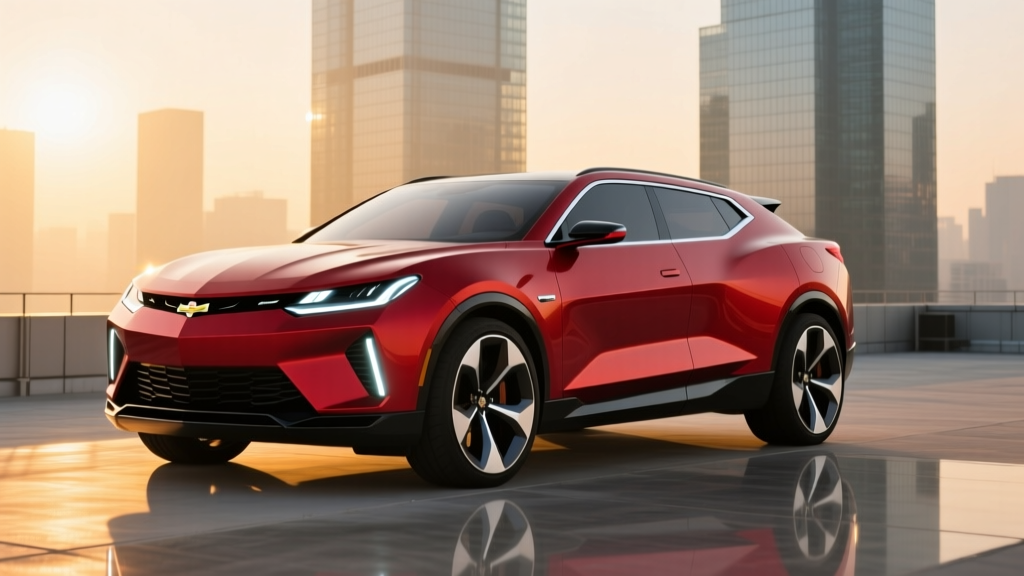
As of early 2026, General Motors has not officially confirmed a Camaro EV SUV for production. What exists is a combination of GM trademark filings, executive hints, and industry reporting suggesting that the Camaro nameplate could return as an electric crossover built on GM's Ultium (now branded BEV3) platform — potentially arriving for the 2027 or 2028 model year. No EPA range, battery capacity, pricing, or tax-credit eligibility has been published. Any numbers circulating online are speculative. This guide breaks down what's plausible based on GM's current EV lineup, what a Camaro EV SUV would need to compete, and whether you should wait or look at alternatives available today.
Why the Camaro EV SUV Rumors Won't Go Away
The sixth-generation Chevrolet Camaro ended production in January 2024 after a final farewell edition. GM executives, including then-president Mark Reuss, publicly stated the Camaro nameplate was not being retired permanently — it was being "paused." Since then, GM has filed multiple trademark applications with the USPTO related to Camaro branding in vehicle categories, and automotive media has reported internal discussions about an electric successor that trades the coupe's low-slung body for a more practical crossover form factor.
The logic is straightforward. The gas Camaro peaked at around 70,000 units annually in its early sixth-gen years but had declined significantly by 2023. Meanwhile, GM's electric crossover strategy — the Equinox EV, Blazer EV, and Silverado EV — has established a template for electrifying nameplates. A Camaro EV SUV would slot into the performance-oriented end of that lineup, competing with vehicles like the Ford Mustang Mach-E (itself a muscle-car-to-crossover transition) and the Hyundai Ioniq 5 N.
Platform and Powertrain: What GM's Ultium Lineup Tells Us
If a Camaro EV SUV materializes, it would almost certainly ride on GM's BEV3 architecture — the same platform underpinning the Blazer EV, Cadillac Lyriq, and upcoming next-generation Bolt. Here's what that platform currently delivers across GM's portfolio, which gives us a reasonable basis for estimating Camaro EV SUV specs:
| Model | Battery (kWh usable) | EPA Range | Peak DC Charge (kW) | 10–80% Time | 0–60 mph | Horsepower |
|---|---|---|---|---|---|---|
| Blazer EV RS AWD | 102 kWh (NMC) | 279 mi | 190 kW | ~30 min | 4.8 sec | 293 hp |
| Blazer EV SS AWD | 102 kWh (NMC) | 279 mi | 190 kW | ~30 min | ~3.4 sec (est.) | 557 hp |
| Cadillac Lyriq AWD | 102 kWh (NMC) | 307 mi | 190 kW | ~30 min | 4.6 sec | 500 hp |
| Equinox EV RS AWD | 85 kWh (NMC) | 285 mi | 150 kW | ~34 min | ~5.5 sec | 288 hp |
The Blazer EV SS is the closest proxy for what a performance Camaro EV SUV might look like: 557 hp, sub-3.5-second 0–60, and a ~102 kWh NMC battery. A Camaro-badged variant would likely share this powertrain but with tuned suspension, a lower ride height, and potentially a slightly smaller battery (perhaps 85–100 kWh) to keep weight down and preserve a sportier driving character.
Real-World Range Reality Check
If a Camaro EV SUV targets ~280–310 miles EPA (plausible based on the platform), expect real-world highway range of roughly 230–260 miles at 70–75 mph. In cold weather (below 32°F), plan for a 20–30% range reduction, bringing effective range to approximately 180–220 miles. These figures assume NMC chemistry, which is more cold-sensitive than LFP but offers higher energy density — the likely choice for a performance-oriented model.
Estimated Pricing and Federal Tax Credit Eligibility
Without official MSRP data, we can triangulate pricing from GM's current EV lineup. The Blazer EV RS AWD starts at approximately $54,300 for 2026; the SS trim pushes past $60,000. A Camaro EV SUV would likely slot between the Equinox EV and Blazer EV in price, with a performance SS variant at the top end.
| Trim (Estimated) | Est. Base MSRP | §30D Credit Potential | Est. Net Price |
|---|---|---|---|
| LT (base RWD) | $42,000–$46,000 | Up to $7,500 | $34,500–$38,500 |
| RS (AWD) | $50,000–$55,000 | Up to $7,500 | $42,500–$47,500 |
| SS (Performance AWD) | $58,000–$65,000 | Up to $7,500 | $50,500–$57,500 |
§30D Federal Tax Credit — 2026 Rules (IRS)
Before counting on the full $7,500 credit, verify all of the following per current IRS guidance:
- MSRP cap: SUVs, vans, and pickup trucks — $80,000 maximum. Sedans/coupes — $55,000. (If the Camaro EV SUV is classified as an SUV, the higher cap applies.)
- Buyer income limits: Modified AGI must not exceed $300,000 (joint filers), $225,000 (head of household), or $150,000 (single filers).
- Battery sourcing: Critical minerals and battery components must meet phased-in domestic/free-trade-agreement sourcing thresholds that tighten annually through 2029.
- Point-of-sale transfer: The credit can be applied at the dealership as a down-payment reduction, not just as a tax return credit.
- Final assembly: Vehicle must be assembled in North America.
Eligibility varies by buyer and model year. Consult a tax professional and check fueleconomy.gov for the latest qualifying vehicles.
Camaro EV SUV vs. Gas Camaro vs. Current Electric Rivals
For buyers who loved the gas Camaro, the transition to an electric crossover represents a fundamental shift in vehicle character. Here's how the numbers compare:
| Spec | 2024 Camaro SS (Gas) | Camaro EV SUV (Est.) | Mustang Mach-E GT | Hyundai Ioniq 5 N |
|---|---|---|---|---|
| 0–60 mph | 4.0 sec | ~3.4–4.5 sec | 3.5 sec | 3.4 sec |
| Horsepower | 455 hp | ~400–557 hp | 480 hp | 641 hp (N Grin Boost) |
| Range / Tank | ~340 mi (16 gal) | ~280–310 mi (EPA est.) | 262 mi (EPA) | 221 mi (EPA) |
| "Refuel" Time | ~5 min (gas station) | ~25–35 min (DC fast) | ~30 min (10–80%) | ~18 min (10–80%) |
| Fuel/Energy Cost per Mile | ~$0.18/mi (premium) | ~$0.04–$0.06/mi (home) | ~$0.04–$0.06/mi | ~$0.05/mi |
| Starting MSRP | $48,195 (2024) | $42,000–$65,000 (est.) | $59,995 | $67,500 |
| Cargo Space | 9.1 cu ft (trunk) | ~28–35 cu ft (est.) | 29.7 cu ft | 27.2 cu ft |
| Weight | ~3,900 lbs | ~4,800–5,200 lbs (est.) | 4,920 lbs | 4,861 lbs |
The trade-offs are clear. An electric Camaro crossover would offer dramatically more cargo space, lower per-mile energy costs, and potentially higher peak horsepower than the gas SS — but at a significant weight penalty (likely 1,000+ lbs more). That extra mass affects handling dynamics, tire wear, and braking distances. The gas Camaro's relatively light, rear-drive chassis was central to its character; an EV successor would feel fundamentally different regardless of tuning.
5-Year Ownership Cost Breakdown
Assuming a mid-range Camaro EV SUV RS at an estimated $52,000 MSRP (net ~$44,500 after the §30D credit), here's how ownership costs might compare to the gas equivalent over five years and 75,000 miles:
| Category | Camaro EV SUV RS (Est.) | Comparable Gas Performance SUV |
|---|---|---|
| Purchase Price (after credit) | $44,500 | $46,000 |
| Energy/Fuel Cost | $3,000–$4,500 | $10,500–$13,500 |
| Maintenance | $1,200–$1,800 | $3,500–$5,000 |
| Insurance (avg.) | $9,000–$11,000 | $7,500–$9,500 |
| Depreciation (est.) | $18,000–$22,000 | $16,000–$20,000 |
| Estimated 5-Year Total | $75,700–$83,800 | $83,500–$94,000 |
Key assumptions: home Level 2 charging at $0.13/kWh national average; gas at $3.80/gal premium; EV maintenance limited to tires, cabin air filter, brake fluid, and wiper blades (no oil changes, no transmission fluid). Insurance costs are typically 15–25% higher for EVs due to repair cost structures and battery replacement risk. Depreciation for EVs remains volatile — check IIHS safety ratings once available, as strong crash-test performance helps resale value.
Common Misconceptions About an Electric Camaro Crossover
| Myth | Fact |
|---|---|
| "It'll be just like driving a gas Camaro." | EVs deliver instant torque and one-pedal regen braking, but the ~1,000-lb weight increase fundamentally changes cornering feel, steering feedback, and tire wear. Expect a GT cruiser, not a track car. |
| "300 miles of range means I can drive 300 miles." | EPA range assumes mixed driving at moderate speeds. Sustained 75 mph highway driving typically yields 75–85% of EPA range. In freezing weather, expect 65–75%. |
| "Charging takes too long for road trips." | At a 190 kW DC fast charger, a 10–80% charge takes ~30 minutes — comparable to a meal stop. However, peak charge rate is not sustained; the curve tapers sharply above 80%, which is why EV road-trippers rarely charge past 80%. |
| "The $7,500 tax credit applies to everyone." | The §30D credit has income caps ($150K single / $300K joint), MSRP caps ($80K for SUVs), and battery-sourcing requirements that change annually. Many buyers qualify for less or none. |
| "I can charge anywhere with a regular outlet." | Level 1 (120V) charging adds roughly 3–5 miles of range per hour — adequate only for PHEVs or very low daily mileage. A Camaro EV SUV with a ~100 kWh battery would take 20+ hours on Level 1. Level 2 home installation ($800–$2,500) is practically essential. |
Should You Wait or Buy Now? A Decision Framework
The Wait-or-Buy Decision
Wait for the Camaro EV SUV if:
- You specifically want the Camaro brand identity and are willing to wait until 2027–2028 (at earliest) for an unconfirmed model.
- You currently own a gas Camaro and want a spiritual successor with EV running costs and crossover practicality.
- Your daily driving is under 80 miles round-trip with access to home Level 2 charging, making range a non-issue.
- You value GM's Super Cruise hands-on-wheel highway driving system, which will likely be available on a Camaro EV SUV.
Buy an available EV now if:
- You need a vehicle within the next 6–12 months — the Camaro EV SUV is not confirmed and has no announced sale date.
- You want proven real-world range and charging data before committing $45,000+.
- Performance crossovers like the Mustang Mach-E GT ($59,995, 262 mi EPA, 3.5-sec 0–60) or Hyundai Ioniq 5 N ($67,500, 221 mi EPA, 3.4-sec 0–60) already meet your needs.
- You want to lock in current §30D credit eligibility before battery-sourcing rules tighten further in 2027+.
Real-World Ownership Considerations for Any Performance EV Crossover
Whether you wait for a Camaro EV SUV or buy a Mach-E GT or Ioniq 5 N today, these ownership realities apply to any high-performance electric crossover:
Home charging is nearly mandatory. Public DC fast charging at $0.35–$0.50/kWh eliminates most of the per-mile cost advantage over gas. At home on Level 2 ($0.10–$0.16/kWh depending on your utility), a 100 kWh battery costs $10–$16 for a full charge — versus $60–$75 to fill a gas performance SUV's tank. But if you live in an apartment without charging access or park on the street, daily EV ownership becomes significantly harder.
Tire costs are real. Performance EVs burn through tires faster than gas cars due to instant torque and heavy weight. Budget $1,200–$2,000 for a set of four performance tires every 25,000–35,000 miles. EV-specific tires (like Michelin Pilot Sport EV) reduce rolling noise but cost a premium.
Cold weather changes everything. If you live north of the 37th parallel, expect meaningful range loss in winter. Battery preconditioning (available on most modern EVs) mitigates this by warming the pack before charging, but it doesn't fully restore cold-lost range. A heated garage helps enormously.
Insurance is pricier. EV insurance premiums run 15–25% higher than gas equivalents. Get quotes before purchasing — a Mach-E GT might cost $2,000+/year to insure depending on your state, age, and driving record.
Frequently Asked Questions
Is GM officially making a Camaro EV SUV?
No official confirmation exists as of early 2026. GM has hinted at the Camaro nameplate returning in an electrified form, and trademark filings suggest active exploration, but no production timeline, specs, or pricing have been announced.
What platform would a Camaro EV SUV use?
Almost certainly GM's BEV3 (formerly Ultium) architecture, shared with the Blazer EV, Cadillac Lyriq, and Equinox EV. This platform supports battery capacities from ~85 to ~102 kWh, rear-drive and AWD configurations, and DC fast charging up to 190 kW.
How much would a Camaro EV SUV cost?
Based on GM's current EV pricing, a reasonable estimate is $42,000–$65,000 depending on trim, with the §30D federal tax credit potentially reducing the net price by up to $7,500 for eligible buyers. Official pricing will not be known until GM formally announces the vehicle.
Would it qualify for the $7,500 federal tax credit?
Possibly, but it depends on three factors at the time of purchase: (1) the vehicle's MSRP falling under the $80,000 SUV cap or $55,000 sedan cap (classification matters), (2) the buyer's modified adjusted gross income being within IRS limits, and (3) the battery meeting critical-mineral and component-sourcing requirements in effect for that model year. Always verify on IRS.gov before relying on the credit.
What are the best alternatives available right now?
If you want a performance electric crossover today, the top options are the Ford Mustang Mach-E GT (480 hp, 262 mi EPA, ~$59,995), the Hyundai Ioniq 5 N (641 hp with boost, 221 mi EPA, ~$67,500), the Tesla Model Y Performance (456 hp, 285 mi EPA, ~$52,490), and the BMW iX M60 (610 hp, 296 mi EPA, ~$111,500). Each is available now with verified specs and real-world ownership data.
Will a Camaro EV SUV handle like the gas Camaro?
No. The gas Camaro weighed roughly 3,900 lbs with a low center of gravity and rear-drive chassis. An EV crossover version would likely weigh 4,800–5,200 lbs with AWD and a higher ride height. Instant electric torque provides thrilling straight-line acceleration, but the mass and ride height mean cornering dynamics will feel more like a Blazer EV SS than a traditional muscle car.