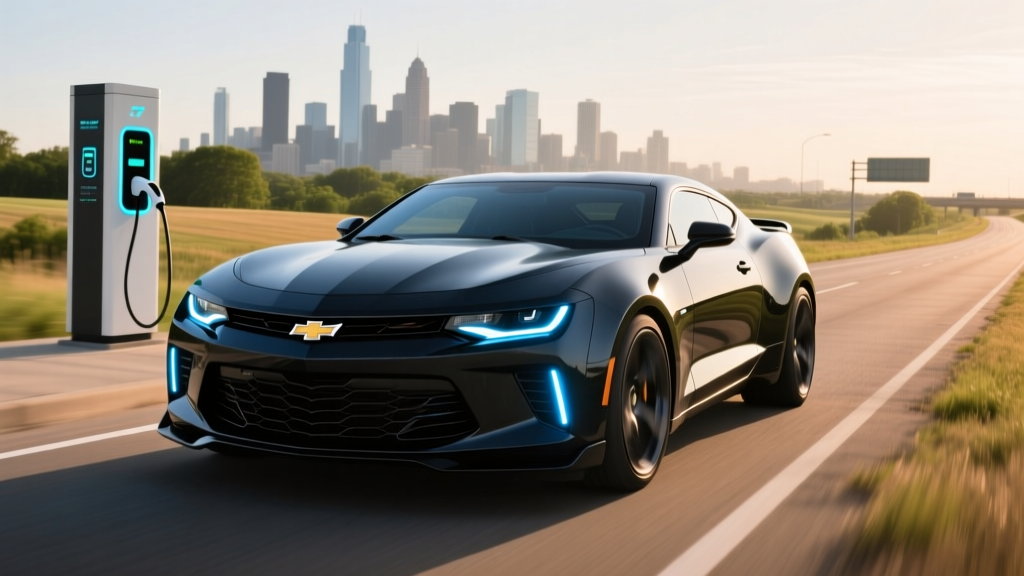
The short answer: As of early 2026, Chevrolet has not officially announced a Camaro electric. The sixth-generation Camaro ended production in January 2024, and GM has not confirmed a seventh-generation model—electric or otherwise. If an electric Camaro arrives, industry analysts expect it to share the Ultium platform with the Blazer EV and Silverado EV, targeting 300+ miles of EPA range, 600+ horsepower, and a starting MSRP in the $55,000–$65,000 range. Until GM makes a formal announcement, any specs circulating online are speculative. Buyers looking for an EV muscle car today should consider the Dodge Charger Daytona EV (announced), Ford Mustang Mach-E GT, or Tesla Model 3 Performance.
What Happened to the Camaro—and Could It Return Electric?
Chevrolet discontinued the sixth-generation Camaro after the 2024 model year, citing declining sales in a market shifting toward SUVs and crossovers. The Camaro SS and ZL1, with their 6.2L V8 and supercharged V8 respectively, were beloved by enthusiasts but sold roughly 30,000 units annually in their final years—a fraction of their peak.
GM's broader electrification strategy centers on the Ultium battery platform, which underpins the Blazer EV, Equinox EV, Silverado EV, and Cadillac Lyriq. This modular architecture supports vehicles from compact crossovers to heavy-duty trucks, with battery packs ranging from roughly 65 kWh to over 200 kWh and drivetrain configurations from single-motor FWD to tri-motor AWD.
If a Camaro electric materializes, it would almost certainly ride on a shortened Ultium-derived platform, likely sharing components with the Blazer EV SS. GM has registered trademarks and teased the possibility of electric performance models wearing historic nameplates, but nothing has been confirmed for the Camaro specifically.
Projected Specs: What an Electric Camaro Might Look Like
Based on Ultium platform capabilities and competitive positioning against the Dodge Charger Daytona EV and Mustang Mach-E GT, here is a reasonable projection of what a Camaro electric could offer—all figures are estimated and unofficial:
| Specification | Estimated Value |
|---|---|
| Platform | GM Ultium (BEV3 variant) |
| Battery Capacity | ~102 kWh usable (NMC chemistry) |
| EPA Range (est.) | 310–340 miles |
| Drivetrain | Dual-motor AWD |
| Horsepower | ~615 hp (SS variant) |
| 0–60 mph | ~3.2 seconds (est.) |
| Peak DC Fast Charge | ~190 kW |
| 10–80% DC Charge Time | ~28 minutes (est.) |
| Level 2 Charging (240V) | 11.5 kW (~37 mi/hr) |
| Base MSRP (est.) | $55,000–$65,000 |
| Battery Warranty | 8 years / 100,000 miles (GM standard) |
Real-world range reality check: An EPA estimate of 330 miles would likely translate to 260–280 miles on sustained highway driving at 75 mph, and potentially 220–240 miles in freezing temperatures. Performance-oriented EVs with aggressive tire compounds and lower efficiency (kWh/mile) tend to lose more range at speed than efficiency-focused sedans. A Camaro EV would prioritize acceleration over MPGe.
EV Muscle Car vs. Gas: The Numbers That Matter
For buyers weighing an electric performance car against the last-generation gas Camaro—or cross-shopping with current EV rivals—here is how the economics and performance compare:
| Metric | Camaro EV (Est.) | 2024 Camaro SS (1LE) | 2026 Mustang Mach-E GT | 2026 Dodge Charger Daytona R/T |
|---|---|---|---|---|
| Base MSRP | ~$60,000 | $48,595 | $59,995 | $59,595 |
| Horsepower | ~615 hp | 455 hp | 480 hp | 496 hp |
| 0–60 mph | ~3.2 sec | 4.0 sec | 3.5 sec | ~4.7 sec |
| EPA Range / MPG | ~330 mi / ~95 MPGe | 16/24 MPG (city/hwy) | 280 mi / 91 MPGe | ~317 mi / ~92 MPGe |
| Annual Fuel/Energy Cost | ~$650 (electricity) | ~$3,100 (premium gas) | ~$700 | ~$680 |
| Federal Tax Credit (§30D) | Eligibility TBD | $0 | Up to $7,500* | Up to $7,500* |
| Annual Maintenance | ~$300 | ~$900 | ~$350 | ~$350 |
*§30D federal tax credit eligibility depends on MSRP caps (under $55,000 for sedans, under $80,000 for SUVs/trucks), buyer income limits ($150K single / $300K joint AGI), battery sourcing requirements, and point-of-sale transfer availability. Always verify current rules at IRS.gov or consult a tax professional.
The Real Cost of Owning an Electric Muscle Car
Performance EVs carry a distinct ownership profile. Here is a realistic 5-year cost breakdown for a projected $60,000 Camaro electric compared to the outgoing $48,600 Camaro SS:
| Cost Category | Camaro EV (Est.) | 2024 Camaro SS |
|---|---|---|
| Purchase Price (MSRP) | $60,000 | $48,600 |
| Federal Tax Credit | –$0 to $7,500* | $0 |
| State/Local Incentives | Varies by state | $0 |
| Home Level 2 Charger Install | $800–$2,000 | $0 |
| 5-Year Energy/Fuel | $3,250 (at $0.13/kWh avg) | $15,500 (premium gas) |
| 5-Year Maintenance | $1,500 | $4,500 |
| 5-Year Insurance (est.) | $12,000 | $9,500 |
| Depreciation (5-yr, est.) | ~$30,000 | ~$22,000 |
| Estimated 5-Year Total | ~$76,750–$78,750 | ~$100,100 |
Key takeaways: The EV saves significantly on fuel and maintenance over five years (~$15,000 combined), but carries higher insurance premiums (performance EVs are costlier to repair after collisions) and potentially steeper depreciation, though EV depreciation curves have been stabilizing as the market matures. Home charging installation is a one-time cost that pays for itself within the first year of ownership versus gas.
What First-Time EV Buyers Need to Know
If you have never owned an EV and are drawn to the idea of an electric muscle car, these practical considerations will shape your experience more than horsepower numbers:
Home Charging Access Is Non-Negotiable for Most Owners
Over 80% of EV charging happens at home. Without access to a garage or driveway where you can install a Level 2 charger (240V, 32–48 amps, 7.7–11.5 kW), daily EV ownership becomes significantly less convenient. Public DC fast charging is viable for road trips but costs 2–4× more per kWh than home electricity and adds time to your routine. If you live in an apartment without charging infrastructure, a performance EV may not be practical as your only vehicle.
Cold Weather Reduces Range by 20–40%
In sustained sub-freezing temperatures, expect a 330-mile EPA range to drop to 200–260 miles. Battery chemistry slows in cold, and cabin heating draws significant energy. Vehicles with heat pumps (standard on most modern Ultium-based GM EVs) mitigate this loss somewhat, but physics is physics. If you live in Minnesota or Maine and need full range year-round, plan for a larger battery or accept the seasonal reduction.
Charging Speed Is About the Curve, Not the Peak
A "190 kW peak charge rate" does not mean the car charges at 190 kW the entire session. Lithium-ion batteries accept charge fastest between 10–40% State of Charge (SoC) and taper significantly above 80%. A typical session might peak at 190 kW for 5–8 minutes, then drop to 90 kW, then 50 kW above 80%. The 10–80% time (~28 minutes projected) is the more useful metric than peak kW alone.
Tax Credits Are Not Guaranteed
The §30D federal tax credit has strict eligibility requirements that change periodically. Battery component and critical mineral sourcing rules have disqualified several previously eligible models. The credit can now be transferred to the dealer at point of sale (reducing your purchase price directly), but only if the vehicle qualifies and your income falls within caps. Always verify eligibility before signing a purchase agreement.
Common Myths About Electric Muscle Cars—Debunked
| Myth | Fact |
|---|---|
| "EVs can't match muscle car acceleration" | Electric motors deliver instant torque from 0 RPM. The projected Camaro EV (~3.2 sec 0–60) would outpace the gas Camaro SS (4.0 sec) and rival the ZL1 (3.5 sec). |
| "The battery will need replacing in 5 years" | Modern NMC and LFP batteries are designed for 1,500–3,000+ charge cycles. GM warranties Ultium packs for 8 years/100,000 miles with a capacity retention threshold (typically 70%). Real-world degradation data from Tesla and Hyundai shows most packs retain 85–90% capacity at 100,000 miles. |
| "You'll be stranded without charging stations" | The U.S. now has over 70,000 public charging ports, including 30,000+ DC fast chargers (AFDC). However, rural "charging deserts" still exist in parts of the Mountain West and Great Plains. Plan road trips with apps like PlugShare or A Better Routeplanner. |
| "EVs are worse for the environment because of battery mining" | Lifecycle analyses from Argonne National Laboratory and ICCT consistently show EVs produce 50–70% fewer lifetime emissions than comparable gas cars, even accounting for battery manufacturing and grid electricity mix. The grid is also getting cleaner each year. |
| "Electric muscle cars have no soul or sound" | Subjective, but automakers are addressing this. Dodge's Charger Daytona uses a "Fratzonic" exhaust system that generates synthetic V8-like sound through a chambered speaker system. GM could adopt similar technology. Whether that constitutes "soul" is a personal call. |
Decision Framework: Should You Wait, or Buy Now?
Choose to wait for a Camaro electric if:
- You specifically want the Camaro badge, styling, and heritage
- You can comfortably wait 2–3+ years with no guaranteed announcement timeline
- Your current vehicle meets your needs in the interim
- You want to see how GM positions pricing against the Charger Daytona EV and Mach-E GT
Choose to buy a current EV performance car now if:
- You want an electric muscle car experience today with real specs and warranties
- The Dodge Charger Daytona EV (590 hp, ~317 mi range, ~$59,595) aligns with your needs
- The Ford Mustang Mach-E GT (480 hp, 280 mi range, $59,995) fits your lifestyle as a performance crossover
- The Tesla Model 3 Performance (510 hp, 315 mi range, $54,990) appeals to you as a sedan alternative
- You can take advantage of current §30D tax credits before rules potentially change
Choose to stick with a gas performance car if:
- You lack reliable home charging access
- You regularly drive in areas with sparse public charging infrastructure
- You track your car frequently (EV batteries add weight that affects tire and brake wear on track, and sustained high-speed driving depletes charge rapidly)
- The sound, feel, and manual transmission engagement of a gas muscle car are central to your enjoyment
Frequently Asked Questions
Has Chevrolet officially confirmed a Camaro electric?
No. As of early 2026, GM has not announced a seventh-generation Camaro in any form. The sixth-generation Camaro ended production in January 2024. GM executives have hinted that iconic nameplates could return on the Ultium platform, but no Camaro-specific commitment has been made.
When could a Camaro electric realistically arrive?
If GM greenlights the project, a 2028 or 2029 model year debut is the earliest plausible timeline, given typical 3–4 year development cycles and the current prioritization of Ultium-based SUVs and trucks. This is speculative—there is no confirmed timeline.
Would an electric Camaro qualify for the $7,500 federal tax credit?
It depends on the final MSRP, battery sourcing, and your income. Under current §30D rules, sedans must have an MSRP under $55,000 to qualify, while SUVs/trucks/vans can be up to $80,000. If GM classifies a Camaro EV as a sedan (likely), the MSRP cap could be a challenge for higher trims. Battery critical mineral and component sourcing requirements also apply. Check IRS.gov for current eligibility.
How would a Camaro EV compare to the Dodge Charger Daytona EV?
The Charger Daytona R/T produces 496 hp with an estimated 317 miles of range at ~$59,595. The Scat Pack trim jumps to 670 hp at ~$73,595. A Camaro EV would likely target the 550–650 hp range and undercut the Scat Pack on price while matching or exceeding the R/T. Direct comparison awaits official specs.
Is an electric muscle car practical as a daily driver?
Yes, with caveats. With 300+ miles of range and home Level 2 charging, daily commuting is effortless—you wake up to a "full tank" every morning. The limitations emerge on long road trips (30–45 minute charging stops every 200–250 miles at highway speeds) and in extreme cold (20–40% range reduction). For most daily driving patterns under 100 miles round-trip, a performance EV is highly practical.
What about insurance costs for an electric muscle car?
Performance EVs typically cost 15–30% more to insure than their gas equivalents due to higher repair costs (battery pack damage, specialized body panels, advanced sensor arrays). Expect annual premiums of $2,200–$2,800 for a $60,000 electric muscle car, depending on your driving record, location, and coverage levels. Always get quotes before purchasing.