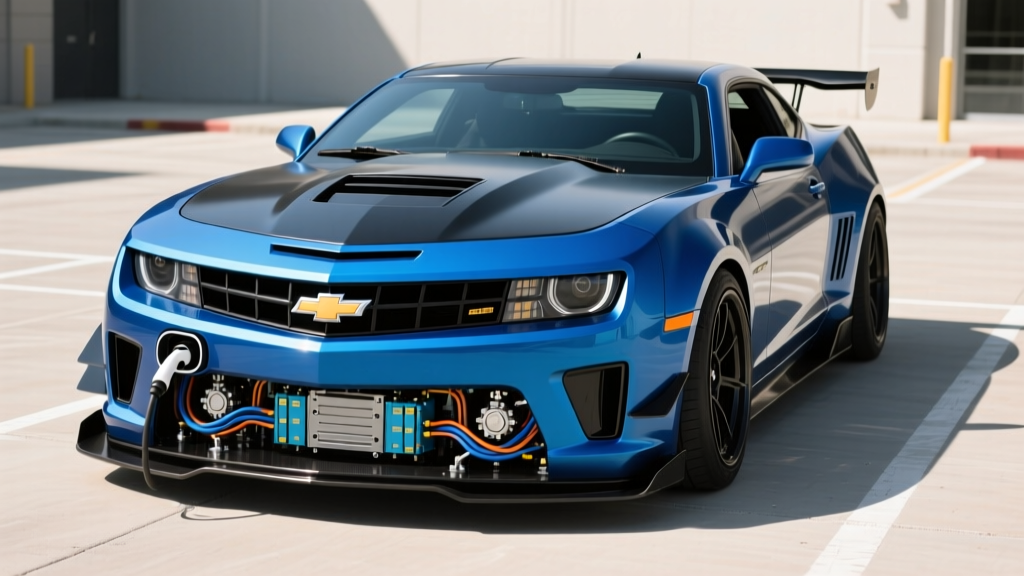
Why the 2012 Camaro Bolt Pattern Matters for EV Builders
The fifth-generation Chevrolet Camaro (2010–2015) remains one of the most popular platforms for custom builds, restomods, and increasingly, electric-vehicle conversions. Whether you are fitting aftermarket wheels on a stock V6, planning a full EV drivetrain swap using a salvaged Tesla or Chevrolet Bolt EUV powertrain, or simply replacing a bent rim, the camaro 2012 bolt pattern is the foundational measurement that determines what wheels physically mount to your hubs.
For EV conversion shops and DIY builders in 2026, wheel compatibility takes on extra importance. Electric drivetrains add weight, shift weight distribution, and deliver instant torque — all of which place different demands on wheels, tires, and suspension geometry. Understanding the 2012 Camaro's hub specifications is step one of any electrified build.
2012 Camaro Bolt Pattern: The Exact Specs
The 2012 Chevrolet Camaro uses a 5-lug, 120 mm bolt circle — commonly written as 5×120 (or 5×4.72 inches in imperial measurement). This is shared across all 2012 trims, including the LS, LT, and SS, regardless of whether the car left the factory with 18-inch, 20-inch, or 21-inch wheels.
| Specification | Value |
|---|---|
| Bolt Pattern | 5 × 120 mm (5 × 4.72 in) |
| Center Bore (Hub Bore) | 66.9 mm |
| Thread Size (Lug Nuts) | M14 × 1.5 |
| Lug Nut Torque Spec | 140 lb-ft (190 Nm) |
| Factory Wheel Sizes | 18" (LS/LT), 20" (SS), 21" (optional) |
| Typical Offset Range | +35 to +45 mm (front), +38 to +48 mm (rear) |
The 66.9 mm center bore is critical: any aftermarket or EV-conversion wheel must either match this bore exactly (hub-centric fitment) or use hub-centric rings to avoid vibration. A lug-centric wheel that relies only on the lug nuts for centering will develop steering-wheel shimmy under the high-torque, smooth-delivery characteristics of an electric motor.
Vehicles Sharing the 5×120 Bolt Pattern
One advantage of the 5×120 pattern is its prevalence across GM and several European platforms. If you are sourcing wheels from a donor EV or parts car for a Camaro EV conversion, these vehicles share the same bolt circle:
- BMW 3-Series, 5-Series, X3, X5 (most model years through 2024) — a common source of lightweight flow-formed wheels
- Chevrolet Camaro (all 5th-gen 2010–2015 and 6th-gen 2016–2024)
- Cadillac CT4, CT5 (2020+)
- Pontiac G8 / Chevrolet SS (2008–2017)
- Holden Commodore (VE/VF, Australian-market)
Note that while the bolt pattern matches, offset, width, and center bore must also align. BMW wheels, for example, use a 72.6 mm center bore and will require a 72.6-to-66.9 mm hub-centric ring to fit a Camaro hub.
EV Conversion Considerations: Weight, Torque, and Wheel Load
Swapping an internal-combustion drivetrain for a battery-electric one fundamentally changes what your wheels endure. Here is why the 2012 Camaro's bolt pattern and hub specs become even more important in an EV build:
Added Curb Weight
A stock 2012 Camaro SS weighs approximately 3,900 lbs. A typical EV conversion — using, for example, a salvaged Tesla Large Drive Unit and a 60–80 kWh battery pack — adds 500 to 900 lbs depending on battery placement and enclosure fabrication. The resulting 4,400–4,800 lb curb weight increases the load on every lug stud, wheel bearing, and wheel flange.
Builders should select wheels with a load rating of at least 1,650 lbs per corner (6,600 lbs total) to provide adequate margin. Many lightweight track-oriented wheels rated for 1,400 lbs per corner are insufficient for a converted EV Camaro.
Instant Torque Delivery
Electric motors deliver peak torque from 0 RPM. A Tesla LDU can produce over 400 lb-ft at the output shaft, transmitted to the rear wheels without the torque-converter cushioning of an automatic transmission. This places higher shear stress on the M14 × 1.5 lug studs at launch. Always torque lug nuts to the factory 140 lb-ft spec and re-torque after the first 50 miles on new wheels.
Regenerative Braking Loads
Aggressive regen braking — common in EV conversions using controllers like the Cascadia Motion or AEM EV — applies repeated reverse-torque pulses through the wheel hubs. Hub-centric wheel fitment becomes even more important here, as lug-centric wheels can shift microscopically under regen load cycles, leading to stud fatigue.
Wheel and Tire Sizing for an EV-Swapped Camaro
When selecting wheels for a 2012 Camaro EV conversion, balance three priorities: load capacity, rolling resistance (which directly affects range), and clearance for any modified suspension or brake components.
| Position | Wheel Size | Offset | Tire Size | Notes |
|---|---|---|---|---|
| Front | 19 × 8.5" | +38 mm | 245/40R19 | Low rolling-resistance compound recommended |
| Rear | 19 × 10" | +42 mm | 275/35R19 | Wider contact patch for EV torque |
For maximum range, choose a low-rolling-resistance tire such as the Michelin Energy Saver or Continental EcoContact 6. Expect a 5–8% range improvement over standard performance summer tires, which translates to roughly 10–15 additional miles from a 60 kWh pack.
Sourcing EV-Compatible Wheels: New vs. Donor Vehicles
In 2026, the aftermarket has caught up to the EV conversion trend. Several manufacturers now offer wheels explicitly rated for the higher static and dynamic loads of electric vehicles:
- TSW Bathurst (EV-rated) — flow-formed, 5×120 available, 1,760 lb load rating
- HRE FT05 — forged, lightweight, configurable bolt pattern and bore
- Konig Dekagram (EV spec) — 5×120 with 66.9 mm bore, designed for heavier vehicles
Alternatively, salvage yards and EV dismantlers are a source for OEM wheels from BMW EVs (i4, iX) that share the 5×120 pattern. These wheels are engineered for heavy battery-electric vehicles and often carry higher load ratings than standard Camaro SS wheels.
Frequently Asked Questions
Is the 2012 Camaro bolt pattern the same as the 2010 and 2015 models?
Yes. All fifth-generation Camaros (2010–2015) share the 5×120 mm bolt pattern, 66.9 mm center bore, and M14 × 1.5 lug studs. The sixth-generation Camaro (2016–2024) also uses 5×120, though offset ranges differ slightly.
Can I use BMW wheels on my 2012 Camaro EV conversion?
BMW wheels share the 5×120 bolt pattern, but most have a 72.6 mm center bore versus the Camaro's 66.9 mm. You will need hub-centric adapter rings (72.6 mm OD × 66.9 mm ID) and should verify offset to avoid fender rubbing or suspension interference.
What lug nut torque should I use on an EV-converted Camaro?
Stick with the factory specification of 140 lb-ft (190 Nm) for M14 × 1.5 studs. The added weight and instant torque of an EV drivetrain make correct torque even more critical — use a calibrated torque wrench, never an impact gun alone.
Do I need different wheels if my EV conversion adds 800 lbs?
Yes, you should verify that your chosen wheels carry a load rating sufficient for the new gross vehicle weight. Divide your converted vehicle's curb weight by four and add a 15–20% safety margin. For a 4,800 lb EV Camaro, each wheel should be rated for at least 1,380 lbs minimum; 1,600+ lbs is preferred.
Where can I find the official bolt pattern specification?
Chevrolet publishes wheel specifications in the owner's manual and service documentation. For aftermarket fitment verification, resources like Tire Rack's fitment guide and the NHTSA vehicle database provide factory wheel and tire data by model year.