The Quick Answer: What's Behind the California EV Sticker?
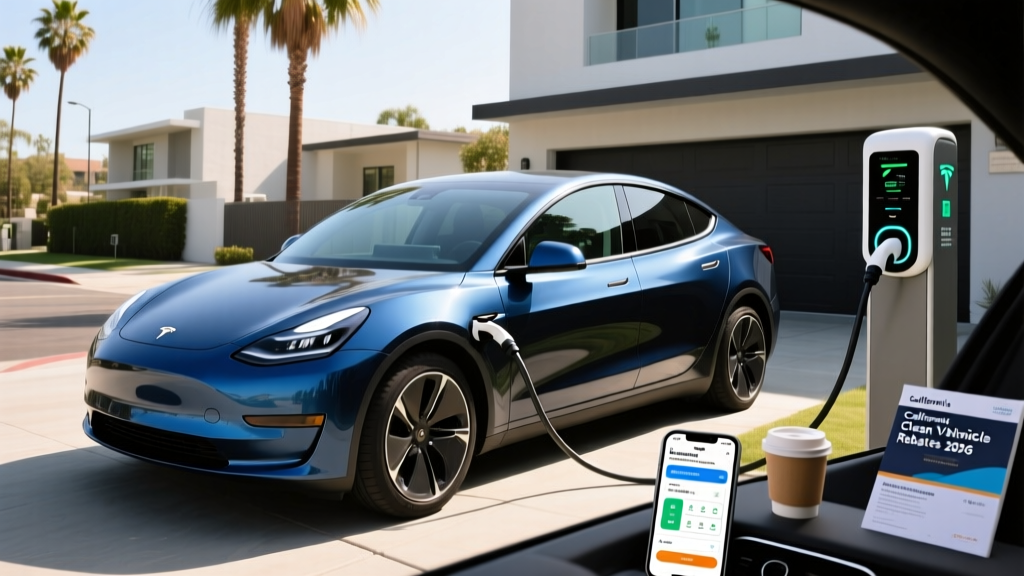
A new EV in California typically carries a base MSRP between $30,000 and $65,000 before incentives in 2026. After applying the federal §30D tax credit (up to $7,500 if you, the vehicle, and your income qualify), California's CVRP rebate (up to $7,000 for income-eligible buyers), and utility incentives, effective purchase prices can drop by $5,000 to $14,500. However, the "sticker" only tells half the story: EV owners in California save an average of $1,200–$1,800 per year on fuel and maintenance compared to a comparable gas car, but may pay 10–25% more in insurance premiums and face home charger installation costs of $500–$2,500.
Breaking Down the California EV Sticker: What You'll Actually Pay
The window sticker on a new EV tells you the Manufacturer's Suggested Retail Price (MSRP), but the number you ultimately pay depends on a stack of incentives layered on top of each other — and several costs that the sticker doesn't show. Here's what a realistic 2026 purchase looks like for three popular models sold in California:
| Cost Factor | Tesla Model 3 RWD | Hyundai Ioniq 5 SE | Chevrolet Equinox EV LT |
|---|---|---|---|
| Base MSRP | $38,990 | $42,400 | $33,600 |
| Destination fee | $1,390 | $1,495 | $1,395 |
| Federal §30D credit (if eligible) | −$7,500 | −$7,500 | −$7,500 |
| CA CVRP rebate (income-eligible) | −$2,000 | −$2,000 | −$7,000 |
| Utility rebate (e.g., PG&E/SCE) | −$500 | −$500 | −$500 |
| Home Level 2 charger + install | +$1,200 | +$1,200 | +$1,200 |
| Effective first-year cost | $31,580 | $35,095 | $21,195 |
Several important caveats apply. The IRS §30D credit requires that your modified adjusted gross income falls below $150,000 (single) or $300,000 (joint), that the vehicle MSRP is under $55,000 for cars ($80,000 for SUVs/pickups), and that the battery meets critical-mineral and component-sourcing thresholds that tighten each year. As of 2026, the sourcing requirements are the strictest they've been, and not every trim of every model qualifies. Always verify eligibility at the point of sale. The CVRP rebate amount depends on your household income relative to the state median — lower-income buyers get the maximum; higher-income buyers may get nothing.
EV vs. Gas in California: The Numbers That Matter
California's gasoline prices consistently run among the highest in the nation, averaging roughly $4.60–$5.20 per gallon in 2026. That makes the fuel-cost gap wider here than almost anywhere else in the U.S. Let's compare a typical EV against a comparable gas sedan over a year of California driving.
| Metric | EV (e.g., Tesla Model 3) | Gas Sedan (e.g., Toyota Camry) |
|---|---|---|
| Efficiency | 26 kWh/100 mi (132 MPGe) | 32 MPG combined |
| Energy/fuel cost | $0.16/kWh (CA avg residential) | $4.90/gallon |
| Annual energy cost | $499 | $1,838 |
| Annual maintenance | ~$300 (no oil, fewer brakes) | ~$650 (oil, filters, brake wear) |
| Combined annual operating cost | ~$799 | ~$2,488 |
| Annual savings with EV | ~$1,689/year | |
Over a 5-year ownership period, those operating savings compound to roughly $8,400–$9,500 — enough to offset a meaningful chunk of the EV's higher sticker price. But this math assumes you're charging primarily at home on residential rates. If you rely exclusively on DC fast charging at public stations (where California rates average $0.35–$0.55/kWh), your annual "fuel" cost jumps to $1,050–$1,650, narrowing the savings substantially.
One factor that works against EVs in California: insurance. Average EV insurance premiums in the state run 10–25% higher than comparable gas vehicles, driven by higher repair costs and battery replacement risk. Budget an extra $200–$500 per year for insurance compared to a gas equivalent.
Real-World Ownership: What the Sticker Doesn't Tell You
The MSRP window sticker discloses range, efficiency, and price. It doesn't tell you about the daily realities that determine whether an EV works for your life in California.
Home Charging: The Make-or-Break Factor
California leads the nation in home solar adoption and EV-ready housing, but roughly 30–35% of California residents live in apartments or condos without dedicated parking and charging access. If you can install a Level 2 (240V) home charger, you'll wake up every morning with a "full tank" at the cheapest possible electricity rate. A typical Level 2 installation in California costs:
- Charger hardware: $350–$700 (e.g., ChargePoint Home Flex, Tesla Wall Connector)
- Electrician labor + permit: $500–$1,800 (varies by panel proximity and local jurisdiction)
- Electrical panel upgrade (if needed): $1,500–$3,500 (common in older California homes with 100-amp service)
If you can't charge at home, California's public charging infrastructure is the most extensive in the country — over 110,000 public charging ports as of 2026, per AFDC. But relying on public charging means higher costs, longer "refueling" times, and occasional broken-station frustration. Plan for this honestly before buying.
California Climate: An EV Advantage
Unlike buyers in Minnesota or Maine, Californians benefit from some of the most EV-friendly weather in the country. Cold-weather range loss — which can cut EPA range by 20–30% in freezing temperatures — is minimal across most of the state. A Tesla Model 3 with an EPA-estimated 341 miles of range will realistically deliver 290–310 miles in mixed California highway driving during summer, and nearly the full EPA figure in moderate coastal climates. Inland areas like Bakersfield or Sacramento may see a 5–10% summer range dip due to heavy A/C use, but this is far less severe than northern-state winter losses.
Battery Longevity and Warranty
California's zero-emission vehicle (ZEV) regulations mean that EVs sold here carry enhanced battery warranties. Under California Air Resources Board (CARB) rules, the traction battery must be warranted for 10 years / 150,000 miles (versus the federal minimum of 8 years / 80,000 miles). This covers capacity loss below a stated threshold — typically 70% of original capacity. For buyers concerned about long-term battery health, this is a significant protection that doesn't appear on the window sticker.
Five-Year Total Cost of Ownership: EV vs. Gas in California
| Cost Category | EV (e.g., Ioniq 5 SE) | Gas (e.g., Toyota RAV4) |
|---|---|---|
| Purchase price (after incentives) | $35,095 | $33,500 |
| Home charger install | $1,200 | $0 |
| Fuel/energy (5 years) | $2,495 | $9,190 |
| Maintenance (5 years) | $1,500 | $3,250 |
| Insurance (5 years) | $9,750 | $7,500 |
| Estimated depreciation | $16,000 | $12,500 |
| 5-Year Total | $66,040 | $65,940 |
The totals are remarkably close — and the EV actually edges ahead if you qualify for the maximum incentives, drive more than 12,000 miles per year, or have time-of-use electricity rates that let you charge at off-peak prices below $0.10/kWh. The EV's higher insurance and depreciation costs are nearly offset by fuel and maintenance savings. By year 6 and beyond, the EV typically pulls ahead as those operating savings continue while the gas car's maintenance costs accelerate.
Common California EV Sticker Misconceptions — Fact-Checked
| Myth | Fact |
|---|---|
| "Every EV gets the full $7,500 federal tax credit." | Eligibility depends on your income, the vehicle MSRP cap, and battery sourcing requirements that change yearly. Many popular EVs qualify for only $3,750 or nothing at all in 2026. Check the IRS qualified vehicles list before committing. |
| "I'll save money on fuel no matter how I charge." | If you rely on DC fast charging at $0.40–$0.55/kWh in California, your per-mile energy cost approaches or exceeds that of a fuel-efficient hybrid. Home charging is where the savings live. |
| "California has enough chargers everywhere — no range anxiety." | Urban coastal corridors are well-served, but rural routes (e.g., US-395, parts of I-5 north of Redding, remote mountain communities) still have sparse coverage. Plan road trips accordingly. |
| "EV batteries need replacing every few years and cost $20,000." | Modern LFP and NMC batteries are lasting 200,000+ miles with 85–90% capacity retention. Full replacements are rare and covered under California's 10-year/150,000-mile warranty for most scenarios. |
| "The HOV lane sticker is automatic with any EV purchase." | California's Clean Air Vehicle (CAV) decals have income caps and program expiration dates for new applicants. Check current DMV CAV decal rules before counting on carpool-lane access. |
Decision Framework: Is a California EV Purchase Right for You?
Choose an EV if:
- You can install a Level 2 charger at home or have reliable workplace charging
- Your household income qualifies for the federal §30D credit and/or CVRP rebate
- You drive 10,000+ miles per year (higher mileage = faster payback on fuel savings)
- Most of your driving is within 200 miles of home (covering the vast majority of California commutes and weekend trips)
- You value HOV lane access and are eligible for CAV decals
Choose a hybrid (HEV or PHEV) instead if:
- You live in an apartment without charging access and your workplace doesn't offer it
- You regularly drive 300+ miles into rural areas with limited charging infrastructure
- Your budget is under $28,000 and you need a new vehicle (EV options at this price point remain very limited)
- You want the lowest possible upfront cost and aren't ready to navigate incentive paperwork
Wait or reconsider if:
- You're counting on the full $7,500 federal credit but your target vehicle doesn't meet 2026 battery-sourcing requirements
- Your home electrical panel is 100 amps and a $2,500+ upgrade isn't in your budget
- You need to tow more than 3,500 lbs frequently (towing can reduce EV range by 40–50%)
First-Time California EV Buyer Checklist
- Verify federal credit eligibility — check the IRS qualified-vehicle list for your target model and trim. Not all trims qualify, and the credit can change mid-year as manufacturers hit sourcing thresholds.
- Check CVRP availability — California's Clean Vehicle Rebate Project has limited funding rounds. Apply before purchasing if possible, or confirm that the dealer can process the point-of-sale rebate.
- Get an electrician quote — before signing a purchase agreement, have a licensed electrician assess your panel capacity and quote a Level 2 installation. A 200-amp panel with nearby garage access might cost $600; a 100-amp panel needing an upgrade could cost $3,000+.
- Test the real route — take a test drive that mimics your actual commute and a typical road trip. Watch the energy consumption display (kWh/mi) to estimate your real-world range, not just the EPA sticker.
- Insurance quote first — get a binding insurance quote for the exact EV model and trim before finalizing. Some EVs carry premiums 25%+ higher than their gas counterparts, and this varies significantly by insurer.
- Understand the charge curve — the "peak 250 kW" charging spec on the sticker is a maximum rate, not a sustained rate. A typical session at a DC fast charger starts at peak power and tapers significantly above 80% State of Charge. A "10–80% in 18 minutes" spec is more useful than the peak kW number alone.
Frequently Asked Questions
Does every EV sold in California qualify for state and federal incentives?
No. Federal §30D eligibility depends on battery sourcing, vehicle MSRP caps ($55,000 for sedans, $80,000 for SUVs/trucks), and buyer income limits. California's CVRP has income-based tiers and funding limitations. A vehicle might qualify for the full $7,500 federal credit but only $2,000 of the state rebate — or vice versa. Always verify both before assuming a final price.
How does the California EV sticker price compare to a hybrid?
A comparable hybrid (like the Toyota RAV4 Hybrid at ~$33,000 MSRP) typically costs $3,000–$10,000 less upfront than a similar EV. However, the hybrid gets no federal tax credit (unless it's a PHEV that qualifies), and its fuel savings are smaller — about $600–$800/year versus a gas-only car in California. Over 5 years, the EV and hybrid total costs often converge, with the EV pulling ahead at higher annual mileage.
What if I rent or live in an apartment without charging?
California's public charging network is extensive, but relying on it exclusively means paying $0.35–$0.55/kWh at DC fast chargers, which erodes fuel savings. Some apartment complexes and HOAs are now required under California law (Civil Code §4745) to permit EV charger installations. Explore workplace charging, utility-sponsored apartment charging programs, or a PHEV as a bridge option that doesn't require daily plug-in access.
Will my EV's range be enough for California road trips?
Most 2026 EVs offer 250–350 miles of EPA-estimated range, which handles LA-to-SF (380 miles) with one 15–20 minute fast-charge stop. For longer trips — say, LA to Yosemite or San Diego to Lassen — plan charging stops using apps like A Better Routeplanner. The real constraint isn't range; it's charging availability in remote areas. Eastern Sierra and far Northern California still have gaps.
Is it better to buy or lease an EV in California right now?
Leasing can be advantageous because some leased EVs qualify for the $7,500 commercial clean vehicle credit (§45W) that the lessor can pass through as a lease incentive — even on vehicles that don't qualify for the consumer §30D credit due to sourcing rules. However, you forgo the CVRP rebate (which requires purchase) and won't build equity. If your target vehicle qualifies for both credits and you plan to keep it 5+ years, buying usually wins on total cost.