Quick Answer: What Is the California EV Mandate?
The California EV mandate — officially called Advanced Clean Cars II (ACC II) — requires that 100% of new light-duty vehicles sold in California be zero-emission (ZEV) by 2035. This covers battery-electric vehicles (BEVs), hydrogen fuel-cell vehicles, and plug-in hybrids (PHEVs) that meet specific electric-range thresholds. It does not ban existing gas cars, used car sales, or driving your current vehicle. As of 2026, the interim target is that 68% of new car sales in the state must be ZEVs. The rule, adopted by the California Air Resources Board (CARB) in August 2022, is phased in annually and has been adopted by over a dozen other states.
How the ZEV Phase-In Actually Works Year by Year
The mandate isn't a cliff — it's a ramp. Automakers earn ZEV credits based on the percentage of zero-emission vehicles in their California sales mix. Here's the trajectory through 2035:
| Model Year | ZEV Sales Requirement | PHEV Credit Allowance (max) |
|---|---|---|
| 2026 | 68% | ~9% of requirement |
| 2028 | 79% | ~9% of requirement |
| 2030 | 88% | ~9% of requirement |
| 2032 | 94% | ~6% of requirement |
| 2035 | 100% | 0% (PHEVs no longer count) |
For buyers, this means automakers are already heavily incentivized to stock dealer lots with EVs and PHEVs in California and ACC II-adopting states. You'll see expanding inventories, more competitive pricing, and heavier incentives from manufacturers trying to hit their credit targets. Gas-only models will progressively shrink in availability — especially in compact and midsize segments where EVs are easiest to build profitably.
EV vs Gas in California: Real Cost Comparison for 2026
The mandate shapes what's available, but your wallet decides what you buy. Let's compare a popular EV against a comparable gas car using actual California numbers.
| Factor | 2026 Tesla Model Y Long Range (AWD) | 2026 Toyota RAV4 Gas (LE AWD) |
|---|---|---|
| Base MSRP | $44,990 | $32,350 |
| Federal §30D Tax Credit | Up to $7,500 (if eligible) | $0 |
| CA Clean Fuel Rebate / Utility Incentives | ~$1,000–$2,000 (varies by utility) | $0 |
| Effective Purchase Price (best case) | ~$35,490–$36,490 | $32,350 |
| EPA Range / Fuel Economy | 320 mi / 123 MPGe | 30 MPG combined |
| Energy Cost (CA avg: $0.28/kWh home, $4.60/gal gas) | $0.074/mi (home L2 charging) | $0.153/mi |
| Annual Fuel/Energy (12,000 mi) | ~$888 | ~$1,836 |
| Annual Maintenance | ~$300 (tires, cabin filter, wipers) | ~$650 (oil, filters, brakes, fluids) |
| 5-Year Energy + Maintenance | ~$5,940 | ~$12,430 |
| Estimated Insurance (annual avg, CA) | ~$2,100 | ~$1,650 |
The Model Y's higher insurance premiums (~$450/year more) partially offset fuel and maintenance savings, but the 5-year operating cost gap is still roughly $6,490 in the EV's favor. Factor in the federal tax credit and California utility rebates, and total cost of ownership (TCO) converges with — or beats — the RAV4 gas model within 3–4 years for many buyers.
Critical caveat on the §30D credit: The IRS §30D tax credit has income caps ($150K single / $300K joint), MSRP caps ($55K sedans / $80K SUVs/trucks), and battery sourcing requirements that change annually. As of 2026, many vehicles lose partial or full credit eligibility due to critical-mineral and battery-component sourcing rules. Always verify eligibility for the specific model year and trim before assuming $7,500 off.
What This Means If You're Buying a Car Right Now
The mandate creates both urgency and opportunity. Here's how different buyer profiles should think about their next purchase:
Decision Framework: What Should You Buy in 2026?
- Choose a BEV if: You have access to Level 2 home or workplace charging, your daily driving is under 250 miles, and you want the lowest per-mile operating cost. Best current values: Hyundai Ioniq 5 (EPA 310 mi, peak 240 kW DC charging, ~$42,500), Tesla Model Y LR (EPA 320 mi, 250 kW peak, ~$44,990), Chevy Equinox EV (EPA 319 mi, ~$33,000).
- Choose a PHEV if: You can charge at home but frequently take road trips beyond 300 miles, live in an apartment without charging access for longer trips, or want to hedge against charging-infrastructure gaps. Strong options: Toyota RAV4 Prime (42 mi electric, 94 MPGe, ~$44,500), Hyundai Tucson PHEV (33 mi electric, ~$39,500).
- Buy a gas car now if: You live in a rural charging desert, drive a low-miles commuter route with no home charging, or your budget is under $25K (used market). Just know that new gas car availability will narrow each year, and California's gas prices (consistently $1.00–$1.50/gal above national average) make fueling the most expensive in the nation.
- Wait if: You're targeting a sub-$30K EV. Models like the next-gen Nissan Leaf and updated Chevy Bolt are expected with LFP batteries and 250+ mile range, but final pricing and availability remain unconfirmed as of early 2026.
Real-World Ownership Considerations Most Guides Skip
The mandate doesn't solve the practical challenges of EV ownership. Here's what actually matters once you take delivery:
Home Charging Is the Single Biggest Variable
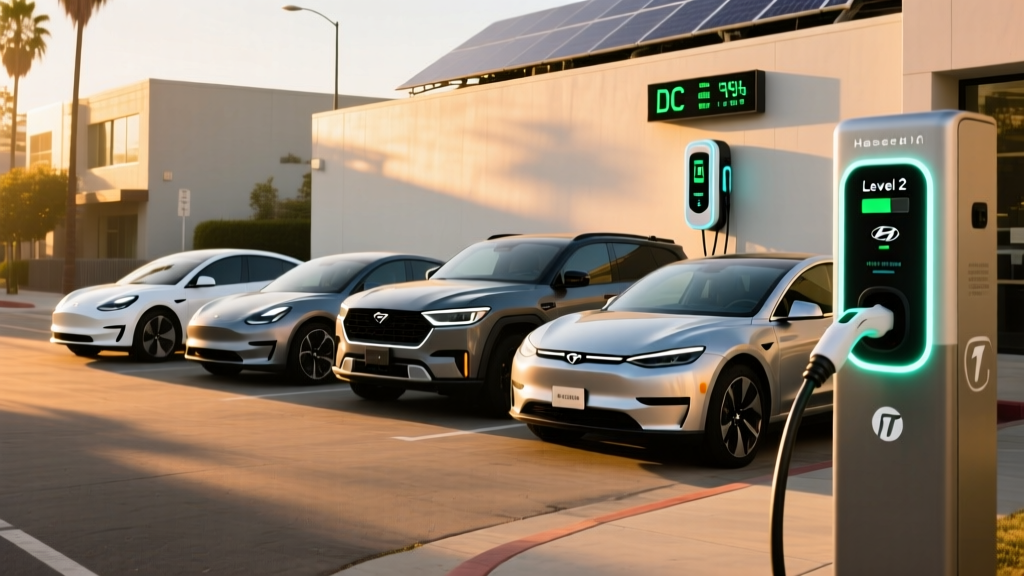
California leads the nation in public charging infrastructure — over 16,000 Level 2 ports and 5,000+ DC fast chargers as of early 2026, per the Alternative Fuels Data Center. But public charging costs $0.35–$0.60/kWh at DC fast stations, which erases most of the cost advantage over gas. The real savings come from Level 2 home charging at residential rates ($0.20–$0.35/kWh depending on your utility and time-of-use plan).
A typical Level 2 home installation (240V, 48-amp hardwired charger like the ChargePoint Home Flex or Tesla Wall Connector) costs $800–$2,500 if your electrical panel has capacity. If you need a 200-amp panel upgrade — common in older California homes — add $2,000–$4,000. Many California utilities (PG&E, SCE, SDG&E) offer rebates of $500–$1,500 for charger installation and EV-specific time-of-use rate plans that can drop overnight charging to $0.12–$0.15/kWh.
California's Climate Is Actually an EV Advantage
Unlike Midwest and Northeast owners who see 20–35% range loss in sub-30°F winters, California's mild climate means EVs perform close to their EPA ratings year-round in most of the state. A Tesla Model Y rated at 320 miles EPA will typically deliver 290–310 real-world miles in Southern California coastal driving. Even in the Central Valley's summer heat, modern thermal management systems (liquid-cooled battery packs with heat pumps) limit degradation and range loss to roughly 5–10%.
The exception: mountain driving on I-5 or US-395. Sustained climbs at 70+ mph with elevation gains of 3,000–5,000 feet can reduce range by 25–40%. Plan charging stops accordingly — or use preconditioning and route-based navigation (standard in Tesla, Hyundai, and BMW EVs) to optimize battery temperature before fast-charging stops.
Charging Speed Reality: Peak kW ≠ Sustained kW
When manufacturers advertise "250 kW DC fast charging," that's a peak rate achievable only between roughly 10–30% state of charge (SoC) under ideal battery temperatures. The actual 10–80% charge time depends on the charge curve — how the vehicle sustains power as the battery fills. For example:
- Tesla Model Y LR: Peaks at 250 kW, sustains ~170 kW average → 10–80% in ~27 minutes at a V3 Supercharger
- Hyundai Ioniq 5: Peaks at 240 kW, sustains ~185 kW average → 10–80% in ~18 minutes (800V architecture)
- Ford Mustang Mach-E ER: Peaks at 150 kW, sustains ~100 kW average → 10–80% in ~40 minutes
For road trips along I-5 or US-101, the Ioniq 5's 800V system is meaningfully faster in practice, despite similar peak numbers to Tesla. For daily driving, any of these are irrelevant — you charge at home overnight and wake up full.
Common Misconceptions About the Mandate
| Myth | Fact |
|---|---|
| "I won't be able to drive my gas car after 2035" | The mandate only affects new vehicle sales. You can keep, drive, and sell your gas car indefinitely. |
| "Used gas cars will be banned" | Used vehicle sales are completely unaffected. The used gas car market will persist for decades. |
| "All new cars must be fully electric — no hybrids" | PHEVs with at least 50 miles of electric range can count as partial ZEV credits through 2034. After 2035, only pure BEVs and hydrogen fuel-cell vehicles qualify. |
| "There won't be enough charging stations" | California has allocated over $1.4 billion through the Clean Transportation Program to expand public charging. The state targets 250,000 shared public/semi-public ports by 2025 and 2.1 million by 2030. Infrastructure is growing, but rural and apartment-dweller access remains a real gap. |
| "EV batteries won't last and cost $20K to replace" | Modern LFP and NMC batteries with active thermal management are showing 85–92% capacity retention at 150,000 miles based on fleet data. Federal law mandates 8-year/100,000-mile battery warranties (10 years/150,000 miles in CARB states including California). Out-of-warranty replacement costs have dropped to $8,000–$14,000 for most mainstream models as of 2026. |
Which States Have Adopted California's Rules
Under Section 177 of the Clean Air Act, other states can adopt California's emissions standards. As of 2026, the following states have committed to ACC II's ZEV sales requirements (with varying phase-in start dates):
- Colorado, Connecticut, Delaware, Maine, Maryland, Massachusetts, New Jersey, New Mexico, New York, Oregon, Rhode Island, Vermont, Virginia, Washington, and Washington D.C.
If you live in one of these states, expect the same market dynamics: increasing EV/PHEV availability, narrowing gas-model lineups, and growing manufacturer incentives to move ZEV inventory. If you're cross-shopping between an ACC II state and a non-adopting state, you may find better gas-car selection and pricing outside the mandate zone — but California's higher gas prices make the TCO math favor EVs regardless.
Bottom Line: Your Action Plan
The California EV mandate isn't forcing you to buy an EV today. It's reshaping what's on dealer lots, how aggressively automakers price their electric models, and which vehicles will have long-term parts and service support. If you're planning a new vehicle purchase within the next 2–5 years, the smartest move is:
- Audit your charging situation first — can you install a Level 2 charger at home or access one at work? If yes, a BEV is likely your lowest-cost option over 5 years.
- Check §30D eligibility for your target model using the IRS's updated credit lookup tool before visiting a dealer. Point-of-sale transfers are available if you qualify, reducing the purchase price directly.
- Test-drive both BEVs and PHEVs — the mandate ensures both will be widely available through 2034, and a PHEV may be the better bridge if your driving patterns include frequent long trips.
- Don't rush, but don't wait for a perfect moment — EV pricing is competitive now, incentives are real but may tighten, and the best time to buy is when a model fits your needs and budget, not when a regulatory deadline approaches.
Can I still buy a gas car in California after 2035?
No — new gas-only cars cannot be sold in California after 2035 under the ACC II mandate. However, you can continue to buy and sell used gas cars, and you can keep driving a gas car you already own. The ban applies only to new light-duty vehicle sales by manufacturers and dealers.
Does the California EV mandate apply to trucks and SUVs?
Yes, but with a nuance. ACC II covers light-duty vehicles up to 8,500 lbs GVWR, which includes most consumer SUVs and light trucks (F-150, Silverado 1500, Tacoma). Medium-duty and heavy-duty trucks fall under a separate rule (Advanced Clean Trucks). Large pickups like the F-250 and 2500-series trucks are not affected by the 2035 ZEV requirement.
Will EVs get cheaper because of the mandate?
Increasingly, yes. As automakers scale EV production to meet the 68% (2026) and growing ZEV targets, battery costs have continued declining — LFP cells are now under $80/kWh at the pack level. Models like the Chevy Equinox EV (~$33,000) and Hyundai Ioniq 5 (~$42,500 before credits) already compete with gas counterparts on price when incentives are included. Expect more sub-$35K EVs by 2028 as the mandate tightens.
What happens if I move out of California with a gas car I bought before 2035?
Nothing — you can drive and register your gas car in any state. The mandate only governs new vehicle sales within California (and ACC II-adopting states). Your vehicle's legality follows you regardless of where you relocate.
Are hydrogen fuel-cell vehicles part of the mandate?
Yes. Hydrogen fuel-cell electric vehicles (FCEVs) like the Toyota Mirai count as ZEVs under ACC II. However, California's hydrogen refueling infrastructure remains very limited (fewer than 70 public stations statewide), and hydrogen fuel costs roughly $15–$30/kg — translating to $0.15–$0.25/mile, comparable to or more expensive than gas. For most buyers, a BEV or PHEV is more practical in 2026.