California remains the most incentive-rich state for electric vehicle buyers in 2026, but the patchwork of federal, state, and utility rebates is notoriously difficult to navigate. This guide cuts through the confusion with exact dollar figures, eligibility requirements, and a five-year total cost of ownership (TCO) analysis so you can determine whether an EV actually saves you money — or costs you more — compared to a comparable gas car.
California EV Credits: What's Available in 2026?
California offers several layers of incentives that can stack on top of the federal credit. Here's how the major programs break down for the current year:
Clean Cars 4 All (CC4A)
California's flagship equity program provides up to $12,000 for income-eligible residents who retire an older, higher-polluting vehicle and replace it with a new or used EV, plug-in hybrid, or hybrid. Eligibility requires household income at or below 400% of the federal poverty level and residence in one of the participating air districts (Bay Area, San Joaquin Valley, South Coast, Sacramento, or San Diego). The program prioritizes lower-income applicants with grants up to $12,000, while moderate-income participants may receive $2,000–$5,000 depending on the replacement vehicle type.
Clean Fuel Rebate (Utility Programs)
Most California investor-owned utilities offer rebates for purchasing or leasing a new or used EV. As of 2026:
- PG&E: $1,000 Clean Fuel Rebate for EVs; income-qualified customers may receive up to $4,000.
- SCE (Southern California Edison): $1,500 rebate; up to $4,500 for income-qualified customers under the Charge Ready program.
- SDG&E: $1,500 rebate with enhanced amounts for income-qualified residents.
- LADWP: $1,500 rebate plus up to $2,000 for qualifying used EVs.
CVRP (Clean Vehicle Rebate Project) — Status Update
The statewide CVRP rebate of up to $7,000 was exhausted in late 2023 and has not been refunded as of early 2026. Some buyers confuse CVRP with the federal §30D credit or utility rebates. If Sacramento reauthorizes a successor program, we'll update this guide. For now, CC4A and utility rebates are the primary state-level incentives.
Clean Air Vehicle (CAV) Decals — HOV Lane Access
California's white and green CAV stickers granting solo HOV-lane access expired for new applicants in September 2025. Existing stickers remain valid through their printed expiration date, but new EV buyers in 2026 can no longer receive HOV-lane privileges as an incentive. This is a meaningful change for commuters in congested corridors like the 405, 101, and I-80.
Federal §30D Tax Credit: Eligibility Checklist for 2026
The federal EV tax credit under IRS §30D offers up to $7,500 for qualifying new EVs and up to $4,000 for qualifying used EVs (§25E). However, eligibility hinges on several strict requirements that eliminate many popular models and higher-income buyers.
New EV Credit (§30D) — Up to $7,500:
- Income caps (MAGI): $300,000 joint / $225,000 head of household / $150,000 single filer
- MSRP caps: $80,000 for SUVs, vans, and pickups; $55,000 for sedans and other vehicles
- Battery component sourcing: At least 100% of battery components must be manufactured or assembled in North America (2026 requirement — phased up annually)
- Critical minerals: At least 80% of critical minerals by value must be sourced from the US or a free-trade-agreement partner (2026 requirement)
- FEOC restriction: Vehicles with battery components from a Foreign Entity of Concern (China, Russia, Iran, North Korea) are disqualified — this has removed several models from eligibility
- Point-of-sale transfer: You can transfer the credit to the dealer at purchase for an immediate price reduction (effective Jan 1, 2024, and still active in 2026)
- Nonrefundable: The credit cannot exceed your total tax liability for the year (unless transferred at point of sale)
Used EV Credit (§25E) — Up to $4,000:
- 30% of the sale price, capped at $4,000
- Vehicle must be at least 2 model years old, priced at $25,000 or less
- Income caps: $150,000 joint / $112,500 head of household / $75,000 single
- Sold through a licensed dealer
The battery-sourcing rules have tightened significantly since the credit's inception. As of 2026, the FEOC restriction has disqualified several previously eligible models. Always check the DOE/FuelEconomy.gov qualifying vehicle list before committing to a purchase, as eligibility can change mid-year.
5-Year Total Cost of Ownership: EV vs. Gas Sedan
To build a realistic ownership cost picture, we modeled a 2026 Tesla Model 3 Long Range (AWD, $42,490 MSRP, 341 mi EPA range, 75 kWh usable battery, NMC chemistry) against a 2026 Toyota Camry LE ($29,495 MSRP, 32 MPG combined). Both are midsize sedans popular with California buyers. We assumed 15,000 miles/year, California electricity rates, and a 5-year hold period.
| Category | Tesla Model 3 LR | Toyota Camry LE |
|---|---|---|
| Purchase Price (MSRP) | $42,490 | $29,495 |
| Federal Tax Credit (§30D) | −$7,500 | $0 |
| CA Utility Rebate (SCE avg) | −$1,500 | $0 |
| Net Effective Purchase | $33,490 | $29,495 |
| Fuel/Energy (5 yr, 75k mi) | $4,875 | $10,547 |
| Maintenance (5 yr) | $1,800 | $3,900 |
| Insurance (5 yr avg) | $12,750 | $9,500 |
| Depreciation (5 yr) | $15,200 | $9,800 |
| Total 5-Year Cost | $68,115 | $63,242 |
Key takeaway: Even after stacking $9,000 in incentives, the Model 3 costs approximately $4,873 more over 5 years than the Camry — primarily due to higher insurance and steeper depreciation. However, this gap narrows significantly for income-qualified buyers who can access CC4A's $12,000 grant, which would flip the math to a ~$3,127 EV savings. Your mileage, literally and financially, will vary.
Charging vs. Gas: The Per-Mile Math in California
California has some of the highest electricity rates in the continental US, which complicates the "EVs are cheaper to fuel" narrative. Let's run the actual numbers.
EV Charging Cost Per Mile
Assumptions: Model 3 Long Range, 26 kWh/100mi efficiency (EPA), California residential average rate of $0.31/kWh (2026 PG&E/SCE blended average), with 80% home charging / 20% DC fast charging at $0.48/kWh average.
- Home charging: 26 kWh × $0.31 = $0.081/mi (8.1¢)
- DC fast charging: 26 kWh × $0.48 = $0.125/mi (12.5¢)
- Blended (80/20): $0.065/mi (6.5¢)
Gas Vehicle Cost Per Mile
Assumptions: Camry LE, 32 MPG combined, California average gasoline price of $4.50/gallon (2026).
- Fuel cost: $4.50 ÷ 32 = $0.141/mi (14.1¢)
Annual savings at 15,000 mi/yr: ($0.141 − $0.065) × 15,000 = $1,140/year or $5,700 over 5 years.
The savings are real but not enormous in California — roughly $95/month. In states with cheaper electricity (Washington, Idaho, Louisiana at ~$0.11/kWh), the gap widens dramatically. In California, the EV fuel advantage is meaningful but won't single-handedly offset a higher purchase price.
Time-of-use (TOU) optimization: If your utility offers EV-specific TOU rates (PG&E's EV2, SCE's TOU-D-PRIME), charging overnight at super-off-peak rates as low as $0.12/kWh drops your per-mile cost to 3.1¢ — a 78% savings versus gas. Installing a Level 2 home charger is essential to capture this benefit.
Maintenance Savings: Where EVs Quietly Win
EVs have roughly 20 moving parts in their drivetrain versus 2,000+ in an internal combustion engine. This translates to real, measurable maintenance savings.
| Service Item | EV (5-yr cost) | Gas Car (5-yr cost) | Savings |
|---|---|---|---|
| Oil changes | $0 | $450 | $450 |
| Brake pads (regen reduces wear ~60%) | $200 | $600 | $400 |
| Transmission fluid / service | $0 | $300 | $300 |
| Coolant flush | $150 | $250 | $100 |
| Cabin air filter | $150 | $150 | $0 |
| Tire rotation/replacement (EVs wear tires ~15% faster due to weight and torque) | $1,100 | $950 | −$150 |
| Wiper fluid / misc | $200 | $200 | $0 |
| 5-Year Maintenance Total | $1,800 | $3,900 | $2,100 |
The $2,100 maintenance savings over 5 years is one of the most underappreciated advantages of EV ownership. Regenerative braking is the biggest factor: because the motor slows the car and recovers energy, friction brakes are used far less frequently. Many EV owners report original brake pads lasting 100,000+ miles. The offset? EV tires wear faster due to the vehicle's heavier curb weight (the Model 3 AWD weighs 4,034 lbs vs. the Camry at 3,310 lbs) and the instant torque of electric motors.
Insurance Reality: Why EVs Cost More to Insure
This is where the EV ownership equation takes a hit. Based on aggregated 2026 California quotes from major carriers (Geico, Progressive, State Farm, AAA), the Model 3 costs an average of $2,550/year to insure versus $1,900/year for the Camry — a 34% premium increase.
Why the gap?
- Repair costs: EV battery packs and specialized components are expensive to replace after a collision. A minor fender-bender that damages a high-voltage harness or battery enclosure can total an EV that a gas car would walk away from.
- Limited repair network: Fewer body shops have EV-certified technicians, increasing labor rates and repair timelines.
- Higher vehicle values: Even after incentives, the insured value of a Model 3 is higher than a Camry.
- Parts availability: OEM EV parts (especially body panels and battery modules) often have longer lead times, increasing rental-car claims.
How to reduce EV insurance costs: Shop at least 5 carriers. Tesla Insurance (available in California) often undercuts traditional carriers by 10–20% for Tesla owners. Bundling home and auto, maintaining a clean record, and choosing higher deductibles ($1,000 vs. $500) can narrow the gap to roughly 15–20% above a comparable gas car.
Depreciation and Resale Value: The Wildcard
EV depreciation has been volatile. After Tesla's aggressive price cuts in 2023–2024 and a broader market correction, used EV values dropped significantly. By 2026, the market has partially stabilized, but EVs still depreciate faster than comparable gas vehicles on average.
Based on current Kelley Blue Book and industry data:
- Model 3 Long Range: ~45% depreciation over 5 years (resale value ~$23,400 on a $42,490 MSRP)
- Toyota Camry LE: ~33% depreciation over 5 years (resale value ~$19,760 on a $29,495 MSRP)
That's a $5,400 depreciation penalty for the EV in absolute dollar terms. Contributing factors include buyer uncertainty about battery longevity (even though degradation data is increasingly reassuring), rapid technology obsolescence (newer models with faster charging and longer range reduce demand for older EVs), and the fact that the used-EV tax credit (§25E, up to $4,000) has put downward pressure on used EV prices.
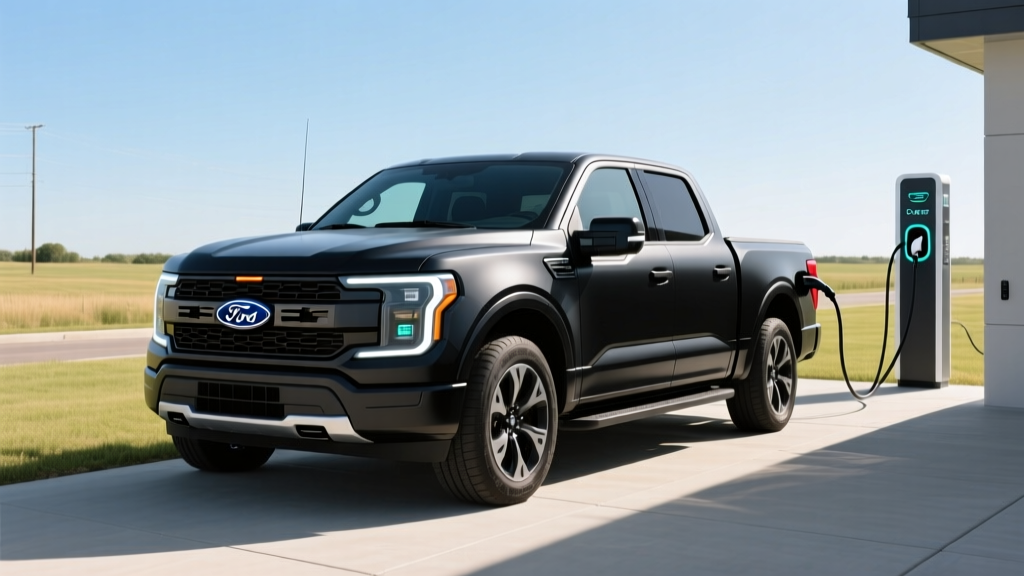
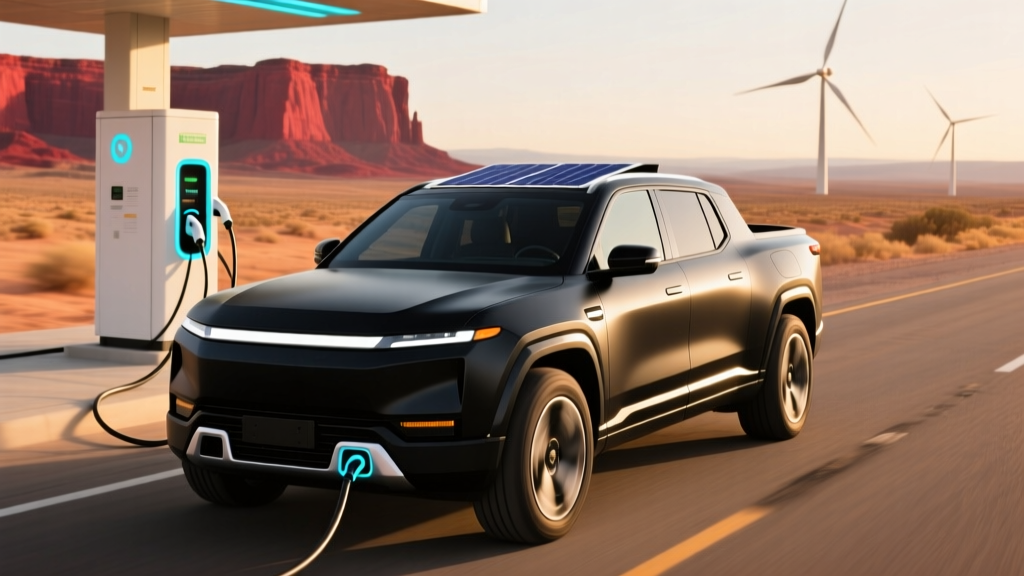
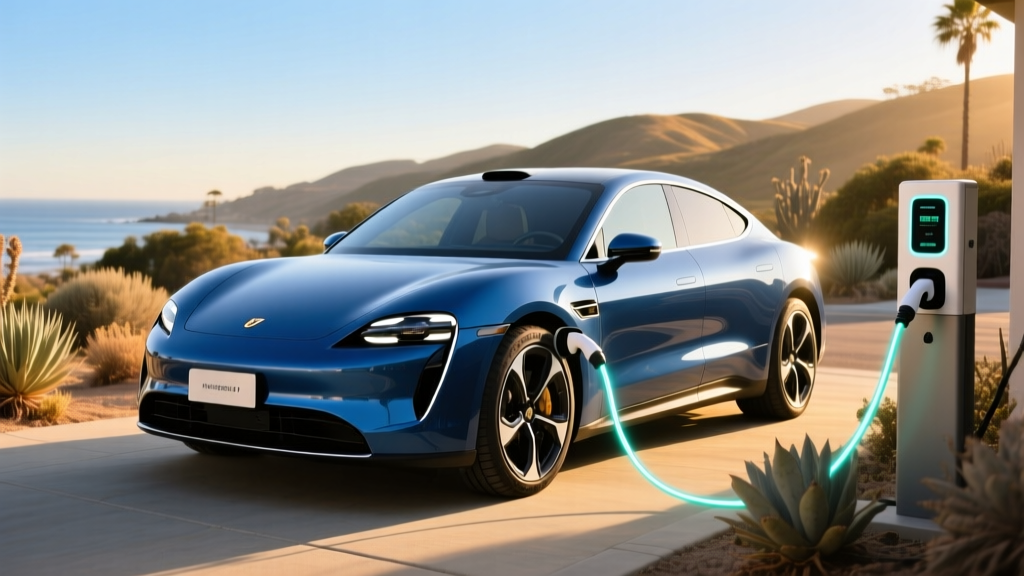
Which EVs hold value best? Trucks and SUVs with strong demand (Ford F-150 Lightning, Rivian R1T, Porsche Taycan) have historically retained value better than sedans. If depreciation is your top concern, a PHEV like the Toyota RAV4 Prime often splits the difference — lower depreciation than a BEV with some electric driving benefits.
Who Comes Out Ahead? The Decision Framework
Choose an EV if:
- You qualify for CC4A ($12,000) or significant utility rebates, closing the purchase-price gap
- You can install a Level 2 home charger and access TOU electricity rates below $0.15/kWh
- You drive 15,000+ miles/year (fuel savings scale with mileage)
- You plan to keep the car 7+ years (depreciation impact lessens, maintenance savings compound)
- HOV lane access isn't a factor (discontinued for new buyers)
Choose a Hybrid/PHEV if:
- You can't charge at home or live in a charging-desert area
- You want to minimize depreciation risk
- Your daily commute is under 40 miles (a PHEV covers it on electric, then uses gas for longer trips)
- You're above the §30D income caps and don't qualify for CC4A
Wait or choose gas if:
- Your annual mileage is under 8,000 miles (fuel savings won't offset the premium)
- You plan to sell within 3 years (depreciation will dominate your cost)
- Insurance quotes in your area are 50%+ above a gas equivalent
Stacking Incentives: A California Buyer Case Study
To show what aggressive incentive stacking looks like, consider this real-world scenario:
Buyer profile: Family of four in Bakersfield (Kern County), household income $72,000, PG&E territory, trading in a 2008 Honda Civic.
Vehicle: 2026 Chevrolet Equinox EV LT (315 mi EPA range, 85 kWh battery, $34,995 MSRP, qualifies for full §30D credit).
- Federal §30D credit: −$7,500 (point-of-sale transfer)
- Clean Cars 4 All (income-qualified, retirement of older vehicle): −$9,500
- PG&E Clean Fuel Rebate (income-qualified): −$4,000
- San Joaquin Valley Air District supplemental rebate: −$3,000
- Total incentives: $24,000
- Effective purchase price: ~$10,995
This is an extreme but achievable example of what California's incentive ecosystem can do for qualifying buyers. The Equinox EV becomes cheaper than a base Honda Civic after incentives. The catch? You need to meet every eligibility threshold, navigate four separate application processes, and the incentives are subject to funding availability. A licensed California EV dealer familiar with these programs can often streamline the paperwork.
Frequently Asked Questions
How much does it really cost to own an EV over 5 years in California?
Based on our Model 3 vs. Camry analysis, a mid-range EV costs approximately $68,000 over 5 years including purchase (after incentives), energy, maintenance, insurance, and depreciation. That's roughly $5,000 more than a comparable gas sedan. However, income-qualified buyers stacking CC4A and utility rebates can reduce this to parity or better. The break-even point typically arrives around year 6–7 when maintenance savings accumulate and depreciation curves flatten.
Do I qualify for the federal tax credit?
You qualify for the full $7,500 if: (1) your MAGI is below $150K single / $300K joint, (2) the vehicle MSRP is under $55K (sedans) or $80K (SUVs/trucks), (3) the vehicle meets 2026 battery-sourcing and critical-mineral requirements, and (4) the vehicle has no FEOC-sourced battery components. Check the current qualifying list at fueleconomy.gov before purchasing — the list updates regularly. You can transfer the credit to the dealer at point of sale for an immediate price reduction, which also sidesteps the nonrefundable limitation.
How much do I save on fuel and maintenance?
In California with blended home/public charging at an average of $0.31/kWh, expect to save roughly $1,140/year on fuel versus a 32-MPG gas car. Maintenance savings add approximately $420/year. Combined, that's about $1,560/year or $7,800 over 5 years in operating-cost savings. These savings increase significantly if you can charge on a TOU plan at off-peak rates.
Are EVs more expensive to insure in California?
Yes. Expect to pay 20–40% more for EV insurance compared to a similar gas vehicle. For a Model 3 vs. Camry, the gap is roughly $650/year. The primary drivers are higher repair costs (specialized components, battery protection), a smaller certified repair network, and higher vehicle values. Shopping multiple carriers and considering Tesla Insurance (for Teslas) or EV-specific policies can reduce this premium.
How well do EVs hold their value?
As of 2026, mainstream EVs depreciate approximately 40–50% over 5 years, compared to 30–38% for comparable gas vehicles. The gap is driven by rapid technology advancement (making older EVs less desirable), buyer concerns about out-of-warranty battery replacement, and the used-EV tax credit putting downward pressure on resale prices. If resale value is a priority, consider a PHEV (which depreciates closer to gas-car rates) or choose an EV with strong brand demand (Porsche, Rivian, or high-demand trucks).
Can I combine California EV credits with the federal tax credit?
Yes — most California incentives stack with the federal §30D credit. CC4A, utility rebates, and air district incentives are designed to layer on top of federal credits. The key constraint is that some programs have income limits that differ from the federal caps. For example, CC4A requires income at or below 400% of the federal poverty level (~$124,800 for a family of four in 2026), while §30D allows up to $300,000 MAGI for joint filers. Always verify each program's specific requirements independently.
Is the California CVRP rebate still available?
No. The Clean Vehicle Rebate Project (CVRP) exhausted its funding in late 2023 and has not been reauthorized as of early 2026. The primary state-level replacement is Clean Cars 4 All (CC4A), which targets income-qualified buyers. Buyers above CC4A income limits should focus on federal §30D credits, utility rebates, and any air district-specific programs in their region.