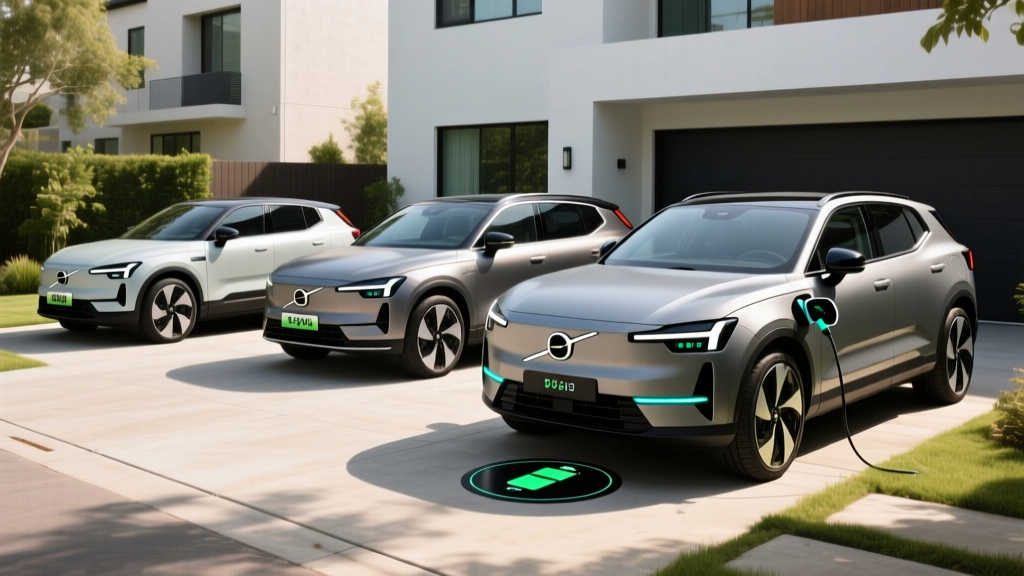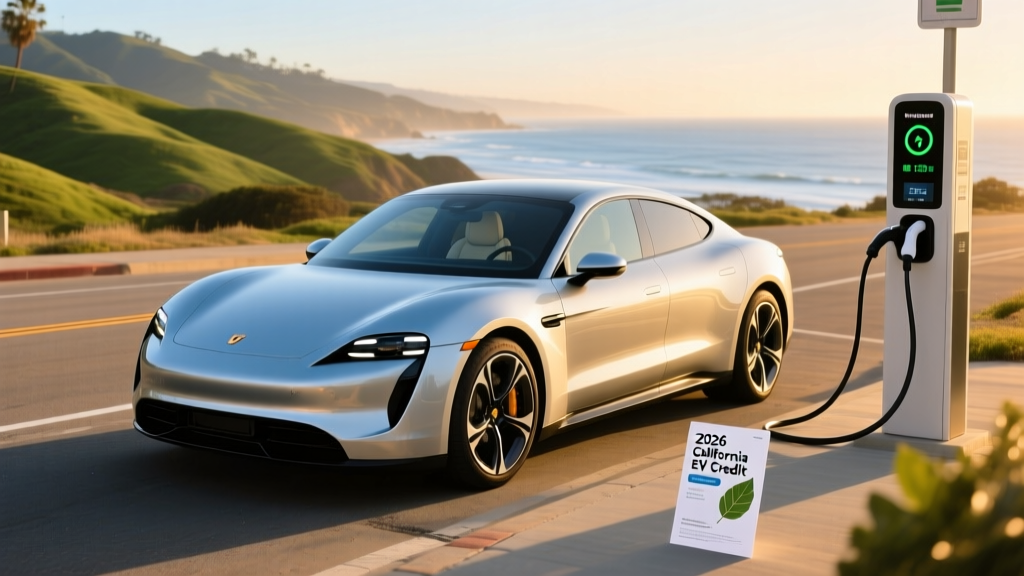
California remains the most EV-friendly state in the U.S., but stacking incentives and understanding true ownership costs requires navigating a maze of federal rules, state rebates, utility programs, and insurance realities. This guide breaks down every dollar — from the federal §30D tax credit to per-mile charging costs — so you can build an accurate 5-year budget before signing a purchase agreement.
Federal Tax Credit Under IRS §30D: What You Actually Qualify For
The federal clean vehicle credit under IRS §30D offers up to $7,500 for new EVs and up to $4,000 for qualified used EVs. But "up to" is the operative phrase — eligibility depends on your income, the vehicle's MSRP, and where the battery materials are sourced.
2026 §30D Eligibility Checklist
- Income caps: Modified AGI ≤ $150,000 (single), $225,000 (head of household), $300,000 (joint filers)
- MSRP caps: ≤ $55,000 for sedans/wagons; ≤ $80,000 for SUVs, vans, and pickups
- Battery sourcing: Critical minerals and battery components must meet escalating percentage thresholds sourced from the U.S. or FTA-partner countries — vehicles that don't qualify receive $0 or a reduced $3,750
- Point-of-sale transfer: You can transfer the credit to the dealer at purchase, reducing your out-of-pocket cost immediately rather than waiting to claim it on your tax return
- Manufacturer reporting: The automaker must submit a seller report to the IRS before you take delivery — always confirm this with your dealer
The battery-sourcing requirement is where most buyers get tripped up. As of 2026, the critical-mineral and battery-component thresholds have tightened significantly compared to the early years of the Inflation Reduction Act. Several popular models that qualified in 2024 no longer receive the full $7,500. Always check the DOE/EPA fuel economy site for the current eligible vehicle list before committing to a purchase.
California Electric Vehicle Credit & State Incentives
California does not offer a direct state tax credit for EV purchases the way some states do. Instead, the state's incentive ecosystem operates through several programs:
California Incentive Programs (2026)
- Clean Cars 4 All (CC4A): Up to $9,500 for low-income residents who retire an older vehicle and replace it with a new or used EV/PHEV. Income limits and air-district residency requirements apply.
- Clean Vehicle Rebate Project (CVRP): Funding has been exhausted in prior cycles — check the California Energy Commission for current availability and successor programs.
- Utility rebates: PG&E, SCE, and SDG&E each offer rebates for home Level 2 charger installation (typically $250–$1,500) and, in some cases, EV purchase rebates for income-qualified customers.
- HOV lane access: California's Clean Air Vehicle decal program grants solo HOV lane access to qualifying EVs and PHEVs — a non-monetary incentive worth hundreds per year in time savings for commuters in the Bay Area and LA basin.
- Local air district incentives: Bay Area BAAQMD, South Coast AQMD, and San Joaquin Valley APCD periodically offer additional rebates, especially for fleet and ride-share conversions.
Important: Incentive availability, funding levels, and eligibility rules change frequently. Always verify current program status with official state and utility sources before budgeting around a specific rebate.
If you live outside California, your state may offer its own credits or rebates — Colorado, for example, provides a state tax credit up to $5,000, and several Northeast states have their own programs. These can often stack with the federal §30D credit.
5-Year Total Cost of Ownership: EV vs. Gas Baseline
To ground this in real numbers, here's a side-by-side 5-year/75,000-mile ownership comparison between a representative 2026 EV (Hyundai Ioniq 5 SEL, ~$47,000 MSRP, 303-mile EPA range, 84 kWh usable NMC battery) and a comparable gas-powered crossover (Toyota RAV4 XLE AWD, ~$33,000 MSRP, 30 MPG combined).
| Category | Hyundai Ioniq 5 SEL (EV) | Toyota RAV4 XLE AWD (Gas) |
|---|---|---|
| Purchase price (MSRP) | $47,000 | $33,000 |
| Federal tax credit (§30D) | −$7,500 | $0 |
| CA/utility incentives (est.) | −$500 (charger rebate) | $0 |
| Effective purchase price | $39,000 | $33,000 |
| Fuel/energy (75,000 mi) | $3,750 (home charging) | $9,375 (gas at $3.75/gal) |
| Maintenance | $1,200 | $3,500 |
| Insurance (5-year total) | $10,500 | $7,800 |
| Depreciation (est. retained value) | −$17,550 (55% retained) | −$11,550 (65% retained) |
| Net 5-year cost | $36,900 | $42,125 |
Assumptions: 15,000 miles/year; electricity at $0.18/kWh (California average residential); EV efficiency at 3.5 mi/kWh; gas at $3.75/gal; insurance averaged across major carriers; depreciation based on 2026 Kelley Blue Book/Edmunds trend data for 5-year retention. Actual costs vary by driving pattern, utility rate, and insurance profile.
The EV wins on net cost in this scenario — but the margin is narrower than most marketing suggests, and it depends heavily on your electricity rate, whether you qualify for the full federal credit, and insurance costs in your ZIP code.
Charging vs. Gas: Per-Mile Cost With Real Numbers
The single biggest ongoing savings for EV owners is fuel. But the actual cost per mile depends entirely on how and where you charge.
| Scenario | Rate / Price | Efficiency | Cost/Mile |
|---|---|---|---|
| Home Level 2 (CA avg residential) | $0.18/kWh | 3.5 mi/kWh | $0.051 |
| Home Level 2 (off-peak TOU rate) | $0.12/kWh | 3.5 mi/kWh | $0.034 |
| Public DC fast charger (EA/EVgo) | $0.48/kWh | 3.5 mi/kWh | $0.137 |
| Gas car (30 MPG combined) | $3.75/gal | 30 MPG | $0.125 |
| Gas car (22 MPG city/truck) | $3.75/gal | 22 MPG | $0.170 |
At California's average residential rate of ~$0.18/kWh, home charging costs roughly $0.05/mile — about 60% less than fueling a 30-MPG gas car. If you're on a time-of-use (TOU) plan and charge overnight at $0.12/kWh, the cost drops to roughly $0.034/mile.
The math flips at public DC fast chargers. At $0.48/kWh (common at Electrify America and EVgo stations in California without a subscription), you're paying $0.14/mile — more than gas. This is why home charging access is the single most important factor in EV economics. If you can't charge at home or at work, the fuel-cost advantage largely disappears.
Maintenance Savings: Fewer Parts, Real Dollars
EVs have dramatically fewer moving parts than internal combustion vehicles — no engine, no transmission, no exhaust system, no oil, no spark plugs. The maintenance savings are real and measurable.
| Service Item | EV Cost | Gas Car Cost |
|---|---|---|
| Oil changes (every 7,500 mi) | $0 | $600–$800 |
| Brake pads | $0–$200 (regen extends life to 80k+ mi) | $600–$1,000 (2 sets) |
| Transmission fluid / service | $0 | $200–$400 |
| Coolant flush | $150 | $150–$250 |
| Cabin air filter | $100 | $100–$150 |
| Tire rotation/replacement | $1,200 (EVs wear tires faster due to weight/torque) | $900 |
| 5-year total (est.) | $1,200–$1,500 | $3,000–$3,800 |
Regenerative braking is the unsung maintenance hero. Because regen handles most deceleration, friction brakes on EVs routinely last 80,000–100,000+ miles. Some Tesla owners have reported original brake pads at 120,000 miles.
The one maintenance area where EVs cost more is tires. The combination of heavier curb weight (battery packs add 500–1,000 lbs) and instant torque accelerates tread wear by roughly 20–30% compared to a similar gas vehicle. Budget for tire replacement at 35,000–45,000 miles rather than the 50,000–60,000 miles typical for ICE vehicles.
Insurance Costs: The Expense Most Buyers Overlook
EV insurance premiums are typically 15–30% higher than equivalent gas vehicles. According to industry data, the average annual EV insurance premium in California runs $2,000–$2,300 compared to $1,500–$1,700 for a comparable gas crossover.
Several factors drive this gap:
- Higher repair costs: EV collision repairs require specialized high-voltage training, and battery-pack damage from even minor impacts can total the vehicle. Insurers price this risk into premiums.
- Parts availability: EV-specific components (battery modules, power electronics, heat pump assemblies) have longer lead times and higher unit costs than mass-produced ICE parts.
- Vehicle price: EVs still carry a higher average transaction price, and insurers base comprehensive/collision premiums partly on replacement value.
- Claims data: Early EV claims data showed higher severity per incident, though frequency was similar or lower.
Some insurers — including Tesla Insurance (available in California), State Farm, and Progressive — have begun offering EV-specific policies that narrow the gap. Always get at least three quotes before purchase, and ask specifically about EV rate classifications.
Depreciation & Resale Value: A Shifting Landscape
EV depreciation has been one of the most volatile variables in ownership economics. After a period of strong residual values in 2021–2022, aggressive manufacturer price cuts (led by Tesla in 2023–2024) and rapid battery technology improvements compressed used EV values significantly through 2025.
As of 2026, the trend is stabilizing but EVs still depreciate faster on average than comparable gas vehicles:
- Average 5-year EV retention: 45–55% of original MSRP (varies heavily by brand)
- Average 5-year gas car retention: 55–65%
- Best EV retainers: Tesla Model Y, Porsche Taycan, Rivian R1T tend to hold value better due to strong demand and OTA software updates
- Worst EV retainers: Early-model EVs with <200-mile range, discontinued models (Chevy Bolt pre-refresh), and luxury EVs with high initial MSRPs
The depreciation gap is narrowing as battery technology stabilizes, the used-EV market matures, and the used-EV tax credit (up to $4,000 under §25E) boosts demand for pre-owned electric vehicles. If you plan to lease rather than buy, depreciation risk shifts to the lessor — making leasing an attractive option for buyers concerned about residual value uncertainty.
Building Your Personal EV Budget: A Decision Framework
EV Economics Work Best When:
- You can install a Level 2 home charger (or already have one) — this unlocks the lowest per-mile cost
- You qualify for the full $7,500 federal §30D credit (income and vehicle both eligible)
- Your daily commute is under 80 miles round-trip (covers most driving on a single charge)
- You live in a state with additional incentives (California, Colorado, New York, etc.)
- You drive 12,000+ miles/year (higher mileage = greater fuel savings that offset insurance premiums)
Consider a PHEV or Wait When:
- You lack reliable home or workplace charging access
- Your income exceeds §30D caps and no state incentives offset the premium
- You regularly tow heavy loads or drive 400+ miles in a single day (towing cuts EV range 30–50%)
- You plan to keep the vehicle under 3 years (depreciation may outweigh operational savings)
The math is clear: for a California buyer who qualifies for the full federal credit, has home charging, and drives 15,000 miles/year, a 2026 EV saves roughly $4,000–$6,000 over five years compared to a gas equivalent — even after accounting for higher insurance and faster depreciation. But strip away any one of those variables and the advantage shrinks or reverses. Run your own numbers with your actual electricity rate, insurance quote, and expected mileage before committing.
Frequently Asked Questions
How much does it really cost to own an EV over 5 years in California?
For a mainstream EV like the Hyundai Ioniq 5 or Tesla Model Y, expect a net 5-year cost of $35,000–$42,000 (purchase after incentives, plus charging, insurance, maintenance, minus depreciation recovery). This compares to $40,000–$48,000 for a comparable gas crossover over the same period, assuming you qualify for the federal tax credit and charge primarily at home.
Do I qualify for the federal $7,500 EV tax credit?
You qualify if your modified AGI is under the IRS thresholds ($150k single / $300k joint), the vehicle's MSRP is under the cap ($55k sedans / $80k SUVs and trucks), and the vehicle's battery meets the 2026 critical-mineral and component sourcing requirements. As of 2026, you can transfer the credit to the dealer at point of sale for an immediate price reduction. Check the IRS clean vehicle credit page for the current eligible vehicle list.
How much do I save on fuel and maintenance with an EV?
At California's average residential electricity rate (~$0.18/kWh), you'll spend roughly $0.05/mile on energy vs. $0.125/mile on gas for a 30-MPG vehicle. Over 75,000 miles, that's approximately $5,600 in fuel savings. Combined with roughly $2,000 in maintenance savings (no oil changes, extended brake life), total operational savings run $7,000–$8,000 over five years.
Are EVs more expensive to insure in California?
Yes — typically 15–30% more than a comparable gas vehicle. Expect to pay $2,000–$2,300/year vs. $1,500–$1,700/year for a gas crossover. The higher cost reflects expensive battery repairs, specialized collision training requirements, and higher vehicle replacement values. Shop multiple carriers and ask about EV-specific policies.
How well do EVs hold their resale value?
Average 5-year EV retention is 45–55% of MSRP, compared to 55–65% for gas vehicles. The gap is narrowing as the used-EV market matures and the used-EV tax credit boosts demand. Tesla, Porsche, and Rivian models tend to retain value better than average. If depreciation concerns you, leasing shifts that risk to the lessor.
Is there a California-specific electric vehicle tax credit?
California does not currently offer a direct state EV purchase tax credit. The state's incentives operate through programs like Clean Cars 4 All (income-qualified, up to $9,500), utility rebates for charger installation, and the Clean Air Vehicle HOV decal program. Federal §30D remains the primary purchase incentive for California buyers.