The Real Math Behind California EV Incentives in 2026
California leads the nation in EV adoption, and for good reason: the state offers some of the most aggressive incentive stacking available anywhere. But between the federal §30D tax credit, the California Clean Fuel Reward (now restructured), utility rebates from PG&E, SCE, and SDG&E, and local air-district grants, figuring out what you actually qualify for is a maze of income caps, MSRP ceilings, and battery-sourcing rules.
This guide cuts through the noise with exact figures. We'll walk through the federal credit eligibility checklist, California-specific programs, utility rebates, and a ground-up 5-year total cost of ownership (TCO) comparison so you can see whether an EV actually saves you money — or costs you more — in the Golden State.
- Federal §30D Clean Vehicle Credit: Up to $7,500 (point-of-sale transfer available)
- California Clean Vehicle Rebate Project (CVRP): Up to $2,000–$7,500 income-tiered for new EVs (funding-dependent)
- Utility rebates: $500–$1,500 depending on provider (PG&E, SCE, SDG&E, LADWP)
- Clean Air Vehicle (CAV) decal: Solo HOV lane access for qualifying vehicles
- Local air-district programs: Varies by county — some offer $2,500+ for low-income residents trading in older vehicles
Incentive amounts and availability change frequently. Always verify current program status with official sources before purchasing.
Federal §30D Tax Credit: Eligibility Checklist for 2026
The federal Clean Vehicle Credit under IRS §30D remains the single largest EV incentive available, but qualifying requires clearing multiple hurdles simultaneously. Since January 2024, the credit can be transferred to the dealer at point of sale — meaning you get it as an immediate price reduction rather than waiting to claim it on your tax return. This is a significant cash-flow advantage.
§30D Eligibility Requirements (New Vehicles, 2026)
- Vehicle MSRP cap: ≤ $80,000 for SUVs, vans, and pickups; ≤ $55,000 for sedans, wagons, and hatchbacks
- Buyer modified AGI limit: ≤ $300,000 (married filing jointly); ≤ $225,000 (head of household); ≤ $150,000 (single/separate)
- Battery component sourcing: Battery components must be manufactured or assembled in North America (percentage thresholds increase annually — 100% for components by 2029)
- Critical minerals requirement: A specified percentage of critical minerals must be sourced from the US or a free-trade-agreement partner (escalating yearly)
- Credit amount: $3,750 for meeting battery components requirement + $3,750 for meeting critical minerals requirement = up to $7,500 total
- Foreign entity of concern (FEOC) restriction: Vehicles with battery components from a FEOC are ineligible; critical-mineral FEOC restriction phases in
- Final assembly: Vehicle must undergo final assembly in North America
- Point-of-sale transfer: Buyer can elect to transfer the credit to the dealer for an upfront price reduction (dealer must be IRS-registered)
Source: IRS Clean Vehicle Credit. Tax rules are complex and subject to change — consult a tax professional for your specific situation.
What this means in practice: Many popular EVs qualify for the full $7,500 (such as the Tesla Model Y, Ford F-150 Lightning, and Chevrolet Equinox EV), while others qualify for only $3,750 or nothing at all depending on battery sourcing. The fueleconomy.gov tax credit lookup tool is the most reliable way to check a specific VIN's eligibility before you buy.
California-Specific EV Incentives and Utility Rebates
Beyond the federal credit, California layers on several programs that can meaningfully reduce your out-of-pocket cost. However, program funding fluctuates — some rebates pause when allocations run out, then reopen with new funding.
California Clean Vehicle Rebate Project (CVRP)
CVRP provides rebates for the purchase or lease of new eligible zero-emission vehicles. The program is income-tiered: households earning ≤ 400% of the federal poverty level qualify for larger rebates (up to $7,500 for low-income applicants), while higher-income buyers receive reduced amounts or may be ineligible depending on current funding cycles. Check the California Energy Commission CVRP page for real-time availability.
Utility Company Rebates
Most major California utilities offer EV purchase rebates and home-charging incentives:
- PG&E: Residential EV rebate programs (historically $500–$1,000) plus time-of-use rate optimization
- Southern California Edison (SCE): Charge Ready program with rebates for home charging equipment and installation support
- SDG&E: EV rebate programs and reduced-rate EV charging plans
- LADWP: Residential charger rebates and used-EV incentives
These programs often require enrollment in a time-of-use (TOU) electricity rate, which rewards off-peak charging with lower $/kWh rates — a critical factor in your per-mile cost calculation below.
CAV HOV Lane Decal
Qualifying EVs receive a Clean Air Vehicle decal granting solo access to California carpool lanes. For commuters on the 405, 10, or 101, this alone can save 20–40 minutes daily. The decal program has limited slots and sunset dates — apply through the DMV promptly after purchase.
5-Year Total Cost of Ownership: EV vs. Gas in California
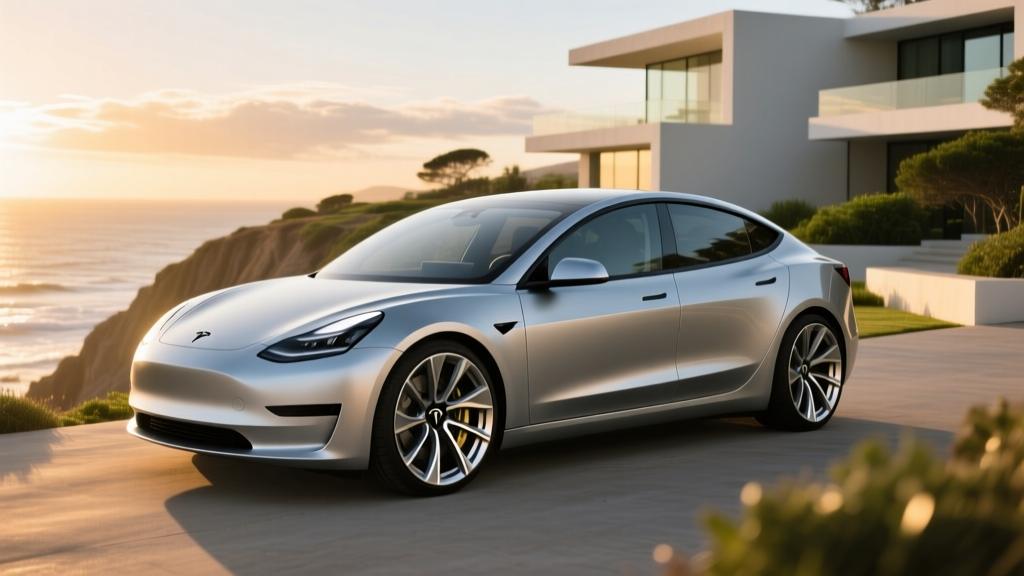
The headline question: does an EV actually save money over five years when you factor in everything? We modeled a realistic comparison using a 2026 Tesla Model Y Long Range (AWD, ~$46,000 MSRP before incentives) against a comparably equipped 2026 Toyota RAV4 AWD (~$35,000 MSRP), both driven 12,000 miles/year in California.
5-Year TCO Comparison: Tesla Model Y LR vs. Toyota RAV4 AWD (California, 12,000 mi/yr)
| Cost Category | Tesla Model Y LR (EV) | Toyota RAV4 AWD (Gas) |
|---|---|---|
| Purchase price (MSRP) | $46,000 | $35,000 |
| Federal §30D credit | –$7,500 | $0 |
| CA/utility rebates (est.) | –$1,500 | $0 |
| Net purchase cost | $37,000 | $35,000 |
| Fuel/energy (5 yrs, 60k mi) | $4,200 | $10,500 |
| Maintenance (5 yrs) | $1,200 | $3,800 |
| Insurance (5 yrs) | $12,500 | $9,500 |
| Depreciation (est. 5-yr) | $20,000 | $14,500 |
| Total 5-year cost | $74,900 | $73,300 |
| Cost per mile (all-in) | $1.25 | $1.22 |
Assumptions: CA electricity at $0.28/kWh blended (home + public DCFC), gas at $4.85/gal (CA avg), RAV4 at 30 MPG combined, Model Y at 3.5 mi/kWh. Insurance based on CA avg quotes. Depreciation estimates based on 2024–2025 resale trends. Individual results vary significantly by driving pattern, charging mix, and trim.
The verdict: At the 5-year mark with these assumptions, the EV and gas vehicle are nearly dead even on total cost. The EV's fuel and maintenance savings are substantial ($6,300 + $2,600 = $8,900 saved), but higher insurance premiums (~$3,000 more over 5 years) and steeper depreciation (~$5,500 more) eat into those gains. Extend to 7–10 years, and the EV pulls ahead as maintenance costs on the gas vehicle accelerate and the EV's fuel savings compound.
Charging vs. Gas: The Per-Mile Cost Breakdown
This is where EVs shine — but only if you charge strategically. California has some of the highest electricity rates in the continental US, which narrows the gap with gasoline compared to cheaper-electricity states.
Cost Per Mile: EV Charging Scenarios vs. Gasoline (California 2026)
| Scenario | Rate | $/Mile (Model Y, 3.5 mi/kWh) |
|---|---|---|
| Home Level 2, off-peak TOU | $0.15/kWh | $0.043 |
| Home Level 2, blended avg | $0.28/kWh | $0.080 |
| Public DCFC (Electrify America, Tesla) | $0.48/kWh | $0.137 |
| Gas: RAV4 AWD (30 MPG) | $4.85/gal | $0.162 |
| Gas: Truck (20 MPG) | $4.85/gal | $0.243 |
The cheapest EV charging (home off-peak at $0.043/mi) is 74% cheaper per mile than a 30-MPG gas car. Even public DCFC at $0.137/mi undercuts gas. But if you rely entirely on peak-rate home charging or expensive public chargers, the savings shrink considerably.
Critical insight: kW (power) determines how fast you charge; kWh (energy) determines how much it costs. When you see a public charger priced at $0.48/kWh, that's an energy cost — the same way you pay per gallon at a gas station. A Model Y's ~75 kWh usable battery charged from 10% to 80% (~52.5 kWh) at $0.48/kWh costs about $25.20 for roughly 180 miles of range.
Maintenance Savings: Where EVs Consistently Win
EVs have dramatically fewer moving parts than internal-combustion vehicles — no engine oil, no transmission fluid, no spark plugs, no timing belt, no exhaust system, and regenerative braking that significantly extends brake pad life. This translates to real dollar savings.
| Maintenance Item | EV (5-yr cost) | Gas Vehicle (5-yr cost) |
|---|---|---|
| Oil changes (synthetic, 2x/yr) | $0 | $600–$900 |
| Transmission fluid/service | $0 | $200–$400 |
| Brake pads and rotors | $100–$300 | $600–$1,200 |
| Spark plugs / ignition | $0 | $200–$500 |
| Cabin air filter | $150–$250 | $150–$250 |
| Tire rotation/replacement | $800–$1,400* | $600–$1,000 |
| Coolant / misc. fluids | $50–$150 | $200–$400 |
| TOTAL (5-year est.) | $1,100–$2,100 | $2,550–$4,650 |
*EVs tend to wear tires 15–25% faster than equivalent gas vehicles due to higher vehicle weight and instant torque delivery. Budget for premium EV-rated tires.
Honest caveat on tires: EVs are heavy (a Model Y weighs ~4,400 lbs vs. a RAV4 at ~3,600 lbs), and instant electric torque accelerates tread wear. Expect to replace tires every 25,000–35,000 miles on an EV versus 40,000–50,000 on a lighter gas vehicle. EV-specific tires (like the Michelin Pilot Sport EV or Hankook iON) cost $200–$350 per corner but offer lower rolling resistance and noise optimization.
Insurance Reality: The Cost EV Owners Often Overlook
EV insurance premiums in California typically run 15–30% higher than comparable gas vehicles. Several factors drive this:
- Higher repair costs: Battery pack damage in a collision can total a vehicle that would be repairable if it were gas-powered. Specialized high-voltage training is required for body shops.
- Parts availability: EV-specific components (battery modules, power electronics, thermal management parts) often have longer lead times and higher costs.
- Vehicle value: Higher MSRP means higher comprehensive/collision premiums.
- Total-loss frequency: Insurers are more likely to declare an EV a total loss after moderate collisions due to battery safety protocols.
For our Model Y vs. RAV4 comparison, expect to pay roughly $2,400–$2,800/year for the Tesla versus $1,800–$2,100/year for the Toyota in California (rates vary enormously by ZIP code, driving record, and coverage level). Over 5 years, that's a $2,500–$3,500 insurance premium for going electric — a real cost that partially offsets fuel and maintenance savings.
Mitigation strategies: Tesla offers its own insurance product in California that uses real-time driving data and can be 10–20% cheaper than third-party quotes for safe drivers. Shop multiple carriers — some (like Progressive and State Farm) have become more competitive on EV rates as their actuarial data improves.
Depreciation and Resale Value Trends
EV depreciation has been the most volatile ownership factor in recent years. After aggressive price cuts by Tesla in 2023–2024 rippled through the used market, EV resale values took a hit. By 2025–2026, the market has largely stabilized, but EVs still depreciate faster on average than top-resale gas vehicles like the RAV4 or Tacoma.
Typical 5-year depreciation (percentage of original MSRP retained):
- Top-tier EVs (Tesla Model Y, Model 3): 40–50% retained after 5 years
- Mainstream EVs (Hyundai Ioniq 5, Ford Mustang Mach-E): 35–45% retained
- Luxury EVs (BMW iX, Mercedes EQS): 25–35% retained
- High-resale gas vehicles (Toyota RAV4, Honda CR-V): 55–65% retained
Several structural factors work against EV resale value: rapid battery technology improvements make older models feel dated, manufacturer price cuts on new vehicles immediately depress used values, and some buyers remain wary of out-of-warranty battery replacement costs (typically $8,000–$20,000 depending on the pack, though most EVs retain 85–92% battery health at 100,000 miles based on current fleet data).
The federal battery warranty mandate — 8 years/100,000 miles with a minimum 70% capacity retention threshold — provides a safety net. But once that warranty expires, depreciation accelerates. If you plan to keep your EV for 8–10+ years, depreciation matters less because you'll ride the curve past the steepest drop.
Stacking Incentives: A Practical Purchase Scenario
Here's what maximum incentive stacking looks like for a California buyer purchasing a 2026 Tesla Model Y Long Range ($46,000 MSRP) in mid-2026:
| Incentive | Amount | Key Requirement |
|---|---|---|
| Federal §30D (point-of-sale) | –$7,500 | Income ≤ $300k MFJ, eligible VIN |
| CVRP rebate (moderate income) | –$2,000 | Income tier, funding available |
| Utility rebate (e.g., SCE) | –$1,000 | TOU rate enrollment |
| Home charger install credit (utility) | –$500 | Qualified electrician, permit |
| Total incentives | –$11,000 | |
| Effective purchase price | $35,000 | Before tax, registration, delivery |
At $35,000 effective cost, the Model Y becomes directly competitive with a mid-trim RAV4 — before factoring in any fuel or maintenance savings. This is the power of incentive stacking in California, and it's why the state's EV adoption rate leads the country.
Frequently Asked Questions
How much does it really cost to own an EV over 5 years in California?
Based on our modeling, a 2026 Tesla Model Y Long Range costs roughly $74,900 over 5 years (60,000 miles) including net purchase price after incentives, energy, maintenance, insurance, and depreciation. That's approximately $1.25/mile all-in. A comparable Toyota RAV4 AWD comes in around $73,300 ($1.22/mile). The EV wins on fuel and maintenance but loses on insurance and depreciation. Extend ownership to 7–10 years and the EV's cumulative fuel savings typically tip the scales in its favor.
Do I qualify for the federal §30D tax credit?
You qualify for up to $7,500 if: (1) your modified adjusted gross income is ≤ $300,000 (married filing jointly), ≤ $225,000 (head of household), or ≤ $150,000 (single); (2) the vehicle MSRP is ≤ $80,000 (SUVs/trucks/vans) or ≤ $55,000 (cars); (3) the vehicle meets battery component and critical mineral sourcing requirements; and (4) final assembly occurred in North America. Since 2024, you can transfer the credit to the dealer at point of sale for an instant price reduction. Check your specific VIN at fueleconomy.gov and consult a tax professional.
How much do I save on fuel and maintenance vs. a gas car?
In California, an EV owner charging primarily at home on off-peak TOU rates ($0.15/kWh) pays roughly $0.043/mile for energy versus $0.162/mile for a 30-MPG gas vehicle at $4.85/gallon — a savings of about $0.12/mile. Over 60,000 miles (5 years), that's approximately $7,200 in fuel savings. Maintenance savings add another $1,500–$2,500 over the same period (no oil changes, reduced brake wear, fewer fluid services). Combined fuel + maintenance savings: roughly $8,700–$9,700 over 5 years.
Are EVs more expensive to insure in California?
Yes, typically 15–30% more expensive than a comparable gas vehicle. A Tesla Model Y in California averages $2,400–$2,800/year for full coverage versus $1,800–$2,100 for a Toyota RAV4. The gap is driven by higher repair costs (battery pack damage protocols), higher vehicle values, specialized parts, and elevated total-loss rates. Over 5 years, expect to pay $2,500–$3,500 more in insurance for the EV. Shop multiple carriers and consider Tesla Insurance or usage-based programs to narrow the gap.
How well do EVs hold their resale value?
Moderately, but generally worse than top-resale gas vehicles. A Tesla Model Y retains roughly 40–50% of MSRP after 5 years, while a Toyota RAV4 retains 55–65%. EV depreciation is driven by rapid technology advancement, new-vehicle price cuts that depress used values, and some buyer concern about out-of-warranty battery costs. If you plan to keep your EV for 8+ years, depreciation impact diminishes significantly. The 8-year/100,000-mile federal battery warranty provides protection through the steepest depreciation years.
Is the California EV credit stackable with the federal credit?
Yes. The federal §30D credit, California CVRP rebate, utility company rebates, and local air-district incentives can all be combined (stacked) on a single vehicle purchase, provided you meet each program's individual eligibility requirements. In a best-case scenario, a qualifying California buyer can reduce the effective price of a new EV by $9,000–$12,000 through combined incentives. Always verify current program funding and eligibility before relying on specific rebate amounts.
What happens if I move out of California after claiming state rebates?
Most California rebate programs require you to register the vehicle in California and maintain California residency for a minimum period (typically 12–24 months) after purchase. Selling the vehicle or moving out of state before the minimum period may trigger a clawback provision requiring you to repay the rebate. Read the specific terms of any CVRP or utility rebate agreement carefully before signing.
Editorial note: Incentive programs, tax credit rules, and electricity rates change frequently. This article reflects rules and rates current as of mid-2026. Always verify eligibility with official sources — IRS §30D, California Energy Commission, and your local utility — before making a purchase decision. Consult a tax professional for personalized advice.