Buying an electric vehicle in California means navigating a maze of incentives, utility rebates, and ownership variables that can swing the total cost of ownership by thousands of dollars. The California electric car tax credit isn't a single line item — it's a stack of federal, state, and local programs that, when combined correctly, can knock $10,000 or more off the effective price of a new EV. But eligibility rules tightened significantly under the Inflation Reduction Act, and stacking them requires understanding income caps, MSRP limits, battery-sourcing requirements, and utility-specific rebate programs.
This guide breaks down every incentive available to California EV buyers in 2026, models the real five-year cost of ownership against a comparable gas car, and shows exactly where EVs save money — and where they cost more.
Federal §30D Tax Credit: Up to $7,500 (With Strict Eligibility)
The federal Clean Vehicle Credit under IRS §30D remains the single largest purchase incentive for new EV buyers. The maximum benefit is $7,500, split into two $3,750 halves based on battery component sourcing and critical mineral requirements. But not every EV qualifies, and not every buyer qualifies.
§30D Eligibility Checklist (2026 Tax Year)
- Income caps (modified AGI): $300,000 joint filers / $225,000 head of household / $150,000 single
- MSRP caps: $80,000 for SUVs, pickups, and vans / $55,000 for sedans and other body styles
- Battery sourcing: $3,750 requires battery components manufactured or assembled in North America (percentage thresholds increase annually through 2029)
- Critical minerals: $3,750 requires a percentage of critical minerals extracted or processed in the U.S. or a free-trade-agreement country (threshold rises each year)
- Foreign entity of concern (FEOC): Vehicles with battery components from a FEOC are disqualified entirely — this excludes several models with Chinese-sourced battery cells
- Point-of-sale transfer: Buyers can transfer the credit to the dealer at purchase, reducing the drive-off price immediately (rather than waiting to claim it on a tax return)
- Final assembly: Vehicle must undergo final assembly in North America — verify via the DOE VIN lookup tool
For 2026, the critical minerals threshold sits at 80%, and battery component sourcing requires 100% North American manufacturing or assembly. These escalating requirements have removed several previously eligible models from the list. Always confirm eligibility for the specific VIN you're purchasing — manufacturer qualification can change mid-year.
California State Incentives & Utility Rebates
California does not currently offer a broad, statewide purchase rebate for new EVs the way the federal program does. The state's primary incentive infrastructure operates through targeted programs and utility-level rebates:
Key California EV Incentives (2026)
- Clean Cars 4 All (CC4A): Up to $9,500 for income-qualified residents in disadvantaged communities who retire an older gas vehicle and replace it with a new or used EV. Administered by local air districts (Bay Area, South Coast, San Joaquin Valley).
- Clean Vehicle Rebate Project (CVRP): The statewide rebate program was exhausted and is no longer accepting new applications as of 2026. Watch for potential successor programs from CARB.
- Utility rebates: Many California utilities offer $500–$1,500 rebates for EV purchase or home charger installation. Examples include PG&E, SCE, and SDG&E programs — amounts and availability vary by service territory and income tier.
- HOV lane access: New EVs still qualify for California Clean Air Vehicle decals granting single-occupant carpool lane access through 2027 (subject to legislative renewal).
- Used EV credit (IRS §25E): Up to $4,000 (30% of sale price, max $4,000) for qualifying used EVs priced under $25,000, with income caps at $150k/$112.5k/$75k.
The practical takeaway: most California EV buyers will stack the federal §30D credit (if eligible) with their utility's rebate and any local air-district program they qualify for. A buyer in a disadvantaged community replacing a clunker could theoretically stack CC4A + §30D + utility rebate for over $12,000 in combined incentives. A suburban buyer with no income-based qualification may only capture the federal credit and a modest utility rebate.
5-Year Total Cost of Ownership: EV vs Gas in California
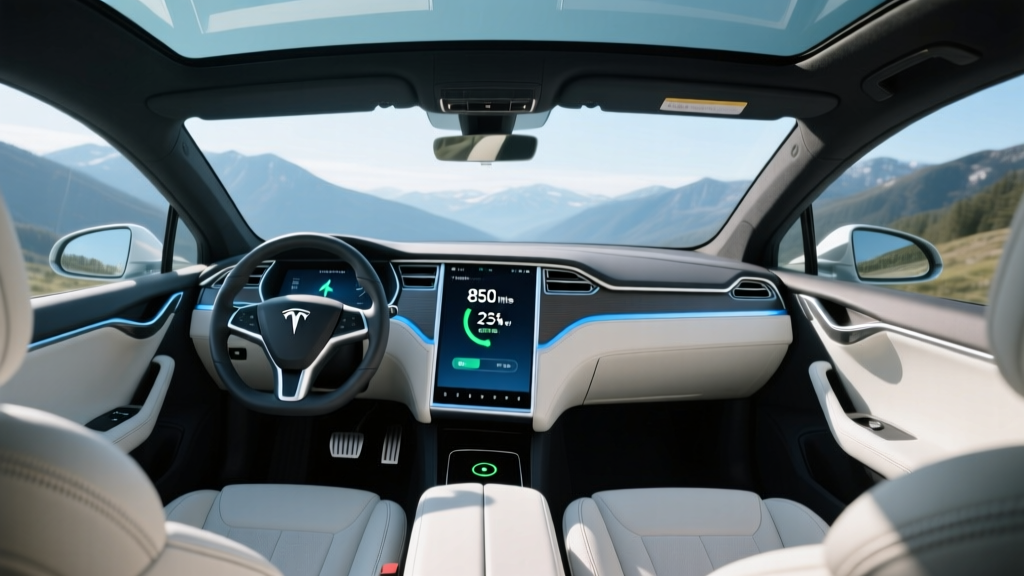
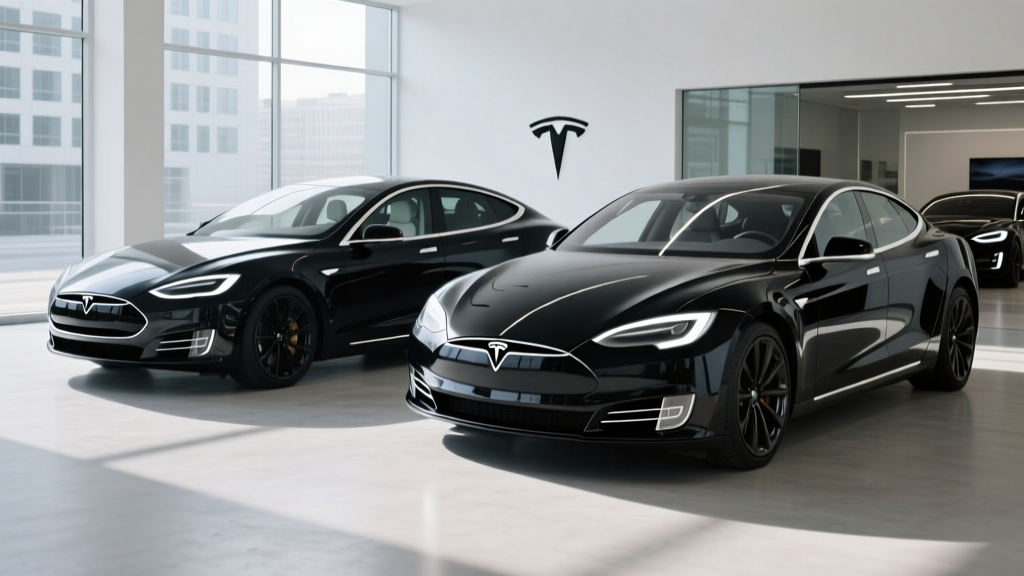
To model real ownership cost, we'll compare a popular California EV — the 2026 Tesla Model Y Long Range AWD ($46,630 MSRP, 320 mi EPA range, 75 kWh usable battery) — against a comparable gas compact SUV averaging 28 MPG combined. Both are driven 12,000 miles per year for 5 years (60,000 miles total).
| Category | Tesla Model Y LR AWD (EV) | Gas SUV (28 MPG Combined) |
|---|---|---|
| Purchase price (MSRP) | $46,630 | $38,000 |
| Federal §30D credit | −$7,500 | $0 |
| Effective purchase price | $39,130 | $38,000 |
| Fuel/energy (60k mi) | $4,320 (at $0.18/kWh, 3.5 mi/kWh) | $9,643 (at $4.50/gal, 28 MPG) |
| Maintenance (5 yr) | $1,800 | $4,200 |
| Insurance (5 yr) | $11,400 ($2,850/yr avg) | $8,400 ($1,680/yr avg) |
| Depreciation (est.) | $18,500 | $14,200 |
| Total 5-Year Cost | $75,150 | $74,443 |
The numbers are remarkably close. The EV's fuel and maintenance savings ($7,723 combined) are nearly offset by higher insurance ($3,000) and steeper depreciation ($4,300). The federal tax credit is what tips the balance — without it, the EV costs roughly $8,600 more over five years. With it, the EV comes out slightly ahead or roughly even, depending on your actual electricity rate, driving pattern, and insurance quotes.
Note: California electricity rates vary enormously. PG&E residential rates average $0.32–$0.42/kWh on standard tiers, while off-peak EV charging plans from SCE or LADWP can drop to $0.08–$0.12/kWh. Home charging on a time-of-use plan is essential to achieving the $0.18/kWh blended rate used above. Public DC fast charging at $0.35–$0.55/kWh will significantly raise the EV's energy cost.
Charging vs Gas: The Per-Mile Cost Reality
The per-mile energy comparison is where EVs shine brightest — but only when charging at home on a favorable rate plan.
| Scenario | Cost/Mile | Annual Cost (12k mi) |
|---|---|---|
| EV — Home L2, off-peak TOU ($0.12/kWh, 3.5 mi/kWh) | $0.034 | $408 |
| EV — Home L2, blended avg ($0.18/kWh) | $0.051 | $612 |
| EV — Public DCFC ($0.45/kWh) | $0.129 | $1,548 |
| Gas SUV — 28 MPG, $4.50/gal | $0.161 | $1,932 |
| Gas SUV — 22 MPG, $4.50/gal | $0.205 | $2,460 |
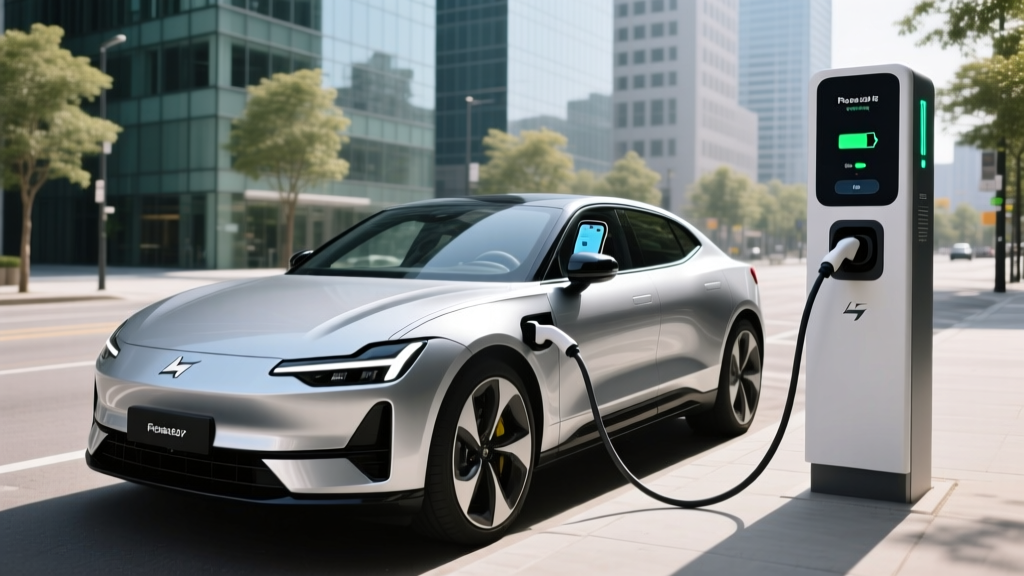
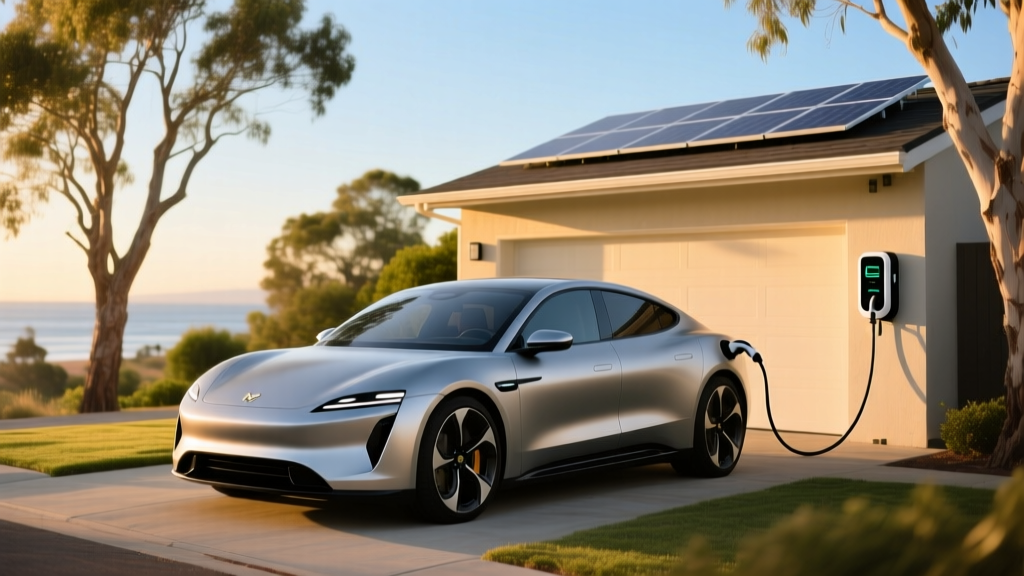
At the most favorable home rate, an EV costs roughly $0.03–$0.05 per mile to fuel versus $0.16+ for gas. That's a 70–80% per-mile savings. But if you're exclusively reliant on public DC fast charging — common for apartment dwellers without home charging access — the gap narrows to about 20–35%. This is why home Level 2 charging installation is practically a prerequisite for the EV cost argument in California.
Maintenance Savings: Where EVs Genuinely Cost Less
EVs eliminate entire categories of routine maintenance. No engine means no oil changes, no spark plugs, no timing belts, no transmission fluid. Regenerative braking dramatically extends brake pad and rotor life — many EV owners report original brake pads at 80,000+ miles.
| Service Item | EV Cost | Gas Vehicle Cost |
|---|---|---|
| Oil changes (6 @ $60–$80) | $0 | $360–$480 |
| Brake pads & rotors | $0–$300 (regen extends life) | $600–$1,200 |
| Transmission fluid | $0 | $150–$300 |
| Engine air filter | $0 | $100–$150 |
| Coolant flush | $150–$200 | $200–$300 |
| Tire rotation & replacement | $1,200–$1,600 (heavier vehicle, instant torque wears tires faster) | $800–$1,200 |
| Cabin air filter | $100–$200 | $100–$200 |
| Total (estimated) | $1,450–$2,300 | $2,310–$3,830 |
The net savings are real: expect to spend roughly $1,500–$2,500 less on maintenance over five years. The one category where EVs often cost more is tires — the combination of higher curb weight and instant electric torque accelerates tread wear, particularly on the drive axle. Budget for a tire replacement around 35,000–45,000 miles rather than the 50,000+ you might get on a lighter gas vehicle.
Insurance: The Line Item EV Buyers Underestimate
EV insurance premiums in California typically run 20–40% higher than comparable gas vehicles. Several factors drive this:
- Higher repair costs: EV battery packs are expensive to replace if damaged, and collision repair requires high-voltage-certified technicians. Minor rear-end collisions that would cost $2,000 on a gas car can total an EV if the battery enclosure is compromised.
- Higher vehicle values: EVs generally carry higher MSRPs than equivalent gas vehicles, and comprehensive/collision premiums scale with replacement cost.
- Specialized parts: Body panels, sensors, and proprietary components can have longer lead times and higher unit costs.
- Claim severity data: Insurers have accumulated enough EV claim data to price the higher average severity accurately.
For the Model Y example above, expect annual premiums of $2,500–$3,200 in California (varying by driver profile, zip code, and coverage level) versus $1,500–$2,000 for a similarly priced gas SUV. That's $5,000–$6,000 in additional insurance cost over five years — a figure that erases a significant portion of the fuel savings. Always get insurance quotes before purchasing. Some insurers (notably GEICO and USAA) have narrowed the EV premium gap; others have not.
Depreciation and Resale Value: The Moving Target
EV depreciation has been volatile. In 2023–2024, Tesla's aggressive price cuts cascaded through the used EV market, causing some models to lose 40–50% of their value in the first two years. The market has stabilized somewhat entering 2026, but EVs still generally depreciate faster than gas vehicles in the short term:
- Average 5-year EV depreciation: 45–55% of original transaction price (post-incentive)
- Average 5-year gas vehicle depreciation: 35–45%
- Factors accelerating EV depreciation: Rapid battery technology improvement (LFP replacing NMC, solid-state on the horizon), frequent MSRP reductions, federal incentive eligibility changes affecting used demand, and lingering consumer uncertainty about long-term battery health
- Factors helping EV resale: Growing charging infrastructure, expanding buyer familiarity, and battery warranty transferability (most manufacturers offer 8-year/100,000-mile battery warranties that transfer to second owners)
The depreciation picture is improving but remains a genuine cost factor. If you plan to own your EV for 8+ years and drive it into the ground, depreciation matters less. If you trade every 3–4 years, expect to absorb more value loss than you would with a proven gas vehicle like a RAV4 or CR-V.
Stacking Incentives: A California Buyer Scenario
Here's what a realistic incentive stack looks like for a middle-income California buyer purchasing a 2026 Tesla Model Y Long Range:
- Federal §30D credit: $7,500 (Model Y qualifies; buyer under income cap; applied at point of sale)
- Utility rebate (e.g., SCE EV rate plan signup): $500–$1,000 one-time rebate for enrolling in a TOU-EV plan
- Home charger rebate (utility or local program): $250–$500 toward Level 2 equipment
- HOV lane decal: Non-monetary but worth $500–$1,000/year in time savings for commuters on the 405, 10, or 101
- Total monetary incentive stack: $8,250–$9,000 off the effective cost of ownership
A lower-income buyer in a disadvantaged community replacing an older vehicle could stack CC4A ($9,500) with the §30D credit and utility rebates for a combined benefit exceeding $17,000 — fundamentally changing the purchase math. Check your eligibility with your local air district and utility before committing to a purchase.
Is the California Electric Car Tax Credit Worth It? Decision Framework
Choose an EV in California if:
- You can install a Level 2 home charger (garage or dedicated parking with 240V access)
- You qualify for the full $7,500 federal credit (income under caps, vehicle under MSRP cap, battery sourcing met)
- You drive 10,000+ miles per year (higher mileage amplifies fuel savings)
- Your utility offers a favorable TOU-EV rate plan ($0.08–$0.15/kWh off-peak)
- You plan to keep the vehicle 5+ years (mitigates depreciation risk)
Consider a hybrid (PHEV/HEV) instead if:
- You lack home charging access (apartment, street parking only)
- You frequently drive 300+ mile one-way trips through charging deserts
- Your insurance quotes for EVs are 50%+ above your current premium
- You trade vehicles every 2–3 years (depreciation will hurt more)
- The specific EV you want doesn't qualify for §30D (battery sourcing or MSRP disqualification)
Frequently Asked Questions
How much does it really cost to own an EV over 5 years in California?
For a mainstream EV like the Tesla Model Y or Hyundai Ioniq 5, expect a 5-year total cost of $70,000–$80,000 including purchase (after incentives), energy, insurance, maintenance, and depreciation. This is comparable to or slightly below a similarly equipped gas SUV — but only if you qualify for the $7,500 federal credit and charge primarily at home on a time-of-use plan.
Do I qualify for the federal EV tax credit?
You qualify if your modified AGI is under $300,000 (joint) / $150,000 (single), the vehicle's MSRP is under $80,000 (SUVs/trucks) or $55,000 (sedans), the vehicle meets 2026 battery-sourcing thresholds (100% North American components, 80% critical minerals from FTA countries), and final assembly occurred in North America. Verify specific vehicle eligibility at fueleconomy.gov and confirm with your tax professional.
How much do I save on fuel and maintenance with an EV?
California EV owners charging at home on off-peak rates save roughly $5,000–$6,000 on fuel over 5 years (60,000 miles) compared to a 28 MPG gas vehicle at $4.50/gallon. Maintenance savings add another $1,500–$2,500. Combined savings of $7,000–$8,500 over five years — but this assumes home charging and is partially offset by higher insurance premiums.
Are EVs more expensive to insure in California?
Yes, typically 20–40% more expensive. Higher repair costs (battery pack vulnerability, specialized technicians), higher vehicle values, and greater claim severity all contribute. Expect to pay $800–$1,500 more per year in premiums. Always get quotes from multiple insurers before purchasing.
How well do EVs hold their value?
EVs currently depreciate 45–55% over five years, compared to 35–45% for mainstream gas vehicles. The gap has narrowed since the 2023–2024 used EV market correction but remains wider than gas equivalents. Long-term ownership (8+ years) minimizes the impact. Battery warranty transferability (typically 8 yr/100,000 mi) supports resale value.
Can I get the California electric car tax credit on a used EV?
The federal §25E used clean vehicle credit offers up to $4,000 (30% of sale price, capped at $4,000) for used EVs priced under $25,000, purchased from a dealer, with the same income caps as §30D. California's CC4A program also applies to used EVs for income-qualified buyers in disadvantaged communities. The original §30D credit applies only to new vehicles.