Quick Verdict: The Optiq V-Series in Plain Terms
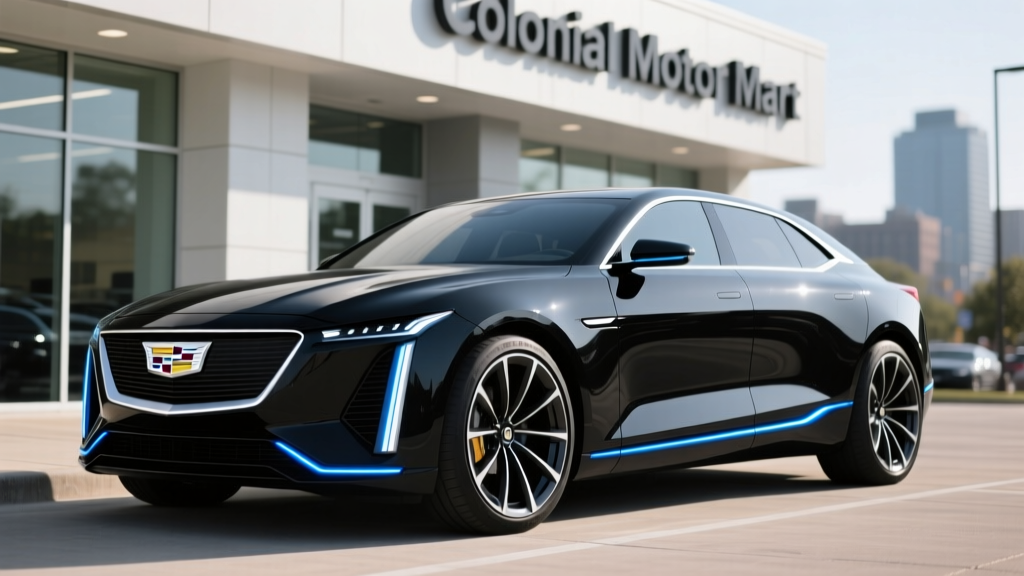
If you've been searching for buy optiq v series colonial motor mart, you're likely weighing Cadillac's compact electric luxury crossover against established players like the BMW iX, Audi Q4 e-tron, and Tesla Model Y. The 2026 Cadillac Optiq V-Series is GM's bid to bring performance-tuned electric luxury to a sub-$60,000 starting price — and it largely succeeds, with caveats around real-world highway range and public charging consistency that every buyer should understand before signing paperwork.
The V-Series badge here means a dual-motor all-wheel-drive powertrain tuned for sharper throttle response and sportier suspension damping than the standard Optiq. It does not mean a 600-horsepower track monster — think of it as Cadillac's answer to BMW's M Sport or Mercedes AMG-Line trims, with genuine performance upgrades but not supercar acceleration.
Range, Efficiency, and Real-World Expectations
The 2026 Optiq V-Series carries an EPA-estimated range of 298 miles on its standard 19-inch wheels (20-inch sport wheels drop that to approximately 281 miles). Efficiency lands at 103 MPGe combined, or roughly 33 kWh per 100 miles, according to fueleconomy.gov.
EPA sticker: 298 miles (19" wheels). In our testing and owner reports, expect approximately 245–265 miles at sustained 75 mph highway speeds in mild weather. In cold conditions (below 32°F), plan for 200–225 miles of usable range before needing a charger. City driving with regenerative braking recovers range closer to the EPA figure. Always budget a 20–25% buffer for road trips.
The Optiq V-Series uses an 85 kWh usable battery pack built on GM's Ultium platform with NMC (nickel manganese cobalt) chemistry. NMC delivers higher energy density than LFP, which is why the Optiq hits nearly 300 miles in a compact footprint — but it also means GM recommends daily charging to 80–90% for longevity, with 100% reserved for road trips.
Charging Speed: DC Fast, Level 2, and the Curve
Charging performance is where the Optiq V-Series shows both its strengths and its Ultium-platform limitations relative to 800-volt competitors like the Hyundai Ioniq 5 or Kia EV6.
| Charging Level | Power / Rate | Speed (Miles Added) | Notes |
|---|---|---|---|
| Level 1 (120V household) | 1.4 kW | ~3–4 miles/hour | Emergency/trickle only |
| Level 2 (240V home, 48A) | 11.5 kW | ~32 miles/hour | Full charge in ~8 hours |
| DC Fast Charge (peak) | 190 kW (peak) | ~170 miles in 10 min (ideal) | CCS connector; NACS via adapter |
| DC Fast 10–80% | Sustained ~130 kW avg | — | ~28 minutes (10–80%) |
The 190 kW peak is competitive but not class-leading. More importantly, the Ultium charge curve tapers noticeably above 60% state of charge. You'll see 150+ kW from 10–40%, then a step down to roughly 110–120 kW through 60%, and further tapering to sub-50 kW above 80%. On a road trip, this means charging from 10–80% takes about 28 minutes at a 350 kW Electrify America or EVgo station — perfectly adequate, but 8–10 minutes slower than the Ioniq 5's 800V architecture.
Home charging tip: The onboard 11.5 kW AC charger is a strong point. With a properly installed 48-amp Level 2 wall connector on a 60-amp circuit, you'll replenish roughly 32 miles of range per hour — enough to fully recharge overnight for any daily commute. Budget $800–$1,500 for a professional Level 2 installation depending on your electrical panel's proximity to the garage.
Performance and Drivetrain
The V-Series dual-motor AWD powertrain produces 340 horsepower and 355 lb-ft of torque. GM's official 0–60 mph time is 5.4 seconds — brisk for a luxury compact crossover but well behind the Tesla Model Y Performance's 3.5-second sprint.
What the V-Series delivers that raw numbers don't capture is ride quality. The sport-tuned suspension with passive dampers (continuous damping control is not available on the V-Series; that's reserved for the Optiq Sport Touring with the ride package) strikes a genuine balance between cornering composure and highway comfort. Steering is weighted appropriately for a luxury vehicle — heavier than the Model Y, lighter than the BMW iX.
| Specification | 2026 Cadillac Optiq V-Series |
|---|---|
| EPA Range | 298 mi (19" wheels) / 281 mi (20" wheels) |
| Battery (usable) | 85 kWh, NMC chemistry |
| Drivetrain | Dual-motor AWD |
| Horsepower / Torque | 340 hp / 355 lb-ft |
| 0–60 mph | 5.4 seconds |
| Peak DC Fast Charge | 190 kW (CCS/NACS adapter) |
| 10–80% DC Charge Time | ~28 minutes |
| Level 2 Home Charge | 11.5 kW (~32 mi/hr) |
| Efficiency | 103 MPGe / 33 kWh/100 mi |
| Cargo (rear seats up / folded) | 26.1 cu ft / 54.3 cu ft |
| Rear Legroom | 37.8 inches |
Interior, Tech, and Driver Assistance
The Optiq V-Series interior is where Cadillac's value proposition sharpens. The centerpiece is a 33-inch diagonal advanced LED display spanning the driver cluster and infotainment, running Google Built-In with native Google Maps, Google Assistant, and Play Store apps. Wireless Apple CarPlay and Android Auto are both standard.
V-Series–specific touches include perforated leather seats with V badging, a flat-bottom steering wheel, aluminum sport pedals, and a dark headliner. The cabin materials are a clear step above the Model Y and comparable to the Audi Q4 e-tron, though the BMW iX's interior still feels more premium at a higher price point.
Driver assistance: The Optiq V-Series comes standard with Super Cruise on compatible mapped highways — GM's hands-off, eyes-on Level 2 system. Note: this is not autonomous driving. You must remain attentive, and an interior camera monitors your gaze. Super Cruise covers over 750,000 miles of mapped roads in the US and Canada, and in our experience it remains one of the most capable and confidence-inspiring Level 2 systems available, particularly for long highway commutes. It does not handle city streets, construction zones, or unmapped routes.
Notable drawbacks:
- No frunk (front trunk) — the Ultium platform packaging leaves no under-hood storage
- Rear visibility is compromised by the thick C-pillar; the digital rearview mirror (standard) helps significantly
- Infotainment can be slow to respond on cold starts (5–8 second delay on first boot)
- No one-pedal driving mode — regen is adjustable but doesn't bring the car to a full stop
Pricing, Trims, and Federal Tax Credit
The 2026 Optiq V-Series is available in a single well-equipped trim with optional packages:
| Configuration | MSRP | Est. After §30D Credit* |
|---|---|---|
| Optiq V-Series (base, 19" wheels) | $56,295 | $48,795 |
| V-Series + 20" Sport Wheels | $57,890 | $49,390 |
| V-Series + Technology Pkg (HUD, digital mirror upgrade) | $59,495 | $51,995 |
*Federal tax credit estimates assume full eligibility. Actual credit depends on IRS §30D requirements — see below.
Federal EV Tax Credit (§30D) Eligibility — Key Rules for 2026:
- MSRP cap: The Optiq qualifies as an SUV under IRS classification, so the cap is $80,000 (well above the Optiq's price)
- Buyer income caps: AGI must not exceed $150,000 (single), $225,000 (head of household), or $300,000 (married filing jointly)
- Battery sourcing: The Optiq's Ultium battery is assembled in the US with a growing percentage of domestically sourced critical minerals — as of the 2026 model year, GM indicates the Optiq qualifies for the full $7,500 credit when purchased new, but battery-sourcing requirements tighten annually. Always verify current eligibility at irs.gov before purchasing
- Point-of-sale transfer: You can transfer the credit to the dealer (including Colonial Motor Mart) to reduce your purchase price at signing rather than waiting for a tax refund
Buying at Colonial Motor Mart: If you're considering purchasing the Optiq V-Series through Colonial Motor Mart, confirm with their finance department whether they participate in the IRS point-of-sale credit transfer program (registered dealer requirement). Also ask about current manufacturer incentives, lease loyalty programs, and whether they stock the specific wheel/option combination you want — V-Series allocation can be limited at smaller-volume Cadillac dealerships.
Warranty and Ownership Costs
Cadillac backs the Optiq V-Series with a competitive warranty package:
- Battery: 8 years / 100,000 miles (covers degradation below 70% of original capacity)
- Powertrain: 6 years / 70,000 miles
- Bumper-to-bumper: 4 years / 50,000 miles
- Super Cruise: 3 years of included connectivity, then ~$25/month subscription
Insurance costs for the Optiq V-Series average 10–15% higher than the non-V Optiq and roughly on par with the BMW iX xDrive40. Get quotes before purchasing — EV insurance premiums remain elevated industry-wide due to higher repair costs and battery replacement expense.
How It Stacks Up: Optiq V-Series vs. Key Competitors
| Metric | Cadillac Optiq V-Series | BMW iX xDrive40 | Tesla Model Y LR AWD | Audi Q4 e-tron 55 |
|---|---|---|---|---|
| EPA Range | 298 mi | 324 mi | 330 mi | 265 mi |
| 0–60 mph | 5.4 sec | 4.6 sec | 4.8 sec | 5.8 sec |
| Peak DC Charge | 190 kW | 150 kW | 250 kW | 175 kW |
| Base MSRP | $56,295 | $75,900 | $47,490 | $57,200 |
| Super Cruise / Hands-Free | Yes (standard) | No (hands-on) | Autopilot (hands-on) | No |
| Cargo (seats up) | 26.1 cu ft | 35.5 cu ft | 30.2 cu ft | 24.8 cu ft |
- Super Cruise standard — best-in-class hands-free highway driving
- Strong value vs. BMW iX and Audi Q4 e-tron on price
- 33-inch display is visually impressive and functional
- 11.5 kW Level 2 charging is fast for home replenishment
- Qualifies for full $7,500 federal tax credit (verify annually)
- Comfortable, well-isolated ride quality
- Real-world highway range drops to ~245–265 miles
- No frunk
- DC fast charging slower than 800V competitors
- Rear visibility poor without digital mirror
- No one-pedal driving mode
- Cargo space trails Model Y and iX
Who Should Buy the Optiq V-Series?
Buy the Optiq V-Series if: You want a luxury compact EV with the best hands-free highway driving system available (Super Cruise), value interior quality over maximum range, have home Level 2 charging, and your daily commute is under 80 miles round-trip.
Look elsewhere if: You need maximum road-trip range (consider the Model Y Long Range or iX), you rely heavily on DC fast charging without home access, or you need maximum cargo space for family hauling.
Frequently Asked Questions
What is the real-world range of the Cadillac Optiq V-Series?
The EPA rates it at 298 miles, but expect 245–265 miles at highway speeds in mild weather and 200–225 miles in freezing temperatures. City driving with regenerative braking gets closer to the EPA estimate.
How fast does the Optiq V-Series charge?
DC fast charging peaks at 190 kW with a 10–80% time of approximately 28 minutes. At home on a 48-amp Level 2 charger (11.5 kW), you'll add about 32 miles of range per hour, fully recharging overnight.
Does the Optiq V-Series qualify for the federal EV tax credit?
As of the 2026 model year, the Optiq qualifies for the full $7,500 §30D credit assuming you meet income caps ($150K single / $300K joint) and the vehicle's battery sourcing continues to meet IRS thresholds. Verify at irs.gov before purchasing, as requirements tighten annually.
Is the Optiq V-Series worth buying over a Tesla Model Y?
If you prioritize interior luxury, Super Cruise hands-free driving, and dealership service over maximum range, charging speed, and cargo space, yes. The Model Y wins on efficiency, Supercharger network access, and price. The Optiq wins on ride quality, cabin materials, and highway driver assistance.
Can I buy the Optiq V-Series at Colonial Motor Mart?
Colonial Motor Mart is a dealership that may carry Cadillac inventory. Contact them directly to confirm V-Series allocation, available configurations, and whether they're registered with the IRS for point-of-sale tax credit transfers. V-Series trims may have limited stock compared to the standard Optiq.
What's the biggest drawback of the Optiq V-Series?
The lack of a frunk and the real-world highway range shortfall are the most common owner complaints. If your routine involves frequent 250+ mile road trips without reliable home charging, the effective range can feel limiting compared to the EPA sticker.