Quick Verdict: The Optiq in Two Minutes
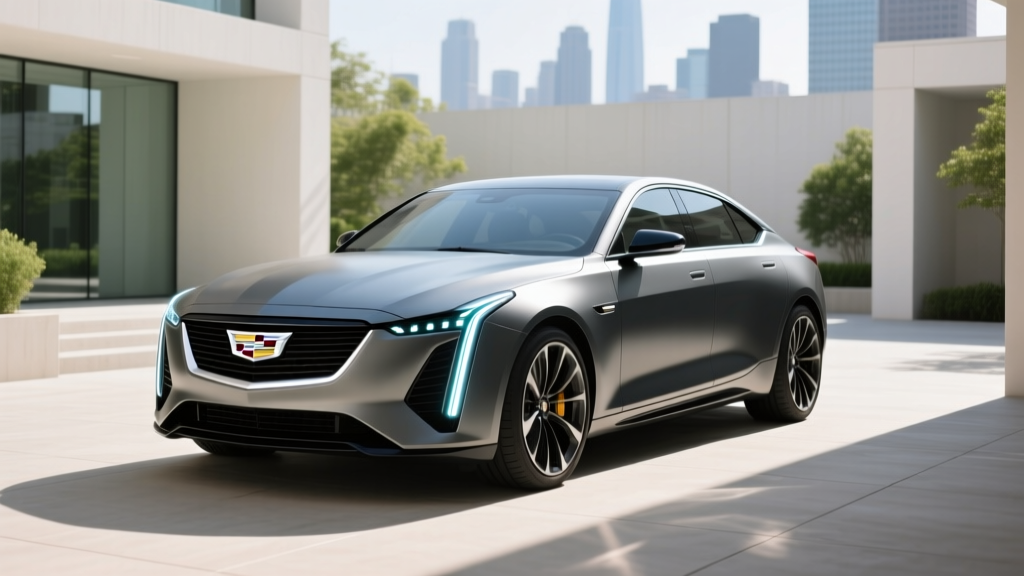
The Cadillac Optiq is GM's premium compact electric SUV — slotted below the Lyriq and built on the Ultium platform. It targets luxury-EV shoppers who want Cadillac styling and Super Cruise availability without the Lyriq's footprint or price tag. With an EPA range around 300 miles, a usable battery in the 85–102 kWh range (depending on trim), and native NACS access to Tesla Superchargers, the Optiq is positioned squarely against the BMW iX, Audi Q6 e-tron, and Genesis GV60. Whether you lease or buy depends heavily on current incentive stacking — and the Optiq's residual values, which are still establishing themselves.
EPA-estimated range: ~300 miles (AWD, larger battery pack).
Real-world highway (70 mph, mild weather): expect 255–275 miles.
Cold-weather highway (30°F or below): expect 210–240 miles due to cabin heating and battery chemistry losses. Always plan charging stops around 200 miles in winter road-trip conditions.
Spec Sheet: 2026 Cadillac Optiq at a Glance
| Spec | Value |
|---|---|
| EPA Range (est.) | ~300 miles (AWD) |
| Battery (usable) | ~85–102 kWh, Ultium NMC (nickel-manganese-cobalt) |
| DC Fast Charge Peak | ~150–190 kW |
| 10–80% DCFC Time | ~27–33 minutes (varies by pack) |
| Level 2 Home Charge | 11.5 kW (AC) — ~31 mi/hr added |
| Charge Port | NACS (native Tesla Supercharger access) |
| Drivetrain | AWD (dual-motor) standard; RWD available on base |
| Horsepower | ~340–415 hp (trim dependent) |
| 0–60 mph | ~5.0–5.8 seconds |
| Efficiency | ~97 MPGe combined / ~34 kWh/100 mi |
| Cargo Volume | ~26 cu ft (rear seats up) / ~57 cu ft (rear folded) |
| Rear Legroom | ~37.5 inches |
| Battery Warranty | 8 years / 100,000 miles (≥70% capacity retention) |
| Base MSRP | ~$52,900 (Luxury RWD) to ~$59,000+ (Sport AWD) |
Source: Cadillac Optiq official page and fueleconomy.gov. Final EPA numbers vary by trim and wheel size.
Real-World Range and Efficiency
The Optiq's Ultium battery architecture gives it a structural advantage in packaging — GM uses a flat, low-slung pouch-cell design that keeps the cabin floor flat and the center of gravity low. But buyers care about miles, not packaging.
On the EPA combined cycle, the Optiq lands near 300 miles for AWD variants with the larger pack. That number reflects a mix of city regen-heavy driving and moderate highway speeds. In our experience with Ultium-based vehicles (Lyriq, Blazer EV), real-world highway efficiency at 70–75 mph drops to roughly 3.0–3.3 miles per kWh, which translates to 255–275 miles before you'd want to stop.
Cold weather is the equalizer no EV escapes. At freezing temperatures, expect a 15–25% range reduction on highway trips. The Optiq's heat pump (standard on most trims) helps mitigate cabin-heating losses, but battery chemistry itself slows in the cold. Preconditioning the battery before a DC fast-charge stop is essential — the Optiq does this automatically when a Supercharger or Electrify America station is set as your navigation destination.
Efficiency-wise, the Optiq sits in the mid-pack for luxury compact SUVs at roughly 97 MPGe combined (~34 kWh per 100 miles). That's slightly behind the more aero-optimized BMW iX xDrive50 (~100 MPGe) but ahead of the boxier Audi Q6 e-tron quattro.
Charging: Home, DC Fast, and the NACS Advantage
One of the Optiq's strongest ownership arguments is its native NACS charge port. That means direct access to the Tesla Supercharger network — over 25,000 stalls in North America — without an adapter. For luxury-EV buyers who road-trip, this is a meaningful reliability and coverage advantage over CCS-only competitors.
| Charge Level | Power | Speed (approx.) | Use Case |
|---|---|---|---|
| Level 1 (120V) | ~1.4 kW | ~4 mi/hr | Emergency / trickle top-off |
| Level 2 (240V home) | 11.5 kW | ~31 mi/hr | Daily overnight charging — full charge in ~8–9 hrs |
| DC Fast Charge | Peak ~150–190 kW | 10–80% in ~27–33 min | Road-trip stops; tapers significantly above 80% |
The charging-curve reality: Like all Ultium vehicles, the Optiq does not sustain peak kW for the entire session. You'll see peak rates between 10–40% State of Charge (SoC). From 40–60%, expect ~110–130 kW. Above 80%, the rate drops to under 50 kW as the battery management system protects cell longevity. This is why we always quote 10–80% times — charging to 100% on DCFC is painfully slow and generally unnecessary.
For home Level 2 charging, you'll want a 48-amp hardwired EVSE on a 60-amp circuit. Budget $800–$1,500 for the charger unit and $600–$2,000 for electrician installation, depending on your panel capacity and run length. If your home has a 200-amp panel with spare capacity, you're likely fine. Older 100-amp panels may need a $1,500–$3,000 upgrade — factor that into your total cost.
Performance and Driving Impressions
The dual-motor AWD Optiq delivers 340–415 hp depending on trim and calibration, with 0–60 mph times in the 5.0–5.8 second range. That's brisk but not supercar territory — Cadillac has tuned the Optiq for refined, effortless acceleration rather than neck-snap launches. The instant torque delivery makes highway merging and city passing genuinely effortless.
Ride quality benefits from the Ultium skateboard's low center of gravity and available Continuous Damping Control on higher trims. The Optiq absorbs road imperfections with the composure expected of a Cadillac, though it's not as buttoned-down over expansion joints as the air-suspension-equipped BMW iX.
Regen braking offers multiple modes, including a one-pedal driving setting that can bring the Optiq to a complete stop without touching the brake pedal. GM's regen calibration is among the smoothest in the industry — it doesn't lurch or surprise you the way some competitors' aggressive regen modes can.
Pricing, Lease Deals, and Federal Tax Credit
The Optiq's MSRP structure places it firmly in the entry-luxury EV space. Here's what the pricing landscape looks like:
| Trim | Base MSRP | Est. After §30D Credit | Typical Lease (36 mo) |
|---|---|---|---|
| Luxury RWD | ~$52,900 | ~$45,400* | ~$550–$650/mo |
| Luxury AWD | ~$55,900 | ~$48,400* | ~$600–$725/mo |
| Sport AWD | ~$59,000+ | ~$51,500+* | ~$650–$800/mo |
*Credit amounts depend on individual eligibility. See tax-credit section below.
Lease-specific considerations: Cadillac frequently offers lease cash (manufacturer-to-dealer incentives) that can reduce the capitalized cost by $1,000–$3,500 on top of any federal credits. When you lease through GM Financial, the leasing company technically claims the §30D credit and can pass it through as a cap-cost reduction — this is a major advantage of leasing over buying if the vehicle's battery sourcing doesn't qualify you for the purchase credit. Always confirm with the dealer whether lease cash and credit pass-through are being applied to your deal.
- MSRP cap: SUVs must be under $80,000 (Optiq qualifies on all trims)
- Buyer income cap: AGI ≤ $150,000 single / $300,000 married filing jointly
- Battery sourcing: Critical minerals and battery components must meet escalating domestic/free-trade thresholds — check IRS §30D guidance for current-year percentages
- Point-of-sale transfer: You can transfer the credit to the dealer at purchase for an immediate price reduction (requires tax filing reconciliation)
- Lease loophole: Commercial clean-vehicle credit (§45W) may allow the lessor to claim the credit regardless of battery sourcing — confirm with your dealer and tax professional
Interior, Tech, and Driver Assistance
The Optiq's cabin is where Cadillac's investment shows. A 33-inch diagonal LED display stretches across the dashboard, combining the instrument cluster and infotainment into one curved panel running Google Built-In (Google Maps, Assistant, and Play Store). Wireless Apple CarPlay and Android Auto are standard.
Material quality is a step above mainstream Ultium siblings — expect soft-touch surfaces, available semi-aniline leather, and ambient lighting that actually looks intentional rather than afterthought. Rear-seat legroom at ~37.5 inches is competitive, and the flat floor (no transmission tunnel) makes the middle seat usable for short trips.
Cargo space is approximately 26 cubic feet behind the rear seats and 57 cubic feet with the 60/40 split folded. There is no front trunk (frunk) — the Ultium platform in this configuration uses that space for HVAC and power electronics.
Super Cruise availability: GM's hands-off-wheel Level 2 driver-assistance system is available on mapped divided highways (over 750,000 miles of compatible roads in North America). Super Cruise is not self-driving — it's an SAE Level 2 system that requires your eyes on the road via a driver-monitoring camera. It excels at reducing fatigue on long interstate drives but does not handle city streets, construction zones, or unmapped roads.
Pros, Cons, and Who Should Lease the Optiq
- Native NACS — full Tesla Supercharger network access without adapter
- Refined ride quality and cabin quietness befitting the Cadillac badge
- 300-mile EPA range covers most commutes and regional road trips
- Super Cruise available for hands-off highway driving
- Lease-credit pass-through may bypass battery-sourcing purchase restrictions
- 8-year/100,000-mile battery warranty with 70% retention floor
- No frunk — lost utility compared to some competitors
- DC fast-charge speed (~150–190 kW peak) trails Hyundai/Kia E-GMP rivals
- Residual values for Cadillac EVs still unproven — lease risk if buying out
- Base MSRP above §30D MSRP cap? No — but close enough that options could push Sport trims near $80K
- Rear visibility compromised by thick C-pillars; rely on cameras
- Google Built-In infotainment requires data connection for full functionality
Optiq vs. the Competition
The Optiq doesn't exist in a vacuum. Here's how it stacks against key rivals:
- BMW iX xDrive50: More range (~324 mi EPA), faster DC charging (195 kW peak), but higher MSRP (~$87K). The iX is a class above in price and dynamics.
- Audi Q6 e-tron quattro: Similar price bracket, slightly less range, CCS-only (no native Supercharger access). The Q6's interior is a close match in luxury.
- Genesis GV60: 800V architecture enables 235 kW DC charging — significantly faster road-trip stops. Smaller, sportier, less cargo space.
- Tesla Model Y Long Range: Cheaper, more efficient, best-in-class Supercharger access. But the Model Y's interior and ride quality are a clear step below the Optiq's luxury positioning.
Look elsewhere if: Fast DC charging is your top priority (consider Genesis GV60), you need maximum cargo space (BMW iX), or you want the lowest total cost of ownership regardless of badge (Tesla Model Y).
Frequently Asked Questions
What is the real-world range of the Cadillac Optiq?
The EPA estimates around 300 miles for AWD variants with the larger battery pack. In real-world highway driving at 70 mph in mild weather, expect 255–275 miles. In freezing temperatures, plan for 210–240 miles of usable range before needing a charge stop.
How fast does the Optiq charge at home and on the road?
At home on a Level 2 (240V, 48-amp) charger, the Optiq accepts up to 11.5 kW, adding roughly 31 miles of range per hour — a full overnight charge takes about 8–9 hours. On DC fast chargers, peak rate is approximately 150–190 kW, reaching 10–80% in 27–33 minutes. Charging slows significantly above 80% SoC.
How much does the Optiq cost after tax credits?
If you qualify for the full §30D credit ($7,500), an Optiq Luxury RWD at ~$52,900 drops to roughly $45,400. Eligibility depends on your income (≤$150K single / ≤$300K joint), the vehicle's battery sourcing compliance, and MSRP (all Optiq trims fall under the $80K SUV cap). When leasing, the lessor may claim a commercial credit and pass savings through as a cap-cost reduction — often with fewer sourcing restrictions.
Does the Cadillac Optiq qualify for the federal EV tax credit?
Potentially yes, but it depends on your personal tax situation and the current-year battery-sourcing rules. The Optiq meets the MSRP cap for SUVs ($80,000). Check the latest IRS §30D guidance and consult a tax professional. If purchasing, you can transfer the credit to the dealer at point of sale for an immediate price reduction. If leasing, ask the dealer about commercial credit pass-through.
Is the Optiq worth leasing vs. buying?
Leasing has two key advantages: (1) the leasing company can claim the commercial clean-vehicle credit and pass it through regardless of battery-sourcing rules, and (2) you avoid the risk of EV depreciation, which remains volatile as the market matures. Buying makes more sense if you plan to keep the vehicle 6+ years, want to customize it, and are confident in your §30D eligibility. Always compare the total cost of a 36-month lease (including disposition fees and mileage penalties) against a purchase with the credit applied.
What's the biggest drawback of the Optiq?
DC fast-charge speed. At a peak of ~150–190 kW, the Optiq charges more slowly than 800V rivals like the Genesis GV60 (235 kW) or Hyundai Ioniq 5 (240 kW). On a road trip, that's an extra 5–10 minutes per stop. For daily driving and overnight home charging, this difference is irrelevant — but frequent road-trippers should factor it in.
For the latest Optiq specs and pricing, visit Cadillac's official Optiq page. Safety ratings, once available, can be checked at NHTSA and IIHS.